Yarn Rack
CN → US| HS Code | Tariff Rate | Origin | Destination | Doc |
|---|---|---|---|---|
| 8479896500 | 20.3% | CN | US | Official Doc |
| 4421999880 | 38.3% | CN | US | Official Doc |
| 4421919880 | 38.3% | CN | US | Official Doc |
| 8479899599 | 87.5% | CN | US | Official Doc |
| 3926909989 | 22.8% | CN | US | Official Doc |
Product Images


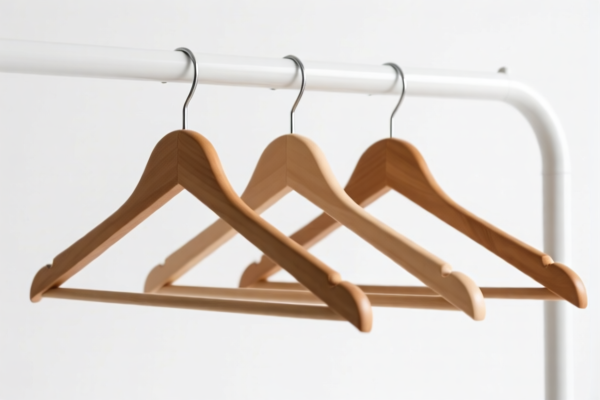

AI Analysis
🧶 Yarn Rack (Yarn Storage Organizer)
🌐 HS Code Reference & Customs Clearance Guide | 2026 Latest Tariff Analysis | Professional Logistics Strategy
📌 I. Product Definition & Classification: Do You Really Understand a “Yarn Rack”?
A Yarn Rack is a storage solution designed to hold skeins, balls, or cones of yarn. In international trade, its classification is highly sensitive to material composition and functional design. It is not a single HS code product but rather a category that splits based on whether it is made of metal, wood, bamboo, or plastic, and whether it is considered a "mechanical device" or a simple "household item."
⚠️ Key Distinction Point:
- If made of Metal or Plastic with complex mechanical support functions → Often falls under Chap. 84 (Machinery/Parts) or Chap. 39 (Plastics) depending on specific structure.
- If made of Wood or Bamboo → Falls under Chap. 44 (Wood/Bamboo Articles).
- Crucial Warning: Misclassification between "Wooden Household Item" and "Metal Machinery/Support" can lead to massive tariff discrepancies (from ~20% to ~87%).
📦 II. HS Code Classification Details (Based on Provided Data)
The following HS Codes are derived directly from the provided data <DATA>. Note that these codes reflect specific interpretations of the yarn rack's material and function.
| HS Code | Product Description & Logic | Total Tax Rate | Tax Breakdown |
|---|---|---|---|
| 8479.89.65.00 | Metal/Plastic Mechanical Support: Inferred as a mechanical/support device made of metal or plastic. Classified under "Other machines/apparatus with individual functions." | 20.3% | Base: 2.8% Add'l: 7.5% Sec. 301: 10% |
| 4421.99.98.80 | Wooden Article: Inferred to be made of wood based on use. Classified under "Other wooden articles" not specifically excluded elsewhere. | 38.3% | Base: 3.3% Add'l: 25.0% Sec. 301: 10% |
| 4421.91.98.80 | Wood/Bamboo Article: Inferred to be wood or bamboo. Classified as "Other wooden articles" (sub-category for others/bamboo/other). | 38.3% | Base: 3.3% Add'l: 25.0% Sec. 301: 10% |
| 8479.89.95.99 | Complex Metal/Plastic Machine: Classified as a mechanical auxiliary support device. High tax due to steel/aluminum/copper surcharges if applicable. | 87.5% | Base: 2.5% Add'l: 25.0% Sec. 301: 10% Metals Surcharge: 50% |
| 3926.90.99.89 | Plastic Article: Inferred to be made of plastic. Classified under "Other塑料制品" (Other plastic articles). | 22.8% | Base: 5.3% Add'l: 7.5% Sec. 301: 10% |
🔍 Critical Observation:
- Wood/Bamboo (4421) vs. Metal/Plastic (8479/3926): The tax difference between wooden racks (~38.3%) and plastic racks (~22.8%) is significant.
- The "Trap" Code 8479.89.95.99: This code carries an 87.5% tax rate. This is likely due to the 50% additional surcharge on steel, aluminum, or copper products. If your yarn rack is metal, ensure it is not misclassified into this high-bracket category unless justified by specific mechanical features.
💰 III. 2026 Latest Tariff Rate Detailed Explanation (US Market)
✅ Applicable Country: United States (US)
✅ Origin: China (CN)
✅ Effective Date: Current tariff structure applies.
🎯 1. 8479.89.65.00 (Metal/Plastic Mechanical Support) - Lowest Metal/Plastic Option
| Item | Detail |
|---|---|
| Base Rate | 2.8% |
| Section 301 Surcharge | +7.5% (List 3/4 adjustments may apply, but data specifies 7.5%) |
| Section 301 Additional | +10% (Section 301 tariffs on Chinese goods) |
| Total Tax | 20.3% |
| De Minimis Exemption | ❌ Not Eligible (Likely due to Section 301 nature) |
📌 Explanation:
- This is the most favorable classification for metal or plastic yarn racks.
- Avoids the heavy steel/aluminum surcharges seen in other 8479 codes.
- Strategy: If the rack is metal, argue it is a "general mechanical support device" rather than a specific metal commodity subject to higher surcharges.
🎯 2. 3926.90.99.89 (Plastic Article) - Lowest Overall Tax
| Item | Detail |
|---|---|
| Base Rate | 5.3% |
| Section 301 Surcharge | +7.5% |
| Section 301 Additional | +10% |
| Total Tax | 22.8% |
| De Minimis Exemption | ❌ Not Eligible |
📌 Explanation:
- Plastic yarn racks are taxed at 22.8%, which is lower than wooden racks.
- Strategy: If the rack is primarily plastic, this is the optimal code. Ensure the product description clearly states "Plastic Yarn Storage Rack."
🎯 3. 4421.99.98.80 / 4421.91.98.80 (Wood/Bamboo Articles) - Mid-Range Tax
| Item | Detail |
|---|---|
| Base Rate | 3.3% |
| Section 301 Surcharge | +25.0% (High surcharge on wood products) |
| Section 301 Additional | +10% |
| Total Tax | 38.3% |
| De Minimis Exemption | ❌ Not Eligible |
📌 Explanation:
- Wooden racks incur a 25% surcharge, making them more expensive than plastic or simple metal racks.
- Strategy: Only use this classification if the product is undeniably wood/bamboo. Do not use this for composite materials.
🎯 4. 8479.89.95.99 (High-Tax Metal/Machinery) - Avoid Unless Necessary
| Item | Detail |
|---|---|
| Base Rate | 2.5% |
| Section 301 Surcharge | +25.0% |
| Section 301 Additional | +10% |
| Metal Surcharge | +50% (For steel, aluminum, copper) |
| Total Tax | 87.5% |
| De Minimis Exemption | ❌ Not Eligible |
📌 Explanation:
- This is the worst-case scenario. The 50% metal surcharge is triggered if the goods are classified as steel/aluminum/copper articles under this specific subheading.
- Strategy: DO NOT classify a simple yarn rack here. This code is likely for complex industrial machinery parts. Argue for 8479.89.65.00 instead if metal.
🛠️ IV. Customs Clearance Practical Advice (Pitfall Avoidance Guide)
✅ 1. Preparation Checklist (Must-Have Documents)
| Document | Required | Notes |
|---|---|---|
| ✅ Product Photos | ✔️ | Clear images showing material (wood grain, plastic texture, metal welds). |
| ✅ Material Composition Statement | ✔️ | Explicitly state: "100% Plastic," "Solid Wood," or "Steel Frame with Plastic Coating." |
| ✅ Bill of Lading / Invoice | ✔️ | Describe accurately: "Yarn Rack, Plastic, Model XYZ" or "Wooden Yarn Storage Unit." |
| ✅ Structure Diagram | ✔️ | For metal racks, show that it is a simple support frame, not a complex machine. |
✅ 2. Classification Strategy (Key Rules)
| Scenario | Recommended HS Code | Reasoning |
|---|---|---|
| Plastic Rack | 3926.90.99.89 |
Lowest tax (22.8%). Plastic is not subject to the heavy metal surcharges. |
| Wooden Rack | 4421.99.98.80 |
Mid-range tax (38.3%). Must be genuine wood. |
| Metal Rack (Simple) | 8479.89.65.00 |
Low tax (20.3%). Argue it as a "mechanical support device" to avoid the 50% metal surcharge. |
| Metal Rack (Complex/Industrial) | 8479.89.95.99 |
AVOID (87.5%). Only use if it qualifies as a complex machine part. |
| Bamboo Rack | 4421.91.98.80 |
Mid-range tax (38.3%). Treated similarly to wood. |
🔥 Golden Rule:
"Plastic is King (Low Tax), Wood is Middle, Metal is Risky (High Tax if misclassified)."
If you must use metal, strive for 8479.89.65.00 by proving it is a general support device, not a specific metal commodity.
✅ 3. Special Cases
| Case | Handling Advice |
|---|---|
| Composite Materials | If the rack is wood with metal brackets, the dominant material determines the chapter. Usually, wood (Chap. 44) may apply, but check if metal components exceed threshold. |
| OEM/Custom Designs | Provide design files to prove it is a "household storage item" and not an "industrial machine." |
| Plastic-Coated Metal | If metal is the structural core but coated, customs may still view it as metal. Try to argue for Plastic (3926) if the coating is substantial and defines the product's nature. |
🌍 V. Global Market Comparison (2026)
| Market | Preferred HS Code | Est. Tax (China Origin) | Notes |
|---|---|---|---|
| 🇺🇸 USA | 3926.90.99.89 (Plastic) |
22.8% | Best option. Avoid 8479.89.95.99. |
| 🇺🇸 USA | 4421.99.98.80 (Wood) |
38.3% | Higher due to 25% surcharge. |
| 🇪🇺 EU | Various | Varies | Generally lower base duties, but may have anti-dumping checks on certain materials. |
| 🇨🇳 China | Various | Low | No Section 301 surcharges. Base duty only. |
📌 Conclusion:
- For US imports, Plastic is the most tax-efficient material.
- Metal racks require careful classification to avoid the 87.5% trap.
- Wood is a safe mid-range option but less competitive than plastic.
📌 VI. Common Errors & Pitfalls (Lessons Learned)
❌ Error 1: Classifying a Plastic Yarn Rack as 8479.89.95.99 (Metal/Machinery).
👉 Consequence: Tax jumps from 22.8% to 87.5%. Disaster!
❌ Error 2: Classifying a Metal Rack as 4421.99.98.80 (Wood).
👉 Consequence: Customs seizure for false declaration. Penalty + Back Taxes.
❌ Error 3: Ignoring the Section 301 Surcharge.
👉 Consequence: Underpayment of duties. Interest and penalties apply.
❌ Error 4: Vague Description "Yarn Holder".
👉 Consequence: Customs delays for classification review. Use precise terms: "Plastic Yarn Storage Rack."
✅ Correct Approach:
"Yarn Rack, 100% High-Density Polyethylene (HDPE), Model XYZ, for Home Use"
→ Classify under3926.90.99.89(22.8%).
🎯 VII. Conclusion: Professional Classification Saves Money
🎯 Remember the Motto:
🔹 "Plastic First, Wood Second, Metal Cautious."
🔹 "HS Code is Life: 22% vs 87% is a 65% Difference!"
📌 Pro Tip:
If you are importing large volumes, consider pre-classification rulings with US Customs (CBP) to lock in the 22.8% rate for plastic racks or 20.3% for specific metal racks. Avoid the 87.5% pitfall at all costs.
✨ Professional Customs Clearance Starts with Accurate Classification!
💼 Every percent of tax saved is pure profit!
Customer Reviews
About HS Code Classification
The Harmonized System (HS) is an internationally standardized nomenclature developed by the World Customs Organization (WCO) to classify traded products. Over 200 countries use the HS system as the basis for customs tariffs, trade statistics, and import/export regulations.
Each HS code follows a hierarchical structure:
- Chapter (2 digits) — Broad category of goods (e.g., Chapter 84: Machinery and Mechanical Appliances)
- Heading (4 digits) — More specific grouping within the chapter
- Subheading (6 digits) — Internationally standardized breakdown, used by all WCO member countries
- National subdivisions (8-10 digits) — Country-specific extensions for further classification, such as US HTSUS 10-digit codes
Correct HS code classification is essential for smooth customs clearance, accurate duty payment, and compliance with trade regulations. Misclassification can lead to customs delays, overpayment of duties, or penalties.
When importing from CN to US, the applicable tariff rates may include:
- Most-Favored-Nation (MFN) rate — The standard duty rate applied to WTO members
- General rate — Applied to countries without trade agreements
- Trade remedy duties — Additional tariffs such as Section 301 (anti-dumping), Section 232 (national security), or countervailing duties
The information provided on this page is for reference purposes only. For official classification, please consult with your local customs authority or a licensed customs broker.