Yarn for Clothing
CN → US| HS Code | Tariff Rate | Origin | Destination | Doc |
|---|---|---|---|---|
| 5607909000 | 41.3% | CN | US | Official Doc |
| 5604909000 | 40.0% | CN | US | Official Doc |
| 5606000090 | 43.0% | CN | US | Official Doc |
| 5606000010 | 43.0% | CN | US | Official Doc |
| 5607493000 | 38.6% | CN | US | Official Doc |
Product Images
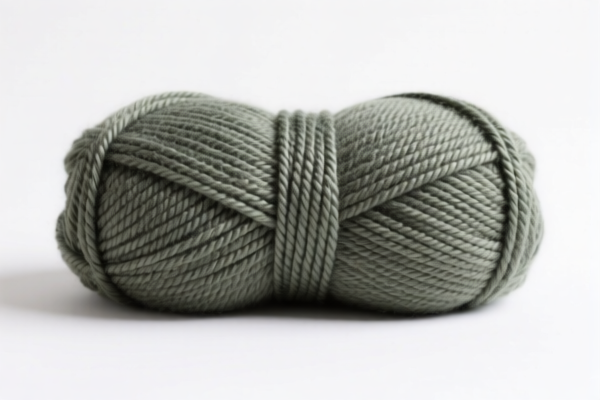
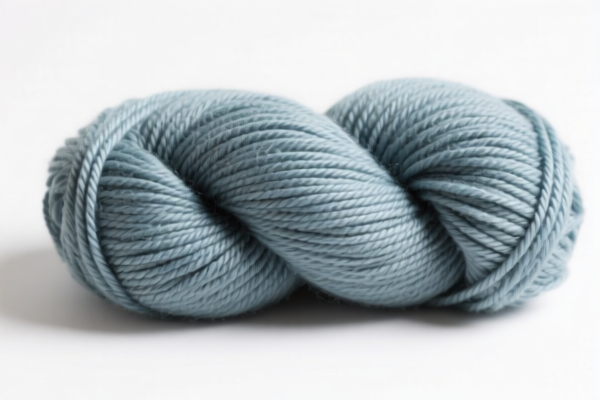
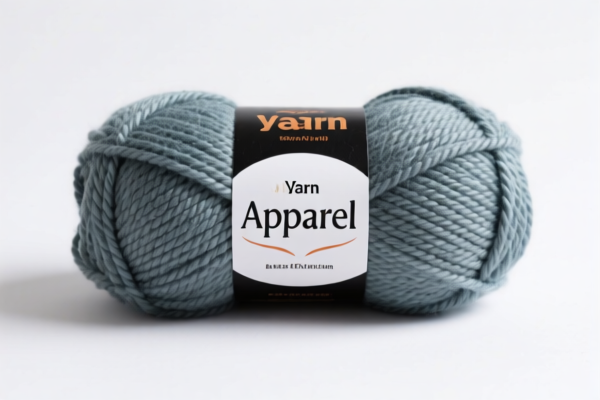
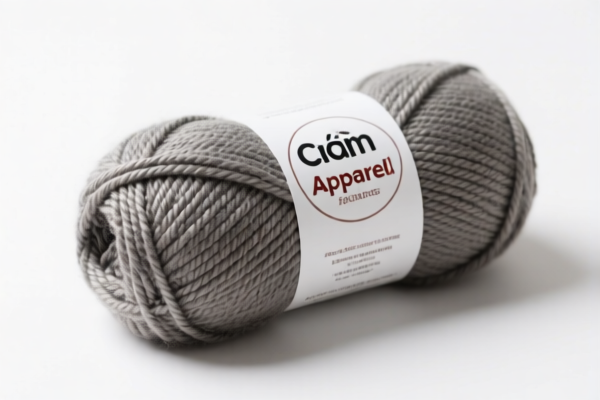
AI Analysis
🧵 Yarn for Clothing (纺织用缆线纱)
🌐 HS Code Reference & Customs Clearance Guide | 2024/2025 Latest Tariff Analysis | Strategic Clearance Strategy
📌 I. Product Definition & Classification: Do You Really Understand "Clothing Yarn"?
"Yarn for Clothing" is a broad commercial term. In international trade, it does not refer to a single HS Code. Instead, it covers various forms of textiles, including twisted yarns, cabled yarns, and covered yarns. The correct classification depends on the physical form (cable vs. twisted) and material composition (rubber/plastic covered vs. pure textile).
⚠️ Key Distinction Points:
- If it looks like a thick rope or cable → Likely Chapter 56 (Cables/Ropes) → HS 5607.x
- If it is standard twisted yarn with special finishes → Likely Chapter 56 (Yarns) → HS 5604.x / 5606.x
- Misclassification Risk: Declaring a cable as simple yarn (or vice versa) can lead to significant tariff differences (e.g., 38.6% vs. 43.0%).
📦 II. HS Code Classification Details (Authoritative对照)
Based on the specific characteristics of the yarn provided in the data, here are the 5 potential classifications:
| HS Code | Product Description | Key Characteristics | Total Tax Rate |
|---|---|---|---|
5607.90.90.00 |
Textile Cabled Yarn (General) | Falls under "Cables & Ropes". Non-specific category. Form is fiber/cable-like. | 41.3% |
5604.90.90.00 |
Covered Textile Yarn | Textile yarn possibly covered with rubber/plastic. Fits other material/shape characteristics. | 40.0% |
5606.00.00.90 |
Twisted/Chenille Yarn (Non-Elastic) | Twisted yarn, chenille yarn, etc. Textile/cable form. Excludes elastic yarns. | 43.0% |
5606.00.00.10 |
Twisted/Chenille Yarn (Elastic) | Twisted yarn/band. Contains elastic fibers (e.g., Spandex/Lycra). | 43.0% |
5607.49.30.00 |
Synthetic Fiber Cable | Cables/Ropes typically made from Polyethylene (PE) or Polypropylene (PP). | 38.6% |
🔍 Critical Note:
- 5607 codes are for Cables/Ropes (thicker, structural).
- 5604/5606 codes are for Yarns (twisted, covered, or elastic).
- If the yarn contains Spandex/Elastane, it must be classified under 5606.00.00.10.
- If it is a simple PE/PP rope-like structure, it falls under 5607.49.30.00 (lowest tax).
💰 III. 2024/2025 Latest Tariff Rate Breakdown (Detailed Tax Clauses)
✅ Applicable Region: United States (US)
✅ Origin: China (CN)
✅ Effective Date: 2025 Tariff Schedule (Includes Section 301 & Section 232/122 adjustments)
🎯 1. 5607.90.90.00 — Textile Cabled Yarn (General)
| Item | Detail |
|---|---|
| Base Duty | 6.3% |
| Section 301 Tariff | +25.0% |
| Section 122 Tariff | +10.0% |
| Total Effective Rate | 41.3% |
| Calculation | CIF Value × 41.3% |
| De Minimis Exemption | ❌ Not Eligible (Denied under current rules for this category) |
| Legal Basis | HTSUS:5607.90.90.00 + Section 301 Footnote + Section 122 Adjustment |
📌 Explanation:
- This is a "catch-all" for textile cables not specified elsewhere.
- The 41.3% rate is high due to the combination of base duty and multiple surcharges.
🎯 2. 5604.90.90.00 — Covered Yarn (Rubber/Plastic)
| Item | Detail |
|---|---|
| Base Duty | 5.0% |
| Section 301 Tariff | +25.0% |
| Section 122 Tariff | +10.0% |
| Total Effective Rate | 40.0% |
| Calculation | CIF Value × 40.0% |
| De Minimis Exemption | ❌ Not Eligible |
| Legal Basis | HTSUS:5604.90.90.00 + Section 301 + Section 122 |
📌 Explanation:
- Lower base duty (5%) than general cables, but still heavily taxed.
- Applicable if the yarn is core-sheath structure (e.g., textile core with plastic cover).
🎯 3. & 4. 5606.00.00.90 & 5606.00.00.10 — Twisted/Chenille Yarns
| Item | Detail |
|---|---|
| Base Duty | 8.0% |
| Section 301 Tariff | +25.0% |
| Section 122 Tariff | +10.0% |
| Total Effective Rate | 43.0% |
| Calculation | CIF Value × 43.0% |
| De Minimis Exemption | ❌ Not Eligible |
| Legal Basis | HTSUS:5606.00.00 + Section 301 + Section 122 |
📌 Explanation:
- Highest Tax Rate (43.0%) among the options.
-.90: For non-elastic twisted yarns (e.g., standard polyester/cotton twist).
-.10: For elastic twisted yarns (e.g., spandex-covered yarns).
- Warning: Even though base duty is higher (8%), the total rate is the same because the surcharges are flat percentages.
🎯 5. 5607.49.30.00 — Synthetic Fiber Cables (PE/PP)
| Item | Detail |
|---|---|
| Base Duty | 3.6% |
| Section 301 Tariff | +25.0% |
| Section 122 Tariff | +10.0% |
| Total Effective Rate | 38.6% |
| Calculation | CIF Value × 38.6% |
| De Minimis Exemption | ❌ Not Eligible |
| Legal Basis | HTSUS:5607.49.30.00 + Section 301 + Section 122 |
📌 Explanation:
- Lowest Tax Rate (38.6%).
- Only applies if the product is clearly a cable/rope made of Polyethylene (PE) or Polypropylene (PP).
- Strategy: If your product can be technically classified as PE/PP cable, this is the most cost-effective code.
🛠️ IV. Customs Clearance Practical Advice (Avoiding Pitfalls)
✅ 1. Documentation Checklist (Essential)
| Document | Required? | Description |
|---|---|---|
| ✅ Product Specification Sheet | ✔️ | Must specify material (PE, PP, Polyester, Spandex), diameter, and twist type. |
| ✅ Material Composition Breakdown | ✔️ | Crucial for distinguishing between 5604 (covered) and 5606 (twisted). |
| ✅ Product Photos | ✔️ | Close-up of yarn cross-section to show if it's covered, twisted, or braided. |
| ✅ Commercial Invoice | ✔️ | Must describe item as "Textile Yarn" or "Cable", not just "Yarn for Clothing". |
| ✅ Proof of Origin | ✔️ | Certificate of Origin (CO) to verify CN origin for surcharge application. |
✅ 2. Declaration Strategy (Key Tips)
🔥 "Form Dictates Code, Material Dictates Rate!"
| Scenario | Correct HS Code | Incorrect Action | Consequence |
|---|---|---|---|
| PE/PP Rope-like Yarn | 5607.49.30.00 (38.6%) |
Declare as general yarn (5607.90) |
Pay 2.7% more tax unnecessarily. |
| Spandex-Blended Twisted Yarn | 5606.00.00.10 (43.0%) |
Declare as non-elastic (5606.00.00.90) |
Misclassification: May trigger audit, though tax is same. |
| Plastic-Covered Yarn | 5604.90.90.00 (40.0%) |
Declare as simple twist | High Risk: Customs may re-classify and penalize. |
| Generic Textile Cable | 5607.90.90.00 (41.3%) |
— | Safe default, but not the cheapest. |
✅ 3. Special Circumstances
| Situation | Recommendation |
|---|---|
| Mixed Containers | If shipping both PE cables and Spandex yarns, separate HS Codes on the same invoice. Do not lump them. |
| Sample Shipment | Still subject to full duties. No de minimis exemption. |
| OEM Custom Yarn | Provide design specs to prove it is a "cable" vs. "yarn" to choose the lowest rate. |
🌍 V. Global Market Comparison (2024/2025)
| Region | Recommended HS Code | Est. Duty (CN Origin) | Key Requirements |
|---|---|---|---|
| 🇺🇸 USA | 5607.49.30.00 (Best) |
38.6% | Detailed material description, Section 301/122 applies. |
| 🇨🇳 China | 5607.49.30.00 |
Low (0-10%) | No Section 301. Standard MFN rate applies. |
| 🇪🇺 EU | 5607.90.90 |
~6.5% | No Section 301. EORI number required. |
| 🇬🇧 UK | 5607.90.90 |
~6.5% | Post-Brexit rules apply. |
| 🇯🇵 Japan | 5607.49.30 |
~8.0% | CE marking not required, but JIS standards may apply. |
📌 Conclusion:
- USA has the highest effective tax due to Section 301 (25%) and Section 122 (10%).
- Optimization Tip: If your yarn is Polypropylene (PP) based, insist on5607.49.30.00to save 2.7% compared to general cables.
📌 VI. Common Errors & Pitfalls (Lessons Learned)
❌ Error 1: Declaring Spandex Yarn as general textile yarn
👉 Consequence: May be flagged for misdeclaration. Although tax is same (43%), it creates compliance risk.
❌ Error 2: Declaring PE Cable as "Cotton Yarn"
👉 Consequence: Customs Rejection. Material mismatch leads to seizure or heavy fines.
❌ Error 3: Assuming De Minimis ($800) applies
👉 Consequence: Denied. Section 301/122 goods from China are not exempt from de minimis.
❌ Error 4: Using vague description "Yarn for Clothing"
👉 Consequence: Customs will arbitrarily classify it, likely to the highest rate (5606.00.00.90 at 43%).
✅ Correct Action:
"Polypropylene Braided Cable, 5mm, for Textile Reinforcement, HS 5607.49.30.00"
🎯 VII. Conclusion: Professional Classification Saves Money!
🎯 Remember the Golden Rule:
🔹 "If it's PE/PP Cable → 38.6%
🔹 "If it's Covered Yarn → 40.0%
🔹 "If it's General Cable → 41.3%
🔹 "If it's Twisted/Elastic → 43.0%"
📌 Pro Tip:
If you are importing to the US, verify if your product can be classified under
5607.49.30.00(PP/PE Cable). This saves 2.7% on high-value shipments.
Always provide cross-section photos to justify your HS Code.
📣 Immediate Action:
📞 Consult your customs broker with product samples.
📝 Request a Binding Ruling (ISF) if shipments are large.
🚀 Accurate classification = Lower Cost = Faster Clearance!
✨ Expert Clearance Starts with Accurate Classification!
💼 Every percentage point of tax matters in the textile trade!
Customer Reviews
About HS Code Classification
The Harmonized System (HS) is an internationally standardized nomenclature developed by the World Customs Organization (WCO) to classify traded products. Over 200 countries use the HS system as the basis for customs tariffs, trade statistics, and import/export regulations.
Each HS code follows a hierarchical structure:
- Chapter (2 digits) — Broad category of goods (e.g., Chapter 84: Machinery and Mechanical Appliances)
- Heading (4 digits) — More specific grouping within the chapter
- Subheading (6 digits) — Internationally standardized breakdown, used by all WCO member countries
- National subdivisions (8-10 digits) — Country-specific extensions for further classification, such as US HTSUS 10-digit codes
Correct HS code classification is essential for smooth customs clearance, accurate duty payment, and compliance with trade regulations. Misclassification can lead to customs delays, overpayment of duties, or penalties.
When importing from CN to US, the applicable tariff rates may include:
- Most-Favored-Nation (MFN) rate — The standard duty rate applied to WTO members
- General rate — Applied to countries without trade agreements
- Trade remedy duties — Additional tariffs such as Section 301 (anti-dumping), Section 232 (national security), or countervailing duties
The information provided on this page is for reference purposes only. For official classification, please consult with your local customs authority or a licensed customs broker.