Yellow Packaging Film
CN → US| HS Code | Tariff Rate | Origin | Destination | Doc |
|---|---|---|---|---|
| 3920992000 | 39.2% | CN | US | Official Doc |
| 3920995000 | 40.8% | CN | US | Official Doc |
Product Images
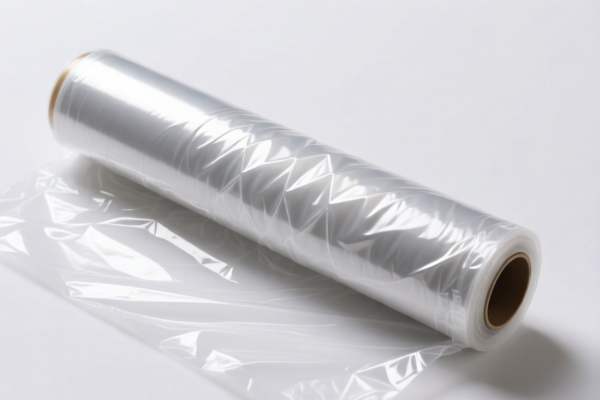
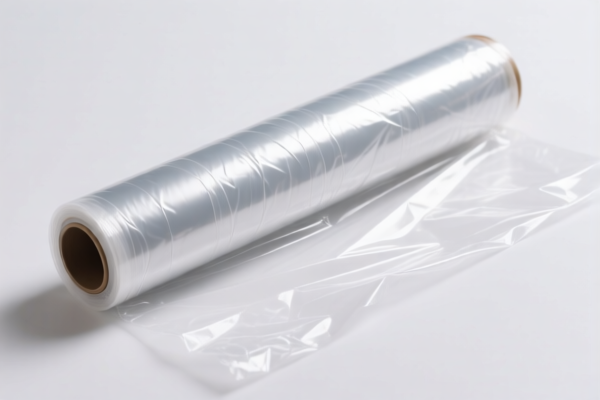
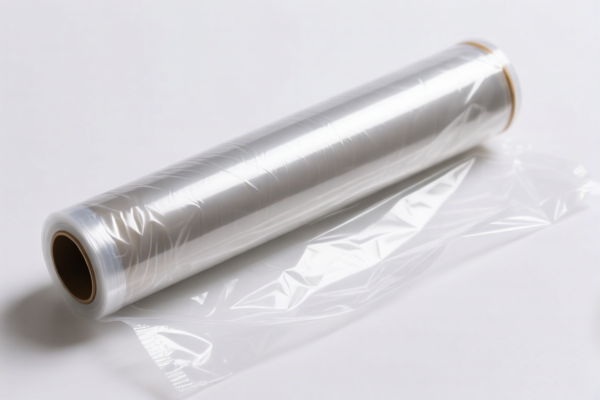
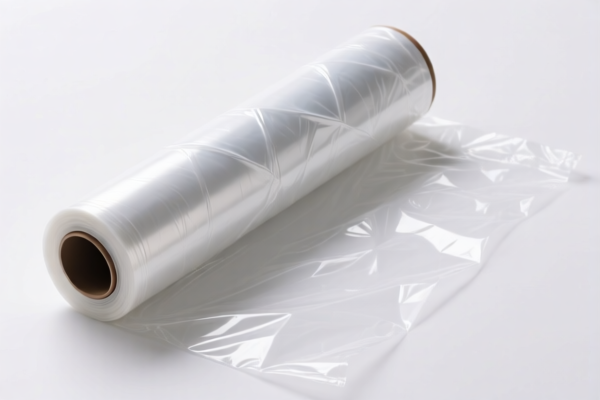
AI Analysis
🎨 Yellow Packaging Film (Plastic Sheets/Film)
🌐 HS Code Reference & Customs Clearance Guide | 2026 Latest Tariff Analysis | Professional Strategy
📌 Part 1: Product Definition & Classification: Do You Really Understand "Yellow Packaging Film"?
"Yellow Packaging Film" is a broad term often used in logistics and warehousing for protective wrapping, shrink wrap, or palletization films that are tinted yellow. In international trade, the classification depends heavily on the material composition, structure, and physical form of the plastic.
According to the provided data, this product falls under Chapter 39 (Plastics and Articles Thereof). Specifically, it is classified as: * Non-cellular: It is not foam or honeycomb structured. * Not reinforced/laminated: It is a single layer of pure plastic, not combined with other materials (like paper, metal, or fiber) in a way that changes its essential character. * Flexible: It is in the form of film, strip, or sheets.
⚠️ Key Distinction Point:
- If the film is pure plastic (e.g., PE, PP, PVC) without any other material support → It falls under 3920.99.
- If the film is reinforced (e.g., plastic coated on fabric) or cellular (foam) → It does NOT fall under these codes and requires a different HS Code.
📦 Part 2: HS Code Classification Details (Based on Provided Data)
There are two possible HS Codes for "Other plates, sheets, film, foil and strip, of plastics" under heading 3920. The distinction lies in the specific sub-category of "Other Plastics."
| HS Code | Product Description | Application Scenario | Tax Rate (China Origin to US) |
|---|---|---|---|
3920.99.20.00 |
Film, strip, and sheets (flexible); Other | Standard yellow packaging film, shrink wrap, pallet wrap (non-cellular, pure plastic) | 29.2% |
3920.99.50.00 |
Other plates, sheets, film, foil and strip; Other | Other plastic films/sheets not specifically listed as "flexible film/strip" or under different specific subheadings | 0.0% |
🔍 Critical Analysis:
- Code3920.99.20.00is the most common classification for standard flexible packaging films (like the yellow stretch wrap or shrink film commonly used). It carries a significant tariff burden.
- Code3920.99.50.00is a residual category for "Other" plastics. Note: If your product is clearly a "flexible film, strip, or sheet," customs may argue it belongs in20.00. However, if the product is a rigid sheet or a specific type of plastic sheet not covered by other specific subheadings,50.00might apply with 0% tax.
- ⚠️ Risk: Misclassifying a flexible film as50.00to avoid tax can lead to audits, penalties, and back-tariffs if customs determines it fits the definition of20.00.
💰 Part 3: 2026 Latest Tariff Rate Breakdown (Including Surcharge)
✅ Applicable Country: United States (US)
✅ Origin: China (CN)
✅ Effective Date: Current rates based on 301 Tariff List and IEEPA provisions.
🎯 1. 3920.99.20.00 —— Flexible Plastic Film (Most Likely for Packaging)
| Item | Content |
|---|---|
| Base Tariff Rate | 4.2% (Standard MFN Rate) |
| Section 301 Surcharge | +25.0% (Additional Tariff for Chinese Origin) |
| Total Tax Rate | 29.2% |
| Tax Calculation | CIF Value × 29.2% |
| De Minimis Eligibility | ❌ Not Applicable (De Minimis only applies to shipments < $800; this rate is for commercial imports) |
| Legal Basis | HTSUS 3920.99.20.00 + Section 301 Footnote |
📌 Explanation:
- The 4.2% is the standard base duty for this plastic article.
- The 25.0% is the additional tariff imposed under Section 301 of the Trade Act of 1974, specifically targeting Chinese-made plastic films and sheets.
- Total: 29.2%. This is a high cost factor that must be factored into your pricing strategy.
🎯 2. 3920.99.50.00 —— Other Plastic Sheets/Foils
| Item | Content |
|---|---|
| Base Tariff Rate | 0.0% |
| Section 301 Surcharge | 0.0% |
| Total Tax Rate | 0.0% |
| Tax Calculation | $0 |
| De Minimis Eligibility | N/A (Free entry) |
| Legal Basis | HTSUS 3920.99.50.00 |
📌 Note:
- This code results in zero duty.
- However, you must prove that your "Yellow Packaging Film" does not fit the definition of "film, strip, and sheets, all the foregoing which are flexible" under20.00. If it is standard flexible packaging, customs will likely reclassify it to20.00and charge the 29.2%. Use50.00only if your product is distinctly different (e.g., rigid sheets, specific non-flexible forms).
🛠️ Part 4: Customs Clearance Practical Advice (Avoiding Pitfalls)
✅ 1. Documentation Checklist (Essential for Smooth Clearance)
| Document | Required | Description |
|---|---|---|
| ✅ Commercial Invoice | ✔️ | Must clearly state: "Yellow Plastic Packaging Film," material (e.g., LDPE, LLDPE), thickness, width, and HS Code. |
| ✅ Product Specification Sheet | ✔️ | Include: Material composition (100% plastic?), cellular or non-cellular, reinforced or not, flexible nature. |
| ✅ Photos of Product | ✔️ | Show the film roll, label, and cross-section to prove it is non-cellular and not laminated. |
| ✅ Bill of Lading | ✔️ | Match description with invoice. |
| ✅ Origin Certificate | ✔️ | Essential to prove origin (China) to apply correct 301 tariffs. |
✅ 2. Declaration Strategy (Key Rules)
🔥 “Be Honest, Be Specific, Avoid ‘Other’ Traps!”
| Situation | Correct Declaration | Incorrect Action |
|---|---|---|
| Standard Yellow Stretch/Shrink Film | Use 3920.99.20.00 |
Try to use 50.00 to save tax → High Audit Risk |
| Rigid Yellow Plastic Sheets (Non-flexible) | Use 3920.99.50.00 |
Declare as "Film" → Misclassification |
| Yellow Film with Paper Layer | Not 3920 | Declare as 3920 → Wrong Chapter |
| Foam Yellow Film | Not 3920 | Declare as 3920 → Wrong Chapter |
✅ 3. Special Considerations
| Case | Handling Advice |
|---|---|
| Is it truly "Flexible"? | If the film curls, bends easily, and is used for wrapping, it is "flexible film." This strongly points to 3920.99.20.00. |
| Material Composition | Ensure it is non-cellular (no air bubbles/foam). If it is foamed plastic, it goes to Chapter 39 but different subheadings (e.g., 3921.19). |
| Lamination | If the yellow film is coated on fabric or paper, it is not "other plastics" under 3920. It may fall under Chapter 59 (Impregnated Coated...) or 48 (Paper). |
🌍 Part 5: Global Market Comparison (2026)
| Country/Region | Recommended HS Code | Tariff | Certification | Notes |
|---|---|---|---|---|
| 🇺🇸 USA | 3920.99.20.00 |
29.2% | No specific cert. | High tariff due to Section 301. |
| 🇨🇳 China | 3920.99.20.00 |
~5-6% | GB Standards | No 301 surcharge. |
| 🇪🇺 EU | 3920.99 |
~6.5% | REACH Compliance | Standard duty, no political surcharge. |
| 🇬🇧 UK | 3920.99 |
~6.5% | UKCA Mark | Similar to EU post-Brexit. |
📌 Conclusion:
- The USA is the most expensive market for this product due to the 25% Section 301 surcharge.
- Total cost impact: 29.2% of CIF value.
- Strategy: Consider pricing adjustments or sourcing from non-Chinese origins if feasible to mitigate tariffs.
📌 Part 6: Common Mistakes & Pitfalls (Lessons Learned)
❌ Mistake 1: Declaring flexible film as 3920.99.50.00 to pay 0% tax.
👉 Consequence: Customs reclassifies it to 20.00, demands 29.2% back-tariff + penalties.
❌ Mistake 2: Failing to specify "Non-cellular" in description.
👉 Consequence: Customs may suspect foam (cellular), leading to delays or reclassification to 3921 (higher duties).
❌ Mistake 3: Not providing material composition.
👉 Consequence: If it’s not 100% plastic (e.g., contains fibers), it may be classified under Chapter 59 or 48, leading to incorrect duty assessment.
✅ Correct Approach:
"Yellow LDPE Non-Cellular Plastic Film, Flexible, for Packaging, 100% Plastic, No Lamination, HS: 3920.99.20.00"
🎯 Part 7: Conclusion: Professional Declaration, Cost Control
🎯 Remember the Rules:
🔹 "Flexible Film = 29.2% Tax (USA)"
🔹 "Rigid Sheet = 0% Tax (If correctly classified)"
🔹 "Always Prove 'Non-Cellular' and 'Pure Plastic'"
📌 Pro Tip:
If your volume is large, consider Applying for an Advance Ruling from US Customs (CBP) to confirm if your specific yellow film qualifies for 50.00 or must be 20.00. This can prevent costly surprises upon entry.
📣 Immediate Action:
📞 Consult a licensed customs broker.
📄 Provide detailed product specs (material, thickness, flexibility).
📊 Calculate landed cost with 29.2% if using20.00.
✨ Precision in Classification Saves Money!
💼 Don’t Let a 29% Tariff Kill Your Margin!
Customer Reviews
About HS Code Classification
The Harmonized System (HS) is an internationally standardized nomenclature developed by the World Customs Organization (WCO) to classify traded products. Over 200 countries use the HS system as the basis for customs tariffs, trade statistics, and import/export regulations.
Each HS code follows a hierarchical structure:
- Chapter (2 digits) — Broad category of goods (e.g., Chapter 84: Machinery and Mechanical Appliances)
- Heading (4 digits) — More specific grouping within the chapter
- Subheading (6 digits) — Internationally standardized breakdown, used by all WCO member countries
- National subdivisions (8-10 digits) — Country-specific extensions for further classification, such as US HTSUS 10-digit codes
Correct HS code classification is essential for smooth customs clearance, accurate duty payment, and compliance with trade regulations. Misclassification can lead to customs delays, overpayment of duties, or penalties.
When importing from CN to US, the applicable tariff rates may include:
- Most-Favored-Nation (MFN) rate — The standard duty rate applied to WTO members
- General rate — Applied to countries without trade agreements
- Trade remedy duties — Additional tariffs such as Section 301 (anti-dumping), Section 232 (national security), or countervailing duties
The information provided on this page is for reference purposes only. For official classification, please consult with your local customs authority or a licensed customs broker.