Yoga Stretch Straps
CN → US| HS Code | Tariff Rate | Origin | Destination | Doc |
|---|---|---|---|---|
| 5609003000 | 39.5% | CN | US | Official Doc |
| 6307905020 | 17.5% | CN | US | Official Doc |
| 6307905010 | 17.5% | CN | US | Official Doc |
| 3926909905 | 22.8% | CN | US | Official Doc |
| 5609004000 | 38.9% | CN | US | Official Doc |
Product Images
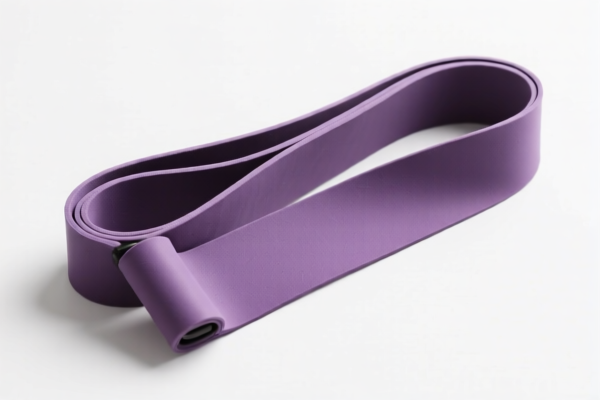


AI Analysis
🧘♀️ Yoga Stretch Straps (Yoga Bands)
🌐 HS Code Reference & Customs Clearance Guide | 2026 Latest Tariff Analysis | Professional Customs Strategy
📌 I. Product Definition & Classification: What Exactly Are "Yoga Stretch Straps"?
Yoga stretch straps are fitness accessories used to assist with flexibility training, physical therapy, and yoga poses. In international trade, their classification depends heavily on material composition and physical form. They are generally categorized into two main types:
Textile/Fabric Based: Made from woven cotton, polyester, nylon, or elastic fibers. These resemble woven goods or made-up textile articles.
Plastic/Rubber/Elastomer Based: Made from thermoplastic elastomers, rubber, or PVC. These resemble molded plastic articles or rubber goods.
⚠️ Key Distinction Point:
- If the strap is made of woven fabric (cotton/polyester) or behaves like a "shoelace" or textile webbing → It falls under Chapter 63 (Other Made Up Textile Articles) or Chapter 56 (Wadding, Felt and Nonwovens).
- If the strap is made of solid plastic/rubber/elastomer (even if flexible) → It falls under Chapter 39 (Plastics) or Chapter 40 (Rubber).
📦 II. HS Code Classification Matrix (2026 Latest Tariff Authority Mapping)
| HS Code | Product Description | Material Characteristic | Typical Application |
|---|---|---|---|
6307.90.50.20 |
Other made up textile articles, similar to shoelaces | Polyester, Nylon, Rubber blend; "Shoelace-like" form | General yoga straps, durable fabric straps |
6307.90.50.10 |
Other made up textile articles, fabric-based | Cotton, Polyester, or other textile fibers | Traditional cotton yoga belts, woven straps |
5609.00.30.00 |
Articles of yarn, string, rope, or twine | Artificial fiber characteristics; "Strip-like" form | Elastic webbing, synthetic fiber bands |
5609.00.40.00 |
Articles of yarn, string, rope, or twine | Woven/elastic strip forms; textile/elastic mix | High-stretch elastic bands, reinforced webbing |
3926.90.99.05 |
Other articles of plastics and articles of other materials of headings 3901 to 3914 | Plastic, Rubber, or Elastomer materials | Non-woven plastic straps, rubber grip straps |
🔍 Critical Reminder:
- Do NOT confuse "Yoga Straps" with "Headings 6213/6217 (Fashion Accessories)" unless they are specifically designed as fashion belts. Fitness straps are usually classified as general textile articles (6307) or plastic articles (3926). - If the product is a composite (e.g., fabric strap with plastic buckles), the classification usually follows the principal material or the component that gives the article its essential character. However, for customs purposes, separate components may sometimes require separate HS codes if declared separately, but for a single unit, the main strap material dictates the code.
💰 III. 2026 Latest Tariff Rate Breakdown (Including Additional Duties, Policy Surcharges)
✅ Applicable Country: United States (US)
✅ Country of Origin: China (CN)
✅ Effective Date: 2025-11-10 onwards (inclusive of subsequent imports)
🎯 1. 6307.90.50.20 & 6307.90.50.10 — Textile-Based Yoga Straps
(Applicable to Polyester, Nylon, Cotton blends)
| Item | Detail |
|---|---|
| Basic Tariff | 0.0% (Ad Valorem) |
| USITC Additional Duty | +7.5% (Section 301 Tariff) |
| IEEPA Additional Duty | +10.0% (China-Specific Surtax) |
| Total Effective Rate | 17.5% |
| Tax Calculation | CIF Value × 17.5% |
| De Minimis Eligibility | ❌ Not Eligible (deny_de_minimis) |
| Legal Authority Path | USITC:6307.90.50.10 / 6307.90.50.20 → FOOTNOTE:301 → IEEPA:9903.01.24 |
📌 Explanation:
- These codes fall under "Other Made Up Textile Articles."
- While the base MFN rate is 0%, the Section 301 surcharge of 7.5% and the IEEPA 10% surcharge apply to Chinese-origin goods.
- Total Load: 17.5%. This is a moderate tax burden compared to other categories.
🎯 2. 5609.00.30.00 & 5609.00.40.00 — Yarn/String/Textile Strip Articles
(Applicable to Artificial Fiber Webbing, Elastic Strips)
| Item | Detail |
|---|---|
| Basic Tariff | 4.5% (30.00) / 3.9% (40.00) |
| USITC Additional Duty | +25.0% (Section 301 Tariff) |
| IEEPA Additional Duty | +10.0% (China-Specific Surtax) |
| Total Effective Rate | 39.5% (30.00) / 38.9% (40.00) |
| Tax Calculation | CIF Value × ~39% |
| De Minimis Eligibility | ❌ Not Eligible (deny_de_minimis) |
| Legal Authority Path | USITC:5609.00.30.00 / 5609.00.40.00 → FOOTNOTE:301 → IEEPA:9903.01.24 |
📌 Explanation:
- These codes cover "Articles of yarn, string, rope, or twine." Customs may classify woven elastic webbing here if it doesn't fit "made up textile articles."
- The Section 301 surcharge is significantly higher at 25%, leading to a total rate near 39%.
- High Tax Warning: Ensure your supplier provides a detailed material declaration. If the item is clearly a "textile article" (like a sewn strap), try to argue for6307to save ~20% in duties.
🎯 3. 3926.90.99.05 — Plastic/Rubber Yoga Straps
(Applicable to Pure Plastic, Rubber, or Elastomer Straps)
| Item | Detail |
|---|---|
| Basic Tariff | 5.3% |
| USITC Additional Duty | +7.5% (Section 301 Tariff) |
| IEEPA Additional Duty | +10.0% (China-Specific Surtax) |
| Total Effective Rate | 22.8% |
| Tax Calculation | CIF Value × 22.8% |
| De Minimis Eligibility | ❌ Not Eligible (deny_de_minimis) |
| Legal Authority Path | USITC:3926.90.99.05 → FOOTNOTE:301 → IEEPA:9903.01.24 |
📌 Explanation:
- If the strap is made of TPR, PVC, or Solid Rubber, it is classified as a plastic article.
- The base tariff is 5.3%, with a 7.5% Section 301 surcharge.
- Total Load: 22.8%. This is often the most cost-effective classification for non-woven, molded, or extruded plastic straps.
🛠️ IV. Customs Clearance Practical Advice (Pitfall Avoidance Guide)
✅ 1. Required Documentation Checklist
| Document | Mandatory | Notes |
|---|---|---|
| ✅ Product Specification Sheet | ✔️ | Must detail material (% Cotton, % Polyester, % Plastic), dimensions, and elasticity. |
| ✅ Material Declaration | ✔️ | Critical for distinguishing between 6307 (Textile) and 3926 (Plastic). |
| ✅ Product Photos | ✔️ | Clear images showing texture, buckle type, and any woven patterns. |
| ✅ Commercial Invoice | ✔️ | Describe as "Yoga Stretch Strap, 100% Polyester" or "Yoga Band, TPR Material." |
| ✅ Packing List | ✔️ | Ensure quantity matches invoice. |
| ✅ Origin Certificate (CO) | ✔️ | Essential if claiming any potential exemptions or verifying CN origin for surcharges. |
✅ 2. Declaration Strategy (Key Mantras)
🔥 “Material Dictates Code, Textile vs. Plastic, 17.5% vs 39%, Choose Wisely!”
| Scenario | Correct Declaration | Risk of Error |
|---|---|---|
| Woven Fabric Strap (Cotton/Poly) | 6307.90.50.10 or 6307.90.50.20 |
Misclassifying as 5609 → ~22% extra tax! |
| Elastic Webbing (Artificial Fiber) | 5609.00.30.00 or 5609.00.40.00 |
Misclassifying as 6307 → Underpayment Risk |
| Rubber/Plastic Strap (Non-woven) | 3926.90.99.05 |
Misclassifying as Textile → Severe Penalty/Back Taxes |
| Composite Strap (Fabric + Plastic Buckle) | Declare main strap material | If buckles are separate, they may need separate HS codes. |
📌 Crucial Tip:
- If your product is a sewn fabric strap, always aim for6307. It has the lowest total tax burden (17.5%) among all options.
- If your product is a single-piece molded plastic/rubber strap, use3926(22.8%).
- Avoid5609unless the product is specifically "yarn/twine" articles, as the tax burden is nearly double that of6307.
✅ 3. Special Handling Scenarios
| Situation | Handling Advice |
|---|---|
| OEM/Custom Colors | Provide color standards. Does not affect HS code, but helps in product identification. |
| Set with Yoga Mat | If sold as a "Yoga Set," the HS code for the mat (often 9506.99) or the strap may dominate depending on essential character. Usually, they are declared separately for clarity. |
| Plastic Buckles on Fabric Strap | The fabric strap determines the HS code (6307). The plastic buckle is considered an accessory. Do not declare the whole item as plastic. |
| Dropshipping (De Minimis) | ❌ High Risk. Even under $800, Section 301 and IEEPA duties apply. Do not rely on de minimis exemptions for Chinese-origin yoga straps. |
🌍 V. Global Market Comparison (2026 Update)
| Region | Recommended HS Code | Approx. Tariff (China Origin) | Notes |
|---|---|---|---|
| 🇺🇸 USA | 6307.90.50.20 (Textile) |
17.5% | Lowest among all US options for yoga straps. |
| 🇺🇸 USA | 3926.90.99.05 (Plastic) |
22.8% | Higher than textile. |
| 🇺🇸 USA | 5609.00.30.00 (Webbing) |
39.5% | Avoid if possible. |
| 🇪🇺 EU | Varies (Often 6307 or 3926) |
0-4% | Generally lower tariffs, but VAT applies. |
| 🇨🇦 Canada | Varies | 0-6% | Lower duties, but strict origin rules. |
📌 Conclusion:
- The US market is the most expensive due to Section 301 and IEEPA surcharges.
- Optimizing HS Code selection is critical: Choosing6307(Textile) saves you 22%+ compared to5609(Webbing) and 5%+ compared to3926(Plastic).
📌 VI. Common Errors & Pitfalls (Lessons Learned)
❌ Mistake 1: Declaring all yoga straps as "Plastic Articles" (3926) when they are actually fabric.
👉 Consequence: Overpayment of duties by ~5%. (Not illegal, but wasteful).
❌ Mistake 2: Declaring fabric straps as 5609 (Yarn/Strip).
👉 Consequence: Overpayment of ~22%. This is the most common costly error. Textile articles (6307) are cheaper than yarn articles (5609) for finished straps.
❌ Mistake 3: Using vague descriptions like "Fitness Band" or "Resistance Band."
👉 Consequence: Customs may misclassify, leading to delays or re-assessment. Be specific: "Yoga Stretch Strap, 100% Polyester Woven."
❌ Mistake 4: Assuming de minimis applies to Chinese-origin goods.
👉 Consequence: Penalties and back taxes. All Chinese-origin yoga straps are subject to additional duties regardless of value.
✅ Correct Practice:
"Yoga Strap, 1.5m x 2.5cm, 100% Polyester Woven, with Plastic Buckle, Model YS-01"
🎯 VII. Conclusion: Precision in Classification Saves Money!
🎯 Remember the Mantra:
🔹 "Fabric = 6307 (17.5%) → Cheapest!"
🔹 "Plastic = 3926 (22.8%) → Middle."
🔹 "Webbing = 5609 (~39%) → Avoid!"
🔹 "No De Minimis for China → Pay Full Duty!"
📌 Pro Tip:
- If you manufacture in Vietnam, India, or Thailand, you can avoid US Section 301 and IEEPA surcharges entirely.
- For US-bound goods, always request a Certificate of Origin and ensure the HS Code is pre-agreed with your customs broker.
- Advance Rulings are highly recommended for high-volume shipments to lock in the 6307 classification.
📣 Act Now:
📞 Consult your customs broker to confirm if your specific "yoga strap" fits
6307.90.50.20.
🚀 Smart Classification = Higher Margins = Faster Clearance!
✨ Professional Customs Clearance Starts with the Right HS Code!
💼 Every Percent of Duty Saved is Pure Profit!
Customer Reviews
About HS Code Classification
The Harmonized System (HS) is an internationally standardized nomenclature developed by the World Customs Organization (WCO) to classify traded products. Over 200 countries use the HS system as the basis for customs tariffs, trade statistics, and import/export regulations.
Each HS code follows a hierarchical structure:
- Chapter (2 digits) — Broad category of goods (e.g., Chapter 84: Machinery and Mechanical Appliances)
- Heading (4 digits) — More specific grouping within the chapter
- Subheading (6 digits) — Internationally standardized breakdown, used by all WCO member countries
- National subdivisions (8-10 digits) — Country-specific extensions for further classification, such as US HTSUS 10-digit codes
Correct HS code classification is essential for smooth customs clearance, accurate duty payment, and compliance with trade regulations. Misclassification can lead to customs delays, overpayment of duties, or penalties.
When importing from CN to US, the applicable tariff rates may include:
- Most-Favored-Nation (MFN) rate — The standard duty rate applied to WTO members
- General rate — Applied to countries without trade agreements
- Trade remedy duties — Additional tariffs such as Section 301 (anti-dumping), Section 232 (national security), or countervailing duties
The information provided on this page is for reference purposes only. For official classification, please consult with your local customs authority or a licensed customs broker.