Yogurt Maker
CN → US| HS Code | Tariff Rate | Origin | Destination | Doc |
|---|---|---|---|---|
| 8509400025 | 14.2% | CN | US | Official Doc |
| 8509805095 | 14.2% | CN | US | Official Doc |
| 8419819080 | 17.5% | CN | US | Official Doc |
| 8419815080 | 17.5% | CN | US | Official Doc |
| 2106906200 | 27.5% | CN | US | Official Doc |
Product Images
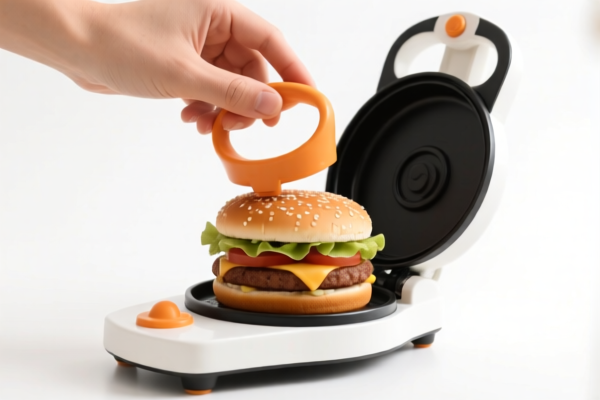


AI Analysis
🥛🍓 Yogurt Maker: The Ultimate HS Code Guide & Clearance Strategy (2026 Edition)
🌐 HS Code Reference & Clearance Guide | 2026 Tariff Analysis | Professional Customs Strategy
📌 I. Product Definition: Is It a Machine or a Food Product?
A Yogurt Maker is a household appliance designed to cultivate milk into yogurt by maintaining a precise, controlled temperature for fermentation. In international trade, the classification is highly contested depending on the technical design:
1. The Appliance View (Machines):
- If the device contains a self-contained electric motor, heating element, or timer to control temperature.
- It is treated as a Home Appliance (8509 series) or Thermal Processing Machine (8419 series).
2. The Food View (The Result):
- If the shipment is already fermented yogurt (the product inside), it is classified as a Food Preparation Product (2106 series).
⚠️ Critical Distinction:
- Empty Machine = Electrical/Mechanical Appliance (Low tax risk, specific codes).
- Pre-filled Yogurt = Food Item (High tax risk, high tariffs).
- Misclassification = Seizure, Heavy Penalties, or 300%+ Total Tax!
📦 II. Detailed HS Code Breakdown (2026 Tariff Authority)
Based on the latest 2026 data, here is the exact breakdown for Yogurt Makers (Appliances only) and Yogurt (Product).
| HS Code | Product Description | Function Logic | Total Tax Rate* | Tax Breakdown (US/China Context) |
|---|---|---|---|---|
| 8509.80.50.95 | Home Appliance with Electric Motor | Fits the definition of "Other electrical appliances with self-contained motors." | 14.2% | Base: 4.2% Section 301: 0.0% Sec 122: 10.0% |
| 8419.81.90.80 | Thermal Processing Equipment | Fits "Equipment for heating/temperature change" (Hot drinks/Cooking). | 17.5% | Base: 0.0% Section 301: 7.5% Sec 122: 10.0% |
| 8419.81.50.80 | Food Processing Machine | Fits "Mechanical devices for cooking/heating food." | 17.5% | Base: 0.0% Section 301: 7.5% Sec 122: 10.0% |
| 8509.40.00.25 | Food Processing / Mixing Appliance | Logic aligns with "Food Mixers" (Electrical Home Appliances). | 14.2% | Base: 4.2% Section 301: 0.0% Sec 122: 10.0% |
| 2106.90.62.00 | Prepared Yogurt (The Food) | Fits "Food preparation products" with >10% milk solids. | 27.5% | Base: 10.0% Section 301: 7.5% Sec 122: 10.0% |
🔍 Key Insight:
- If you import the machine, the tax is 14.2% - 17.5% (depending on the specific motor/heating mechanism).
- If you import finished yogurt, the tax jumps to 27.5%.
- Sec 122 (10%) is a mandatory 10% tariff applied to almost all Chinese-origin goods in this category under current policies.
💰 III. 2026 Tariff Rate Deep Dive
✅ Applicable Market: United States (US)
✅ Origin: China (CN)
✅ Status: Active (Post-Nov 2025 Regulations)
🎯 Scenario A: Importing the Machine (8509.80.50.95)
The most common and cost-effective classification for empty machines.
| Item | Details |
|---|---|
| Product | Yogurt Maker (Electric, Motorized) |
| Base Tariff | 4.2% |
| Section 301 Add-on | 0.0% (Specific to this sub-header) |
| Sec 122 Tariff | 10.0% (Mandatory on China origin) |
| Total Tax Rate | 14.2% |
| De Minimis? | ❌ NO (Deny_de_minimis applies) |
| Legal Path | Sec 122:10% → USITC:8509.80.50.95 |
📌 Why it's cheaper: This code treats the unit as a standard home appliance, avoiding the high "Food Processing" surcharge.
🎯 Scenario B: Importing the Machine (8419.81.90.80)
Used if the machine is defined strictly as a "Thermal Processer".
| Item | Details |
|---|---|
| Product | Temperature Control Heating Device |
| Base Tariff | 0.0% |
| Section 301 Add-on | 7.5% |
| Sec 122 Tariff | 10.0% |
| Total Tax Rate | 17.5% |
| De Minimis? | ❌ NO |
⚠️ Warning: Some customs brokers prefer 8419 for "heating" logic, but 8509 (Appliance) is often safer and cheaper (14.2% vs 17.5%).
🎯 Scenario C: Importing Finished Yogurt (2106.90.62.00)
Do NOT use this code for the machine! Only for the liquid.
| Item | Details |
|---|---|
| Product | Prepared Yogurt (>10% Milk Solids) |
| Base Tariff | 10.0% |
| Section 301 Add-on | 7.5% |
| Sec 122 Tariff | 10.0% |
| Total Tax Rate | 27.5% |
🛠️ IV. Customs Clearance Action Plan (Pro Tips)
✅ 1. Essential Documentation Checklist
| Document | Must-Have? | Why? |
|---|---|---|
| Technical Specification Sheet | ✅ YES | Must explicitly state: "Self-contained electric motor" or "Temperature control unit." |
| Circuit Diagram / Schematic | ✅ YES | Critical to prove it is an appliance (8509) and not just a heating plate (8419) or food. |
| Product Photos (Label + Interior) | ✅ YES | Show the motor, heating element, and control panel clearly. |
| CE/FCC/UL Certification | ✅ YES | Mandatory for US entry of electrical appliances. |
| Commercial Invoice | ✅ YES | DO NOT write "Yogurt" on the invoice for the machine. Write "Electric Yogurt Maker". |
| Material Safety Data Sheet (MSDS) | ✅ YES | Required for lithium batteries (if cordless) or electrical components. |
✅ 2. Declaration Strategy (The "Golden Rules")
🔥 Rule #1: Never Call it "Yogurt"!
❌ Wrong: "Yogurt," "Dairy Product," "Fermented Milk."
✅ Right: "Electric Yogurt Maker," "Home Appliance for Food Preparation."🔥 Rule #2: Specify the Mechanism
If the machine relies on a motor to rotate or mix: Use 8509.
If the machine relies purely on static heating: Use 8419.
Pro Tip: 8509.80.50.95 (14.2%) is usually the safest bet for modern yogurt makers.🔥 Rule #3: Avoid the 2106 Trap
If you ship the machine with yogurt inside (pre-filled), you MUST declare it as Food (2106.90.62.00) and pay 27.5%.
Strategy: Ship the machine EMPTY and the yogurt SEPARATELY (if possible), or ensure the machine is clearly the primary item.
✅ 3. Special Scenarios & Mitigation
| Scenario | Risk | Solution |
|---|---|---|
| Machine has a timer + motor | High risk of 17.5% (8419) if misclassified. | Highlight the "Electric Motor" in the description to secure 8509.80.50.95 (14.2%). |
| Machine shipped with starter culture | Risk of "Food" classification. | Declare as "Appliance with Accessories (Culture Pack included)." Keep culture pack small (<5% value). |
| No Motor, just a heating plate | Likely 8419 (17.5%). | Accept the higher rate; do not force 8509. |
| Origin: Vietnam/Mexico | Potential Savings! | If re-exported from non-China origin, Sec 122 (10%) may be waived (check specific rules). |
🌍 V. Market Comparison: US vs. Rest of World
| Region | Recommended HS Code | Total Tax (China Origin) | Key Requirement |
|---|---|---|---|
| 🇺🇸 USA | 8509.80.50.95 |
14.2% | Sec 122 (10%) is strict. FCC ID required. |
| 🇪🇺 EU | 8509.80 |
~4-12% | CE Mark + ErP (Energy) compliance. No Sec 122. |
| 🇨🇳 China | 8509.80 |
~4-14% | CCC Mark required. |
| 🇦🇺 Aus | 8509.80 |
~5-10% | RCM compliance. |
📌 Conclusion: The US is the most expensive market due to Sec 122 and potential Section 301 add-ons. Accurate HS Code selection is the only way to save 3-5% in tax.
📌 VI. Common Mistakes & "Blood & Tears" Lessons
❌ Mistake 1: Calling it "Yogurt Maker" without specifying "Electric".
👉 Consequence: Customs may guess it's a food item (2106) or a mechanical device (8419), leading to 27.5% tax instead of 14.2%.
❌ Mistake 2: Shipping pre-filled yogurt in the same box as the machine without clear labeling.
👉 Consequence: The entire shipment gets flagged as Food (2106) → 27.5% Tax + FDA detention.
❌ Mistake 3: Ignoring the "Self-Contained Motor" clause.
👉 Consequence: If you can't prove there is a motor, you get stuck with the 8419 rate (17.5%) instead of 8509 (14.2%).
✅ Correct Declaration Phrase:
"Electric Yogurt Maker (Appliance), Model XYZ, 500W, 110V, with built-in motor and temperature controller. Empty unit. FCC Certified."
🎯 VII. Final Strategy: Save Money, Clear Faster
🎯 The "14.2%" Formula:
- Ensure the machine has a motor.
- Use HS Code 8509.80.50.95.
- Declare as Electric Appliance, not Food.
- Pay 14.2% total (4.2% Base + 10% Sec 122).
🚀 Action Items:
- Get a Pre-Ruling: Submit specs to CBP for an Advance Ruling on 8509.80.50.95.
- Verify Origin: If possible, source via Vietnam/Mexico to avoid Sec 122.
- Check Certs: Ensure FCC/UL certificates are current.
📣 Final Call to Action:
🛑 STOP guessing your HS Code! 🚀 START using 8509.80.50.95 for machines and 2106.90.62.00 only for the actual yogurt. 💡 Precision in classification = Thousands of dollars in savings!
✨ Professional Customs Clearance Starts with the Right Code!
💼 Don't let a 13% tax difference cost you your profit margin.
Customer Reviews
About HS Code Classification
The Harmonized System (HS) is an internationally standardized nomenclature developed by the World Customs Organization (WCO) to classify traded products. Over 200 countries use the HS system as the basis for customs tariffs, trade statistics, and import/export regulations.
Each HS code follows a hierarchical structure:
- Chapter (2 digits) — Broad category of goods (e.g., Chapter 84: Machinery and Mechanical Appliances)
- Heading (4 digits) — More specific grouping within the chapter
- Subheading (6 digits) — Internationally standardized breakdown, used by all WCO member countries
- National subdivisions (8-10 digits) — Country-specific extensions for further classification, such as US HTSUS 10-digit codes
Correct HS code classification is essential for smooth customs clearance, accurate duty payment, and compliance with trade regulations. Misclassification can lead to customs delays, overpayment of duties, or penalties.
When importing from CN to US, the applicable tariff rates may include:
- Most-Favored-Nation (MFN) rate — The standard duty rate applied to WTO members
- General rate — Applied to countries without trade agreements
- Trade remedy duties — Additional tariffs such as Section 301 (anti-dumping), Section 232 (national security), or countervailing duties
The information provided on this page is for reference purposes only. For official classification, please consult with your local customs authority or a licensed customs broker.