Yuzu Wood Flooring
CN → US| HS Code | Tariff Rate | Origin | Destination | Doc |
|---|---|---|---|---|
| 4418790100 | 38.2% | CN | US | Official Doc |
| 4407230100 | 35.0% | CN | US | Official Doc |
| 4407290296 | 35.0% | CN | US | Official Doc |
| 4409222500 | 35.0% | CN | US | Official Doc |
| 4418999105 | 38.2% | CN | US | Official Doc |
Product Images
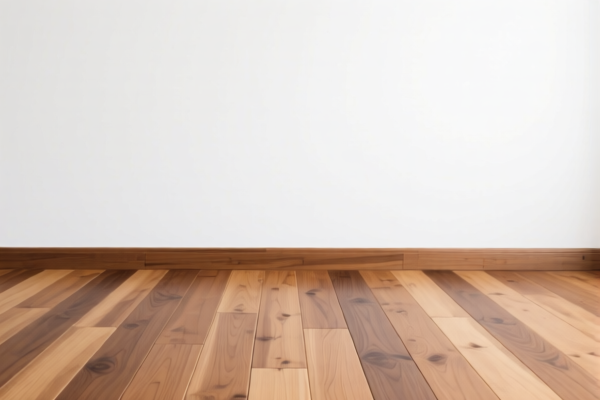
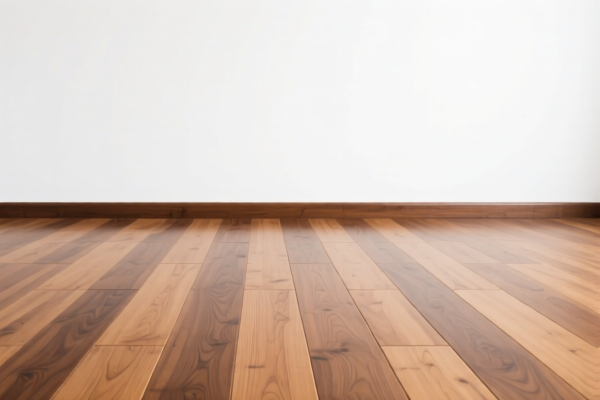
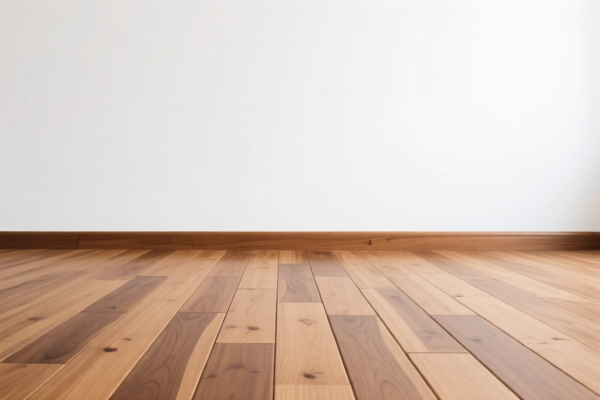
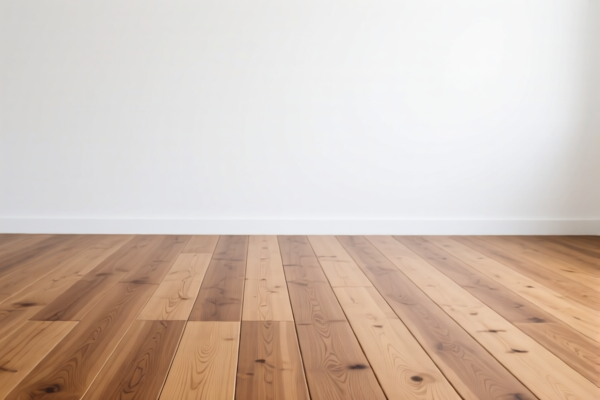
AI Analysis
🌲 Yuzu Wood Flooring (Teak/Premium Hardwood)
🌐 HS Code Reference & Customs Clearance Guide | 2026 Latest Tariff Analysis | Professional通关 Strategy
📌 I. Product Definition & Classification: Do You Truly Understand "Yuzu Wood Flooring"?
In international trade, "Yuzu Wood Flooring" typically refers to flooring made from Teak or similar high-density tropical hardwoods. It is crucial to distinguish between raw processed wood and finished flooring assemblies, as this distinction drastically changes the HS Code and, consequently, the tax liability.
1. Assembled Flooring Panels (Finished Product):
These are finished boards, often with tongues, grooves, or pre-finished surfaces, ready for installation.
2. Sawn Wood / Substrate Material:
Raw planks or boards cut to size but not yet assembled into final flooring units, often used as base material.
⚠️ Key Distinction Point:
- If the product is a finished, assembled floorboard (with interlocking mechanisms or pre-finished surface) → Classified under Chapter 44.18 (Wood Joinery/Carpentry).
- If the product is raw sawn wood or simple planks without assembly features → Classified under Chapter 44.07/44.09 (Wood Sawed or Chipped).
📦 II. HS Code Classification Details (2026 Latest Tariff Authoritative对照)
| HS Code | Product Description | Application Scenario | Assembly Status |
|---|---|---|---|
4418.79.01.00 |
Yuzu/Teak Flooring, Assembled Material: Teak; Form: Assembled Flooring Planks |
Finished residential/commercial flooring | ✅ Assembled |
4407.23.01.00 |
Teak Sawn Wood (>6mm thick) Compliant with board or flooring substrate form |
Raw planks, unfinished base material | ❌ Raw Sawn |
4407.29.02.96 |
Other Tropical Wood Sawn Pieces Teak falls under this if not specifically listed elsewhere; Form: Wood |
General tropical hardwood sawn timber | ❌ Raw Sawn |
4409.22.25.00 |
Yuzu/Teak Flooring, Non-Coniferous Tropical Form: Flooring strips/profiles |
Semi-finished flooring profiles (tongue & groove but not fully assembled/finished) | ⚠️ Semi-processed |
4418.99.91.05 |
Yuzu/Teak Flooring, Wooden Material Use: Wood Flooring |
Generic wooden flooring, broad category | ✅ Assembled |
🔍 Key Reminder:
- Finished Flooring (assembled, ready to lay) must be classified under 4418.xxxxxxxx codes (e.g.,4418.79.01.00or4418.99.91.05).
- Raw/Unassembled Wood (sawn planks, even if intended for flooring) must be classified under 4407 or 4409 codes.
- Misclassifying finished flooring as raw wood can lead to severe penalties or delays.
💰 III. 2026 Latest Tariff Rate Breakdown (Including Surcharges & Policy Add-ons)
✅ Applicable Country: United States (US)
✅ Origin: China (CN)
✅ Effective Date: From November 10, 2025 (including subsequent imports)
🎯 1. 4418.79.01.00 & 4418.99.91.05 —— Yuzu/Teak Flooring (Assembled/Finished)
| Item | Content |
|---|---|
| Base Tariff Rate | 3.2% (ad valorem) |
| Section 301 Surcharge | +25.0% (USITC Footnote 9903.88.01) |
| Section 122 Tariff | +10.0% (Specific policy surcharge) |
| Total Tariff Rate | 38.2% |
| Tax Calculation | CIF Value × 38.2% |
| De Minimis Exemption Eligible? | ❌ NO (deny_de_minimis) |
| Legal Basis Path | USITC:4418.79.01.00 → 301:9903.88.01 → 122:Policy Add-on |
📌 Explanation:
- "Base Tariff 3.2%": Standard Most-Favored-Nation (MFN) rate for wooden flooring.
- "Section 301 Surcharge 25%": Imposed under US Trade Act Section 301 against Chinese goods.
- "Section 122 Tariff 10%": Additional punitive tariff specific to certain wood products or trade actions.
- Total 38.2%: This is a very high tariff. Cost planning must reflect this burden.
🎯 2. 4407.23.01.00, 4407.29.02.96, 4409.22.25.00 —— Teak/Tropical Wood (Sawn/Unassembled)
| Item | Content |
|---|---|
| Base Tariff Rate | 0.0% |
| Section 301 Surcharge | +25.0% |
| Section 122 Tariff | +10.0% |
| Total Tariff Rate | 35.0% |
| Tax Calculation | CIF Value × 35.0% |
| De Minimis Exemption Eligible? | ❌ NO (deny_de_minimis) |
| Legal Basis Path | USITC:4407.23.01.00 → 301:9903.88.01 → 122:Policy Add-on |
📌 Note:
- Even though the base rate is 0%, the add-on tariffs (35%) make it expensive.
- Whether classified as4407(Sawn Wood) or4409(Continuously Shaped Wood), the total effective rate is 35%.
- Difference:4418(Finished) is 38.2%, while4407/4409(Raw) is 35%. The difference is 3.2%, but classification must match the physical product state.
🛠️ IV. Customs Clearance Practical Advice (Battle-tested Pitfall Avoidance Guide)
✅ 1. Required Documentation List (All are Mandatory)
| Document | Must Provide | Description |
|---|---|---|
| ✅ Product Specification Sheet | ✔️ | Includes species (Teak/Yuzu), dimensions, moisture content, finish type. |
| ✅ Product Photos (Labeled) | ✔️ | Clear images of the product, packaging, and any interlocking mechanisms (tongue/groove). |
| ✅ Commercial Invoice | ✔️ | Must explicitly state: "Wood Flooring, Assembled" or "Sawn Wood Planks" based on actual state. |
| ✅ Packing List | ✔️ | Detail gross/net weight, carton count, and pallet info. |
| ✅ Certificate of Origin (CO) | ✔️ | Required to verify origin for tariff application. |
| ✅ Third-party Test Report | ✔️ | Formaldehyde emission (CARB/EPA), durability, or moisture content reports if requested. |
✅ 2. Declaration Tips (Key Mantra)
🔥 "Shape Defines Code, Finish Defines Rate, Name Must Be Precise!"
| Scenario | Correct Declaration | Wrong Practice |
|---|---|---|
| Finished Flooring (Tongue & Groove, Pre-finished) | HS Code 4418.79.01.00 or 4418.99.91.05Desc: "Assembled Wooden Flooring" |
Declare as "Wood Planks" → Customs Rejection/Delay |
| Raw Sawn Planks (No assembly features) | HS Code 4407.23.01.00 or 4407.29.02.96Desc: "Sawn Wood, Teak" |
Declare as "Flooring" → Misclassification Penalty |
| Semi-finished Profiles (Tongue/Groove but unfinished) | HS Code 4409.22.25.00Desc: "Shaped Wood, Not Assembled" |
Declare as "Finished Flooring" → Rate Error (35% vs 38.2%) |
✅ 3. Special Case Handling
| Scenario | Handling Advice |
|---|---|
| Mixed Shipments | Clearly separate Assembled Flooring from Raw Wood in invoices. Do not mix under one HS Code. |
| Labeling | Ensure product labels match the declaration. If declared as "Assembled," the product must have assembly features. |
| Value Declaration | CIF value includes Cost, Insurance, and Freight. Ensure accurate valuation to avoid under/over-declaration penalties. |
| Origin Verification | Provide detailed supply chain documents to prove Chinese origin. If re-exported from Vietnam/Malaysia, different rules may apply (but verify "substantial transformation"). |
🌍 V. Global Market Comparison (2026 Latest)
| Country/Region | Recommended HS Code | Tariff (China Origin) | Certification Req. | Notes |
|---|---|---|---|---|
| 🇺🇸 USA | 4418.79.01.00 (Finished)4407.23.01.00 (Raw) |
38.2% (Finished) 35.0% (Raw) |
No specific agency cert. | High tariff burden. Section 301 + 122 apply. |
| 🇨🇳 China | 4418.79.01.00 |
~5-10% | CCC (if applicable) | Lower entry barriers for domestic sales. |
| 🇪🇺 EU | 4418.79.00 |
0-5% | FSC/PEFC (Sustainability) | Focus on sustainable sourcing documentation. |
| 🇦🇺 Australia | 4418.79.00 |
5% | No specific cert. | Standard import duties apply. |
| 🇯🇵 Japan | 4418.79.00 |
5-10% | Phytosanitary Cert. | Strict wood pest control requirements. |
📌 Conclusion:
- The US market imposes the highest tariffs on Yuzu/Teak wood products due to Section 301 and Section 122.
- China-origin products face a 35%-38.2% effective tariff rate.
- Accurate classification between "Assembled Flooring" (4418) and "Sawn Wood" (4407/4409) is critical to ensure compliance and avoid penalties.
📌 VI. Common Errors & Pitfall Avoidance (Lessons Learned)
❌ Error 1: Declaring finished flooring as "Wood Boards" to claim lower base rate.
👉 Consequence: Customs inspection reveals assembly features → Retrospective tax adjustment + fines!
❌ Error 2: Ignoring Section 122 Tariff.
👉 Consequence: Underpayment by 10% → Seizure or penalty!
❌ Error 3: Mixing assembled and unassembled wood in one shipment without clear separation.
👉 Consequence: Customs may apply the highest rate to the entire shipment or request re-declaration → Delays.
❌ Error 4: Using vague descriptions like "Wood Floor."
👉 Consequence: Customs cannot determine if it’s assembled or raw → Hold for inspection.
✅ Correct Practice:
"Assembled Teak Wood Flooring, 18mm thick, Pre-finished, Tongue & Groove, Model XYZ, HS Code 4418.79.01.00"
🎯 VII. Conclusion: Professional Declaration, Save Time, Reduce Costs!
🎯 Remember the Mantra:
🔹 "Assembled = 4418 (38.2%) | Sawn = 4407/4409 (35.0%)"
🔹 "Name it right, declare it right, or pay the price!"
📌 Tips:
- If your Yuzu Wood Flooring is processed in Vietnam, Malaysia, or Thailand and meets "Substantial Transformation" criteria, you may qualify for different origin rules. However, verify with a customs broker.
- Apply for an Advance Ruling from US Customs and Border Protection (CBP) if unsure about classification.
📣 Immediate Action:
📞 Contact a licensed customs broker + Provide product photos + Verify HS Code pre-classification
🚀 Ensure smooth clearance, avoid delays, and protect your profit margins!
✨ Professional Clearance Starts with Accurate Classification!
💼 Every cent of cost deserves precise calculation!
Customer Reviews
About HS Code Classification
The Harmonized System (HS) is an internationally standardized nomenclature developed by the World Customs Organization (WCO) to classify traded products. Over 200 countries use the HS system as the basis for customs tariffs, trade statistics, and import/export regulations.
Each HS code follows a hierarchical structure:
- Chapter (2 digits) — Broad category of goods (e.g., Chapter 84: Machinery and Mechanical Appliances)
- Heading (4 digits) — More specific grouping within the chapter
- Subheading (6 digits) — Internationally standardized breakdown, used by all WCO member countries
- National subdivisions (8-10 digits) — Country-specific extensions for further classification, such as US HTSUS 10-digit codes
Correct HS code classification is essential for smooth customs clearance, accurate duty payment, and compliance with trade regulations. Misclassification can lead to customs delays, overpayment of duties, or penalties.
When importing from CN to US, the applicable tariff rates may include:
- Most-Favored-Nation (MFN) rate — The standard duty rate applied to WTO members
- General rate — Applied to countries without trade agreements
- Trade remedy duties — Additional tariffs such as Section 301 (anti-dumping), Section 232 (national security), or countervailing duties
The information provided on this page is for reference purposes only. For official classification, please consult with your local customs authority or a licensed customs broker.