Y型水管
CN → US| HS Code | Tariff Rate | Origin | Destination | Doc |
|---|---|---|---|---|
| 3917400095 | 40.3% | CN | US | Official Doc |
| 7307199080 | 41.2% | CN | US | Official Doc |
| 3917390050 | 13.1% | CN | US | Official Doc |
Product Images
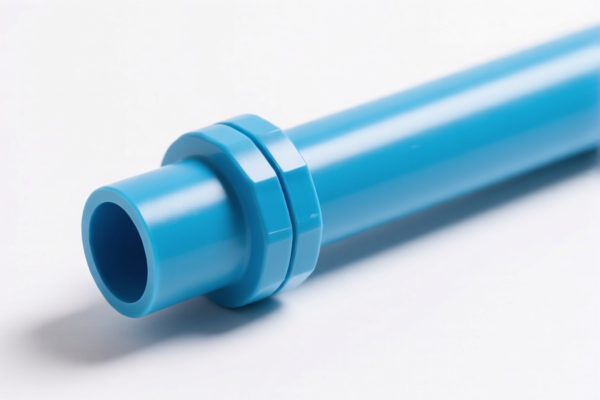
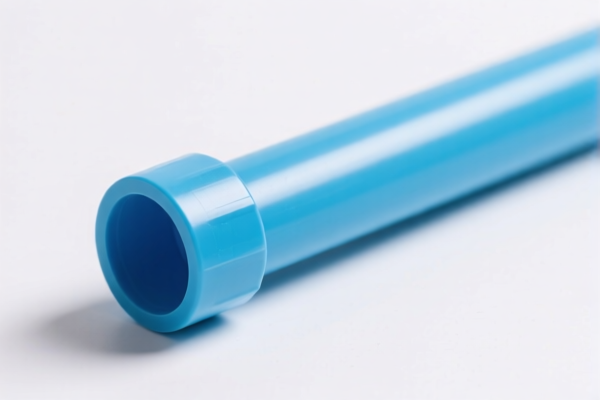
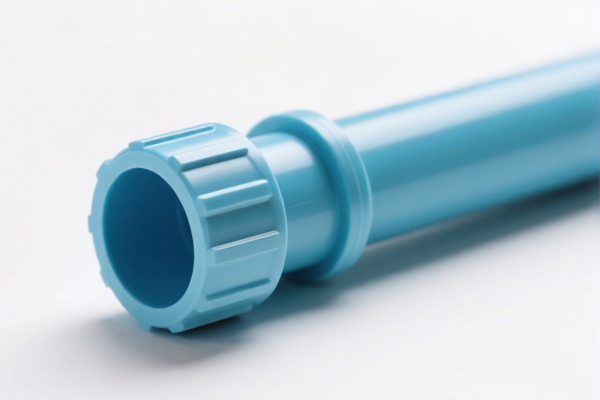
AI Analysis
🚰 Y-Fit Pipe Fittings (Y-Shape Plumbing Connectors)
🌐 HS Code Classification & Customs Clearance Guide | 2026 Updated Tariff Analysis | Pro-Level Import Strategy
📌 One, Product Definition & Classification: What Exactly Is a "Y-Fit Pipe"?
A Y-shaped pipe fitting is a plumbing connector used to join three pipes in a branching configuration — typically one inlet and two outlets (or vice versa). Commonly made from plastic, metal (iron/steel), or composite materials, it’s widely used in residential, industrial, and HVAC systems.
⚠️ Key Distinction:
- If the component is a continuous tubular structure with no separate joints or flanges → may be classified as pipe (HS 3917.40 / 7307.19).
- If it's a separate connector with a Y-shaped junction, designed to join pipes → classified as a pipe fitting or attachment (HS 3917.39 / 7307.19).
- Y-shape itself is a form factor, not a material — classification depends on material, function, and structure.
📦 Two, HS Code Classification Breakdown (2026 Official Tariff Reference)
| HS Code | Product Description | Material Inferred | Functional Role | Tax Rate |
|---|---|---|---|---|
3917.40.00.95 |
Plastic pipes and tubes, including fittings, not elsewhere specified | ✅ Plastic (non-metallic) | Y-shaped connector fitting | 40.3% |
7307.19.90.80 |
Iron or steel castings, including pipe fittings, not elsewhere specified | ✅ Iron/Steel (metallic) | Y-shaped casting fitting | 41.2% |
3917.39.00.50 |
Other plastic pipes and tubes, not elsewhere specified | ✅ Plastic | Tubular structure with Y-shape | 13.1% |
🔍 Critical Insight:
- The Y-shape is not a standalone category — it's functional morphology.
- Material + Form + Function determine the correct HS code.
- Fittings are not pipes — but pipe-like structures with connection features are still considered pipe-related under customs rules.
💰 Three, 2026 Updated Tariff Breakdown (With Full Legal Basis)
✅ Target Market: United States (US)
✅ Origin: China (CN)
✅ Effective Date: November 10, 2025 (and ongoing)
🎯 1. 3917.40.00.95 — Plastic Y-Fit Fittings (Non-Metallic)
| Item | Detail |
|---|---|
| Base Duty | 5.3% (ad valorem) |
| Section 301 (USITC) Additional Duty | +25.0% |
| Section 122 (IEEPA) Emergency Economic Powers Duty | +10.0% |
| Total Effective Duty | 40.3% |
| Tax Calculation | CIF Value × 40.3% |
| De Minimis Threshold | ❌ Not applicable (denied) |
| Legal Pathway | IEEPA:9903.01.25 → IEEPA:9903.01.24 → USITC:3917.40.00.95 → FOOTNOTE:9903.88.01 |
📌 Explanation:
- Plastic fittings are subject to all three layers of tariffs:
- Base duty: Standard import tax on plastic pipe fittings.
- Section 301 (USITC): Tariff from the U.S. Trade Representative’s China tariff list.
- Section 122 (IEEPA): Emergency powers under the International Emergency Economic Powers Act — applies to goods from China.
- Total: 40.3% — extremely high for a small fitting.
🎯 2. 7307.19.90.80 — Cast Iron/Steel Y-Fit Fittings (Metallic)
| Item | Detail |
|---|---|
| Base Duty | 6.2% |
| Section 301 (USITC) Additional Duty | +25.0% |
| Section 122 (IEEPA) Emergency Economic Powers Duty | +10.0% |
| Total Effective Duty | 41.2% |
| Tax Calculation | CIF Value × 41.2% |
| De Minimis Threshold | ❌ Not applicable |
| Legal Pathway | IEEPA:9901.25 → IEEPA:9903.01.24 → USITC:7307.19.90.80 → FOOTNOTE:9903.88.01 |
📌 Explanation:
- Iron/steel castings are heavily targeted under U.S. trade policy.
- Even small metal fittings are treated as industrial components and taxed accordingly.
- 41.2% is the highest tariff among the three — due to higher base rate + same附加 duties.
🎯 3. 3917.39.00.50 — Plastic Pipes (Non-Fitting, Tubular Shape)
| Item | Detail |
|---|---|
| Base Duty | 3.1% |
| Section 301 (USITC) Additional Duty | +0.0% |
| Section 122 (IEEPA) Emergency Economic Powers Duty | +10.0% |
| Total Effective Duty | 13.1% |
| Tax Calculation | CIF Value × 13.1% |
| De Minimis Threshold | ✅ Applicable (if value < $800) |
| Legal Pathway | IEEPA:9903.01.25 → IEEPA:9903.01.24 → USITC:3917.39.00.50 → FOOTNOTE:9903.88.01 |
📌 Explanation:
- This is the most favorable option — but only if the Y-shape is not a fitting.
- If the item is a continuous plastic tube with a Y-shaped bend, and no separate joint or flange, it may be classified as plastic pipe, not a fitting.
- No 301 tariff (0%) — only 10% IEEPA applies.
- 13.1% total — significantly lower than the other two.
- De Minimis applies — under $800, can be cleared without duty!
🛠️ Four, Customs Clearance Best Practices (Pro Tips to Avoid Penalties)
✅ 1. Required Documentation (Must-Have Checklist)
| Document | Required? | Why It Matters |
|---|---|---|
| ✅ Product Specification Sheet | ✔️ | Shows material, dimensions, shape, and function |
| ✅ CAD/Engineering Drawings | ✔️ | Proves whether it’s a fitting or bent pipe |
| ✅ High-Res Product Photos (with label) | ✔️ | Clear view of Y-shape, joints, material |
| ✅ Material Safety Data Sheet (MSDS) | ✔️ | Confirms plastic vs. metal |
| ✅ Commercial Invoice | ✔️ | Must state "Y-Shaped Plastic Pipe Fitting" or "Bent Plastic Tube" |
| ✅ Certificate of Origin (CO) | ✔️ | Critical for tariff eligibility |
| ✅ Packing List | ✔️ | Shows if multiple fittings are packed together |
✅ 2.申报技巧 (Key Rules to Remember)
🔥 "Shape is not destiny — material and function decide!"
| Scenario | Correct HS Code | Wrong Code | Risk |
|---|---|---|---|
| Y-fitting made of plastic, with separate joints | 3917.40.00.95 |
3917.39.00.50 |
+27.2% tax |
| Y-fitting made of iron/steel, cast | 7307.19.90.80 |
3917.40.00.95 |
+35.0% tax |
| Continuous plastic tube with Y-bend, no joint | 3917.39.00.50 |
3917.40.00.95 |
Save 27.2% |
| Fitting labeled as "pipe" | ❌ Avoid | → Risk of misclassification | Penalties |
✅ 3. Special Cases & Workarounds
| Situation | Recommended Action |
|---|---|
| Plastic Y-fitting with no flanges or threads | Classify as pipe (3917.39.00.50) if continuous structure |
| Metal Y-fitting with threads | Must be 7307.19.90.80 — no escape |
| Mixed shipment (plastic + metal fittings) | Declare separately — avoid "combo" classification |
| Custom-designed Y-fittings | Apply for Advance Ruling (Pre-Review) to lock in HS code |
| Low-value shipment (<$800) | Use 3917.39.00.50 — de minimis applies → 0% duty |
🌍 Five, Global Market Comparison (2026)
| Country/Region | Recommended HS Code | Tariff | Certification | Notes |
|---|---|---|---|---|
| 🇺🇸 USA | 3917.40.00.95 / 7307.19.90.80 |
40.3% / 41.2% | None (but must declare) | High risk — all three tariffs apply |
| 🇨🇳 China | 3917.40.00.95 |
5% | CCC | No additional tariffs |
| 🇪🇺 EU | 3917.40.00.95 |
0% (if CE) | CE | No 301/IEEPA |
| 🇦🇺 Australia | 3917.40.00.95 |
5% | RCM | No extra tariffs |
| 🇯🇵 Japan | 3917.40.00.95 |
0% | PSE | No extra tariffs |
📌 Insight:
- The U.S. is the only market imposing 3-layer tariffs (IEEPA + 301 + base).
- China, EU, Australia, Japan have no additional tariffs on plastic fittings.
📌 Six, Common Mistakes & Pitfalls (Learn from Others' Errors)
❌ Mistake 1: Calling a plastic Y-fitting a "plastic pipe" → incorrect classification
👉 Result: 40.3% vs. 13.1% → Save $27.20 per $100 value
❌ Mistake 2: Using "Y-pipe" as a product name without material proof
👉 Result: Customs may reclassify as fitting → higher duty
❌ Mistake 3: Not providing drawings or photos
👉 Result: Delayed clearance, refusal, or reclassification
❌ Mistake 4: Assuming all Y-shapes are fittings
👉 Result: Overpaying — if it’s just a bent tube, lower HS code applies
✅ Correct Declaration Example:
"Y-shaped continuous plastic tube, 1-inch diameter, 12-inch length, no joints, for plumbing use, material: PVC, not a fitting"
🎯 Seven, Conclusion: Accurate Classification = Cost Savings & Speed
🎯 Remember the Golden Rule:
🔹 "If it’s a connector with joints → Fitting → High Tax"
🔹 If it’s a bent tube with no joints → Pipe → Low Tax"
🔹 Plastic ≠ Fitting, Metal ≠ Pipe — Material & Form Decide!
📌 Pro Tip:
If your Y-fitting is made in Vietnam, Mexico, Thailand, or Malaysia, you may qualify for IEEPA exemption → 0% tariff on plastic fittings.
✅ Apply for Advance Ruling (Pre-Review) to lock in the correct HS code and avoid surprises.
📣 Take Action Now:
📞 Contact a licensed customs broker + provide photos + drawings + specs
🚀 Get HS Code pre-approval → avoid delays, penalties, and overpayment
✨ Precision in Classification = Profit in Export!
💼 Your next shipment shouldn’t pay 40% just because of a shape!
Customer Reviews
About HS Code Classification
The Harmonized System (HS) is an internationally standardized nomenclature developed by the World Customs Organization (WCO) to classify traded products. Over 200 countries use the HS system as the basis for customs tariffs, trade statistics, and import/export regulations.
Each HS code follows a hierarchical structure:
- Chapter (2 digits) — Broad category of goods (e.g., Chapter 84: Machinery and Mechanical Appliances)
- Heading (4 digits) — More specific grouping within the chapter
- Subheading (6 digits) — Internationally standardized breakdown, used by all WCO member countries
- National subdivisions (8-10 digits) — Country-specific extensions for further classification, such as US HTSUS 10-digit codes
Correct HS code classification is essential for smooth customs clearance, accurate duty payment, and compliance with trade regulations. Misclassification can lead to customs delays, overpayment of duties, or penalties.
When importing from CN to US, the applicable tariff rates may include:
- Most-Favored-Nation (MFN) rate — The standard duty rate applied to WTO members
- General rate — Applied to countries without trade agreements
- Trade remedy duties — Additional tariffs such as Section 301 (anti-dumping), Section 232 (national security), or countervailing duties
The information provided on this page is for reference purposes only. For official classification, please consult with your local customs authority or a licensed customs broker.