Zebra Loose Beads
CN → US| HS Code | Tariff Rate | Origin | Destination | Doc |
|---|---|---|---|---|
| 3926903500 | 24.0% | CN | US | Official Doc |
| 3926903300 | 16.5% | CN | US | Official Doc |
| 9602005080 | 20.2% | CN | US | Official Doc |
| 9602005010 | 20.2% | CN | US | Official Doc |
| 7018101000 | 39.0% | CN | US | Official Doc |
| 7018105000 | 35.0% | CN | US | Official Doc |
Product Images
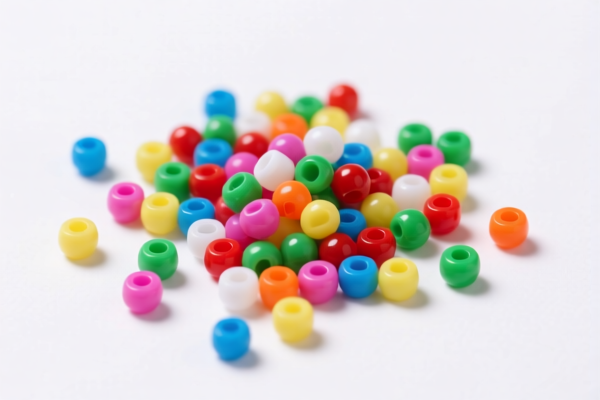
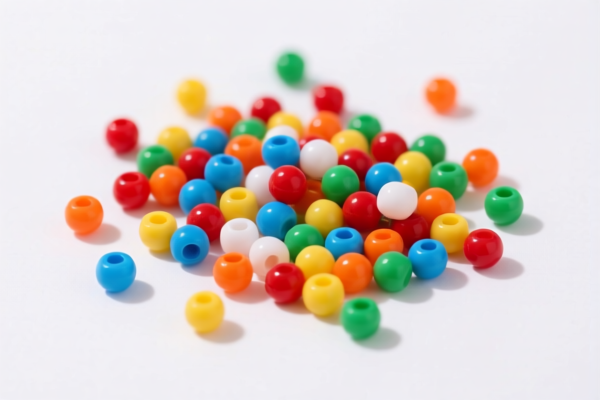
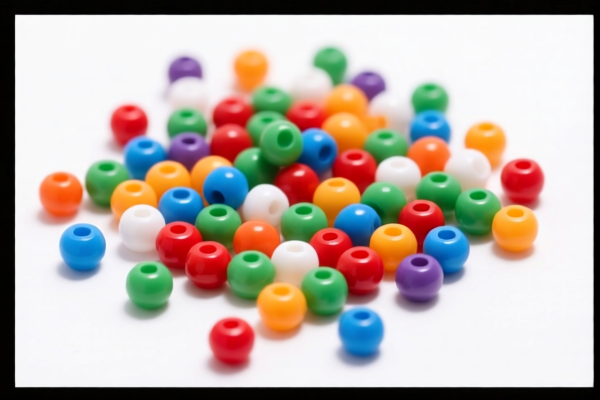
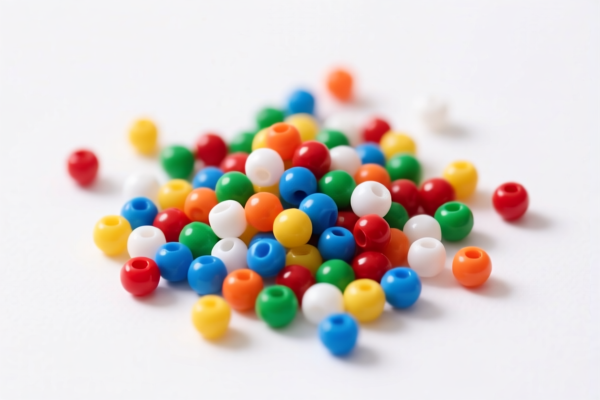
AI Analysis
🦓 Zebra Loose Beads (Patterned Glass/Plastic Beads)
🌐 HS Code Reference & Clearance Guide | 2026 Latest Tariff Analysis | Professional Customs Strategy
📌 I. Product Definition & Classification: What Are "Zebra Loose Beads"?
"Zebra Loose Beads" are decorative accessories featuring a distinctive black-and-white striped pattern, resembling a zebra's coat. They are not strung (except temporarily) and not set.
In international trade, the classification depends strictly on the material of the beads:
- Glass Beads: If made of glass (common for imitation pearls, precious stone looks, or lamp-worked ornaments).
- Plastic Beads: If made of polymers (common for craft beads, costume jewelry components).
⚠️ Critical Distinction:
- If the beads are Glass → They fall under Chapter 70.
- If the beads are Plastic → They fall under Chapter 39.
- Do not classify as "Imitation Jewelry" (Heading 7117) because they are not strung or set.
- Do not classify as "Carving Material" (Heading 9602) unless they are carved vegetable/mineral materials (highly unlikely for standard zebra beads).
📦 II. HS Code Classification Details (2026 Latest Tariff Authority Match)
Based on the provided , here are the exact HS Codes and tax rates for "Zebra Loose Beads" depending on material:
| HS Code | Material | Product Description (Exact Match from Data) | Tax Rate Detail (China Origin to US) |
|---|---|---|---|
7018.10.10.00 |
Glass | Glass beads, imitation pearls, imitation precious or semiprecious stones and similar glass smallwares: Imitation pearls and imitation pearl beads of all shapes and colors, drilled or not drilled, but not strung (except temporarily) and not set | 0.0% (Base: 0%, Additional: 0%) |
7018.10.50.00 |
Glass | Glass beads, imitation pearls, imitation precious or semiprecious stones and similar glass smallwares: Other | 25.0% (Base: 0%, Additional: 25%) |
3926.90.35.00 |
Plastic | Other articles of plastics...: Beads, bugles and spangles, not strung (except temporarily) and not set; articles thereof...: Other | 14.0% (Base: 6.5%, Additional: 7.5%) |
3926.90.33.00 |
Plastic | Other articles of plastics...: Handbags | 6.5% (Base: 6.5%, Additional: 0%) |
🔍 Analysis of Zebra Beads: - Are they "Imitation Pearls"? Usually, zebra beads are opaque or patterned glass/plastic, not pearlescent. If they are glass but not imitation pearls, they fall under
7018.10.50.00("Other"). - Are they "Handbags"? No. The HS Code3926.90.33.00is for Handbags made of plastic, not beads for handbags. Do not use this code for loose beads. - Conclusion: - If Glass: Likely7018.10.50.00(25% tax) unless they are specifically shaped as imitation pearls. - If Plastic:3926.90.35.00(14% tax).
💰 III. 2026 Latest Tariff Rate Breakdown (Detailed Tax Clauses)
✅ Applicable Country: United States (US)
✅ Origin: China (CN)
✅ Validity: Based on provided data snippets.
🎯 1. 7018.10.10.00 —— Glass Imitation Pearl Beads (Glass)
| Item | Content |
|---|---|
| Product | Glass beads, imitation pearls, not strung, not set. |
| Base Tariff | 0.0% |
| Additional Tariff | 0.0% |
| Total Tax Rate | 0.0% |
| Explanation | This code is very specific to imitation pearls. If your zebra beads are glass but do NOT look like pearls (e.g., they are cylindrical, faceted, or opaque zebra-patterned), they may NOT qualify for this 0% rate and might fall to the "Other" glass category. |
🎯 2. 7018.10.50.00 —— Other Glass Beads (Glass)
| Item | Content |
|---|---|
| Product | Glass beads (other than imitation pearls), not strung, not set. |
| Base Tariff | 0.0% |
| Additional Tariff | +25.0% |
| Total Tax Rate | 25.0% |
| Explanation | This is the most likely code for standard glass zebra beads that are not "imitation pearls." The 25% additional tariff is a significant cost factor. |
🎯 3. 3926.90.35.00 —— Plastic Beads (Plastic)
| Item | Content |
|---|---|
| Product | Plastic beads, bugles, spangles, not strung, not set. |
| Base Tariff | 6.5% |
| Additional Tariff | +7.5% |
| Total Tax Rate | 14.0% |
| Explanation | This is the standard code for plastic craft beads. It includes an additional tariff of 7.5%. Total cost impact is lower than glass "Other" category but higher than plastic handbags (which is incorrect for beads). |
🎯 4. 3926.90.33.00 —— Plastic Handbags (NOT Beads)
| Item | Content |
|---|---|
| Product | Handbags made of plastics. |
| Base Tariff | 6.5% |
| Additional Tariff | 0.0% |
| Total Tax Rate | 6.5% |
| Warning | ❌ DO NOT USE for loose beads. This code is for finished handbags. Misclassification can lead to audits and penalties. |
🛠️ IV. Customs Clearance Practical Advice (Real-World Pitfall Guide)
✅ 1. Preparation Checklist (Must-Have Documents)
| Document | Required? | Notes |
|---|---|---|
| ✅ Product Specification | ✔️ | Must clearly state: "Loose Beads," "Not Strung," "Not Set," Material (Glass/Plastic). |
| ✅ Material Declaration | ✔️ | Explicitly state: "100% Glass" or "100% Plastic." Do not say "Mixed." |
| ✅ Photos | ✔️ | Show the beads loose in a container, not strung on thread. |
| ✅ HS Code Justification | ✔️ | Explain why it is NOT "Imitation Jewelry" (because it is loose and not set). |
| ✅ Commercial Invoice | ✔️ | Description: "Glass Beads, Zebra Pattern, Loose, Not Strung." |
✅ 2. Classification Strategy (Key Tips)
| Scenario | Correct HS Code | Why? |
|---|---|---|
| Glass Zebra Beads (Standard) | 7018.10.50.00 |
They are glass beads but not "imitation pearls." |
| Glass Zebra Beads (Pearl-like shape) | 7018.10.10.00 |
Only if they mimic the shape/appearance of pearls. |
| Plastic Zebra Beads | 3926.90.35.00 |
Plastic beads, not strung. |
| Beads on a Thread | NOT LOOSE | If strung for sale as a necklace/bracelet, they may be classified as Imitation Jewelry (Heading 7117), which has different tariffs. |
🔥 Critical Rule:
"Not Strung, Not Set" is the key phrase. If the beads are pre-strung into a necklace, the classification changes completely. Ensure your invoice and physical product match the "Loose" declaration.
✅ 3. Common Errors to Avoid
❌ Error 1: Classifying glass beads as "Imitation Jewelry" (Heading 7117).
👉 Result: Incorrect. Since they are loose, they are "glass smallwares."
❌ Error 2: Using HS Code 3926.90.33.00 (Handbags) for plastic beads.
👉 Result: Misclassification. The code is for finished bags, not components.
❌ Error 3: Assuming all glass beads are 0% tax.
👉 Result: Only "Imitation Pearl" glass beads are 0%. Other glass beads (7018.10.50.00) incur a 25% additional tariff.
❌ Error 4: Ignoring the material.
👉 Result: Glass vs. Plastic changes the base tariff (0% vs. 6.5%) and additional tariff (25% vs. 7.5%).
🌍 V. Global Market Comparison (2026)
| Market | Recommended HS Code (Glass) | Recommended HS Code (Plastic) | Notes |
|---|---|---|---|
| 🇺🇸 USA | 7018.10.50.00 (25% Total) |
3926.90.35.00 (14% Total) |
High additional tariffs on glass "Other" category. |
| 🇨🇳 China | Varies (Import Tariff) | Varies (Import Tariff) | Check China's specific tariff schedule for import. |
| 🇪🇺 EU | Likely 0-4% (Depends on material) | Likely 0-4% | EU has different HS structure (8-digit). Not covered in this . |
📌 Conclusion:
- Plastic beads have a lower total tax burden (14%) compared to Glass "Other" beads (25%) in the US market. - Glass "Imitation Pearl" beads are the cheapest (0% tax), but zebra beads rarely qualify unless shaped like pearls.
📌 VI. Final Clearance Recommendation
- Identify Material: Confirm if beads are Glass or Plastic.
- Check Shape:
- If Glass + Pearl-like → Use
7018.10.10.00(0% tax). - If Glass + Other Shapes → Use
7018.10.50.00(25% tax). - If Plastic → Use
3926.90.35.00(14% tax).
- If Glass + Pearl-like → Use
- Documentation: Clearly state "Loose, Not Strung, Not Set" on all commercial invoices.
- Pre-Ruling: If unsure, apply for an Advance Ruling with US Customs to avoid penalties.
🎯 Pro Tip:
If you can shape your glass beads to resemble imitation pearls (round, opaque, lustrous), you can save 25% tax by using7018.10.10.00. However, "Zebra" patterns are usually distinct and may not qualify as "pearls."
✨ Professional Clearance Starts with Accurate Classification!
💼 Your cost efficiency depends on the right HS Code!
Customer Reviews
About HS Code Classification
The Harmonized System (HS) is an internationally standardized nomenclature developed by the World Customs Organization (WCO) to classify traded products. Over 200 countries use the HS system as the basis for customs tariffs, trade statistics, and import/export regulations.
Each HS code follows a hierarchical structure:
- Chapter (2 digits) — Broad category of goods (e.g., Chapter 84: Machinery and Mechanical Appliances)
- Heading (4 digits) — More specific grouping within the chapter
- Subheading (6 digits) — Internationally standardized breakdown, used by all WCO member countries
- National subdivisions (8-10 digits) — Country-specific extensions for further classification, such as US HTSUS 10-digit codes
Correct HS code classification is essential for smooth customs clearance, accurate duty payment, and compliance with trade regulations. Misclassification can lead to customs delays, overpayment of duties, or penalties.
When importing from CN to US, the applicable tariff rates may include:
- Most-Favored-Nation (MFN) rate — The standard duty rate applied to WTO members
- General rate — Applied to countries without trade agreements
- Trade remedy duties — Additional tariffs such as Section 301 (anti-dumping), Section 232 (national security), or countervailing duties
The information provided on this page is for reference purposes only. For official classification, please consult with your local customs authority or a licensed customs broker.