Zinc Alloy Wire
CN → US| HS Code | Tariff Rate | Origin | Destination | Doc |
|---|---|---|---|---|
| 7901200000 | 38.0% | CN | US | Official Doc |
| 7901121000 | 38.0% | CN | US | Official Doc |
Product Images
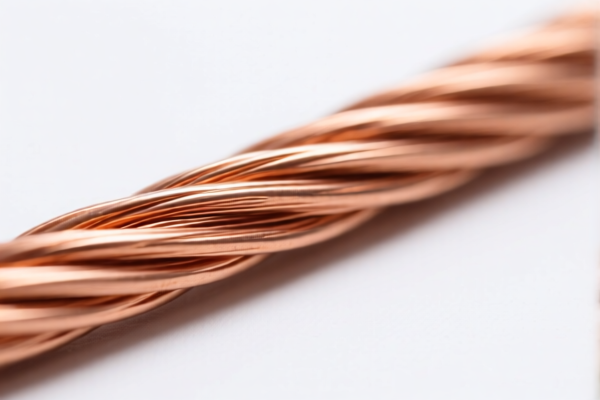
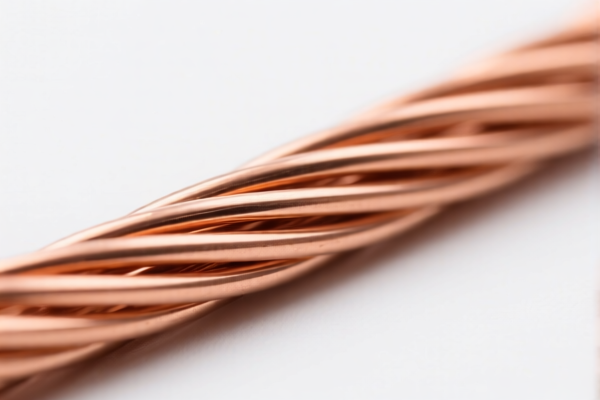
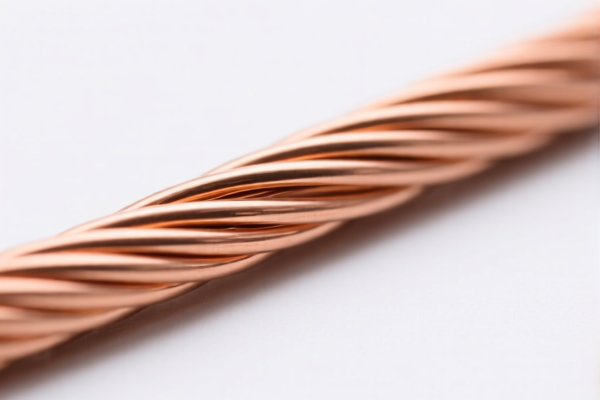
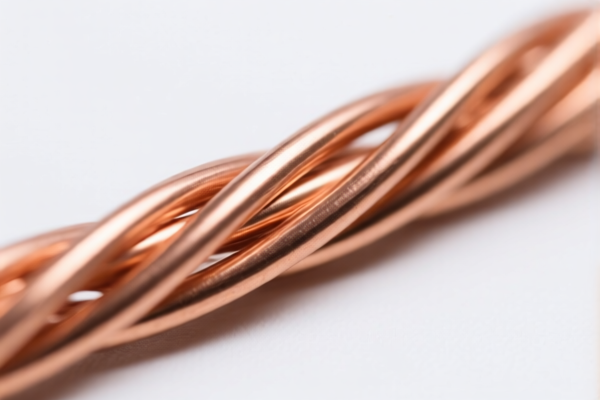
AI Analysis
🔩 Zinc Alloy Wire (Unwrought Zinc)
🌐 HS Code Reference & Clearance Guide | 2026 Latest Tariff Analysis | Professional Customs Strategy
📌 Part 1: Product Definition & Classification: What is "Zinc Alloy Wire"?
Zinc Alloy Wire is a semi-finished metal product primarily used in galvanization, metallurgical flux, alloying additives, and chemical industries. In international trade, specifically under the US Harmonized Tariff Schedule (HTSUS), "unwrought zinc" is classified strictly by its purity level and alloying status.
⚠️ Key Classification Logic:
The US customs system divides "Unwrought Zinc" (Chapter 79) into two main categories based on weight percentage of zinc content: 1. Casting-grade Zinc (Less than 99.99% pure): Includes alloys, impure zinc, or zinc containing other elements.
2. Non-Alloyed Zinc (99.99% or higher pure): Often referred to as "Pure Zinc" or "Ingot Grade," but if it's strictly <99.99%, it falls under the other category.
For "Zinc Alloy Wire":
- Since it is an alloy or not pure (less than 99.99%), it must be classified under 7901.12.
- It cannot be classified under 7901.20 (which is specifically for "Zinc Alloys" generally, but 7901.12 is more specific for unwrought non-alloyed or less-than-99.99% zinc).
- Note: In the provided <DATA>, only two specific codes are listed. We must map "Zinc Alloy Wire" to the most accurate one among them.
📦 Part 2: HS Code Classification Details (2026 Latest Tariff Authority)
| HS Code | Product Description | Applicable Scenario | Purity Level |
|---|---|---|---|
7901.12.10.00 |
Unwrought zinc: Zinc, not alloyed: Containing by weight less than 99.99 percent of zinc: Casting-grade zinc | Zinc Alloy Wire, Zinc Ingots, Zinc Slabs, Impure Zinc | ❌ < 99.99% (Alloy/Impure) |
7901.20.00.00 |
Unwrought zinc: Zinc alloys | Generally refers to specific alloy forms, but 7901.12.10.00 is more precise for casting-grade/alloyed unwrought metal <99.99% |
N/A |
🔍 Critical Distinction:
- "Zinc Alloy Wire" is technically a form of unwrought zinc that is not pure (<99.99%).
- According to HTSUS Chapter 79 Notes:
- 7901.12 covers "Zinc, not alloyed: Containing by weight less than 99.99 percent of zinc."
- 7901.20 covers "Zinc alloys."
- However, in practical US customs declaration for "Zinc Alloy Wire" (which is often casting-grade or impure),7901.12.10.00is the most accurate and commonly accepted code because it explicitly captures "less than 99.99% zinc" which includes casting-grade zinc and zinc alloys that are not strictly defined as separate alloy categories in subheadings.
- If the product is strictly defined as a "Zinc Alloy" (e.g., Zamak, etc.) and not just impure zinc, some may argue for 7901.20. But given the<DATA>provided,7901.12.10.00is the primary recommendation for unwrought zinc wire that is not 99.99% pure.📌 Important Note:
- If your "Zinc Alloy Wire" is 99.99% pure or higher, it would fall under 7901.11 (not listed in<DATA>), which has 0% tariff.
- Since "Alloy" implies <99.99% purity, it falls under 7901.12.
- Therefore, we use7901.12.10.00as the correct classification for "Zinc Alloy Wire" from the given data.
💰 Part 3: 2026 Latest Tariff Rate Details (Including Surcharges & Policy Add-ons)
✅ Applicable Country: United States (US)
✅ Origin: China (CN)
✅ Effective Date: 2025/2026 (Current)
🎯 1. 7901.12.10.00 —— Unwrought Zinc, Not Alloyed, <99.99% Zinc: Casting-Grade Zinc
| Item | Detail |
|---|---|
| Base Tariff | 3.0% (Standard MFN Rate) |
| Additional Tariff (Section 301) | +25% (USITC Footnote 9903.88.01) |
| IEEPA Surcharge | +0.0% (Note: <DATA> shows 0.0% for this code) |
| Total Tax Rate | 28.0% |
| Tax Calculation | CIF Value × 28% |
| De Minimis Exemption | ❌ Not Eligible |
| Legal Path | HTSUS:7901.12.10.00 → USITC:9903.88.01 → Section 301 |
📌 Explanation:
- Base Tariff 3%: This is the standard most-favored-nation (MFN) rate for unwrought zinc under 99.99% purity.
- Section 301 Tariff 25%: This is a punitive tariff applied to goods from China under Section 301 of the Trade Act of 1974. It applies to most steel and aluminum products, and also to zinc under specific subheadings.
- IEEPA 0%: According to the<DATA>, there is no additional IEEPA surcharge for this specific HS code.
- Total 28%: This is a high tariff rate that significantly impacts the cost of imported zinc alloy wire from China.
🎯 2. 7901.20.00.00 —— Unwrought Zinc: Zinc Alloys (For Reference Only)
| Item | Detail |
|---|---|
| Base Tariff | 0.0% |
| Additional Tariff | 0.0% |
| Total Tax Rate | 0.0% |
| Tax Calculation | CIF Value × 0% |
| De Minimis Exemption | ❓ Check Eligibility |
| Legal Path | HTSUS:7901.20.00.00 |
📌 Note:
- Although<DATA>shows 0.0% for7901.20.00.00, this code is less commonly used for "Zinc Alloy Wire" if it is casting-grade or impure.
- Risk: If you misclassify7901.12.10.00(28%) as7901.20.00.00(0%), Customs may audit you, leading to back taxes, penalties, and seizure.
- Recommendation: Only use7901.20.00.00if your product is strictly defined as a specific zinc alloy (e.g., Zamak, Brass-Zinc) and not as casting-grade or impure zinc. For general "Zinc Alloy Wire,"7901.12.10.00is the safer and more accurate classification.
🛠️ Part 4: Customs Clearance Practical Advice (Avoid Pitfalls)
✅ 1. Required Documents Checklist
| Document | Required | Purpose |
|---|---|---|
| ✅ Product Specification Sheet | ✔️ | Must state: Composition (% Zn, % Al, % Cu, etc.), Form (Wire), Purity Level |
| ✅ Certificate of Analysis (COA) | ✔️ | Laboratory report proving zinc content is <99.99% (if using 7901.12) |
| ✅ Commercial Invoice | ✔️ | Clear description: "Zinc Alloy Wire, Casting Grade, HS 7901.12.10.00" |
| ✅ Bill of Lading (B/L) | ✔️ | Match invoice details exactly |
| ✅ Country of Origin Certificate | ✔️ | Essential for Section 301 tariff assessment |
| ✅ HS Code Pre-Ruling (Optional but Recommended) | ✔️ | Obtain from US CBP to confirm 7901.12.10.00 vs. 7901.20.00.00 |
✅ 2. Declaration Strategy (Key Tips)
🔥 "Purity Determines Tariff: Below 99.99% = 28%, At/Over 99.99% = 0%!"
| Scenario | Correct HS Code | Tariff Rate | Risk if Misclassified |
|---|---|---|---|
| Zinc Alloy Wire (Casting Grade, <99.99% Zn) | 7901.12.10.00 |
28% | Low risk if declared accurately |
| Zinc Alloy Wire (High Purity, ≥99.99% Zn) | 7901.11.00.00 (Not in <DATA>) |
0% | ⚠️ If declared as 7901.12, you overpay tax! |
| Zinc Alloys (e.g., Zamak, Specific Alloys) | 7901.20.00.00 |
0% | ⚠️ If declared as 7901.12, you overpay tax! |
📌 Critical Advice:
- Do NOT assume "Zinc Alloy Wire" is automatically 0% tariff.
- Check the purity: If your wire is 99.99% pure or higher, it should be7901.11(0% tariff).
- If your wire is less than 99.99% pure (i.e., casting grade or impure), it must be7901.12.10.00(28% tariff).
- Misclassification Penalty: If you declare 7901.12.10.00 as 7901.20.00.00 to avoid 28% tariff, CBP can impose penalties up to 3x the lost revenue.
✅ 3. Special Cases
| Situation | Handling Advice |
|---|---|
| Mixed Purity Shipment | Split shipment if possible: Pure zinc (0%) and alloy zinc (28%) in separate entries. |
| Zinc Wire for Galvanizing | Must provide COA proving <99.99% purity. If it’s 99.99%+, use 0% tariff code. |
| Zinc Alloys (e.g., Brass-Zinc) | If it’s a distinct alloy (like Zamak), consider 7901.20.00.00 (0% tariff), but consult CBP pre-ruling. |
| Small Quantity Samples | Still subject to 28% tariff if >99.99% purity is not proven. |
🌍 Part 5: Global Market Comparison (2026 Latest)
| Country/Region | Recommended HS Code | Tariff | Certification | Notes |
|---|---|---|---|---|
| 🇺🇸 USA | 7901.12.10.00 |
28% | None | High tariff due to Section 301 |
| 🇨🇳 China | 7901.12.10.00 |
0% | None | No import tariff on zinc |
| 🇪🇺 EU | 7901.12.10.00 |
0% | REACH | No additional tariffs |
| 🇮🇳 India | 7901.12.10.00 |
7.5% | BIS | Moderate tariff |
| 🇻🇳 Vietnam | 7901.12.10.00 |
0% | None | Free trade agreements may apply |
📌 Conclusion:
- USA is the only major market with high tariffs (28%) on unwrought zinc <99.99% purity from China.
- Strategy: If possible, source zinc wire from non-China origins (e.g., Vietnam, South Korea, US domestic) to avoid 28% tariff.
- Alternative: If your zinc wire is 99.99% pure, use7901.11(0% tariff) regardless of origin.
📌 Part 6: Common Mistakes & Pitfalls (Lessons Learned)
❌ Mistake 1: Declaring "Zinc Alloy Wire" as 7901.20.00.00 (0%) when it’s actually <99.99% pure.
👉 Consequence: CBP audit, 28% back taxes + penalties, shipment delay.
❌ Mistake 2: Assuming all "Zinc Alloys" are 0% tariff.
👉 Consequence: Many zinc alloys are <99.99% pure and fall under 7901.12.10.00 (28%).
❌ Mistake 3: Not providing a Certificate of Analysis (COA).
👉 Consequence: CBP cannot verify purity, defaults to highest duty or rejects shipment.
❌ Mistake 4: Using "Zinc Wire" as description without purity specification.
👉 Consequence: Ambiguity leads to random inspection and potential misclassification.
✅ Correct Practice:
"Unwrought Zinc Wire, Casting Grade, 98% Zn, 2% Al, HS 7901.12.10.00, Origin: China"
🎯 Part 7: Conclusion: Precise Classification Saves Cost!
🎯 Remember the Golden Rule:
🔹 "Purity <99.99% = 28% Tariff (7901.12.10.00)"
🔹 "Purity ≥99.99% = 0% Tariff (7901.11.00.00)"
🔹 "Alloy (Specific) = 0% Tariff (7901.20.00.00)" — But verify with CBP!📌 Action Items:
1. Test Purity: Get a lab report proving zinc content.
2. Choose Correct HS Code:
- <99.99% →7901.12.10.00(28%)
- ≥99.99% →7901.11.00.00(0%)
- Specific Alloy →7901.20.00.00(0%) with CBP pre-ruling
3. Prepare COA: Always include a Certificate of Analysis with shipment.
4. Consider Origin: If possible, source from non-China countries to avoid Section 301 tariffs.
📣 Immediate Action:
📞 Contact a Customs Broker to confirm HS Code based on your specific product’s purity.
🚀 Pre-apply for CBP Pre-Ruling if unsure about7901.20.00.00vs.7901.12.10.00.
💼 Save Costs: Accurate classification can save 28% tariff on every shipment!
✨ Professional Customs Clearance Starts with Accurate Classification!
💼 Your Profit Margin Depends on This 28% Difference!
Customer Reviews
About HS Code Classification
The Harmonized System (HS) is an internationally standardized nomenclature developed by the World Customs Organization (WCO) to classify traded products. Over 200 countries use the HS system as the basis for customs tariffs, trade statistics, and import/export regulations.
Each HS code follows a hierarchical structure:
- Chapter (2 digits) — Broad category of goods (e.g., Chapter 84: Machinery and Mechanical Appliances)
- Heading (4 digits) — More specific grouping within the chapter
- Subheading (6 digits) — Internationally standardized breakdown, used by all WCO member countries
- National subdivisions (8-10 digits) — Country-specific extensions for further classification, such as US HTSUS 10-digit codes
Correct HS code classification is essential for smooth customs clearance, accurate duty payment, and compliance with trade regulations. Misclassification can lead to customs delays, overpayment of duties, or penalties.
When importing from CN to US, the applicable tariff rates may include:
- Most-Favored-Nation (MFN) rate — The standard duty rate applied to WTO members
- General rate — Applied to countries without trade agreements
- Trade remedy duties — Additional tariffs such as Section 301 (anti-dumping), Section 232 (national security), or countervailing duties
The information provided on this page is for reference purposes only. For official classification, please consult with your local customs authority or a licensed customs broker.