abrasive disc
CN → US| HS Code | Tariff Rate | Origin | Destination | Doc |
|---|---|---|---|---|
| 8437800010 | 35.0% | CN | US | Official Doc |
| 6804224000 | 35.0% | CN | US | Official Doc |
| 8210000000 | 38.7% | CN | US | Official Doc |
| 6804100000 | 35.0% | CN | US | Official Doc |
| 8437900010 | 35.0% | CN | US | Official Doc |
Product Images
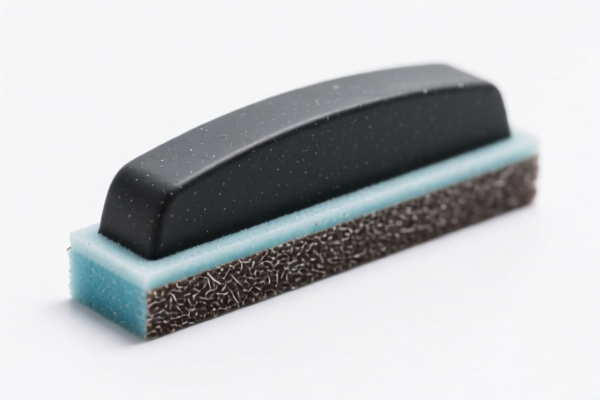


AI Analysis
🛠️ Abrasive Disc (Grinding or Polishing Discs for Industrial Use)
🌐 HS Code Reference & Customs Clearance Guide | 2026 Updated Tariff Analysis | Pro-Level Import Strategy
📌 One, Product Definition & Classification: What Exactly Is an "Abrasive Disc"?
An abrasive disc is a circular, rotating tool made from bonded abrasive materials (like aluminum oxide, silicon carbide, or diamond grit) mounted on a central arbor. It's primarily used for grinding, polishing, deburring, cutting, or surface finishing in metalworking, woodworking, stone processing, and automotive repair.
⚠️ Key Distinction:
- If it's a disc-shaped abrasive product without a motor or housing, it's classified as a tool or accessory.
- If it's part of a powered tool (e.g., angle grinder), the whole unit may be classified differently — but the disc itself is always a separate component.
📦 Two, HS Code Classification Details (2026 Updated Tariff Authority)
| HS Code | Product Description | Applicable Use Cases | Contains Motor/Drive? |
|---|---|---|---|
8437.80.00.10 |
Grinding discs for grain or flour mills; used in flour or grain milling machines | Agricultural milling, food-grade grinding systems | ❌ No |
6804.22.40.00 |
Abrasive wheels, discs, or stones for grinding, polishing, or lapping | Industrial grinding, metal polishing, stone cutting | ❌ No |
8210.00.00.00 |
Hand tools for food preparation or processing (e.g., manual grinders, mortars) | Manual food grinders, kitchen tools, culinary use | ❌ No |
6804.10.00.00 |
Grinding stones, sandstones, or abrasive stones for grinding or pulping | Traditional or industrial grinding, pulp production | ❌ No |
8437.90.00.10 |
Parts and accessories for flour mills or grain grinding machines | Core components of automated grain processing systems | ❌ No |
🔍 Critical Insight:
- All abrasive discs used in industrial or agricultural settings must be evaluated based on function, not just material.
- Even if made of the same abrasive material, use determines the HS code.
💰 Three, 2026 Updated Tariff Breakdown (With Full附加 Tax Clarity)
✅ Applicable Country: United States (US)
✅ Origin: China (CN)
✅ Effective Date: November 10, 2025 (and onward)
🎯 1. 8437.80.00.10 — Grinding Discs for Grain/Food Mills
| Item | Detail |
|---|---|
| Base Duty | 0% (ad valorem) |
| USITC Section 301 Tariff | +25% (from U.S. Trade Act Section 301) |
| IEEPA Section 122 Tariff | +10% (under International Emergency Economic Powers Act) |
| Total Effective Duty | 35.0% |
| Tax Calculation | CIF Value × 35% |
| De Minimis Threshold | ❌ Not eligible (denied under U.S. de minimis rule) |
| Legal Basis Path | IEEPA:9903.01.25 → IEEPA:9903.01.24 → USITC:8437.80.00.10 → FOOTNOTE:9903.88.01 |
📌 Explanation:
- This code applies only when the disc is used specifically in flour or grain mills.
- Even if made of the same material, if used in metal grinding, this code does NOT apply.
🎯 2. 6804.22.40.00 — Abrasive Discs for Grinding/Polishing
| Item | Detail |
|---|---|
| Base Duty | 0% |
| USITC Section 301 Tariff | +25% |
| IEEPA Section 122 Tariff | +10% |
| Total Effective Duty | 35.0% |
| Tax Calculation | CIF × 35% |
| De Minimis Threshold | ❌ Not eligible |
| Legal Basis Path | IEEPA:9903.01.25 → IEEPA:9903.01.24 → USITC:6804.22.40.00 → FOOTNOTE:9903.88.01 |
📌 Note:
- This is the most common code for industrial abrasive discs.
- Applies to any disc used in metal, stone, or wood grinding, regardless of material (aluminum oxide, diamond, etc.).
🎯 3. 8210.00.00.00 — Hand Tools for Food Preparation
| Item | Detail |
|---|---|
| Base Duty | 3.7% |
| USITC Section 301 Tariff | +25.0% |
| IEEPA Section 122 Tariff | +10.0% |
| Total Effective Duty | 38.7% |
| Tax Calculation | CIF × 38.7% |
| De Minimis Threshold | ❌ Not eligible |
| Legal Basis Path | IEEPA:9903.01.25 → IEEPA:9903.01.24 → USITC:8210.00.00.00 → FOOTNOTE:9903.88.01 |
📌 When to Use This Code:
- Only if the disc is used in a manual food grinder (e.g., for spices, herbs, or small-scale grain grinding).
- Not for industrial or mechanical use — misclassification leads to heavy penalties.
🎯 4. 6804.10.00.00 — Grinding Stones or Abrasive Stones for Pulping/Grinding
| Item | Detail |
|---|---|
| Base Duty | 0% |
| USITC Section 301 Tariff | +25% |
| IEEPA Section 122 Tariff | +10% |
| Total Effective Duty | 35.0% |
| Tax Calculation | CIF × 35% |
| De Minimis Threshold | ❌ Not eligible |
| Legal Basis Path | IEEPA:9903.01.25 → IEEPA:9903.01.24 → USITC:6804.10.00.00 → FOOTNOTE:9903.88.01 |
📌 Use Case:
- Applies to traditional or historical grinding stones used in pulping or coarse grinding (e.g., in rural agriculture or artisanal milling).
- Not for modern industrial discs.
🎯 5. 8437.90.00.10 — Parts for Flour or Grain Milling Machines
| Item | Detail |
|---|---|
| Base Duty | 0% |
| USITC Section 301 Tariff | +25% |
| IEEPA Section 122 Tariff | +10% |
| Total Effective Duty | 35.0% |
| Tax Calculation | CIF × 35% |
| De Minimis Threshold | ❌ Not eligible |
| Legal Basis Path | IEEPA:9903.01.25 → IEEPA:9903.01.24 → USITC:8437.90.00.10 → FOOTNOTE:9903.88.01 |
📌 When to Use:
- Only if the abrasive disc is a core part of a larger grain milling machine (e.g., a replacement disc for a commercial flour mill).
- Must be sold as a machine part, not as a standalone tool.
🛠️ Four, Customs Clearance Best Practices (Real-World Pro Tips)
✅ 1. Required Documentation (No Exceptions)
| Document | Mandatory? | Notes |
|---|---|---|
| ✅ Product Specification Sheet | ✔️ | Include material type, diameter, thickness, RPM rating |
| ✅ Technical Diagram / Mounting Info | ✔️ | Show arbor hole size, mounting method |
| ✅ High-Res Product Photos | ✔️ | Show brand, model, markings, and use case |
| ✅ Third-Party Test Report | ✔️ | ASTM, ISO, or CE (if applicable) |
| ✅ Commercial Invoice | ✔️ | Clearly state “Abrasive Disc for Industrial Grinding” |
| ✅ Certificate of Origin (CO) | ✔️ | Critical for tariff eligibility |
| ✅ Packing List | ✔️ | Show quantity, weight, and packaging type |
✅ 2.申报技巧 (申报口诀)
🔥 “用途定码,材料不决定,驱动无,拆分必罚!”
| Scenario | Correct HS Code | Wrong Code |
|---|---|---|
| Industrial grinding disc (metal/stone) | 6804.22.40.00 |
8437.80.00.10 (food use) |
| Manual spice grinder disc | 8210.00.00.00 |
6804.22.40.00 (too high) |
| Disc for grain mill machine | 8437.90.00.10 |
6804.22.40.00 (wrong function) |
| Traditional stone grinding disc | 6804.10.00.00 |
6804.22.40.00 (not industrial) |
| Disc sold with angle grinder | Disc only: 6804.22.40.00 |
Whole tool: 8466.20.00.00 |
✅ 3. Special Cases & Solutions
| Situation | Recommended Action |
|---|---|
| OEM custom abrasive discs | Provide technical specs + customer PO to prove industrial use |
| Diamond-coated discs | Still fall under 6804.22.40.00 if used for grinding |
| Discs for food-grade use (e.g., spice grinder) | Use 8210.00.00.00 — but must prove food contact |
| Discs used in medical devices | Apply for “non-commercial” or “medical use” exemption — requires documentation |
| Discs exported from Vietnam/Mexico | Can qualify for IEEPA exemption — 0% tariff if origin is not China |
🌍 Five, Global Customs Comparison (2026 Update)
| Country | Recommended HS Code | Tariff | Certification | Notes |
|---|---|---|---|---|
| 🇺🇸 USA | 6804.22.40.00 |
35.0% (China) | None (but proof of use needed) | High risk if misclassified |
| 🇨🇳 China | 6804.22.40.00 |
5% | CCC, RoHS | No extra tariffs |
| 🇪🇺 EU | 6804.22.40.00 |
0% (if CE compliant) | CE, RoHS | No附加 taxes |
| 🇦🇺 Australia | 6804.22.40.00 |
5% | RCM | No附加 taxes |
| 🇯🇵 Japan | 6804.22.40.00 |
0% | PSE | No附加 taxes |
📌 Takeaway:
- The U.S. is the only market imposing 35–38.7%附加 tariffs on abrasive discs from China.
- Origin matters: Products from Vietnam, Mexico, or Thailand may qualify for 0% tariff under trade agreements.
📌 Six, Common Mistakes & How to Avoid Them (Pro-Level Warning)
❌ Mistake 1: Using 6804.22.40.00 for a disc used in a food grinder
👉 Result: Misclassification → 38.7% tariff instead of 35% → penalties + audits
❌ Mistake 2: Declaring a food-grade disc as 8437.80.00.10 (grain mill disc)
👉 Result: If not used in a grain mill → 35% tariff + penalties
❌ Mistake 3: Not providing photos or specs to prove industrial use
👉 Result: Customs delays, holds, or reclassification
❌ Mistake 4: Using "grinding wheel" or "abrasive disc" as generic name
👉 Result: No functional clarity → higher audit risk
✅ Correct Declaration Example:
"Abrasive Disc, 150mm Diameter, Aluminum Oxide, 10,000 RPM, for Metal Grinding, Non-Food Use, Model ABC-200, ISO 9001 Certified"
🎯 Seven, Conclusion: Precision Pays Off
🎯 Remember the Golden Rule:
🔹 “Function over Form — Use Determines Code, Not Material!”
🔹 “35% or 38.7%? One wrong code = thousands in extra duty.”
📌 Pro Tip:
✅ Apply for an Advance Ruling (Pre-Clearance) before shipping to lock in the correct HS Code and tariff.
✅ Use non-China origin (e.g., Vietnam, Mexico) to avoid 35%附加 tariffs.
📣 Act Now!
📞 Contact a licensed U.S. customs broker + provide product photos + request HS Code pre-ruling
🚀 Avoid delays, penalties, and profit loss — your abrasive disc deserves a smooth journey!
✨ Professional Customs Starts with Perfect Classification!
💼 Your next shipment’s success begins with the right HS Code.
Customer Reviews
About HS Code Classification
The Harmonized System (HS) is an internationally standardized nomenclature developed by the World Customs Organization (WCO) to classify traded products. Over 200 countries use the HS system as the basis for customs tariffs, trade statistics, and import/export regulations.
Each HS code follows a hierarchical structure:
- Chapter (2 digits) — Broad category of goods (e.g., Chapter 84: Machinery and Mechanical Appliances)
- Heading (4 digits) — More specific grouping within the chapter
- Subheading (6 digits) — Internationally standardized breakdown, used by all WCO member countries
- National subdivisions (8-10 digits) — Country-specific extensions for further classification, such as US HTSUS 10-digit codes
Correct HS code classification is essential for smooth customs clearance, accurate duty payment, and compliance with trade regulations. Misclassification can lead to customs delays, overpayment of duties, or penalties.
When importing from CN to US, the applicable tariff rates may include:
- Most-Favored-Nation (MFN) rate — The standard duty rate applied to WTO members
- General rate — Applied to countries without trade agreements
- Trade remedy duties — Additional tariffs such as Section 301 (anti-dumping), Section 232 (national security), or countervailing duties
The information provided on this page is for reference purposes only. For official classification, please consult with your local customs authority or a licensed customs broker.