acrylic ornaments
CN → US| HS Code | Tariff Rate | Origin | Destination | Doc |
|---|---|---|---|---|
| 9503000073 | 10.0% | CN | US | Official Doc |
| 3926400090 | 15.3% | CN | US | Official Doc |
| 3926400010 | 15.3% | CN | US | Official Doc |
| 9703100000 | 17.5% | CN | US | Official Doc |
| 9503000090 | 10.0% | CN | US | Official Doc |
Product Images
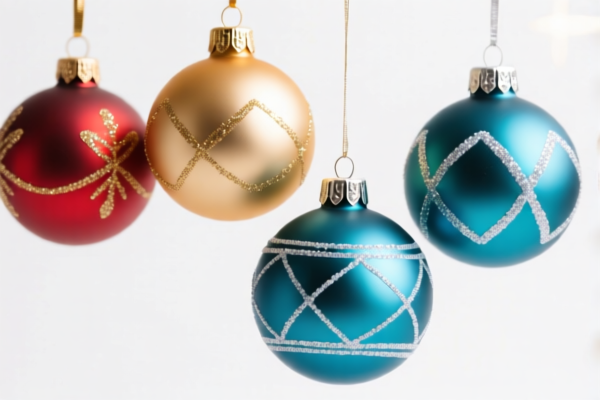



AI Analysis
🎨 Acrylic Ornaments: HS Code Classification & US Customs Clearance Strategy (2026)
🌐 HS Code Reference & Clearance Guide | Latest Tariff Analysis for Plastic Decor & Toys | Professional Entry Strategy
📌 Part I: Product Definition & Classification – What Exactly Is an "Acrylic Ornament"?
Acrylic ornaments (typically made from polymethyl methacrylate, or PMMA) are decorative items often used for home decor, gifting, or display purposes. In international trade, the classification hinges on two critical factors:
1. Material: Acrylic is a plastic/resin (Chapter 39).
2. Function/Form: Is it a toy/model (Chapter 95), a statue/sculpture (Chapter 97), or a general plastic article (Chapter 39)?
⚠️ Key Distinction:
- If viewed as a toy/model/accessory for play: Falls under Chapter 95 (Toys, Games, Sports Equipment).
- If viewed as a statue/sculpture: Falls under Chapter 97 (Works of Art, Collectibles).
- If viewed as a general plastic decorative article: Falls under Chapter 39 (Articles of Plastics).
📦 Part II: HS Code Classification Details (2026 Latest Tariff Alignment)
| HS Code | Product Description | Key Characteristics | Tax Burden |
|---|---|---|---|
| 9503.00.00.73 | Toys/Models: Decorative ornaments made of plastic/resin | Classified under toys/models; acrylic is considered plastic/resin. | 10.0% |
| 3926.40.00.90 | Other articles of plastic: Decorative ornaments | Plastic material (HS 3901-3914); form is decorative. | 15.3% |
| 3926.40.00.10 | Other articles of plastic: Decorative ornaments | Plastic material consistent with use; no conflict in description. | 15.3% |
| 9703.10.00.00 | Original statues and sculptures: Any material | Ornament classified as sculpture; acrylic fits "any material" description. | 17.5% |
| 9503.00.00.90 | Other toys/models/accessories: Plastic/resin | Ornament classified under other toys/models; acrylic is organic resin/plastic. | 10.0% |
| 9703.90.00.00 | Original statues and sculptures: Other materials | Ornament classified as sculpture; acrylic is non-metal/other material, fitting original sculpture category. | 17.5% |
🔍 Critical Reminder:
- Chapter 95 (Toys/Models) generally offers the lowest tariff burden (10%) due to 0% base duty + 10% Section 301/IEEPA surcharge.
- Chapter 39 (Plastics) incurs a higher base duty (5.3%) + 10% surcharge = 15.3%.
- Chapter 97 (Art/Sculpture) incurs the highest burden (0% base + 7.5% Section 301 + 10% IEEPA = 17.5%).
- Misclassification Risk: Declaring a plastic ornament as "Art" (9703) when it is mass-produced may trigger customs scrutiny. Declaring a sculpture as a "Toy" (9503) if it lacks play value may also be challenged.
💰 Part III: 2026 Latest Tariff Rate Breakdown (Including Additional Taxes)
✅ Applicable Country: United States (US)
✅ Origin: China (CN)
✅ Effective Date: From November 10, 2025 (inclusive)
🎯 1. 9503.00.00.73 & 9503.00.00.90 — Toys/Models Category (Lowest Cost Strategy)
| Item | Detail |
|---|---|
| Base Tariff | 0.0% (Ad Valorem) |
| Section 301 / IEEPA Surcharge | +10.0% (Specific 122 Clause Tariff applied to China) |
| Total Effective Rate | 10.0% |
| Tax Calculation | CIF Value × 10.0% |
| De Minimis Eligibility | ❌ No (Deny De Minimis for Section 301/IEEPA goods) |
| Legal Basis Path | IEEPA:9903.01.25 → USITC:9503.00.00 → FOOTNOTE:122 |
📌 Explanation:
- These codes are classified under Toys/Models.
- Base duty is 0%, but subject to the 10% 122 Clause Surcharge.
- Total Cost Impact: Low compared to other categories. Best for mass-produced, decorative acrylic items that can be argued as "model accessories" or "play-related decor."
🎯 2. 3926.40.00.90 & 3926.40.00.10 — Plastic Articles Category (Medium Cost)
| Item | Detail |
|---|---|
| Base Tariff | 5.3% (Ad Valorem) |
| Section 301 / IEEPA Surcharge | +10.0% (Specific 122 Clause Tariff applied to China) |
| Total Effective Rate | 15.3% |
| Tax Calculation | CIF Value × 15.3% |
| De Minimis Eligibility | ❌ No (Deny De Minimis for Section 301/IEEPA goods) |
| Legal Basis Path | IEEPA:9903.01.25 → USITC:3926.40.00 → FOOTNOTE:122 |
📌 Explanation:
- These codes fall under Plastic Articles.
- Base duty is 5.3%, plus 10% surcharge.
- Suitable for generic decorative items where "toy" or "art" classification is too risky.
- Cost Impact: 5.3% higher than toy classification.
🎯 3. 9703.10.00.00 & 9703.90.00.00 — Statues/Sculptures Category (Highest Cost)
| Item | Detail |
|---|---|
| Base Tariff | 0.0% (Ad Valorem) |
| Section 301 / IEEPA Surcharge | +7.5% (Section 301) +10.0% (IEEPA 122 Clause) |
| Total Effective Rate | 17.5% |
| Tax Calculation | CIF Value × 17.5% |
| De Minimis Eligibility | ❌ No (Deny De Minimis for Section 301/IEEPA goods) |
| Legal Basis Path | IEEPA:9903.01.25 → USITC:9703.10.00 / 9703.90.00 → FOOTNOTE:122 |
📌 Explanation:
- These codes are for Original Statues/Sculptures.
- Base duty is 0%, but subject to 7.5% Section 301 + 10% IEEPA.
- Total Cost Impact: Highest. Only appropriate if the item is truly an original work of art (e.g., limited edition, signed by artist). Mass-produced acrylic decor should avoid this code to prevent overpayment or misclassification penalties.
🛠️ Part IV: Practical Customs Clearance Advice (Pitfall Avoidance Guide)
✅ 1. Required Documentation Checklist (Mandatory)
| Document | Required? | Explanation |
|---|---|---|
| ✅ Product Specification Sheet | ✔️ | Must include dimensions, weight, material (100% Acrylic/PMMA), and intended use (Decor/Toy/Art). |
| ✅ Product Photos | ✔️ | Clear images showing the item, packaging, and any markings (model number, brand). |
| ✅ Commercial Invoice | ✔️ | Must accurately describe the item (e.g., "Acrylic Decorative Ornament" vs. "Acrylic Sculpture"). |
| ✅ Packing List | ✔️ | Detail contents, weights, and dimensions. |
| ✅ Material Declaration | ✔️ | Confirm acrylic (Plastic) composition for Chapter 39 classification if applicable. |
| ✅ Certificate of Origin | ✔️ | For origin proof; does not reduce Section 301/IEEPA duties for China-origin goods. |
✅ 2. Declaration Strategy (Key Tips)
🔥 "Choose Category Wisely: Toy vs. Plastic vs. Art!"
| Scenario | Recommended HS Code | Risk/Note |
|---|---|---|
| Mass-produced decorative acrylic items | 9503.00.00.73 or 9503.00.00.90 |
Best for cost (10%). Argue as "model accessory" or "toy-like decor". |
| Generic plastic decor, no play value | 3926.40.00.90 |
Safe fallback (15.3%). No strong toy or art argument needed. |
| Limited Edition, Signed, Artistic Sculpture | 9703.10.00.00 or 9703.90.00.00 |
Only if truly original art (17.5%). High cost, high scrutiny. |
📌 Warning:
- Do not declare mass-produced acrylic ornaments as "Sculptures" (9703) to avoid the 10% toy surcharge, as you will face a higher 7.5%+10% = 17.5% total.
- Do not declare them as "Toys" (9503) if they have absolutely no play function, as customs may reclassify to 3926 (15.3%) and issue a penalty for misdeclaration.
✅ 3. Special Cases
| Situation | Handling Advice |
|---|---|
| Combined Packaging (Ornament + Stand + Base) | Declare as a single unit. The principal character determines the classification. |
| Acrylic + Non-Acrylic Parts (e.g., metal base) | If acrylic is the principal material/value, still likely Chapter 39 or 95. If metal base dominates, consider Chapter 83. |
| Custom Design vs. Stock | Custom/Artistic → Consider 9703 (but pay higher tax). Stock/Mass-produced → Stick to 9503 or 3926. |
| Pre-Ruling | Strongly recommended to request a CBP Ruling if the item’s status (Toy vs. Art) is ambiguous. |
🌍 Part V: Global Market Comparison (2026 Update)
| Country/Region | Recommended HS Code | Total Tax (China Origin) | Notes |
|---|---|---|---|
| 🇺🇸 USA | 9503.00.00.73 |
10.0% | Lowest cost. Must ensure "toy/model" justification. |
| 🇨🇳 China (Import) | 9503.00.00 |
~13% (VAT+Tariff) | Standard import duties. |
| 🇪🇺 EU | 9503.00 |
~0% (CE/EN71) | Low duty, strict safety standards (EN71). |
| 🇬🇧 UK | 9503.00 |
~0% (UKCA) | Post-Brexit rules apply. |
| 🇯🇵 Japan | 9503.00 |
~0% | Low duty, safety certifications required. |
📌 Conclusion:
- USA is the most complex market due to Section 301/IEEPA surcharges.
- Strategy: Aim for 9503 (10%) if defensible, otherwise 3926 (15.3%). Avoid 9703 (17.5%) unless it is genuine art.
📌 Part VI: Common Mistakes & Pitfalls
❌ Mistake 1: Declaring mass-produced acrylic decor as "Original Sculpture" (9703).
👉 Result: Higher tax (17.5%) + potential penalty for misclassification if not original art.
❌ Mistake 2: Declaring a non-playable plastic ornament as a "Toy" (9503) without justification.
👉 Result: Customs may reclassify to 3926 (15.3%) + penalty for incorrect declaration.
❌ Mistake 3: Ignoring the 122 Clause Surcharge.
👉 Result: All these codes (9503, 3926, 9703) are subject to the 10% IEEPA surcharge for China-origin goods. Failure to account for this leads to underpayment.
❌ Mistake 4: Splitting the ornament and its stand into separate line items.
👉 Result: May lead to misclassification of components. Declare as a single composite good.
✅ Correct Practice:
"Acrylic Decorative Ornament, Model XYZ, 100% PMMA, For Home Decor, Non-Functional."
Then, select 9503.00.00.73 if it can be reasonably argued as a model accessory, or 3926.40.00.90 as a plastic article.
🎯 Part VII: Conclusion – Smart Classification, Maximized Profit!
🎯 Key Takeaway:
🔹 "For Acrylic Ornaments: Toy (10%) is cheapest, Plastic (15.3%) is safe, Art (17.5%) is expensive."
🔹 "Always include the 10% IEEPA surcharge in your cost calculations for China-origin goods."
🔹 "Get a Pre-Ruling if you are unsure whether your item is a 'Toy' or 'Plastic Article'."
📌 Pro Tip:
If your acrylic ornaments are originating from Vietnam, Thailand, or Malaysia, you may be eligible for IEEPA Exemptions or lower Section 301 rates.
Always verify the Country of Origin carefully.
📣 Immediate Action:
📞 Consult a Licensed Customs Broker + Provide Product Photos + Apply for a CBP Ruling (if high value)
🚀 Ensure Smooth Clearance, Minimize Duties, and Boost Profit Margins!
✨ Professional Clearance Starts with Accurate Classification!
💼 Every Dollar Saved is a Dollar Earned!
Customer Reviews
About HS Code Classification
The Harmonized System (HS) is an internationally standardized nomenclature developed by the World Customs Organization (WCO) to classify traded products. Over 200 countries use the HS system as the basis for customs tariffs, trade statistics, and import/export regulations.
Each HS code follows a hierarchical structure:
- Chapter (2 digits) — Broad category of goods (e.g., Chapter 84: Machinery and Mechanical Appliances)
- Heading (4 digits) — More specific grouping within the chapter
- Subheading (6 digits) — Internationally standardized breakdown, used by all WCO member countries
- National subdivisions (8-10 digits) — Country-specific extensions for further classification, such as US HTSUS 10-digit codes
Correct HS code classification is essential for smooth customs clearance, accurate duty payment, and compliance with trade regulations. Misclassification can lead to customs delays, overpayment of duties, or penalties.
When importing from CN to US, the applicable tariff rates may include:
- Most-Favored-Nation (MFN) rate — The standard duty rate applied to WTO members
- General rate — Applied to countries without trade agreements
- Trade remedy duties — Additional tariffs such as Section 301 (anti-dumping), Section 232 (national security), or countervailing duties
The information provided on this page is for reference purposes only. For official classification, please consult with your local customs authority or a licensed customs broker.