acrylic plastic lighting panels
CN → US| HS Code | Tariff Rate | Origin | Destination | Doc |
|---|---|---|---|---|
| 3916905000 | 40.8% | CN | US | Official Doc |
| 3926909989 | 22.8% | CN | US | Official Doc |
| 3926305000 | 22.8% | CN | US | Official Doc |
| 3916901000 | 41.5% | CN | US | Official Doc |
| 9405920000 | 38.7% | CN | US | Official Doc |
Product Images
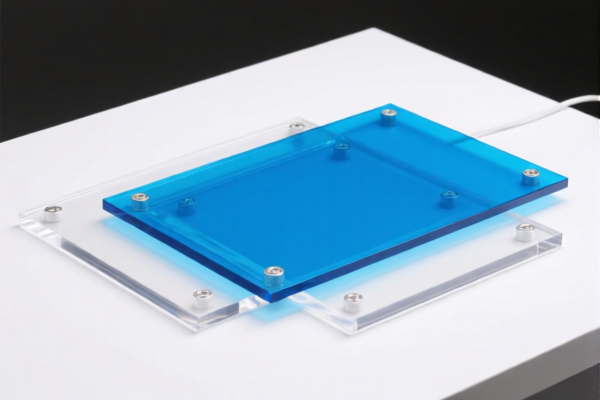
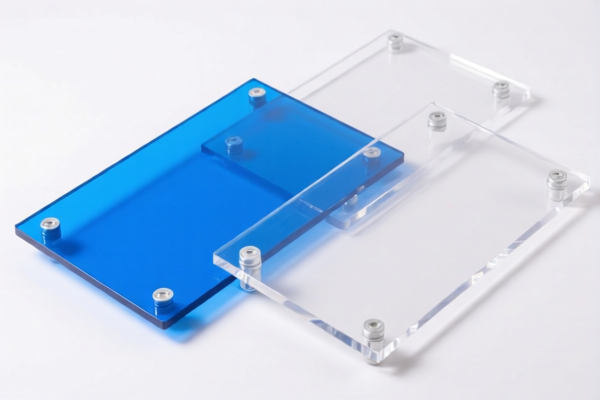
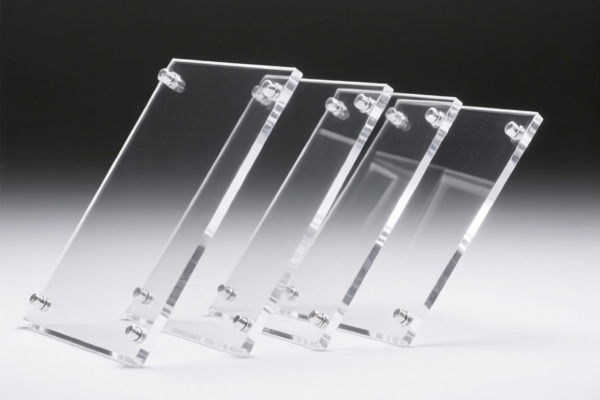
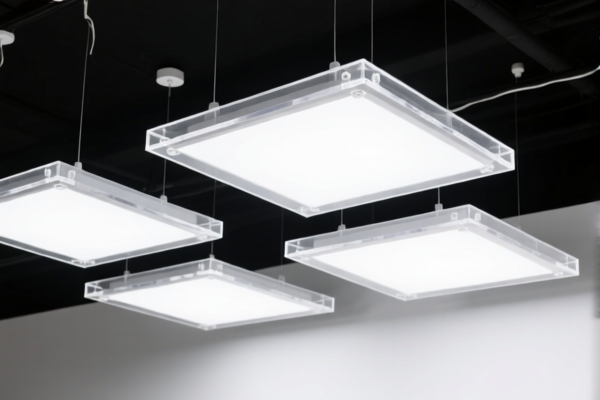
AI Analysis
💡 Acrylic Plastic Lighting Panels (Lighting Diffusers & Structural Components)
🌐 HS Code Reference & Customs Clearance Guide | 2026 Latest Tariff Analysis | Professional Transit Strategy
📌 I. Product Definition & Classification: What Exactly Are "Acrylic Lighting Panels"?
Acrylic plastic lighting panels are primarily used as light diffusers, structural supports, or aesthetic covers for LED and fluorescent lighting fixtures. In international trade, their classification depends strictly on their primary function and structural form:
- Structural Extrusions (Profiles/Bars): If the acrylic is shaped into bars, rods, or specific extruded profiles used as the main structural frame or support piece, it falls under Chapter 39.16.
- Other Fabricated Parts: If the acrylic is cut, bent, or fabricated into generic shapes that do not fit the "extruded profile" definition, or if it is part of a wider range of unspecified plastic goods, it falls under Chapter 39.26.
- Lighting Parts: If the product is specifically identified as a part of a lighting fixture (e.g., a diffuser panel attached to or designed exclusively for a lamp), it may be classified under Chapter 94.05.
⚠️ Key Distinction Point:
- If it is an extruded shape (bar/rod/profile) → 3916 (Higher Tariff due to trade measures).
- If it is a general plastic part (sheet/cut shape) → 3926 (Lower Tariff).
- If it is explicitly a lamp accessory → 9405 (Highest Tariff due to high base duty).
📦 II. HS Code Classification Details (2026 Latest Tariff Authority对照)
| HS Code | Product Description | Application Scenario | Tariff Profile |
|---|---|---|---|
3916.90.50.00 |
Acrylic plastic profiles; classified as plastic bars, rods, and extruded shapes. | Extruded acrylic bars, frames, or structural supports. | High (40.8%) |
3926.90.99.89 |
Acrylic plastic; other plastic articles not elsewhere specified or included. | Generic acrylic parts, cut panels, non-extruded forms. | Low (22.8%) |
3926.30.50.00 |
Acrylic plastic profiles; plastic articles for lighting structures. | Specific plastic components forming part of a lighting structure (but not classified as 9405). | Low (22.8%) |
3916.90.10.00 |
Acrylic corresponds to acrylic polymers; profiles correspond to bars, rods, and shapes. | Specific acrylic polymer extrusions. | Highest (41.5%) |
9405.92.00.00 |
Acrylic plastic parts; components for lamps and lighting fittings. | Diffusers, reflectors, or covers specifically for lighting fixtures. | Very High (38.7%) |
🔍 Important Reminder:
- "Extruded Profile" (3916): If the product is sold as a raw material in the form of a bar/rod/profile for further processing, it is classified here. Avoid this if possible due to high Section 301/122 tariffs. - "Other Plastic Articles" (3926): If the product is a finished part or a sheet cut to size, 3926.90.99.89 or 3926.30.50.00 is often more favorable (22.8% total tax). - "Lamp Parts" (9405): If clearly identified as a part of a lamp (e.g., "LED Light Diffuser"), it falls here. However, be cautious: The base duty is 3.7%, but the total tax reaches 38.7% due to high additional tariffs.
💰 III. 2026 Latest Tariff Rate Breakdown (Including Surtaxes & Policy Add-ons)
✅ Applicable Country: United States (US)
✅ Origin: China (CN)
✅ Effective Date: Ongoing (Includes Section 301 & 122 tariffs)
🎯 1. 3916.90.50.00 —— Acrylic Plastic Profiles (Extruded Bars/Rods)
| Item | Content |
|---|---|
| Base Duty Rate | 5.8% (ad valorem) |
| Section 301 Surcharge | +25.0% (USITC Footnote) |
| Section 122 Surcharge | +10.0% (Trade Act Section 122) |
| Total Tax Rate | 40.8% |
| Tax Calculation | CIF Value × 40.8% |
| De Minimis Exemption | ❌ Not Eligible (deny_de_minimis) |
| Legal Basis Path | IEEPA:9903.01.25 → USITC:3916.90.50.00 → FOOTNOTE:Section 122/301 |
📌 Explanation:
- This classification triggers the highest standard surcharge (25% Section 301 + 10% Section 122). - Total 40.8% makes this classification very expensive for importers. - Strategy: Avoid classifying as "3916" unless the product is strictly a raw extruded profile for further manufacturing.
🎯 2. 3926.90.99.89 —— Other Plastic Articles (Unspecified)
| Item | Content |
|---|---|
| Base Duty Rate | 5.3% (ad valorem) |
| Section 301 Surcharge | +7.5% (USITC Footnote) |
| Section 122 Surcharge | +10.0% (Trade Act Section 122) |
| Total Tax Rate | 22.8% |
| Tax Calculation | CIF Value × 22.8% |
| De Minimis Exemption | ❌ Not Eligible (deny_de_minimis) |
| Legal Basis Path | IEEPA:9903.01.24 → USITC:3926.90.99.89 → FOOTNOTE:Section 122/301 |
📌 Note:
- This is the most cost-effective classification for generic acrylic parts. - The Section 301 surcharge is only 7.5% (compared to 25% for 3916). - Strategy: Use this if the acrylic panel is a fabricated part (cut, bent) rather than an extruded profile.
🎯 3. 3926.30.50.00 —— Plastic Articles for Lighting Structures
| Item | Content |
|---|---|
| Base Duty Rate | 5.3% (ad valorem) |
| Section 301 Surcharge | +7.5% (USITC Footnote) |
| Section 122 Surcharge | +10.0% (Trade Act Section 122) |
| Total Tax Rate | 22.8% |
| Tax Calculation | CIF Value × 22.8% |
| De Minimis Exemption | ❌ Not Eligible (deny_de_minimis) |
| Legal Basis Path | IEEPA:9903.01.24 → USITC:3926.30.50.00 → FOOTNOTE:Section 122/301 |
📌 Note:
- Similar to3926.90.99.89, this classification also benefits from the lower 7.5% Section 301 surcharge. - Specifically mentions "lighting structures," making it a strong candidate for acrylic lighting panels if they are considered structural components rather than finished lamp parts.
🎯 4. 3916.90.10.00 —— Acrylic Polymer Profiles (Specific)
| Item | Content |
|---|---|
| Base Duty Rate | 6.5% (ad valorem) |
| Section 301 Surcharge | +25.0% (USITC Footnote) |
| Section 122 Surcharge | +10.0% (Trade Act Section 122) |
| Total Tax Rate | 41.5% |
| Tax Calculation | CIF Value × 41.5% |
| De Minimis Exemption | ❌ Not Eligible (deny_de_minimis) |
| Legal Basis Path | IEEPA:9903.01.25 → USITC:3916.90.10.00 → FOOTNOTE:Section 122/301 |
📌 Warning:
- This is the most expensive classification (41.5%). - Avoid this unless the product is strictly defined as an "acrylic polymer bar/rod" for industrial use.
🎯 5. 9405.92.00.00 —— Parts of Lamps and Lighting Fittings
| Item | Content |
|---|---|
| Base Duty Rate | 3.7% (ad valorem) |
| Section 301 Surcharge | +25.0% (USITC Footnote) |
| Section 122 Surcharge | +10.0% (Trade Act Section 122) |
| Total Tax Rate | 38.7% |
| Tax Calculation | CIF Value × 38.7% |
| De Minimis Exemption | ❌ Not Eligible (deny_de_minimis) |
| Legal Basis Path | IEEPA:9903.01.25 → USITC:9405.92.00.00 → FOOTNOTE:Section 122/301 |
📌 Caution:
- Although the base duty is low (3.7%), the Section 301 surcharge is 25% (not 7.5%). - Total tax 38.7% is still significantly higher than the 3926 options (22.8%). - Strategy: Do not use this classification unless you have no other choice. The 7.5% surcharge on 3926 is much more favorable than the 25% surcharge on 9405.
🛠️ IV. Customs Clearance Practical Advice (Pitfall Avoidance Guide)
✅ 1. Document Preparation Checklist (Essential)
| Document | Must Provide | Explanation |
|---|---|---|
| ✅ Product Spec Sheet | ✔️ | Details dimensions, thickness, material (PMMA/Acrylic), and finish. |
| ✅ Product Photos | ✔️ | Clear images showing the item is a panel/shape, not just a raw extrusion if claiming 3926. |
| ✅ Commercial Invoice | ✔️ | Describe accurately: "Acrylic Light Diffuser Panel" or "Acrylic Structural Profile." |
| ✅ Packing List | ✔️ | List items separately if mixed with other goods. |
| ✅ Usage Declaration | ✔️ | State if it is a "part of a lamp" (9405) or a "general plastic article" (3926). |
✅ 2. Declaration Tips (Key Mantra)
🔥 "Profile = 3916 (Expensive), Part = 3926 (Cheaper), Lamp Part = 9405 (Also Expensive)!"
| Scenario | Correct Declaration | Wrong Approach |
|---|---|---|
| Extruded Bar/Rod for Frame | 3916.90.50.00 |
Misdeclare as "Part" → Risk of penalty |
| Cut/Bent Diffuser Panel | 3926.90.99.89 |
Misdeclare as "Profile" → Pay 40.8% instead of 22.8% |
| Generic Lighting Support | 3926.30.50.00 |
Misdeclare as "Lamp Part" → Pay 38.7% instead of 22.8% |
| Final Lamp Diffuser | 9405.92.00.00 |
(Only if clearly a lamp part) |
✅ 3. Special Case Handling
| Scenario | Handling Advice |
|---|---|
| Mixed Shipment | Separate "Extruded Profiles" from "Cut Panels" in the invoice. Do not mix them under one HS Code. |
| OEM Lighting Panels | If the panel is custom-cut for a specific lamp, consider 3926.90.99.89 if it can be argued as a "general plastic article" rather than a "lamp part." |
| Acrylic Sheets vs. Profiles | Sheets are often classified under 3920 or 3921, but if cut into specific shapes for lighting, 3926 is common. Check if the sheet is "unworked" or "worked." |
| Lighting Fixture Assembly | If the acrylic panel is sold with the LED driver and housing, it may be classified as a complete lighting fixture (9405.11-9405.40), which has different tariff rates. Do not declare parts separately if sold as a unit. |
🌍 V. Global Market Customs Comparison (2026 Latest)
| Country/Region | Recommended HS Code | Tariff (China Origin) | Certification Required | Note |
|---|---|---|---|---|
| 🇺🇸 USA | 3926.90.99.89 |
22.8% | FCC (if part of electronic device) | Avoid 3916/9405 for cost savings. |
| 🇨🇳 China | 3926.90.99.89 |
5% | CCC (if applicable) | Low base duty, no extra surcharges. |
| 🇪🇺 EU | 3926.90.99.90 |
3.7% (MFN) | CE + RoHS | No Section 301/122 equivalent. |
| 🇬🇧 UK | 3926.90.99.00 |
3.9% | UKCA | Post-Brexit tariffs generally lower. |
| 🇦🇺 Australia | 3926.90.99.00 |
5% | RCM | No extra surcharges. |
📌 Conclusion:
- USA imposes significant surcharges (Section 301 & 122).
- Choosing3926over3916or9405saves ~18% in total tax.
- China, EU, UK, and Australia have much lower or no additional surcharges on these items.
📌 VI. Common Errors & Pitfall Guide (Blood-Teaching Lessons)
❌ Error 1: Declaring "Acrylic Lighting Panel" as 3916 (Profile) when it is a cut/bent part.
👉 Consequence: Pay 40.8% instead of 22.8% → 18% extra cost!
❌ Error 2: Declaring "Acrylic Lighting Panel" as 9405 (Lamp Part) when it is a general plastic article.
👉 Consequence: Pay 38.7% instead of 22.8% → 15.9% extra cost!
❌ Error 3: Mixing extruded profiles and cut panels in one HS Code.
👉 Consequence: Customs may audit and reclassify all items at the highest rate.
❌ Error 4: Using vague descriptions like "Plastic Item."
👉 Consequence: Customs will assign a default HS Code with potentially higher tariffs.
✅ Correct Practice:
"Acrylic Light Diffuser Panel, Cut and Bent, Model XYZ, For LED Lighting, Not an Extruded Profile"
🎯 VII. Conclusion: Smart Classification, Save Money, Ensure Smooth Clearance!
🎯 Remember the Mantra:
🔹 "Profile is 3916 (41%), Part is 3926 (23%), Lamp Part is 9405 (39%). Choose 3926 to Save!"
🔹 "HS Code Determines Cost, 18% Difference is Huge, Wrong Code Means Overpaying!"
📌 Tip:
If your acrylic panels are originating from Vietnam, Mexico, or Thailand, you may qualify for IEEPA Exemptions or lower Section 301 rates.
Recommendation: Apply for a Customs Ruling (Pre-Ruling) before shipment to confirm the correct HS Code (3926.90.99.89 vs. 3926.30.50.00).
📣 Immediate Action:
📞 Contact a professional customs broker + Provide Product Photos + Apply for HS Code Pre-Ruling
🚀 Let your acrylic panels clear customs smoothly, save costs, and boost profits!
✨ Professional Clearance Starts with Accurate Classification!
💼 Every cent of your cost deserves precise calculation!
Customer Reviews
About HS Code Classification
The Harmonized System (HS) is an internationally standardized nomenclature developed by the World Customs Organization (WCO) to classify traded products. Over 200 countries use the HS system as the basis for customs tariffs, trade statistics, and import/export regulations.
Each HS code follows a hierarchical structure:
- Chapter (2 digits) — Broad category of goods (e.g., Chapter 84: Machinery and Mechanical Appliances)
- Heading (4 digits) — More specific grouping within the chapter
- Subheading (6 digits) — Internationally standardized breakdown, used by all WCO member countries
- National subdivisions (8-10 digits) — Country-specific extensions for further classification, such as US HTSUS 10-digit codes
Correct HS code classification is essential for smooth customs clearance, accurate duty payment, and compliance with trade regulations. Misclassification can lead to customs delays, overpayment of duties, or penalties.
When importing from CN to US, the applicable tariff rates may include:
- Most-Favored-Nation (MFN) rate — The standard duty rate applied to WTO members
- General rate — Applied to countries without trade agreements
- Trade remedy duties — Additional tariffs such as Section 301 (anti-dumping), Section 232 (national security), or countervailing duties
The information provided on this page is for reference purposes only. For official classification, please consult with your local customs authority or a licensed customs broker.