activated carbon ammonia remover
CN → US| HS Code | Tariff Rate | Origin | Destination | Doc |
|---|---|---|---|---|
| 3802100050 | 39.8% | CN | US | Official Doc |
| 3808594000 | 40.0% | CN | US | Official Doc |
| 3808945095 | 40.0% | CN | US | Official Doc |
| 3802100050 | 39.8% | CN | US | Official Doc |
| 3808594000 | 40.0% | CN | US | Official Doc |
Product Images
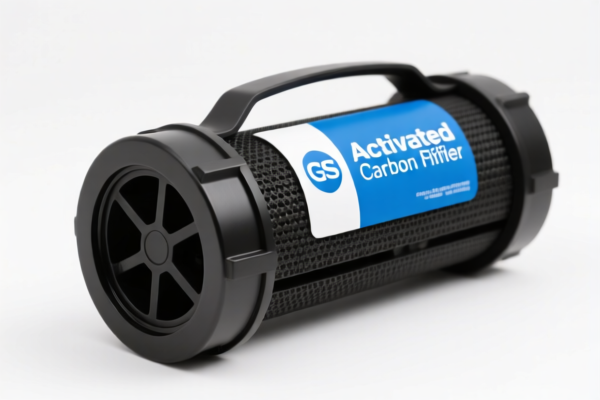
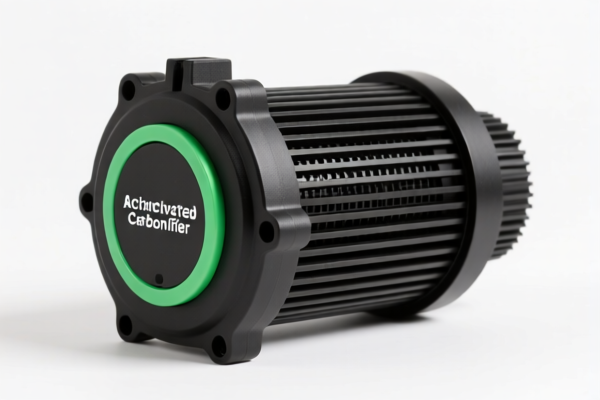
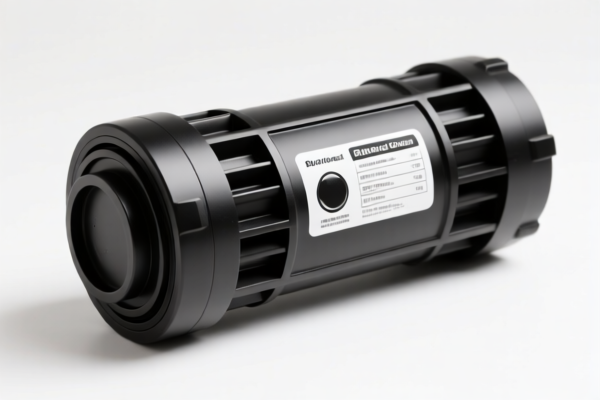
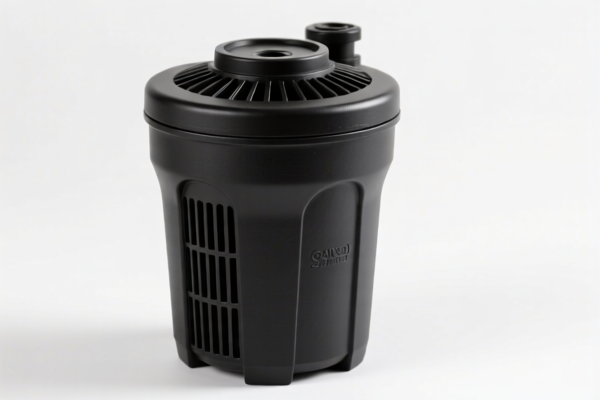
AI Analysis
🌿 Activated Carbon Ammonia Remover (Air Purification & Sanitization)
🌐 HS Code Reference & Customs Clearance Guide | 2026 Latest Tariff Analysis | Professional Clearance Strategy
📌 I. Product Definition & Classification: What Exactly Are You Importing?
An "Activated Carbon Ammonia Remover" is a specialized filtration or chemical treatment product designed to neutralize ammonia gases (NH₃) through adsorption (physical capture by carbon pores) and/or chemical reaction (if combined with other disinfectants).
In international trade, the classification depends on the primary function and composition:
1. Activated Carbon (Physical Adsorption):
If the primary mechanism is the porous structure of activated carbon trapping ammonia molecules, it falls under Chapter 38, Heading 3802.
2. Disinfectant/Sanitizer (Chemical Action):
If the product is marketed primarily as a "disinfectant," "sanitizer," or "chemical agent" that kills bacteria/viruses (and uses carbon as a secondary aid or carrier), it may fall under Chapter 38, Heading 3808.
⚠️ Key Distinction Point:
- If it is pure activated carbon or carbon-based filtration media → 3802.10.00
- If it is a liquid/powder/spray disinfectant with carbon additives → 3808.59.40 or 3808.94.50
📦 II. HS Code Classification Details (2026 Latest Tariff Authority Match)
Based on the provided data, here are the four potential HS Codes with their specific logical justifications:
| HS Code | Summary/Justification | Primary Function | Total Tax Rate |
|---|---|---|---|
| 3802.10.00.50 | Material-Based: Matches material; Activated Carbon composition meets the code requirements. | Adsorption/Material | 39.8% |
| 3808.59.40.00 | Use-Based: Matches usage as a sterilization/disinfection agent and chemical preparation. | Disinfection/Chemical | 40.0% |
| 3808.94.50.95 | Function-Based: Matches usage as a "other disinfectant" containing activated carbon auxiliary components. | Mixed Function (Disinfectant + Carbon) | 40.0% |
| 3802.10.00.50 | Material-Based: Classification based on Activated Carbon material (Duplicate entry for emphasis). | Adsorption/Material | 39.8% |
| 3808.59.40.00 | Use-Based: Classification based on Disinfectant usage (Duplicate entry for emphasis). | Disinfection/Chemical | 40.0% |
🔍 Important Note:
- The code 3802.10.00.50 has the lowest total tax rate (39.8%).
- The codes 3808.59.40.00 and 3808.94.50.95 have a slightly higher total tax rate (40.0%).
- The difference is small (0.2%), but classification accuracy is critical to avoid customs penalties.
💰 III. 2026 Latest Tariff Rate Breakdown (Including Surtaxes & Policy Add-ons)
✅ Applicable Country: USA (US)
✅ Origin: China (CN)
✅ Effective Date: Post-2025 (Including subsequent imports)
🎯 1. 3802.10.00.50 —— Activated Carbon (Material Classification)
| Item | Content |
|---|---|
| Base Tariff | 4.8% |
| Surtax (Section 301) | +25.0% |
| 122 Clause Tariff | +10.0% |
| Total Tax Rate | 39.8% |
| Calculation | CIF Value × 39.8% |
| De Minimis Exemption | ❌ Not Eligible (High tariff rates exclude this from Section 321 benefits) |
| Legal Basis Path | USITC:3802.10.00.50 → 301 Surtax: 25% → Section 122: 10% |
📌 Explanation:
- Base Rate (4.8%): Standard Most Favored Nation (MFN) rate for activated carbon.
- Section 301 Surtax (25%): Added by USITC for Chinese-origin goods.
- Section 122 Tariff (10%): Additional surcharge applied to specific chemical/filtration materials from China.
- Total 39.8%: This is the most favorable rate among the options if the product is strictly classified as activated carbon.
🎯 2. 3808.59.40.00 —— Disinfectants & Chemical Preparations (Use Classification)
| Item | Content |
|---|---|
| Base Tariff | 5.0% |
| Surtax (Section 301) | +25.0% |
| 122 Clause Tariff | +10.0% |
| Total Tax Rate | 40.0% |
| Calculation | CIF Value × 40.0% |
| De Minimis Exemption | ❌ Not Eligible |
| Legal Basis Path | USITC:3808.59.40.00 → 301 Surtax: 25% → Section 122: 10% |
📌 Explanation:
- Base Rate (5.0%): Standard rate for other disinfectants.
- Surtax & 122 Clause: Same as above (+35% total add-ons).
- Total 40.0%: Slightly higher than 3802 due to the higher base rate (5% vs 4.8%).
- Risk: If the product is seen as a "disinfectant" rather than just "carbon," you may be forced into this higher bracket.
🎯 3. 3808.94.50.95 —— Other Disinfectants with Carbon Auxiliary
| Item | Content |
|---|---|
| Base Tariff | 5.0% |
| Surtax (Section 301) | +25.0% |
| 122 Clause Tariff | +10.0% |
| Total Tax Rate | 40.0% |
| Calculation | CIF Value × 40.0% |
| De Minimis Exemption | ❌ Not Eligible |
| Legal Basis Path | USITC:3808.94.50.95 → 301 Surtax: 25% → Section 122: 10% |
📌 Explanation:
- This code is for complex formulations where disinfection is the primary claim, but activated carbon is a secondary component.
- Total 40.0%: Same as the previous disinfectant code.
🛠️ IV. Customs Clearance Practical Advice (Real-World Pitfall Avoidance)
✅ 1. Preparation Checklist (Mandatory)
| Document | Required | Notes |
|---|---|---|
| ✅ Product Specification Sheet | ✔️ | Clearly state: "Activated Carbon" content %, ammonia removal efficiency, and whether it contains active biocides/disinfectants. |
| ✅ Composition List | ✔️ | If it contains chemicals (e.g., quaternary ammonium compounds), it leans toward 3808. If only carbon, lean toward 3802. |
| ✅ Product Photos | ✔️ | Show packaging, labels, and physical form (granules, powder, block, or liquid). |
| ✅ Third-Party Test Report | ✔️ | EPA registration (if disinfectant claim) or Carbon adsorption capacity test (if material claim). |
| ✅ Commercial Invoice | ✔️ | Describe accurately: "Activated Carbon Filter Media for Ammonia Removal" vs. "Antibacterial Disinfectant Spray." |
| ✅ Country of Origin Certificate | ✔️ | To confirm China origin and apply correct surtaxes. |
✅ 2. Declaration Strategy (Key Mantra)
🔥 “Material First, Function Second: Carbon = 3802, Disinfectant = 3808!”
| Scenario | Recommended HS Code | Avoid |
|---|---|---|
| Pure Activated Carbon (Granules, Powder, Blocks) | 3802.10.00.50 | Do NOT call it "Disinfectant" |
| Carbon + Chemical Disinfectant (Liquid/Spray) | 3808.59.40.00 or 3808.94.50.95 | Do NOT call it just "Carbon" |
| Carbon Filter Housing (with carbon inside) | 3802.10.00.50 (for carbon) + 8421.39 (for housing) | Do NOT mix carbon and housing in one line if possible |
📌 Critical Tip:
- If your product is just activated carbon (even if marketed for ammonia), try to declare it under 3802.10.00.50 to save 0.2% on base tax and potentially simplify classification.
- If you make health/medical claims (e.g., "kills 99.9% of germs"), CBP may force you into 3808, increasing scrutiny and tax.
✅ 3. Special Case Handling
| Situation | Handling Advice |
|---|---|
| OEM Custom Carbon | Provide design specs and carbon source (coconut, wood, coal) to justify 3802. |
| "Green" or "Eco" Claims | Ensure no prohibited pesticides/biocides are present. If none, stick to 3802. |
| Combined Products | If sold as a "kit" (carbon + dispenser), declare carbon separately. |
| Liquid Ammonia Removers | Must go to 3808. Ensure EPA compliance if used in US. |
🌍 V. Global Market Clearance Comparison (2026 Latest)
| Country/Region | Recommended HS Code | Tariff | Certification | Notes |
|---|---|---|---|---|
| 🇺🇸 USA | 3802.10.00.50 |
39.8% | None | Lowest tax option if material-only. |
| 🇺🇸 USA | 3808.59.40.00 |
40.0% | EPA Registration | If disinfectant claims are made. |
| 🇨🇳 China | 3802.10.00.50 |
4.8% | None | No surtaxes in China. |
| 🇪🇺 EU | 3802.10.00 |
4.8% | REACH | Lower tariffs in EU/UK. |
| 🇯🇵 Japan | 3802.10.00 |
4.3% | FSC | Low tariffs, strict purity checks. |
📌 Conclusion:
- USA imposes high surtaxes on Chinese-origin goods.
- 3802.10.00.50 is the most cost-effective classification if the product is primarily activated carbon.
- Avoid "Disinfectant" claims if possible to stay under 3802.
📌 VI. Common Errors & Pitfalls (Lessons Learned)
❌ Error 1: Declaring "Activated Carbon" but the product contains bleach or alcohol.
👉 Consequence: Misclassification → 3808 applies → Higher scrutiny + 40.0% tax + EPA violations.
❌ Error 2: Using "Disinfectant" in the description for pure carbon.
👉 Consequence: CBP may reclassify to 3808 for "chemical preparation" → 40.0% tax + potential penalties.
❌ Error 3: Ignoring the Section 122 Tariff.
👉 Consequence: Underpayment → Back taxes + Interest. Always include the 10% 122 clause in calculations.
❌ Error 4: Mixing "Filter Housing" and "Carbon" in one HS Code.
👉 Consequence: Complex valuation → Delays. Declare separately.
✅ Correct Approach:
“Activated Carbon, Coconut Shell, Granular, for Air Filtration, Non-Chemical, Model XYZ, Made in China”
🎯 VII. Conclusion: Precision Classification Saves Money!
🎯 Remember the Mantra:
🔹 “Carbon is 3802 (39.8%), Disinfectant is 3808 (40.0%).”
🔹 “No chemical claims, no extra tax. Pure carbon wins the game!”
🔹 “122 Clause adds 10%, Section 301 adds 25%. Know your surtaxes!”
📌 Pro Tip:
- If your product is pure activated carbon, insist on 3802.10.00.50 to save the 0.2% base tax difference and avoid chemical compliance burdens.
- Apply for an Advance Ruling from CBP if your product is on the borderline. It provides legal certainty and prevents post-import audits.
📣 Act Now:
📞 Contact a Licensed Customs Broker + Provide Product Composition + Request Pre-Ruling
🚀 Ensure Smooth Clearance, Minimize Duties, and Maximize Profit!
✨ Professional Clearance Starts with Accurate Classification!
💼 Every Cent Saved is a Cent Earned!
Customer Reviews
About HS Code Classification
The Harmonized System (HS) is an internationally standardized nomenclature developed by the World Customs Organization (WCO) to classify traded products. Over 200 countries use the HS system as the basis for customs tariffs, trade statistics, and import/export regulations.
Each HS code follows a hierarchical structure:
- Chapter (2 digits) — Broad category of goods (e.g., Chapter 84: Machinery and Mechanical Appliances)
- Heading (4 digits) — More specific grouping within the chapter
- Subheading (6 digits) — Internationally standardized breakdown, used by all WCO member countries
- National subdivisions (8-10 digits) — Country-specific extensions for further classification, such as US HTSUS 10-digit codes
Correct HS code classification is essential for smooth customs clearance, accurate duty payment, and compliance with trade regulations. Misclassification can lead to customs delays, overpayment of duties, or penalties.
When importing from CN to US, the applicable tariff rates may include:
- Most-Favored-Nation (MFN) rate — The standard duty rate applied to WTO members
- General rate — Applied to countries without trade agreements
- Trade remedy duties — Additional tariffs such as Section 301 (anti-dumping), Section 232 (national security), or countervailing duties
The information provided on this page is for reference purposes only. For official classification, please consult with your local customs authority or a licensed customs broker.