activated carbon brick
CN → US| HS Code | Tariff Rate | Origin | Destination | Doc |
|---|---|---|---|---|
| 3802100020 | 39.8% | CN | US | Official Doc |
| 3802100050 | 39.8% | CN | US | Official Doc |
| 3802100010 | 39.8% | CN | US | Official Doc |
| 8421290065 | 35.0% | CN | US | Official Doc |
| 4402900100 | 35.0% | CN | US | Official Doc |
Product Images
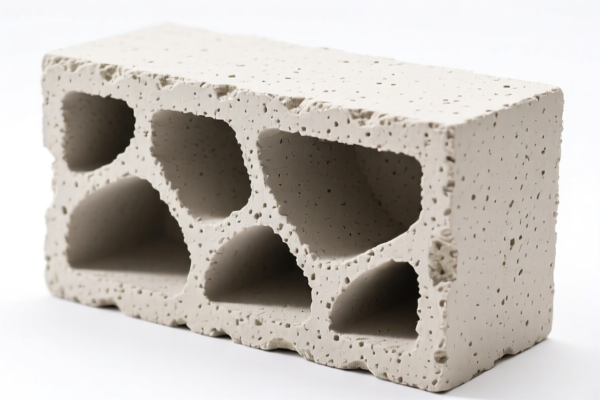
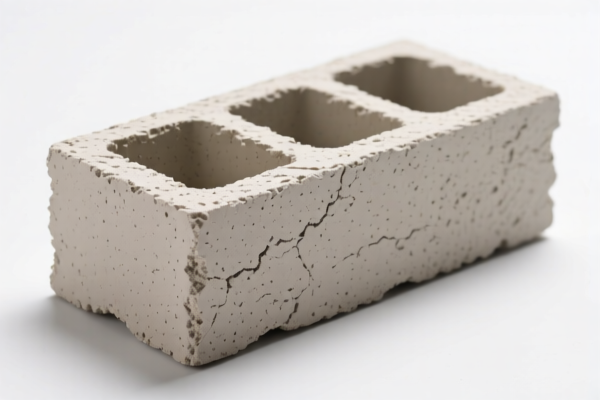
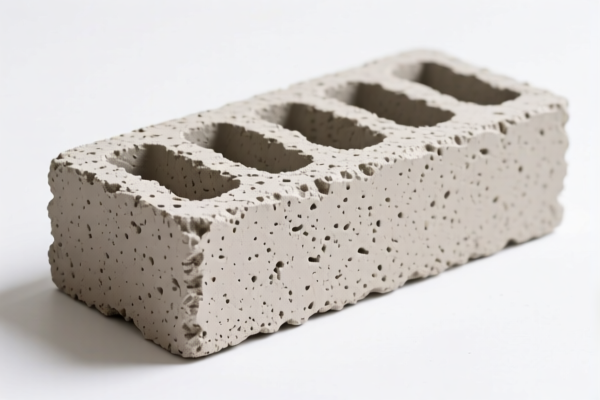
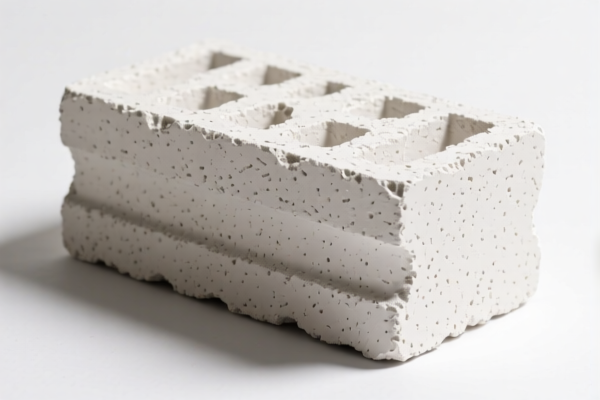
AI Analysis
🧱 Activated Carbon Brick (Industrial Decolorization & Filtration)
🌐 HS Code Reference & Customs Clearance Guide | 2026 Latest Tariff Analysis | Professional Clearance Strategy
📌 I. Product Definition & Classification: What is an "Activated Carbon Brick"?
Activated Carbon Brick is a specialized form of activated carbon, molded into a brick or block shape. It is primarily used for industrial decolorization, liquid/gas filtration, and purification. Unlike loose granular carbon, bricks offer structural integrity, reducing pressure drop in filtration systems and preventing channeling.
In international trade, these products are classified based on their material composition (carbon source) and physical form (block/brick vs. loose). The classification logic is critical because it determines whether the product falls under "Other Activated Carbon" or specific categories like "Wood Charcoal" or "Filtration Media."
⚠️ Key Distinction Point:
- If the product is explicitly described as "Activated Carbon" (regardless of shape like brick/block/powder) → It typically falls under HS 3802.10.
- If the product is described as a "Filtration/Percolation Medium" (emphasizing function over material identity) → It might be classified under HS 8421.29.
- If the product is made from wood and lacks specific "activated" processing details in documentation → It might be misclassified under HS 4402 (Charcoal), but HS 3802 is the correct technical classification for activated carbon.
📦 II. HS Code Classification Details (2026 Latest Tariff Authority Comparison)
| HS Code | Product Description | Application Scenario | Material/State | Total Tax Rate |
|---|---|---|---|---|
3802.10.00.20 |
Activated Carbon Brick (Industrial Decolorization) | Industrial decolorization processes (sugar, oil, chemicals) | Activated Carbon (Coconut or other sources) | 39.8% |
3802.10.00.50 |
Activated Carbon Brick (Other Forms) | General industrial use, gas phase adsorption | Activated Carbon (Brick shape, "Other" category) | 39.8% |
3802.10.00.10 |
Activated Carbon Block | General filtration, water treatment | Activated Carbon (Block shape) | 39.8% |
8421.29.00.65 |
Activated Carbon Block (Filtration Medium) | Liquid or gas filtration/purification devices | Filtration/Purification Material | 35.0% |
4402.90.01.00 |
Activated Carbon Block (Charcoal Class) | Incorrect/Misclassification Risk: Treated as wood charcoal | Charcoal/Wood Carbon (Block shape) | 35.0% |
🔍 Critical Warning:
- HS 3802 is the Primary Classification: For activated carbon, regardless of shape (brick, block, powder), HS 3802.10 is the most accurate technical classification.
- HS 8421 vs. HS 3802: While HS 8421.29 covers "filtration media," customs often prioritize the material nature (Carbon) over the function (Filter) for activated carbon. However, if declared specifically as a "filter element/component," HS 8421 may apply, but it carries a lower tax rate (35% vs 39.8%), creating a risk of audit if not properly justified.
- HS 4402 is Dangerous: Do not classify activated carbon as "Wood Charcoal" (HS 4402) unless it is non-activated. Activated carbon has a higher iodine value and specific surface area, making it distinct from ordinary charcoal. Misclassification here can lead to severe penalties.
💰 III. 2026 Latest Tariff Rate Details (Including Surcharges & Policy Add-ons)
✅ Applicable Country: USA (US)
✅ Country of Origin: China (CN)
✅ Effective Date: November 10, 2025 (for subsequent imports)
🎯 1. 3802.10.00.20, 3802.10.00.50, 3802.10.00.10 —— Activated Carbon (Block/Brick)
| Item | Content |
|---|---|
| Base Tariff | 4.8% (ad valorem) |
| Section 301 Surcharge | +25.0% (USITC Footnote for Section 301 goods) |
| Section 122 Tariff | +10.0% (Specific provision for certain carbon products or general China surcharge) |
| Total Tax Rate | 39.8% |
| Tax Calculation | CIF Value × 39.8% |
| De Minimis Exemption | ❌ Not Available (deny_de_minimis) |
| Legal Basis Path | USITC:3802.10.00 → SECTION301:25% → SECTION122:10% |
📌 Explanation:
- Base Tariff (4.8%): The standard Most Favored Nation (MFN) rate for activated carbon.
- Section 301 (25%): Applies to most Chinese-manufactured carbon products under trade war tariffs.
- Section 122 (10%): Additional surcharge applicable to this classification from China.
- Total: 39.8%. This is a high-cost import, significantly impacting profit margins.
🎯 2. 8421.29.00.65 —— Filtration/Purification Medium
| Item | Content |
|---|---|
| Base Tariff | 0.0% |
| Section 301 Surcharge | +25.0% |
| Section 122 Tariff | +10.0% |
| Total Tax Rate | 35.0% |
| Tax Calculation | CIF Value × 35.0% |
| De Minimis Exemption | ❌ Not Available |
| Legal Basis Path | USITC:8421.29.00 → SECTION301:25% → SECTION122:10% |
📌 Note:
- The base tariff is 0%, which is significantly lower than HS 3802.
- However, justification is key: You must prove the product is a "filtration medium" and not just "activated carbon." If customs determines the product is primarily "activated carbon" (HS 3802), you will face back taxes + penalties.
- Risk: High audit risk. Use only if the product is clearly integrated into a filtration unit or sold as a specific "filter element."
🎯 3. 4402.90.01.00 —— Charcoal (Incorrect but Potential Misclassification)
| Item | Content |
|---|---|
| Base Tariff | 0.0% |
| Section 301 Surcharge | +25.0% |
| Section 122 Tariff | +10.0% |
| Total Tax Rate | 35.0% |
| Tax Calculation | CIF Value × 35.0% |
| De Minimis Exemption | ❌ Not Available |
📌 Warning:
- Do Not Use: This code is for non-activated charcoal (e.g., barbecue charcoal, industrial fuel charcoal).
- Activated carbon has undergone chemical/physical activation, changing its nature from "charcoal" to "activated carbon."
- Misclassifying as HS 4402 is a clear violation of customs rules and can result in seizure, fines, and loss of import privileges.
🛠️ IV. Customs Clearance Practical Advice (实战避坑指南)
✅ 1. Required Documentation Checklist (Mandatory)
| Document | Required | Explanation |
|---|---|---|
| ✅ Product Specification Sheet | ✔️ | Must clearly state "Activated Carbon," iodine value, ash content, and density. |
| ✅ Material Composition Report | ✔️ | Confirm source (coconut, wood, coal) and activation process. |
| ✅ Product Photos | ✔️ | Show brick/block shape, packaging, and labeling. |
| ✅ Commercial Invoice | ✔️ | Use precise description: "Activated Carbon Brick, for Industrial Decolorization." Avoid vague terms like "Carbon Block." |
| ✅ Certificate of Origin (CO) | ✔️ | Essential for proving Chinese origin and applying correct surcharges. |
| ✅ Third-Party Test Report | ✔️ | Prove activation degree (e.g., Iodine Number > 900 mg/g) to distinguish from regular charcoal. |
| ✅ Packing List | ✔️ | Clearly list gross/net weight and dimensions. |
✅ 2. Declaration Tips (Key Mantras)
🔥 “Declare 'Activated Carbon,' not just 'Carbon.' Specify 'Brick/Block' shape. Justify 'Filtration' only if integral.”
| Scenario | Correct Declaration | Wrong Practice |
|---|---|---|
| Standard Activated Carbon Brick | 3802.10.00.20 (Industrial Decolorization) |
Declare as 8421 to save 4.8% → Audit Risk |
| Activated Carbon Block | 3802.10.00.10 (Block Form) |
Declare as 4402 (Charcoal) → Illegal Misclassification |
| Filtration Media in Unit | 8421.29.00.65 (If part of a system) |
Isolated bricks declared as 8421 → Rejection |
| Coconut vs. Wood Source | Mention source in specs | Ignore source → May affect "Other" vs. "Coconut" subcodes |
✅ 3. Special Case Handling
| Scenario | Handling Advice |
|---|---|
| OEM Custom Bricks | Provide customer PO + design specs. Ensure "Activated" is in the name. |
| Bricks with Binder | Declare as "Activated Carbon with Binders." Still HS 3802. |
| Mixed Packets (Granules + Bricks) | Split Declaration: Granules under 3802.10.00.90 (if applicable), Bricks under 3802.10.00.xx. Do not mix. |
| Samples vs. Commercial | Both require full tariff payment. No de minimis exemption for Section 301/122 goods. |
🌍 V. Global Market Clearance Comparison (2026 Latest)
| Country/Region | Recommended HS Code | Tariff | Certification | Note |
|---|---|---|---|---|
| 🇺🇸 USA | 3802.10.00.20 |
39.8% (301+122) | None Specific | High tariff; ensure accurate description. |
| 🇨🇳 China | 3802.10.00 |
4.8% (MFN) | None | Low tariff; no surcharges. |
| 🇪🇺 EU | 3802.10 |
0% | REACH Compliance | No Section 301/122; focus on REACH. |
| 🇬🇧 UK | 3802.10 |
0% | UKCA | Similar to EU post-Brexit. |
| 🇦🇺 Australia | 3802.10 |
5% | None | Low tariff; no surcharges. |
📌 Conclusion:
- USA is the most expensive market due to Section 301 and 122 tariffs.
- EU/UK/Australia/China have significantly lower or zero base tariffs, but compliance with environmental standards (REACH, etc.) is critical.
- Avoid Misclassification: Trying to "game" the system by using HS 4402 or8421incorrectly can lead to severe penalties in the US.
📌 VI. Common Mistakes & Pitfalls (Lessons Learned)
❌ Mistake 1: Declaring "Activated Carbon Brick" as "Charcoal" (HS 4402) to avoid higher taxes.
👉 Consequence: Customs will reject the declaration, demand back taxes (39.8% - 35.0% + penalties), and may seize goods.
❌ Mistake 2: Using "Filter" (HS 8421) for standalone carbon bricks without justification.
👉 Consequence: Audit for tariff evasion. If the brick is not part of a larger filtration unit, it is "Activated Carbon" (HS 3802).
❌ Mistake 3: Ignoring Section 122 Tariff (10%).
👉 Consequence: Underpayment of duties. The total tax is not just 301 (25%) but 25% + 10% + Base.
❌ Mistake 4: Vague Description: "Carbon Block."
👉 Consequence: Customs may classify under a less favorable subcode or demand additional documentation.
✅ Correct Approach:
"Activated Carbon Brick, Coconut Shell Based, Industrial Decolorization, Iodine Value >900mg/g, Model XYZ"
🎯 VII. Conclusion: Professional Declaration, Cost Efficiency!
🎯 Remember the Mantra:
🔹 "Activated Carbon = HS 3802 (39.8% US Tax).
🔹 Charcoal = HS 4402 (Do NOT use for Activated).
🔹 Filter = HS 8421 (Only if integral to unit).
🔹 De Minimis = NO for China Origin."
🔹 "HS Code Determines Destiny; 4.8% Base vs. 39.8% Total is a Huge Difference!"
📌 Tips:
- If your activated carbon is originating from Vietnam, Thailand, or Indonesia, you may avoid Section 301/122 tariffs (subject to rules of origin).
- Apply for Advance Ruling if unsure about the classification between HS 3802 and HS 8421.
- Ensure your technical specs prove the "activated" nature (iodine number, methylene blue value) to avoid being reclassified as "charcoal" or "carbon black."
📣 Immediate Action:
📞 Contact a Licensed Customs Broker + Provide Technical Specs + Apply for Advance Ruling
🚀 Ensure Smooth Clearance, Maximize Profits, Avoid Penalties!
✨ Professional Clearance Starts with Accurate Classification!
💼 Every Cent of Tax Is Accounted For!
Customer Reviews
About HS Code Classification
The Harmonized System (HS) is an internationally standardized nomenclature developed by the World Customs Organization (WCO) to classify traded products. Over 200 countries use the HS system as the basis for customs tariffs, trade statistics, and import/export regulations.
Each HS code follows a hierarchical structure:
- Chapter (2 digits) — Broad category of goods (e.g., Chapter 84: Machinery and Mechanical Appliances)
- Heading (4 digits) — More specific grouping within the chapter
- Subheading (6 digits) — Internationally standardized breakdown, used by all WCO member countries
- National subdivisions (8-10 digits) — Country-specific extensions for further classification, such as US HTSUS 10-digit codes
Correct HS code classification is essential for smooth customs clearance, accurate duty payment, and compliance with trade regulations. Misclassification can lead to customs delays, overpayment of duties, or penalties.
When importing from CN to US, the applicable tariff rates may include:
- Most-Favored-Nation (MFN) rate — The standard duty rate applied to WTO members
- General rate — Applied to countries without trade agreements
- Trade remedy duties — Additional tariffs such as Section 301 (anti-dumping), Section 232 (national security), or countervailing duties
The information provided on this page is for reference purposes only. For official classification, please consult with your local customs authority or a licensed customs broker.