activated carbon column
CN → US| HS Code | Tariff Rate | Origin | Destination | Doc |
|---|---|---|---|---|
| 8421290065 | 35.0% | CN | US | Official Doc |
| 8421390115 | 35.0% | CN | US | Official Doc |
| 8421390130 | 35.0% | CN | US | Official Doc |
Product Images
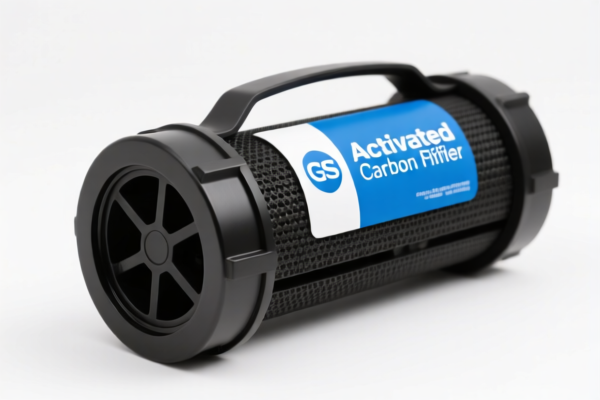
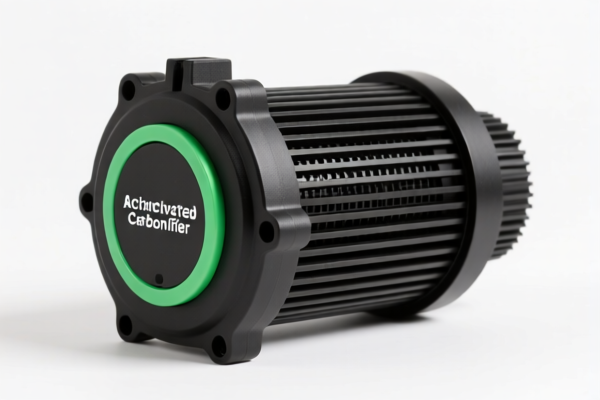
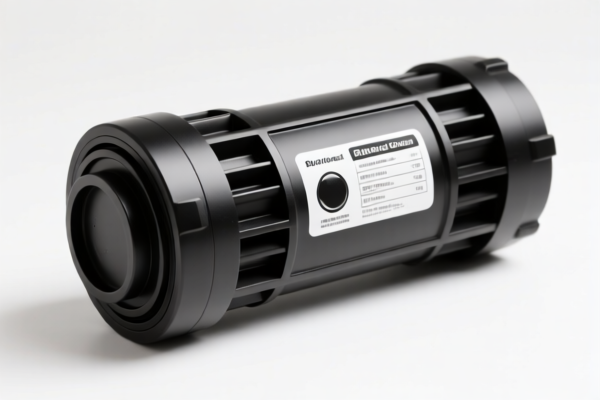
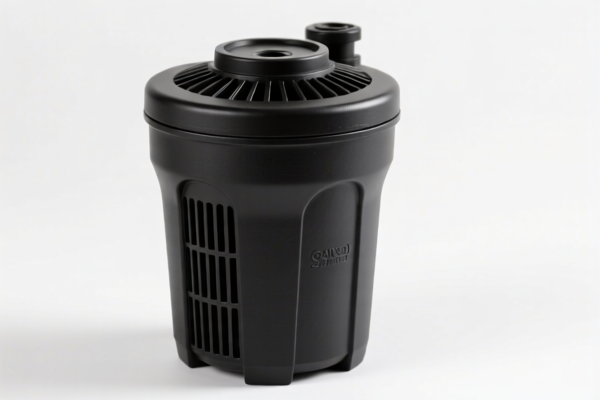
AI Analysis
🌿 Activated Carbon Column: HS Code Classification & Customs Clearance Guide (2026)
🌐 HS Code Reference & Customs Strategy | Latest Tariff Analysis | Professional Clearance Protocol
📌 I. Product Definition & Classification: What is an "Activated Carbon Column"?
Activated Carbon Columns are filtration components filled with porous carbon granules or pellets, designed to adsorb impurities from liquids or gases. In international trade, the classification depends strictly on the function (Liquid vs. Gas) and the form (Component vs. Device).
Key Distinction: * Liquid Filtration (HS 8421.29): Used for water treatment, chemical filtration, or liquid purification. * Gas/Air Filtration (HS 8421.39): Used for HVAC systems, industrial gas cleaning, or air purification units.
⚠️ Critical Classification Point:
- If the product is a cylindrical vessel/filter element specifically for liquids →归入 8421.29.00.65
- If the product is a column/device specifically for air/gas purification → 归入 8421.39.01.15 or 8421.39.01.30
📦 II. HS Code Classification Details (2026 Tariff Authority)
Based on the provided data, there are three specific HS Codes relevant to "Activated Carbon Columns," split by function and form.
| HS Code | Product Description | Application Scenario | Form/State |
|---|---|---|---|
8421.29.00.65 |
Coal-Based Activated Carbon Column | Liquid filtration or purification (e.g., water, chemicals) | Columnar shape, primary/semi-finished state |
8421.39.01.15 |
Activated Carbon Column (Air Purification) | Air purification, gas filtration | Device or component form |
8421.39.01.30 |
Activated Carbon Column (Air Purification) | Industrial gas cleaning, other gas filtration categories | Columnar device form |
🔍 Key Reminder:
- "Liquid" vs. "Gas" is the decisive factor.
- Misclassifying a gas filter as a liquid filter (or vice versa) can lead to customs delays or penalties.
- The term "Column" implies a cylindrical housing or container, not just loose granules.
💰 III. 2026 Tariff Rate Breakdown (Detailed Tax Analysis)
✅ Applicable Country: United States (US)
✅ Origin: China (CN)
✅ Effective Date: 2025/2026 Tariff Schedule
All three HS Codes share the same total tax rate structure, driven by US trade policies against Chinese goods.
🎯 1. Universal Tax Structure for All Three HS Codes
| Item | Details |
|---|---|
| Base Tariff | 0.0% (Ad Valorem) |
| Section 301 Tariff (Add-on) | +25.0% |
| Section 122 Tariff (Add-on) | +10.0% |
| Total Tax Rate | 35.0% |
| Tax Calculation Base | CIF Value (Cost, Insurance, and Freight) |
| De Minimis Exemption? | ❌ No (Not eligible for de minimis treatment) |
📌 Explanation of Tariffs:
- "Base 0%": The standard Most Favored Nation (MFN) duty rate for these filtration components is zero.
- "Add-on 25%": Applied under Section 301 of the Trade Act, targeting specific Chinese manufactured goods.
- "Section 122 10%": Applied under Section 122 of the Trade Act (19 U.S.C. 2151), often used for national security or emergency provisions.
- Total 35%: This is a high-cost barrier. Importers must factor this into the landed cost.
🛠️ IV. Customs Clearance Practical Advice (Avoid Pitfalls)
✅ 1. Essential Documentation Checklist
| Document | Required? | Purpose |
|---|---|---|
| ✅ Product Specification Sheet | ✔️ | Clearly state: "Columnar Form," "Primary/Semi-finished," and Fluid Type (Liquid vs. Gas). |
| ✅ Technical Diagrams | ✔️ | Show if it is a standalone device or a component part of a larger system. |
| ✅ Commercial Invoice | ✔️ | Must explicitly describe the item as "Activated Carbon Column" and specify its use (Liquid/Gas). |
| ✅ Certificate of Origin (CO) | ✔️ | To confirm Chinese origin (subject to 35% tariff). |
| ✅ Packing List | ✔️ | Detail weights and dimensions for accurate valuation. |
✅ 2. Declaration Tips (Key Strategy)
🔥 "Define the Fluid, Declare the Form!"
| Scenario | Correct Declaration | Risk of Error |
|---|---|---|
| Liquid Filter | Declare as 8421.29.00.65 with description "Column for liquid filtration." |
Misdeclaring as air filter may trigger inspection for incorrect HS. |
| Air Filter Component | Declare as 8421.39.01.15 with description "Air purification device/component." |
If declared as a "machine" (finished good) instead of "component," different rules may apply. |
| Industrial Gas Cleaner | Declare as 8421.39.01.30 with description "Industrial gas cleaning column." |
Ensure it fits "Other" category if not standard air purification. |
✅ 3. Special Considerations
- Semi-Finished State: For
8421.29.00.65, the note specifies "primary or semi-finished form." Ensure your product matches this description. If it is a fully assembled, ready-to-use machine, it might belong to a different chapter (e.g., 8421.39.01.90 or similar finished goods codes), which could have different duties. Check if your product is just the carbon-filled column or a complete filtration unit. - Material Verification: Confirm the carbon is "Coal-Based" (as per
8421.29.00.65). If it is wood-based or coconut shell-based, it may still fall under the same heading, but precise description helps customs officers. - No De Minimis: Since the rate is 35% and de minimis is denied, small shipments (e.g., samples under $800) WILL be taxed. Do not attempt to use de minimis to avoid taxes; this will result in seizure or penalties.
🌍 V. Global Market Comparison (2026)
| Country/Region | Recommended HS Code | Tariff Impact | Notes |
|---|---|---|---|
| 🇺🇸 United States | 8421.29.00.65 / 8421.39.01.15 / 8421.39.01.30 |
35% Total | High barrier due to Section 301 + 122. |
| 🇨🇳 China (Import) | 8421.29.00.65 / 8421.39.01.15 / 8421.39.01.30 |
0% - 5% | Varies by FTA (e.g., RCEP, though US is not party). Generally lower. |
| 🇪🇺 European Union | 8421.29 / 8421.39 |
0% - 2.5% | Generally low duties. No US-style add-on tariffs. |
| 🇦🇺 Australia | 8421.29 / 8421.39 |
5% | Standard MFN rate. No special add-ons. |
📌 Conclusion:
- The US market is the most expensive for Chinese-made activated carbon columns due to the 35% combined tariff.
- Exporters to the US must absorb this cost or renegotiate prices with buyers.
- Consider supply chain diversification (e.g., Vietnam, Thailand) if tariffs become prohibitive, as those countries may not face the same Section 301/122 penalties.
📌 VI. Common Errors & Pitfalls (Lessons Learned)
❌ Error 1: Confusing "Component" with "Finished Machine"
👉 Consequence: If you ship a complete water filtration machine but declare it as a "Column" (8421.29.00.65), customs may reclassify it as a "Machine" (8421.21), leading to different duty rates and delays.
✅ Fix: Ensure the description matches the physical form (columnar, semi-finished).
❌ Error 2: Ignoring the "Liquid vs. Gas" Distinction
👉 Consequence: Shipping a gas filter as 8421.29.00.65 (Liquid) is a misdeclaration.
✅ Fix: Always specify the medium (Air/Gas/Liquid) in the commercial invoice and product description.
❌ Error 3: Assuming De Minimis Applies
👉 Consequence: Small parcels under $800 are still subject to 35% tax in the US for these HS codes.
✅ Fix: Budget for duty payments even for small shipments.
✅ Correct Declaration Example:
"Activated Carbon Column, Coal-Based, Columnar Form, Semi-Finished State, For Liquid Filtration, Model AC-L-01"
HS:8421.29.00.65| Tax: 35%
🎯 VII. Conclusion: Precision Matters for Cost Control
🎯 Remember the Rules:
🔹 "Liquid = .65, Air = .15/.30"
🔹 "US Tariff = 35% (0% Base + 25% Sec 301 + 10% Sec 122)"
🔹 "No De Minimis Exemption!"
📌 Pro Tip:
If your business volume is significant, consider applying for an Advance Ruling from US Customs and Border Protection (CBP) to confirm the correct HS code and tariff liability before shipping. This provides legal certainty and prevents costly disputes at the port.
📣 Immediate Action:
📞 Consult with a licensed customs broker.
📄 Prepare detailed technical specs distinguishing liquid vs. gas use.
💰 Calculate landed cost including the 35% tariff.
✨ Professional Clearance Starts with Accurate Classification!
💼 Every percentage point of tax savings is pure profit!
Customer Reviews
About HS Code Classification
The Harmonized System (HS) is an internationally standardized nomenclature developed by the World Customs Organization (WCO) to classify traded products. Over 200 countries use the HS system as the basis for customs tariffs, trade statistics, and import/export regulations.
Each HS code follows a hierarchical structure:
- Chapter (2 digits) — Broad category of goods (e.g., Chapter 84: Machinery and Mechanical Appliances)
- Heading (4 digits) — More specific grouping within the chapter
- Subheading (6 digits) — Internationally standardized breakdown, used by all WCO member countries
- National subdivisions (8-10 digits) — Country-specific extensions for further classification, such as US HTSUS 10-digit codes
Correct HS code classification is essential for smooth customs clearance, accurate duty payment, and compliance with trade regulations. Misclassification can lead to customs delays, overpayment of duties, or penalties.
When importing from CN to US, the applicable tariff rates may include:
- Most-Favored-Nation (MFN) rate — The standard duty rate applied to WTO members
- General rate — Applied to countries without trade agreements
- Trade remedy duties — Additional tariffs such as Section 301 (anti-dumping), Section 232 (national security), or countervailing duties
The information provided on this page is for reference purposes only. For official classification, please consult with your local customs authority or a licensed customs broker.