activated carbon organic adsorbent
CN → US| HS Code | Tariff Rate | Origin | Destination | Doc |
|---|---|---|---|---|
| 3802100050 | 39.8% | CN | US | Official Doc |
| 3802100010 | 39.8% | CN | US | Official Doc |
| 2803000010 | 35.0% | CN | US | Official Doc |
| 2803000050 | 35.0% | CN | US | Official Doc |
| 2803000010 | 35.0% | CN | US | Official Doc |
Product Images
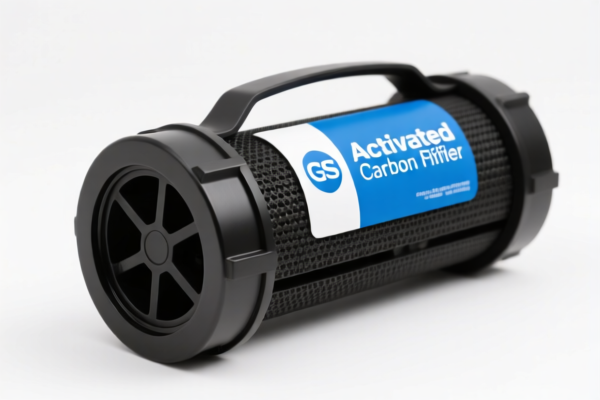
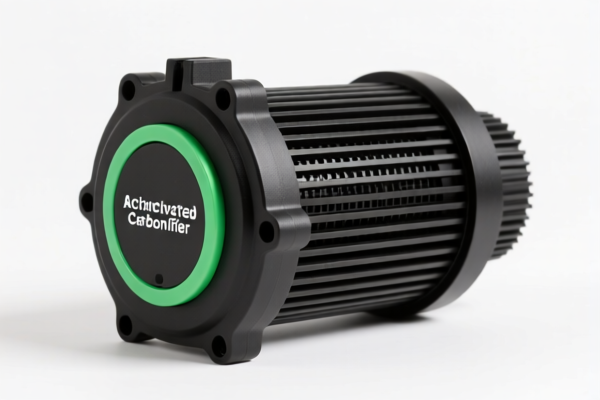
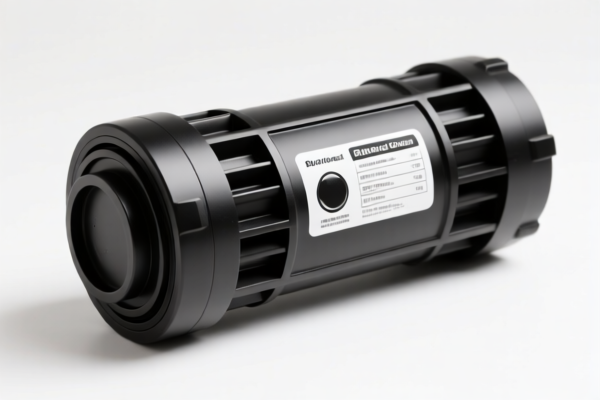
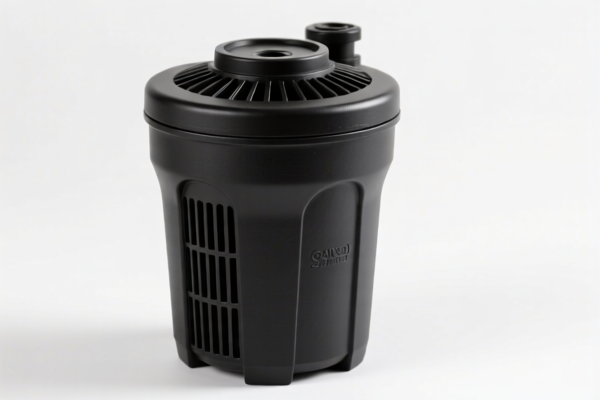
AI Analysis
🌫️ Activated Carbon Organic Adsorbent
🌐 HS Code Reference & Customs Clearance Guide | 2026 Latest Tariff Analysis | Professional Clearance Strategy
📌 I. Product Definition & Classification: Do You Really Understand "Activated Carbon"?
Activated carbon is a highly porous form of carbon with a vast internal surface area, making it an exceptional organic adsorbent capable of trapping gases, vapors, and impurities. In international trade, the classification of activated carbon hinges entirely on its material composition and physical form. Is it a refined chemical product classified under "Carbon," or is it a manufactured adsorbent material?
Key Classification Distinctions: * "Activated Carbon Adsorbent" (HS 3802): Products specifically prepared for adsorption, often containing binders, additives, or processed via specific methods to enhance adsorption capacity. The summary highlights "Material: Activated Carbon" or "Coal/Activated Carbon." * "Other Forms of Carbon" (HS 2803): Raw carbon materials, such as charcoal, coke, or carbon black, that fit the chemical definition of carbon but may not meet the specific regulatory definition of "adsorbents" under Chapter 38, or are classified under Chapter 28 as inorganic/elemental carbon products.
⚠️ Critical Distinction Point:
- If the product is explicitly defined as an "Adsorbent" with a summary mentioning "Activated Carbon" or "Coal/Activated Carbon" material properties →归入 3802.10.00
- If the product is defined broadly as "Carbon" or "Adsorption Material" falling under the definition of "Carbon Black or Other Forms of Carbon" without specific adsorbent pre-treatment claims →归入 2803.00.00
📦 II. HS Code Classification Details (2026 Latest Tariff Authority Comparison)
Based on the provided data, here are the specific HS codes, their summaries, and applicable tax structures.
| HS Code | Product Summary | Material/Key Feature | Total Tax Rate |
|---|---|---|---|
3802.10.00.50 |
Activated carbon adsorbent; material is activated carbon; use is as an adsorbent; fits other category definitions | Pure Activated Carbon / Adsorbent Form | 39.8% |
3802.10.00.10 |
Activated carbon adsorbent; material is Coal/Activated Carbon; use is as an adsorbent; no material conflict | Coal-based Activated Carbon | 39.8% |
2803.00.00.10 |
Activated carbon adsorbent; material is carbon; fits definition of Carbon Black & other forms of carbon | Elemental Carbon / Carbon Black Definition | 35.0% |
2803.00.00.50 |
Activated carbon adsorbent; material is carbon; fits definition of Other Forms of Carbon; no conflict with Carbon Black | Elemental Carbon / Other Form Definition | 35.0% |
2803.00.00.10 |
Activated carbon adsorption material; core material is carbon; meets requirements for Carbon Black & other forms of carbon | Core Material: Carbon (Carbon Black Category) | 35.0% |
🔍 Key Observation:
- Chapter 38 (3802.10) items carry a higher total tax rate (39.8%) due to the inclusion of specific base tariffs.
- Chapter 28 (2803.00) items carry a lower total tax rate (35.0%) because their base tariff is 0.0%.
- The critical factor for customs is whether the product is deemed a "prepared adsorbent" (Ch. 38) or simply "carbon" (Ch. 28).
💰 III. 2026 Latest Tariff Rate Breakdown (Including Surtaxes & Policy Add-ons)
✅ Applicable Country: United States (US)
✅ Origin: China (CN)
✅ Effective Date: Ongoing (Section 301 & IEEPA tariffs apply)
🎯 1. 3802.10.00.50 & 3802.10.00.10 —— Activated Carbon Adsorbents
| Item | Content |
|---|---|
| Base Tariff | 4.8% (Standard MFN Rate) |
| Section 301 Surtax | +25.0% (USITC Footnote related to Section 301) |
| 122 Clause Tariff | +10.0% (Specific trade measure applicable to certain Chinese goods) |
| Total Tax Rate | 39.8% |
| Tax Calculation | CIF Value × 39.8% |
| De Minimis Exemption | ❌ Not Applicable (Deny de minimis) |
| Legal Basis Path | USITC:3802.10.00.50 → Section 301: +25% → 122 Clause: +10% |
📌 Explanation:
- The 4.8% base rate is standard for Chapter 38 adsorbents.
- The 25% Section 301 tariff applies to most Chinese-manufactured chemical products, including activated carbon.
- The 10% 122 Clause tariff is an additional penalty tariff often applied to specific categories of imports.
- Total Burden: Nearly 40% of the CIF value must be paid in duties alone.
🎯 2. 2803.00.00.10 & 2803.00.00.50 —— Carbon / Other Forms of Carbon
| Item | Content |
|---|---|
| Base Tariff | 0.0% (Most-favored-nation rate for Carbon Black/Other Carbon) |
| Section 301 Surtax | +25.0% (USITC Footnote related to Section 301) |
| 122 Clause Tariff | +10.0% (Specific trade measure applicable to certain Chinese goods) |
| Total Tax Rate | 35.0% |
| Tax Calculation | CIF Value × 35.0% |
| De Minimis Exemption | ❌ Not Applicable (Deny de minimis) |
| Legal Basis Path | USITC:2803.00.00.10 → Section 301: +25% → 122 Clause: +10% |
📌 Explanation:
- The 0.0% base rate makes this classification significantly cheaper upfront.
- However, the 25% + 10% surcharges remain identical to Chapter 38 items.
- Savings: Choosing the correct classification under Chapter 28 (if compliant) saves 4.8% on the CIF value.
- Risk: Misclassifying a "prepared adsorbent" as "raw carbon" can lead to customs audits, penalties, and retroactive duty payments.
🛠️ IV. Customs Clearance Practical Advice (Battle-Tested Pitfall Avoidance)
✅ 1. Required Documentation Checklist (Non-Negotiable)
| Document | Required? | Explanation |
|---|---|---|
| ✅ Product Specification Sheet | ✔️ | Must detail pore size, surface area, moisture content, and ash content. |
| ✅ Material Safety Data Sheet (MSDS) | ✔️ | Required for chemical handling and classification verification. |
| ✅ Certificate of Origin (CO) | ✔️ | Essential to confirm Chinese origin for surtax calculation. |
| ✅ Commercial Invoice | ✔️ | Must clearly state "Activated Carbon" or "Carbon" and specify usage (e.g., water filtration, air purification). |
| ✅ Packing List | ✔️ | Include net/gross weights. |
| ✅ Technical Data Sheet (TDS) | ✔️ | Proof of "Adsorbent" properties if claiming HS 3802. |
✅ 2. Classification Strategy & Declaration Tips
🔥 "Material Determines Code, Usage Defines Scope, Base Rate Dictates Cost!"
| Scenario | Correct Declaration | Incorrect Action | Consequence |
|---|---|---|---|
| Refined Adsorbent (Pre-treated, binder-added, high adsorption capacity) | 3802.10.00.10 or .50 |
Declare as "Carbon" (HS 2803) | High Risk: Customs may reject, demand higher duties + penalties. |
| Raw Carbon/Charcoal (Basic form, low processing) | 2803.00.00.10 or .50 |
Declare as "Adsorbent" (HS 3802) | Overpayment: Pay 4.8% more base tax unnecessarily. |
| Mixed Shipment (Both types) | Split Declaration | Lump sum declaration | Customs Hold: Seizure or delayed release for re-classification. |
| Vague Description ("Carbon Product") | Vague | ❌ | Audit Trigger: Customs will assess highest possible duty + fines. |
✅ 3. Special Handling Notes
| Situation | Recommendation |
|---|---|
| Water Filtration Granules | Likely HS 3802.10 if sold as "filter media." Ensure TDS highlights adsorption capacity. |
| Industrial Charcoal | Likely HS 2803 if it meets "Other Forms of Carbon" definition. Provide chemical analysis. |
| Packaged for Retail | If packaged for end-user (e.g., water filter cartridges), still classify the carbon material, not the cartridge assembly, unless the entire unit is declared. |
| Origin Marking | Ensure physical products are marked "Made in China" to avoid secondary penalties. |
🌍 V. Global Market Comparison (2026 Latest)
| Country/Region | Recommended HS Code | Base Tariff | Total Effective Tax (China Origin) | Remarks |
|---|---|---|---|---|
| 🇺🇸 USA | 3802.10.00 |
4.8% | 39.8% | High burden due to 301 + 122 Clause. |
| 🇺🇸 USA | 2803.00.00 |
0.0% | 35.0% | Cheaper base, but same surcharges. |
| 🇨🇳 China | 3802.10.00 |
Varies | Low/Nominal | Export from China usually has 0% export tax. |
| 🇪🇺 EU | 3802.10.00 |
6.5% | 6.5% | No Section 301 equivalents. |
| 🇬🇧 UK | 3802.10.00 |
6.5% | 6.5% | Post-Brexit tariff aligns with EU. |
📌 Conclusion:
- USA is the most expensive market for Chinese activated carbon due to punitive tariffs.
- Classifying under HS 2803 can save 4.8% of CIF value, but only if the product legally qualifies as "Carbon" rather than a "Prepared Adsorbent."
- Compliance is Key: Misclassification leads to audits, which can cost far more than the 4.8% difference.
📌 VI. Common Mistakes & Pitfall Guide (Lessons from the Field)
❌ Mistake 1: Calling "Activated Carbon" a "Filter Cartridge" to avoid chemical tariffs.
👉 Consequence: If the cartridge contains only carbon (no mechanical filtration media), it’s still classified as carbon/adsorbent. If mixed, it may be classified as a part/accessory, leading to complex duty calculations.
❌ Mistake 2: Using "Charcoal" for highly processed activated carbon to claim HS 2803.
👉 Consequence: Customs labs will test iodine adsorption number. If it meets HS 3802 specs, you will pay back duties + interest.
❌ Mistake 3: Ignoring the "122 Clause" in tariff calculations.
👉 Consequence: Underestimating total landed cost by 10%. This clause is not always obvious in standard tariff lookups.
❌ Mistake 4: Inconsistent HS Codes in Invoice vs. Packing List.
👉 Consequence: Customs rejection, port fees, and storage penalties.
✅ Correct Approach:
"Activated Carbon, Powder, Grade I, Iodine Number ≥ 1000mg/g, for Water Treatment, HS 3802.10.00.10, Made in China."
🎯 VII. Conclusion: Precise Classification, Maximized Profit!
🎯 Remember the Mantra:
🔹 "Base Rate is King, Surcharges are Fixed, Classify Correctly to Save 4.8%!"
🔹 "HS 3802 for Adsorbents, HS 2803 for Carbon, Don't Mix Them Up!"
📌 Pro Tip:
If your activated carbon is raw, unprocessed coal char with minimal adsorption specification, argue for HS 2803 to save on the base tariff.
If it is highly processed, high-purity, adsorbent-grade, accept HS 3802 to ensure compliance.
Always request a Binding Ruling from US Customs (CBP) if the classification is borderline.
📣 Immediate Action Required:
📞 Consult a licensed customs broker.
📄 Prepare TDS and MSDS.
📝 Verify "122 Clause" applicability with your freight forwarder.
🚀 Clear customs smoothly, manage costs, and expand your market!
✨ Professional Clearance, Starts with Accurate Classification!
💼 Every Percent Saved is Pure Profit!
Customer Reviews
About HS Code Classification
The Harmonized System (HS) is an internationally standardized nomenclature developed by the World Customs Organization (WCO) to classify traded products. Over 200 countries use the HS system as the basis for customs tariffs, trade statistics, and import/export regulations.
Each HS code follows a hierarchical structure:
- Chapter (2 digits) — Broad category of goods (e.g., Chapter 84: Machinery and Mechanical Appliances)
- Heading (4 digits) — More specific grouping within the chapter
- Subheading (6 digits) — Internationally standardized breakdown, used by all WCO member countries
- National subdivisions (8-10 digits) — Country-specific extensions for further classification, such as US HTSUS 10-digit codes
Correct HS code classification is essential for smooth customs clearance, accurate duty payment, and compliance with trade regulations. Misclassification can lead to customs delays, overpayment of duties, or penalties.
When importing from CN to US, the applicable tariff rates may include:
- Most-Favored-Nation (MFN) rate — The standard duty rate applied to WTO members
- General rate — Applied to countries without trade agreements
- Trade remedy duties — Additional tariffs such as Section 301 (anti-dumping), Section 232 (national security), or countervailing duties
The information provided on this page is for reference purposes only. For official classification, please consult with your local customs authority or a licensed customs broker.