activated clay de phosphorizing agent
CN → US| HS Code | Tariff Rate | Origin | Destination | Doc |
|---|---|---|---|---|
| 3824999361 | 40.0% | CN | US | Official Doc |
| 3824999397 | 40.0% | CN | US | Official Doc |
| 3824993990 | 35.0% | CN | US | Official Doc |
Product Images
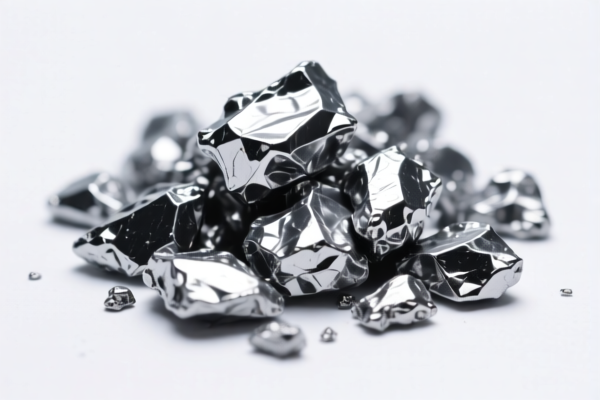
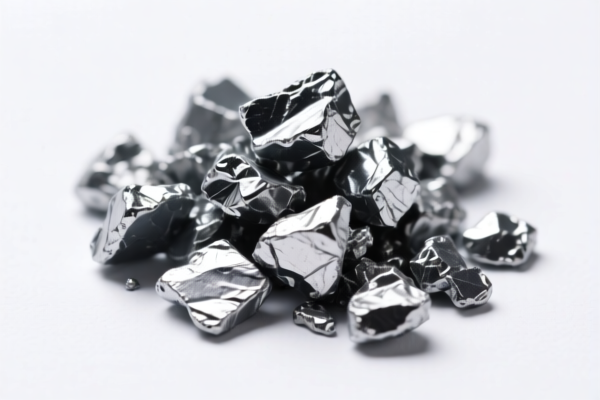
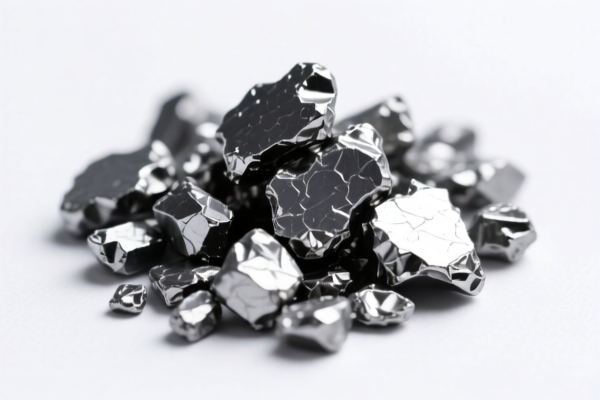
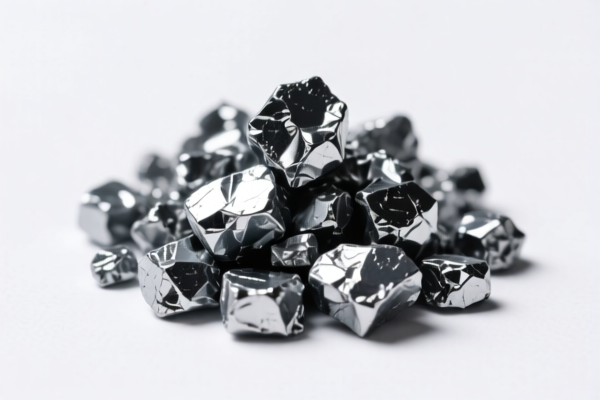
AI Analysis
🧪 Activated Clay De-phosphorizing Agent (Activated Bleaching Earth)
🌐 HS Code Reference & Customs Clearance Guide | 2026 Latest Tariff Analysis | Professional Clearance Strategy
📌 I. Product Definition & Classification: What Exactly is "Activated Clay De-phosphorizing Agent"?
Activated Clay (also known as Bleaching Earth or Fuller’s Earth) is a natural clay that has been processed to remove impurities and increase its porosity and surface area, enhancing its adsorption capabilities. When used as a De-phosphorizing Agent, it is specifically formulated or naturally occurring in mixtures designed to remove phosphorus compounds (often from industrial waste streams, lubricants, or specific chemical processes).
In international trade, this product is generally classified under Chapter 38: Miscellaneous Chemical Products. It is typically viewed as: 1. A mixture of inorganic compounds (clay + activators). 2. A specific chemical industrial product not elsewhere specified.
⚠️ Key Distinction:
- If it is a pure, unmodified natural clay used only for filtration → Might fall under Chapter 25.
- If it is chemically treated, activated, or mixed with other agents to perform a specific chemical function (like de-phosphorization) → It falls under Chapter 38.
- Crucial Note: The provided data indicates it is treated as a mixture or specialized chemical preparation, thus excluding it from basic mineral chapters.
📦 II. HS Code Classification Details (Based on Provided Data)
According to the provided <DATA>, there are three potential HS codes depending on the specific chemical composition and legal interpretation of the mixture.
| HS Code | Product Description Summary | Total Tax Rate | Tax Composition Breakdown |
|---|---|---|---|
| 3824.99.93.61 | Treated as a mixture of phosphorus-containing chemical substances, fitting the characteristics of chemical industry preparations. | 40.0% | Base: 5.0% Additional (Section 301): 25.0% Section 122 Tariff: 10% |
| 3824.99.93.97 | Classified as a phosphorus-containing chemical mixture, falling under "Other chemical products not elsewhere specified." | 40.0% | Base: 5.0% Additional (Section 301): 25.0% Section 122 Tariff: 10% |
| 3824.99.39.90 | Classified as a mixture of two or more inorganic compounds, categorized as other unspecified chemical industrial products. | 35.0% | Base: 0.0% Additional (Section 301): 25.0% Section 122 Tariff: 10% |
🔍 Critical Observation:
- Two Codes Lead to 40%: Codes3824.99.93.61and3824.99.93.97both result in a 40% total tax burden.
- One Code Leads to 35%: Code3824.99.39.90offers a 5% lower total tax due to a 0% Base Duty (likely due to specific trade agreements or category exclusions for inorganic mixtures, though still subject to punitive tariffs).
- Common Denominator: All codes are subject to 25% (Section 301) and 10% (Section 122) additional tariffs, bringing the minimum total to 35%.
💰 III. 2026 Tariff Rate Detailed Explanation
✅ Applicable Country: United States (US)
✅ Origin: China (CN) (Implied by Section 122 and 301 tariffs)
✅ Effective Date: Current tariffs apply as per 2025-2026 regulations.
🎯 1. Codes 3824.99.93.61 & 3824.99.93.97 —— Phosphorus-Containing Chemical Mixtures
| Item | Content |
|---|---|
| Base Tariff | 5.0% (Ad Valorem) |
| Section 301 Additional Tariff | +25.0% (USITC Footnote related to Chinese imports) |
| Section 122 Tariff | +10.0% (National Security/Trade Enforcement Tariff) |
| Total Tax Rate | 40.0% |
| Tax Calculation | CIF Value × 40% |
| De Minimis Exemption | ❌ Not Eligible (High-risk chemical product) |
| Legal Basis Path | USITC:3824.99.93.61 → FOOTNOTE:Section 301 → IEEPA:Section 122 |
📌 Explanation:
- These codes view the product primarily as a phosphorus-specific chemical mixture.
- The 5% base duty applies to general chemical preparations.
- The 35% punitive tariffs (25% + 10%) are mandatory for Chinese-origin goods in this category.
🎯 2. Code 3824.99.39.90 —— Mixture of Inorganic Compounds
| Item | Content |
|---|---|
| Base Tariff | 0.0% (Potentially eligible for lower base duty due to inorganic nature) |
| Section 301 Additional Tariff | +25.0% |
| Section 122 Tariff | +10.0% |
| Total Tax Rate | 35.0% |
| Tax Calculation | CIF Value × 35% |
| De Minimis Exemption | ❌ Not Eligible |
| Legal Basis Path | USITC:3824.99.39.90 → FOOTNOTE:Section 301 → IEEPA:Section 122 |
📌 Strategic Advantage:
- This code offers a 5% savings compared to the other two options.
- Success depends on proving the product is a mixture of inorganic compounds rather than a specific "phosphorus-containing chemical preparation."
- Requires strong technical documentation to support the "inorganic mixture" classification.
🛠️ IV. Customs Clearance Practical Advice (Avoiding Pitfalls)
✅ 1. Documentation Checklist (Essential)
| Document | Required? | Explanation |
|---|---|---|
| ✅ Product Specification Sheet | ✔️ | Must detail chemical composition, activation process, and phosphorus removal efficiency. |
| ✅ Formula/Mixture Ratio | ✔️ | Critical for distinguishing between 3824.99.93 (phosphorus-specific) and 3824.99.39 (inorganic mixture). |
| ✅ Technical Data Sheet (TDS) | ✔️ | Shows adsorption capacity, pH levels, and intended industrial application. |
| ✅ MSDS (Safety Data Sheet) | ✔️ | Required for chemical clearance. Ensure it states "Non-Hazardous" if applicable. |
| ✅ Commercial Invoice | ✔️ | Clearly describe as "Activated Clay for De-phosphorization," not just "Clay." |
| ✅ Certificate of Analysis (COA) | ✔️ | Proves chemical composition to support HS Code selection. |
✅ 2. Declaration Strategy (Key Tips)
🔥 "Define by Composition, Not Just Name"
| Scenario | Recommended HS Code | Risk of Misclassification |
|---|---|---|
| Explicitly marketed as "De-phosphorizing" | 3824.99.93.61 or .97 |
High. Customs may view this as a specialized chemical agent (40% tax). |
| Sold as generic "Activated Bleaching Earth" | 3824.99.39.90 |
Moderate. If composition is purely inorganic, you may qualify for 35% tax. |
| Mixture with organic binders/additives | 3824.99.93.61 |
High. Organic components may push it out of "inorganic mixture" category. |
📌 Key Insight:
- If you declare it as "De-phosphorizing Agent", customs will likely lean towards 3824.99.93 (phosphorus-specific), resulting in 40% tax.
- If you declare it as "Activated Inorganic Clay Mixture" for general use, you may argue for 3824.99.39, saving 5%. However, you must be prepared to defend this with COA and formulas.
✅ 3. Special Considerations
| Issue | Handling Advice |
|---|---|
| Section 122 Tariff (10%) | This is a national security/trade enforcement tariff. It applies to most Chinese goods regardless of HS code. Do not expect exemption. |
| Section 301 Tariff (25%) | Standard punitive tariff for Chinese chemicals. No exemptions for general industrial use. |
| Chemical Notification | Ensure EPA TSCA (Toxic Substances Control Act) compliance. Activated clay is generally exempt, but additives must be declared. |
| Bunker Adjustment Factor (BAF) | Factor in shipping costs; high tariffs apply to CIF value, so higher shipping costs increase total duty paid. |
🌍 V. Global Market Comparison (2026 Outlook)
| Market | Recommended HS Code | Estimated Total Duty | Notes |
|---|---|---|---|
| 🇺🇸 USA | 3824.99.93.61 / .39.90 |
35% - 40% | High punitive tariffs (301 + 122) dominate. |
| 🇨🇳 China | 3824.99.93 |
~5% | Low import duty, no punitive tariffs. |
| 🇪🇺 EU | 3824.99 |
~6.5% | Standard MFN rate. No Section 301/122 equivalents. |
| 🇮🇳 India | 3824.99 |
~7.5% - 10% | Basic customs duty + social welfare surcharge. |
📌 Conclusion for US Importers:
- The US market is the most expensive for this product due to the 35-40% total tariff burden.
- Cost-saving opportunity: Argue for 3824.99.39.90 if chemically accurate to save 5%.
- Alternative: Consider sourcing from Vietnam, India, or Brazil to bypass Section 301 and 122 tariffs (if origin rules are met).
📌 VI. Common Errors & Pitfalls (Lessons Learned)
❌ Error 1: Declaring as "Natural Clay" (HS 2507)
👉 Consequence: Customs will reclassify as chemical preparation (3824) and assess penalties + back duties. Activated/clay is not simple mineral.
❌ Error 2: Ignoring "Section 122" Tariff
👉 Consequence: Underpaying by 10%. CBP audits will recover funds + interest.
❌ Error 3: Vague Description "Chemical Agent"
👉 Consequence: Delayed clearance. Customs requests detailed formula. Provide TDS early.
❌ Error 4: Assuming De Minimis ($800) applies
👉 Consequence: Chemicals are often excluded or flagged. Even if under $800, high-risk chemicals may be inspected.
✅ Correct Practice:
"Activated Bleaching Earth, Chemically Treated, Mixture of Inorganic Silicates and Aluminates, for Industrial De-phosphorization, Made in China"
🎯 VII. Conclusion: Professional Classification Saves Money
🎯 Remember:
🔹 "Phosphorus-Specific = 40% Tax"
🔹 "Inorganic Mixture = 35% Tax"
🔹 "Section 122 + 301 are Unavoidable for China Origin"
📌 Strategic Recommendation:
1. Analyze Your Formula: If your product contains only inorganic clay and activators, fight for 3824.99.39.90 to save 5%.
2. Prepare Technical Docs: Have COA and TDS ready to prove composition.
3. Calculate Landed Cost: Include 35-40% duty + freight + insurance in your pricing model.
4. Consider Origin Diversification: If volume is high, explore non-China sources to eliminate punitive tariffs.
📣 Immediate Action:
📞 Consult a Customs Broker: Submit a Binding Ruling Request to CBP if the classification is borderline.
📄 Audit Your Invoice: Ensure the description matches the chosen HS code precisely.
🚀 Optimize Supply Chain: High tariffs demand efficient logistics to maintain margin.
✨ Professional Clearance Starts with Precise Classification!
💼 Every 1% of Duty Saved is Pure Profit!
Customer Reviews
About HS Code Classification
The Harmonized System (HS) is an internationally standardized nomenclature developed by the World Customs Organization (WCO) to classify traded products. Over 200 countries use the HS system as the basis for customs tariffs, trade statistics, and import/export regulations.
Each HS code follows a hierarchical structure:
- Chapter (2 digits) — Broad category of goods (e.g., Chapter 84: Machinery and Mechanical Appliances)
- Heading (4 digits) — More specific grouping within the chapter
- Subheading (6 digits) — Internationally standardized breakdown, used by all WCO member countries
- National subdivisions (8-10 digits) — Country-specific extensions for further classification, such as US HTSUS 10-digit codes
Correct HS code classification is essential for smooth customs clearance, accurate duty payment, and compliance with trade regulations. Misclassification can lead to customs delays, overpayment of duties, or penalties.
When importing from CN to US, the applicable tariff rates may include:
- Most-Favored-Nation (MFN) rate — The standard duty rate applied to WTO members
- General rate — Applied to countries without trade agreements
- Trade remedy duties — Additional tariffs such as Section 301 (anti-dumping), Section 232 (national security), or countervailing duties
The information provided on this page is for reference purposes only. For official classification, please consult with your local customs authority or a licensed customs broker.