activated shell charcoal
CN → US| HS Code | Tariff Rate | Origin | Destination | Doc |
|---|---|---|---|---|
| 3802100050 | 39.8% | CN | US | Official Doc |
| 3802100010 | 39.8% | CN | US | Official Doc |
| 2803000010 | 35.0% | CN | US | Official Doc |
| 2803000050 | 35.0% | CN | US | Official Doc |
| 8421390115 | 35.0% | CN | US | Official Doc |
Product Images
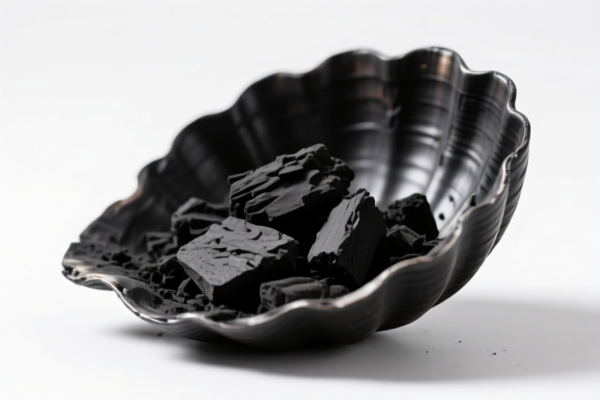
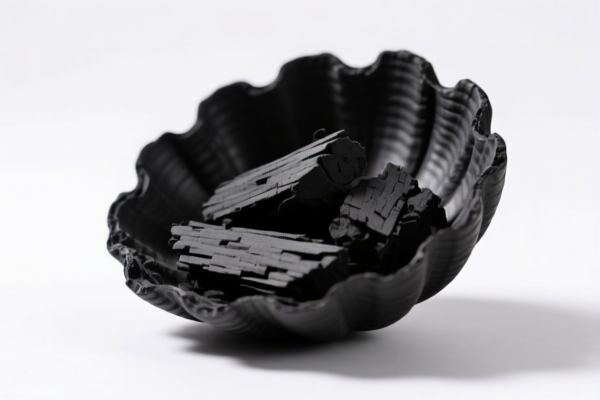
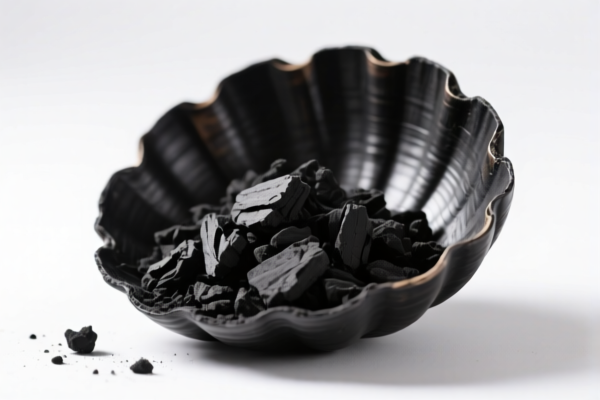
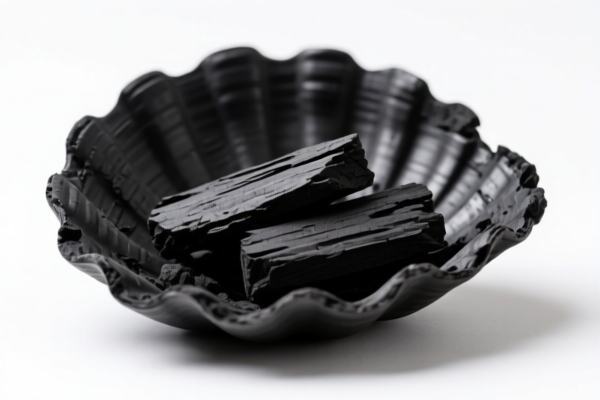
AI Analysis
🌿 Activated Shell Charcoal (Activated Carbon from Shells)
🌐 HS Code Reference & Customs Clearance Guide | 2026 Latest Tariff Analysis | Professional Clearance Strategy
📌 I. Product Definition & Classification: Do You Really Understand "Activated Shell Charcoal"?
Activated Shell Charcoal, also known as Coconut Shell Activated Carbon, is a highly porous adsorbent material derived primarily from coconut shells, but also from other nut shells (like peach, apricot, or date pits). It is widely used in water purification, air filtration, gold recovery, and industrial solvent recovery.
In international trade, it is categorized based on its material consistency and physical form:
- Material: Carbon (specifically activated carbon derived from shell material).
- Form: Granular or Powder.
- Key Distinction: Unlike "Coal-based" activated carbon, shell-based carbon has higher hardness and density, making it ideal for high-pressure filtration systems. However, for HS Code purposes, the primary differentiator is often whether it is classified under general activated carbon (Ch. 38) or other forms of carbon (Ch. 28).
⚠️ Critical Clarification Point:
- If the product is clearly defined as "Activated Carbon" (regardless of source material: shell, coal, wood), it typically falls under Chapter 38 (Miscellaneous Chemical Products).
- If the customs authority interprets it strictly as "Other Forms of Carbon" (ignoring the "activated" processing aspect or if the activation is considered minor), it might fall under Chapter 28 (Inorganic Chemicals).
- Equipment made from or containing this charcoal (e.g., Reactors) falls under Chapter 84 (Machinery).
📦 II. HS Code Classification Details (2026 Latest Tariff Authority Comparison)
Based on the provided data, here are the potential HS Codes, summaries, and tax implications. Note that 3802.10.00.10 and 3802.10.00.50 are the most accurate for the material itself, while 2803 and 8421 represent alternative or downstream interpretations.
| HS Code | Product Description | Application Scenario | Key Matching Logic |
|---|---|---|---|
3802.10.00.50 |
Activated Carbon, Other | General industrial adsorbents, water treatment, gold cyanide extraction | Matches Material (Activated Carbon) & Form (Granular). Refers to "Other Types" of Activated Carbon. |
3802.10.00.10 |
Activated Carbon, Granular | Standard granular activated carbon (GAC) for air/water filtration | Match Success: "Activated Carbon" matches material; "Granular" matches physical form. |
2803.00.00.10 |
Carbon, Other Forms | Industrial carbon, soot, carbon black | Matches Material Consistency: "Activated Carbon" is a form of carbon. High material alignment with "Carbon Black and Other Forms of Carbon." |
2803.00.00.50 |
Carbon, Other Forms | Industrial activated carbon (interpreted as carbon material) | Matches Form: Industrial activated carbon fits "Other Forms of Carbon." Material consistency holds. |
8421.39.01.15 |
Gas Filtration/Reaction Equipment | Reactors, filters, or purification units using activated carbon | Inferred Use: If the product is a "Carbon Reactor" or filtration unit, it falls here. Matches "Gas Purification Equipment." |
🔍 Important Note:
- For raw material imports,3802.10.00.10and3802.10.00.50are the most standard and safe choices.
-2803classifications carry a lower base tariff but may trigger additional scrutiny if the "activated" status is not properly documented.
-8421applies only if you are importing the equipment (e.g., a filter vessel), not the loose charcoal.
💰 III. 2026 Latest Tariff Rate Breakdown (Including Surcharges & Policy Add-ons)
✅ Applicable Country: United States (US)
✅ Origin: China (CN)
✅ Effective Date: November 10, 2025 (and subsequent imports)
🎯 1. 3802.10.00.50 & 3802.10.00.10 —— Activated Carbon (Granular/Other)
| Item | Detail |
|---|---|
| Base Tariff | 4.8% (Ad Valorem) |
| Section 301 Surcharge | +25.0% |
| Section 122 Surcharge | +10.0% |
| Total Tariff Rate | 39.8% |
| Tax Calculation | CIF Value × 39.8% |
| De Minimis Exemption | ❌ Not Applicable (High value threshold not met due to high rates) |
| Legal Basis Path | USITC:3802.10.00.10/50 → FOOTNOTE:301 → IEEPA:122 |
📌 Explanation:
- The 4.8% is the standard MFN (Most Favored Nation) duty for activated carbon.
- The 25% is the Section 301 tariff, specifically targeting many chemical products from China.
- The 10% is an additional surcharge (Section 122 or similar policy add-on) for this category.
- Total: 39.8%. This is a high-cost classification. Buyers must factor this into landed cost calculations.
🎯 2. 2803.00.00.10 & 2803.00.00.50 —— Other Forms of Carbon
| Item | Detail |
|---|---|
| Base Tariff | 0.0% (Ad Valorem) |
| Section 301 Surcharge | +25.0% |
| Section 122 Surcharge | +10.0% |
| Total Tariff Rate | 35.0% |
| Tax Calculation | CIF Value × 35.0% |
| De Minimis Exemption | ❌ Not Applicable |
| Legal Basis Path | USITC:2803.00.00.10/50 → FOOTNOTE:301 → IEEPA:122 |
📌 Note:
- While the base tariff is 0%, the add-on tariffs (35% total) still apply.
- Risk: Classifying activated carbon under2803instead of3802is aggressive. Customs may reject this if the product is clearly "activated" (chemically processed), as Chapter 38 is more specific. However, if successful, it saves 4.8% compared to Chapter 38.
- Recommendation: Only use this if your chemical processing documentation strongly supports "Other Forms of Carbon" rather than "Adsorbents."
🎯 3. 8421.39.01.15 —— Gas Filtration/Reaction Equipment
| Item | Detail |
|---|---|
| Base Tariff | 0.0% (Ad Valorem) |
| Section 301 Surcharge | +25.0% |
| Section 122 Surcharge | +10.0% |
| Total Tariff Rate | 35.0% |
| Tax Calculation | CIF Value × 35.0% |
| De Minimis Exemption | ❌ Not Applicable |
| Legal Basis Path | USITC:8421.39.01.15 → FOOTNOTE:301 → IEEPA:122 |
📌 Explanation:
- This code is for equipment (e.g., a reactor vessel or filter housing), not the charcoal beads themselves.
- If you import a "Activated Carbon Reactor," use this code.
- If you import loose charcoal in bags, do not use this code; it will lead to misclassification penalties.
🛠️ IV. Customs Clearance Practical Advice (Real-World Pitfall Avoidance)
✅ 1. Required Documentation Checklist (Non-Negotiable)
| Document | Must Provide | Description |
|---|---|---|
| ✅ Product Spec Sheet | ✔️ | Must state: "Granular Activated Carbon," "Source: Coconut Shell," "Surface Area," "Iodine Number." |
| ✅ Material Safety Data Sheet (MSDS) | ✔️ | Confirms non-hazardous nature (unless impregnated with chemicals). |
| ✅ Commercial Invoice | ✔️ | Clearly describe as "Granular Activated Carbon, Coconut Shell Origin." Avoid vague terms like "Carbon." |
| ✅ Packing List | ✔️ | Net/Gross weights, number of bags, pallets. |
| ✅ Certificate of Origin (CO) | ✔️ | If shipped from China, standard CO required. |
| ✅ Lab Test Report | ✔️ | Optional but helpful if customs questions the 2803 vs 3802 classification. Proves "Activated" status. |
✅ 2. Declaration Tips (Key Mantras)
🔥 “Activate is Chemical, Shell is Source, Granular is Form, 3802 is Safe!”
| Scenario | Correct Declaration | Incorrect Action |
|---|---|---|
| Loose Granular Charcoal | 3802.10.00.10 |
Misclassifying as 2803 (risk of audit) or 8421 (wrong category). |
| Powdered Charcoal | 3802.10.00.50 |
Declaring as 3802.10.00.10 (wrong form). |
| Activated Carbon Filter Cartridge | 8421.39.01.15 |
Declaring as raw 3802 (under-declaring value). |
| Impregnated Charcoal | 3802.10.00.50 (or other) |
Ignoring chemical additives (may trigger hazard class). |
✅ 3. Special Case Handling
| Case | Handling Advice |
|---|---|
| Mixed Shells (Coconut + Peach) | Declare as "Mixed Shell Activated Carbon" under 3802.10.00.50 (Other). Be precise. |
| High-Grade Pharmaceutical Grade | Still 3802.10.00.10. Grade doesn’t change HS, but affects value. |
| Regenerated Carbon | If carbon is reused/ regenerated, it may still be 3802. Provide regeneration certificate. |
| Reactors/Filters | If the product is a unit (e.g., a carbon bed in a tank), use 8421.39.01.15. If it’s the media, use 3802. |
🌍 V. Global Market Comparison (2026 Latest)
| Country/Region | Recommended HS Code | Tariff (China Origin) | Certification Requirements | Notes |
|---|---|---|---|---|
| 🇺🇸 USA | 3802.10.00.10 |
39.8% (Total) | No specific import license, but must meet EPA/Water Act standards if used for drinking water. | High tariff due to 301/122 surcharges. |
| 🇨🇳 China | 3802.10.00.10 |
4.8% | CCC (if applicable for end-use equipment), but carbon itself usually exempt. | Low base tariff, no surcharges. |
| 🇪🇺 EU | 3802.10.00 |
0% | REACH Compliance is mandatory. Must register substances. | No 301 tariffs, but strict chemical regulations. |
| 🇦🇺 Australia | 3802.10.00 |
5% | NICNAS/Asxo Registration. | Moderate tariff. |
| 🇯🇵 Japan | 3802.10.00 |
3.2% | JIS Standards. | Low tariff, high quality expectations. |
📌 Conclusion:
- USA is the most expensive market due to 39.8% total duties.
- EU has 0% duty but high regulatory compliance costs (REACH).
- For US imports, accurate classification under3802is critical to avoid penalties, even if it means paying the higher duty. Aggressive classification under2803may result in seizures.
📌 VI. Common Mistakes & Pitfall Guide (Lessons Learned)
❌ Mistake 1: Declaring "Activated Carbon" as 2803 to save 4.8%
👉 Consequence: Customs audit, delay, potential fine. 3802 is the specific provision for adsorbents.
❌ Mistake 2: Mixing "Granular" and "Powder" on one invoice
👉 Consequence: Misclassification error. Granular (3802.10.00.10) and Powder (3802.10.00.50) may have different sub-code requirements.
❌ Mistake 3: Importing "Carbon Reactors" under 3802
👉 Consequence: Undervaluation. Equipment (8421) is higher value. Should use 8421.39.01.15.
❌ Mistake 4: Ignoring "Source Material" in Description
👉 Consequence: Customs may reject documentation. Always specify "Coconut Shell" or "Shell-based" to justify hardness/grade claims.
✅ Correct Practice:
"Granular Activated Carbon, Coconut Shell Origin, Iodine Number > 1000mg/g, for Water Treatment, HS Code 3802.10.00.10"
🎯 VII. Conclusion: Precise Classification, Cost Control, Compliance!
🎯 Remember the Mantra:
🔹 "Shell Charcoal is 3802, Granular is 10, Powder is 50."
🔹 "USA Tariff is 39.8%, EU is 0% but REACH is tough."
🔹 "Don't mix Equipment (8421) with Media (3802)!"
📌 Pro Tip:
If your activated carbon is used for food or pharmaceutical applications, ensure it meets USP/FCC or EU Food Grade standards. This doesn't change the HS Code, but it changes the required documentation (Certificate of Analysis).
📣 Immediate Action:
📞 Contact your customs broker with Product Specs + Intended Use.
🚀 Apply for Pre-Ruling if importing large volumes of "Shell Charcoal" under3802to confirm the 39.8% rate is accepted.
✨ Professional clearance starts with precise classification!
💼 Your every cent of cost deserves precise calculation!
Customer Reviews
About HS Code Classification
The Harmonized System (HS) is an internationally standardized nomenclature developed by the World Customs Organization (WCO) to classify traded products. Over 200 countries use the HS system as the basis for customs tariffs, trade statistics, and import/export regulations.
Each HS code follows a hierarchical structure:
- Chapter (2 digits) — Broad category of goods (e.g., Chapter 84: Machinery and Mechanical Appliances)
- Heading (4 digits) — More specific grouping within the chapter
- Subheading (6 digits) — Internationally standardized breakdown, used by all WCO member countries
- National subdivisions (8-10 digits) — Country-specific extensions for further classification, such as US HTSUS 10-digit codes
Correct HS code classification is essential for smooth customs clearance, accurate duty payment, and compliance with trade regulations. Misclassification can lead to customs delays, overpayment of duties, or penalties.
When importing from CN to US, the applicable tariff rates may include:
- Most-Favored-Nation (MFN) rate — The standard duty rate applied to WTO members
- General rate — Applied to countries without trade agreements
- Trade remedy duties — Additional tariffs such as Section 301 (anti-dumping), Section 232 (national security), or countervailing duties
The information provided on this page is for reference purposes only. For official classification, please consult with your local customs authority or a licensed customs broker.