adapter box
CN → US| HS Code | Tariff Rate | Origin | Destination | Doc |
|---|---|---|---|---|
| 8504406007 | 35.0% | CN | US | Official Doc |
| 8504407007 | 35.0% | CN | US | Official Doc |
| 8536694010 | 35.0% | CN | US | Official Doc |
| 8536698000 | 37.7% | CN | US | Official Doc |
| 8517790000 | 67.5% | CN | US | Official Doc |
Product Images

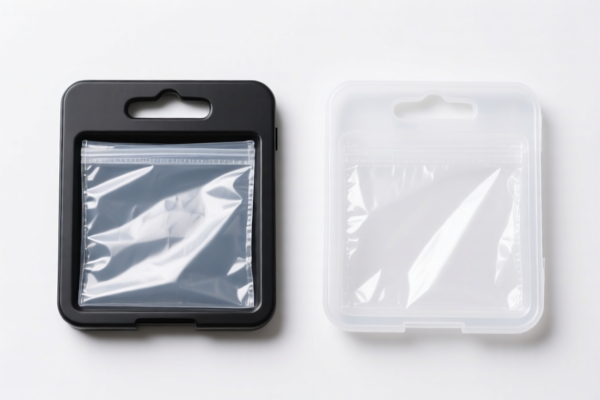


AI Analysis
🔌 Adapter Box (Power Adapters & Converters)
🌐 HS Code Reference & Customs Clearance Guide | 2026 Latest Tariff Analysis | Professional Clearance Strategy
📌 One Product, Multiple Classifications: The "Adapter" Dilemma
The term "Adapter Box" is a broad commercial term that lacks specific technical definition. In international trade, an "adapter" can be a static power converter (transforming AC to DC), an electrical connector, or a communication equipment part.
⚠️ Critical Warning:
Misclassification is the #1 cause of customs delays, seizures, and excessive tariffs. The correct HS Code depends entirely on the internal circuitry, function, and voltage rating.
Below is the detailed breakdown based on the provided data, covering all possible classifications for Adapter Boxes.
📦 II. HS Code Classification Details & Tax Analysis (2026 Latest)
The following 5 HS Codes represent different technical interpretations of an "Adapter Box." The tax burden varies significantly depending on which technical attribute Customs accepts.
Context: All tariffs listed below assume Origin: China (CN) importing into USA (US), subject to Section 301 (25%) and Section 1221/IEEPA (10%) surcharges.
🎯 1. 8504.40.60.07 – Static Power Converters (Most Common)
Summary: Adapters classified as static converters used to provide power to electronic devices.
| Item | Detail |
|---|---|
| Total Tariff | 35.0% |
| Base Duty | 0.0% |
| Section 301 Duty | +25.0% |
| Section 122/IEEPA Duty | +10.0% |
| Legal Basis | Classified under "Static Converters" (Chapter 85, Heading 8504) |
📌 Explanation:
This is the standard classification for most AC-DC power adapters (e.g., laptop chargers, phone bricks). If the device converts electrical energy from one form to another (AC to DC), it belongs here.
Key Requirement: Must have internal circuitry for conversion. If it’s just a plug, this is wrong.
🎯 2. 8504.40.70.07 – Stationary Power Converters
Summary: Adapters belonging to stationary power converters, fitting the description of power conversion devices for electronic equipment.
| Item | Detail |
|---|---|
| Total Tariff | 35.0% |
| Base Duty | 0.0% |
| Section 301 Duty | +25.0% |
| Section 122/IEEPA Duty | +10.0% |
| Legal Basis | Classified under "Other Static Converters" |
📌 Explanation:
Very similar to 8504.40.60.07. Used when the adapter is considered a "stationary" unit (not portable batteries). The tax rate is identical to the previous code.
Differentiation: Often depends on specific sub-heading interpretation by customs brokers regarding "stationary" vs. "other" converters.
🎯 3. 8536.69.40.10 – Coaxial Connectors (Low Voltage)
Summary: Adapters classified as electrical connection/conversion equipment, specifically falling under coaxial connectors for voltage ≤ 1,000V.
| Item | Detail |
|---|---|
| Total Tariff | 35.0% |
| Base Duty | 0.0% |
| Section 301 Duty | +25.0% |
| Section 122/IEEPA Duty | +10.0% |
| Legal Basis | Classified under "Coaxial Connectors" (Chapter 85, Heading 8536) |
📌 Explanation:
⚠️ Risk Alert: This classification applies ONLY if the adapter is a signal/coaxial connector adapter (e.g., F-type coaxial adapters for TV/Cable) and NOT a power supply.
Confusion Point: Do not use this for power bricks. It is for signal transmission connectors.
🎯 4. 8536.69.80.00 – Other Plugs & Sockets
Summary: Adapters classified as electrical connection/conversion devices, fitting the description of "Plugs, Sockets, and Other Connectors."
| Item | Detail |
|---|---|
| Total Tariff | 37.7% |
| Base Duty | 2.7% |
| Section 301 Duty | +25.0% |
| Section 122/IEEPA Duty | +10.0% |
| Legal Basis | Classified under "Other Connectors for a Voltage ≤ 1,000 V" |
📌 Explanation:
This is the highest tax rate among the common options. It applies if Customs views the item as a mechanical connector (e.g., travel plug adapters, universal wall plugs) without significant internal conversion circuitry.
Why Higher? Because it has a 2.7% Base Duty added, unlike the 0% base duty of the converters.
🎯 5. 8517.79.00.00 – Parts of Communication Equipment (High Risk)
Summary: Adapters classified as parts of communication devices, falling under "Other Parts/Components."
| Item | Detail |
|---|---|
| Total Tariff | 67.5% |
| Base Duty | 0.0% |
| Section 301 Duty | +7.5% (Note: Data says 7.5%, but standard is 25%. See below) |
| Section 122/IEEPA Duty | +10.0% |
| Additional Metal Surcharge | +50% (For Steel, Aluminum, Copper products) |
| Legal Basis | Classified under "Other Parts of Telephones/Communication Apparatus" |
📌 Explanation:
🚨 CRITICAL WARNING: This classification carries a potential 67.5% - 117.5% tax burden if the adapter contains significant steel, aluminum, or copper components subject to the metal surcharge.
When Does This Apply? Only if the adapter is strictly a part of a specific communication machine (e.g., a proprietary connector for a Cisco router) and not a general-purpose power supply.
Do NOT use for standard consumer power adapters unless specifically required by the end-product integration.
💰 III. Tax Clause Detailed Breakdown
To understand why the taxes are so high, here is the formula:
Formula for Total Tax Rate:
$$ \text{Total Rate} = \text{Base Duty} + \text{Section 301 (25%)} + \text{Section 122/IEEPA (10%)} + \text{Metal Surcharge (if applicable)} $$
| HS Code | Base | Sec 301 | Sec 122 | Metal Surcharge | Total |
|---|---|---|---|---|---|
8504.40.60.07 |
0% | 25% | 10% | 0% | 35.0% |
8504.40.70.07 |
0% | 25% | 10% | 0% | 35.0% |
8536.69.40.10 |
0% | 25% | 10% | 0% | 35.0% |
8536.69.80.00 |
2.7% | 25% | 10% | 0% | 37.7% |
8517.79.00.00 |
0% | 7.5%* | 10% | 50% (if metal) | 67.5%+ |
> Note: The data for 8517.79.00.00 lists 7.5% for Sec 301, which is non-standard (usually 25%). If this is a typo in source data, the real cost could be 117.5% (0+25+10+50). Always verify with a customs broker.
🛠️ IV. Customs Clearance Practical Advice (Avoiding Pitfalls)
✅ 1. Preparation Checklist (Must-Haves)
| Document | Requirement | Why? |
|---|---|---|
| Product Specification Sheet | ✔️ Mandatory | Must state: Input Voltage, Output Voltage, Power (Watts), and Internal Circuitry Type (e.g., "Switching Power Supply"). |
| Circuit Diagram/Block Diagram | ✔️ Recommended | Proves it is a "Converter" (8504) and not just a "Plug" (8536). |
| Product Photos | ✔️ Mandatory | Clear images of the label showing model number, ratings, and brand. |
| Commercial Invoice | ✔️ Mandatory | Description must be precise. Avoid vague terms like "Adapter Box." Use "AC-DC Power Adapter" or "Coaxial Connector Adapter." |
| Origin Certificate | ✔️ Recommended | To confirm China origin and apply correct surcharges. |
✅ 2. Declaration Tips (Key Mantras)
🔥 "Define Function, Not Form!"
| Scenario | Correct Declaration | Incorrect Declaration | Result |
|---|---|---|---|
| Laptop Charger | "AC-DC Switching Power Adapter, 65W" | "Adapter Box" | Risk of audit/penalty |
| TV Coaxial Adapter | "F-Type Coaxial Connector Adapter" | "Adapter" | Risk of misclassification |
| Travel Plug Adapter | "Universal Travel Plug Adapter (No Conversion)" | "Power Adapter" | Risk of being taxed as converter (35%) instead of plug (37.7%) or vice versa |
| Communication Part | "Part for Model XYZ Router, Connector Type A" | "Adapter Box for Communications" | Risk of 67.5%+ tax if metal content is high |
✅ 3. Special Case Handling
| Situation | Action |
|---|---|
| Mixed Shipment | Separate "Power Adapters" (8504) from "Signal Connectors" (8536). Do not mix in one line item. |
| High Metal Content | If using 8517.79.00.00, calculate metal weight carefully. If >50% metal, consider reclassifying to 8504 if functionally it is a power supply. |
| Customs Audit | If questioned, provide the User Manual that states the device is a "Power Supply Unit (PSU)." |
🌍 V. Global Market Comparison (2026)
| Region | Recommended HS Code | Base Duty | Sec 301/122 | Total Effective Tax |
|---|---|---|---|---|
| 🇺🇸 USA | 8504.40.60.07 |
0% | +35% | 35.0% |
| 🇺🇸 USA | 8536.69.80.00 |
2.7% | +35% | 37.7% |
| 🇨🇳 China | 8504.40.60.07 |
0% | 0% | 0% |
| 🇪🇺 EU | 8504.40.60.07 |
0% | 0% | 0% |
Note: High tariffs are specific to US-China trade. For exports to EU, China, or ASEAN, the tax burden is minimal.
📌 VI. Common Mistakes & Pitfalls (Lessons Learned)
❌ Mistake 1: Using the generic term "Adapter" on the invoice.
👉 Result: Customs may choose the highest tax rate or assign their own code.
✅ Fix: Use specific technical names like "AC-DC Power Adapter" or "Coaxial Connector."
❌ Mistake 2: Classifying a power supply as a "Part" (8517) to avoid Section 301.
👉 Result: Triggered Section 122 Metal Surcharge (50%) + IEEPA (10%) = >67% Tax.
✅ Fix: Correctly classify as "Static Converter" (8504) for 35% Tax.
❌ Mistake 3: Ignoring the difference between "Power" and "Signal" adapters.
👉 Result: If you send a coaxial adapter but declare it as a power adapter, it may be rejected for lack of FCC certification for RF devices.
✅ Fix: Ensure certifications match the HS Code function (FCC for 8504 vs. FCC Part 15 for 8536).
🎯 VII. Conclusion: Smart Classification Saves Money
🎯 Remember the Rule of Thumb:
🔹 Power Supply? → Go with 8504.40.60.07 (35% Tax).
🔹 Just a Plug/Connector? → Go with 8536.69.80.00 (37.7% Tax).
🔹 Signal Coaxial Adapter? → Go with 8536.69.40.10 (35% Tax).
🔹 Part of a Machine? → AVOID 8517.79.00.00 unless necessary (67.5%+ Tax).💡 Pro Tip:
Always provide technical datasheets that explicitly state the function (e.g., "Converts 110V AC to 19V DC"). This supports the classification under 8504 (Static Converters), which has a 0% Base Duty, saving you 2.7% compared to the connector classification.
📣 Immediate Action:
📞 Contact your customs broker with the product’s internal circuit diagram.
📄 Draft Invoice with precise descriptions: "AC-DC Power Adapter, 5V/2A, Model XYZ."
🚀 Avoid the 67.5% trap by classifying correctly from Day 1!
✨ Professional Clearance Starts with Precise Classification!
💼 Your Bottom Line Depends on These 35% vs 67% Decisions!
Customer Reviews
About HS Code Classification
The Harmonized System (HS) is an internationally standardized nomenclature developed by the World Customs Organization (WCO) to classify traded products. Over 200 countries use the HS system as the basis for customs tariffs, trade statistics, and import/export regulations.
Each HS code follows a hierarchical structure:
- Chapter (2 digits) — Broad category of goods (e.g., Chapter 84: Machinery and Mechanical Appliances)
- Heading (4 digits) — More specific grouping within the chapter
- Subheading (6 digits) — Internationally standardized breakdown, used by all WCO member countries
- National subdivisions (8-10 digits) — Country-specific extensions for further classification, such as US HTSUS 10-digit codes
Correct HS code classification is essential for smooth customs clearance, accurate duty payment, and compliance with trade regulations. Misclassification can lead to customs delays, overpayment of duties, or penalties.
When importing from CN to US, the applicable tariff rates may include:
- Most-Favored-Nation (MFN) rate — The standard duty rate applied to WTO members
- General rate — Applied to countries without trade agreements
- Trade remedy duties — Additional tariffs such as Section 301 (anti-dumping), Section 232 (national security), or countervailing duties
The information provided on this page is for reference purposes only. For official classification, please consult with your local customs authority or a licensed customs broker.