adapters
CN → US| HS Code | Tariff Rate | Origin | Destination | Doc |
|---|---|---|---|---|
| 8536698000 | 37.7% | CN | US | Official Doc |
| 8504406007 | 35.0% | CN | US | Official Doc |
| 8504407007 | 35.0% | CN | US | Official Doc |
| 8517690000 | 35.0% | CN | US | Official Doc |
| 8517790000 | 67.5% | CN | US | Official Doc |
Product Images
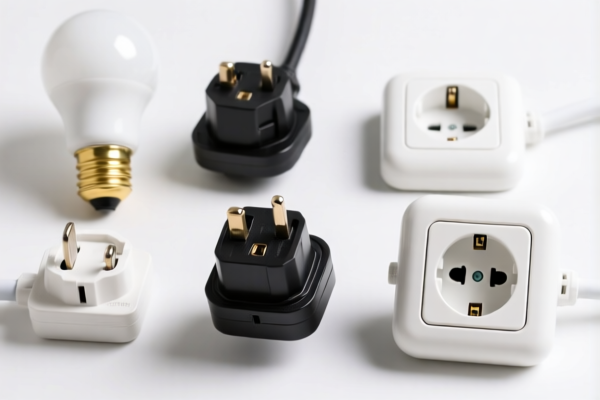
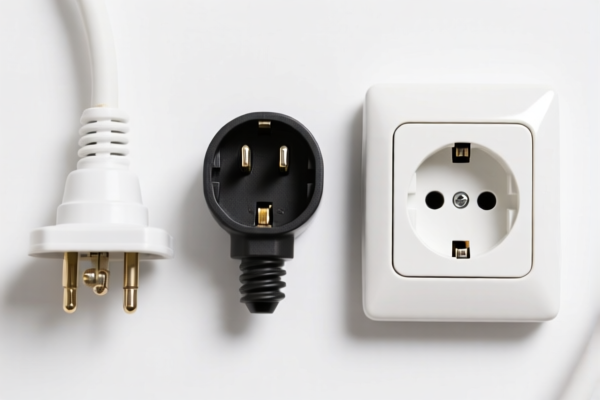
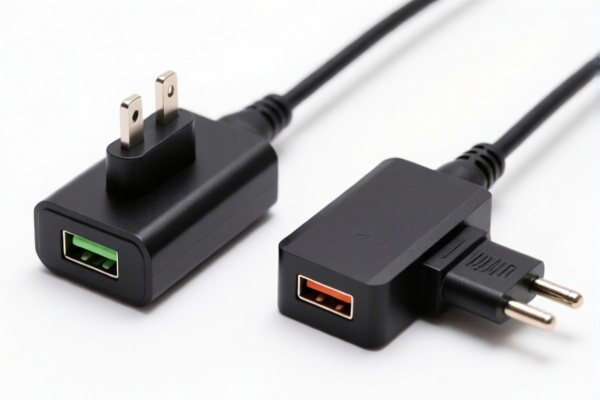
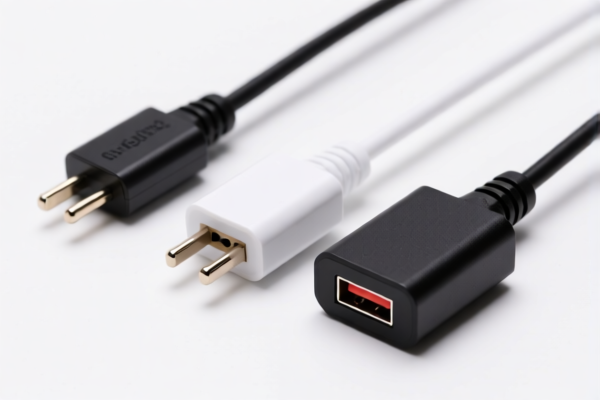
AI Analysis
🔌 Adapters (Power & Data/Communication)
🌐 HS Code Reference & Customs Clearance Guide | 2026 Latest Tariff Analysis | Strategic Clearance Strategy
📌 1. Product Definition & Classification: Do You Really Understand "Adapters"?
In international trade, "Adapters" are a broad category often misunderstood. They generally fall into two distinct functional domains:
- Power Adapters (Static Converters): Devices that convert AC mains power to DC or specific voltages for electronic devices (e.g., laptop chargers, phone bricks). These are legally classified as Static Converters.
- Data/Communication Adapters (Interconnects): Devices that facilitate signal transmission, protocol conversion, or physical connection between different ports (e.g., USB-C to HDMI, Ethernet adapters). These are often classified as Parts of Transmission/Apparatus or Interconnecting Apparatus.
⚠️ Critical Distinction:
- If the primary function is energy conversion (AC/DC) → Look at Chapter 8504 (Static Converters).
- If the primary function is physical/electrical connection or signal routing without voltage conversion → Look at Chapter 8536 (Connectors/Sockets) or Chapter 8517 (Transmission/Reception Apparatus).
- Misclassification here can lead to massive duty differences (e.g., 2.7% vs. 7.5% base duty) and compliance risks.
📦 2. HS Code Classification Details (2026 Latest Tariff Matrix)
Based on the provided data, here are the specific HS Codes applicable to Adapters, their justifications, and tax implications.
| HS Code | Product Description | Justification from Data | Total Tax Rate | Base + Additional Duties |
|---|---|---|---|---|
| 8536.69.80.00 | Electrical Connection/Conversion Device | Classified as a plug/socket/interconnecting device. | 37.7% | Base: 2.7%, Add'l: 25%, Sec 122: 10% |
| 8504.40.60.07 | Static Converter (Power Adapter) | Functions as a static converter providing power to electronic equipment. | 35.0% | Base: 0.0%, Add'l: 25%, Sec 122: 10% |
| 8504.40.70.07 | Static Converter (Power Adapter) | Classified as a stationary converter for power conversion purposes. | 35.0% | Base: 0.0%, Add'l: 25%, Sec 122: 10% |
| 8517.69.00.00 | Data/Signal Transmission Device | Used for data transmission or signal power conversion; categorized under other transmission/reception equipment. | 35.0% | Base: 0.0%, Add'l: 25%, Sec 122: 10% |
| 8517.79.00.00 | Parts/Accessories for Comm. Equipment | Classified as a part/accessory for communication apparatus. | 67.5% | Base: 0.0%, Add'l: 7.5%, Sec 122: 10%, Metal Surcharge: 50% |
🔍 Key Observation:
- 8504 Codes (Power Adapters) generally have a 0% Base Duty, resulting in a lower total tax (35%).
- 8536.69.80.00 (Interconnect Adapters) has a 2.7% Base Duty, resulting in a higher total tax (37.7%).
- 8517.79.00.00 (Comm. Parts) is the highest risk code (67.5%) due to the additional 50% tariff on steel/aluminum/copper products. This often applies if the adapter contains significant metal components and is deemed a "part" rather than a standalone device.
💰 3. 2026 Latest Tariff Rate Breakdown (Including Surcharges)
✅ Applicable Country: United States (US)
✅ Origin: China (CN)
✅ Effective Date: From November 10, 2025 (and onwards)
🎯 1. 8504.40.60.07 / 8504.40.70.07 — Static Power Converters (Best for Pure Power Adapters)
| Item | Detail |
|---|---|
| Base Duty | 0.0% |
| Section 301 Additional Duty | +25.0% |
| Section 122 Duty (USITC Footnote) | +10.0% |
| Total Effective Duty | 35.0% |
| Calculation Basis | CIF Value × 35% |
| De Minimis Eligibility | ❌ No (Subject to high duties, de minimis exemptions usually do not apply to Section 301 goods) |
| Legal Reference Path | Section 301: 8504.40.60.07 → Section 122: 10% |
📌 Explanation:
- This is the most favorable classification for standard power adapters (laptop chargers, phone blocks).
- Because the base duty is 0%, the total burden is strictly the sum of the surcharges.
- Warning: Ensure the product is described as a "Static Converter" in commercial invoices, not just "Adapter."
🎯 2. 8536.69.80.00 — Electrical Interconnecting Devices (For Plugs/Converters)
| Item | Detail |
|---|---|
| Base Duty | 2.7% |
| Section 301 Additional Duty | +25.0% |
| Section 122 Duty (USITC Footnote) | +10.0% |
| Total Effective Duty | 37.7% |
| Calculation Basis | CIF Value × 37.7% |
| De Minimis Eligibility | ❌ No |
| Legal Reference Path | Section 301: 8536.69.80.00 → Section 122: 10% |
📌 Explanation:
- This code applies if the adapter is viewed primarily as a connector or socket mechanism rather than a voltage converter.
- The 2.7% base duty pushes the total cost higher than the 8504 codes.
🎯 3. 8517.79.00.00 — Parts of Transmission Apparatus (High Risk!)
| Item | Detail |
|---|---|
| Base Duty | 0.0% |
| Section 301 Additional Duty | +7.5% |
| Section 122 Duty (USITC Footnote) | +10.0% |
| Section 232/Other Metal Surcharge | +50.0% (On Steel, Aluminum, Copper products) |
| Total Effective Duty | 67.5% |
| Calculation Basis | CIF Value × 67.5% |
| De Minimis Eligibility | ❌ No |
| Legal Reference Path | Section 301: 8517.79.00.00 → Section 122: 10% → Metal Surcharge: 50% |
📌 Critical Warning:
- This code is extremely expensive due to the 50% metal surcharge.
- It is often applied if the adapter is considered a "part" of a communication device (e.g., a network interface card part) and contains significant metal.
- Avoid this classification for standard consumer power adapters unless absolutely necessary. It can double your costs compared to the 8504 classification.
🎯 4. 8517.69.00.00 — Other Transmission/Reception Apparatus
| Item | Detail |
|---|---|
| Base Duty | 0.0% |
| Section 301 Additional Duty | +25.0% |
| Section 122 Duty (USITC Footnote) | +10.0% |
| Total Effective Duty | 35.0% |
| Calculation Basis | CIF Value × 35.0% |
| De Minimis Eligibility | ❌ No |
📌 Explanation:
- Applies to adapters used for data transmission (e.g., Ethernet adapters, USB hubs).
- Tax rate is identical to power adapters (35%) but based on different regulatory logic (transmission equipment).
🛠️ 4. Customs Clearance Practical Advice (Avoiding Pitfalls)
✅ 1. Documentation Checklist (Essential for Clearance)
| Document | Requirement | Purpose |
|---|---|---|
| Commercial Invoice | Must specify "Static Converter" (for 8504) or "Electrical Connector" (for 8536). Avoid vague terms like "Power Adapter" alone. | Determines HS Code eligibility. |
| Product Specifications | List Input (e.g., 100-240V AC) and Output (e.g., 12V DC, 2A). Include voltage/frequency details. | Proves function as a "Converter" (8504) vs. "Connector" (8536). |
| Circuit Diagram/Schematic | Provide simplified circuit diagram showing rectification/transformation. | Key evidence for 8504 classification (Static Converter). |
| Material Composition | List materials for housing and internal components (Plastic, Copper, Aluminum, etc.). | Crucial for assessing the 50% Metal Surcharge risk under 8517.79. |
| Certifications | FCC ID, UL/ETL Report, CE Mark. | Required for entry into the US market. |
| Country of Origin | Explicitly state "Made in China". | Triggers Section 301 and Section 122 duties. |
✅ 2. Declaration Strategy (Key Tips)
🔥 Golden Rule: "Function Dictates Code, Material Dictates Surcharge!"
| Scenario | Recommended HS Code | Why? |
|---|---|---|
| Laptop Charger / Phone Brick | 8504.40.60.07 or 8504.40.70.07 |
Primary function is AC/DC conversion. Lowest total tax (35%). |
| USB-C to HDMI Adapter | 8517.69.00.00 |
Primary function is signal/data transmission/conversion. Tax: 35%. |
| Simple Plug Adapter (No Conversion) | 8536.69.80.00 |
Primary function is physical connection. Higher base duty makes it 37.7%. |
| Network Interface Card (NIC) Part | 8517.79.00.00 |
Classified as a part. AVOID if possible due to 67.5% tax and metal surcharge. |
✅ 3. Special Handling & Risk Mitigation
| Risk | Mitigation Strategy |
|---|---|
| Misclassification as "Part" (8517.79) | Do not declare as "Part of Telecom Equipment" if it is a standalone device. Declare as "Static Power Converter" or "Signal Adapter". |
| Metal Surcharge (50%) | If using 8517 codes, verify if the product contains significant steel/aluminum/copper. If it's mostly plastic with minor metal contacts, argue against the surcharge, but be prepared with material specs. |
| Section 122 Exemption | Ensure you are not eligible for any de minimis exemptions. Section 122 and Section 301 duties are non-negotiable for Chinese-origin goods. |
| Origin Labeling | Ensure permanent marking on the product itself says "Made in China." Missing labels can cause detention. |
🌍 5. Global Market Comparison (2026 Context)
| Market | Recommended HS Code | Est. Duty (China Origin) | Key Requirement |
|---|---|---|---|
| 🇺🇸 USA | 8504.40.60.07 |
35% | FCC, UL, Precise Description |
| 🇺🇸 USA | 8536.69.80.00 |
37.7% | Detailed Electrical Specs |
| 🇪🇺 EU | 8504.40.90 |
~4% + VAT | CE, RoHS, WEEE |
| 🇨🇳 China | 8504.40.90 |
~0-4% | CCC (if applicable) |
📌 Conclusion:
- The US market is the most challenging for adapters due to the叠加 of Section 301 (25%) and Section 122 (10%) tariffs.
- Proper classification is critical: Choosing8504(Power Converter) over8517(Parts) can save you 32.5% in duties.
- Documentation must prove function: Invoices must explicitly state "Static Converter" to justify the 0% base duty rate.
📌 6. Common Mistakes & Pitfalls (Learn from Errors)
❌ Mistake 1: Declaring a Power Adapter as a "Part of a Computer" (8517.79)
👉 Result: Tax jumps to 67.5% due to metal surcharge and misclassification.
👉 Fix: Declare as "Static Converter" (8504.40.xxxx).
❌ Mistake 2: Using Vague Descriptions like "Adapter"
👉 Result: Customs may assign the highest applicable rate or demand extensive verification, causing delays.
👉 Fix: Use precise terms: "AC-DC Power Adapter, 12V Output, Static Converter".
❌ Mistake 3: Ignoring Section 122 (10%) Duty
👉 Result: Under-declaring value or duty, leading to penalties.
👉 Fix: Always calculate CIF value including the 10% Section 122 duty in your cost model.
✅ Correct Approach:
"AC-DC Power Adapter, Model XYZ, Input 100-240V AC, Output 12V DC, Static Converter, FCC Certified, Made in China"
🎯 7. Conclusion: Professional Classification Saves Money!
🎯 Remember:
🔹 "Power? Go 8504. Data? Go 8517. Connect? Go 8536. Never 8517 Parts!"
🔹 "35% is your goal. 67.5% is your nightmare."
📌 Pro Tip:
If your adapters are shipped from Vietnam, Mexico, or Malaysia, you may qualify for IEEPA Exemptions or lower Section 301 rates. Always verify the Country of Origin meticulously. Consider applying for a Binding Ruling from CBP if your product function is complex.
📣 Immediate Action:
📞 Consult a licensed customs broker.
📄 Prepare detailed technical specs (Input/Output, Circuit Type).
🚀 Accurate classification is the key to efficient customs clearance!
✨ Professional Clearance Starts with Precise Classification!
💼 Every percentage point of duty matters!
Customer Reviews
About HS Code Classification
The Harmonized System (HS) is an internationally standardized nomenclature developed by the World Customs Organization (WCO) to classify traded products. Over 200 countries use the HS system as the basis for customs tariffs, trade statistics, and import/export regulations.
Each HS code follows a hierarchical structure:
- Chapter (2 digits) — Broad category of goods (e.g., Chapter 84: Machinery and Mechanical Appliances)
- Heading (4 digits) — More specific grouping within the chapter
- Subheading (6 digits) — Internationally standardized breakdown, used by all WCO member countries
- National subdivisions (8-10 digits) — Country-specific extensions for further classification, such as US HTSUS 10-digit codes
Correct HS code classification is essential for smooth customs clearance, accurate duty payment, and compliance with trade regulations. Misclassification can lead to customs delays, overpayment of duties, or penalties.
When importing from CN to US, the applicable tariff rates may include:
- Most-Favored-Nation (MFN) rate — The standard duty rate applied to WTO members
- General rate — Applied to countries without trade agreements
- Trade remedy duties — Additional tariffs such as Section 301 (anti-dumping), Section 232 (national security), or countervailing duties
The information provided on this page is for reference purposes only. For official classification, please consult with your local customs authority or a licensed customs broker.