adhesive cork flooring strips
CN → US| HS Code | Tariff Rate | Origin | Destination | Doc |
|---|---|---|---|---|
| 6806900090 | 35.0% | CN | US | Official Doc |
| 6806100090 | 38.9% | CN | US | Official Doc |
Product Images
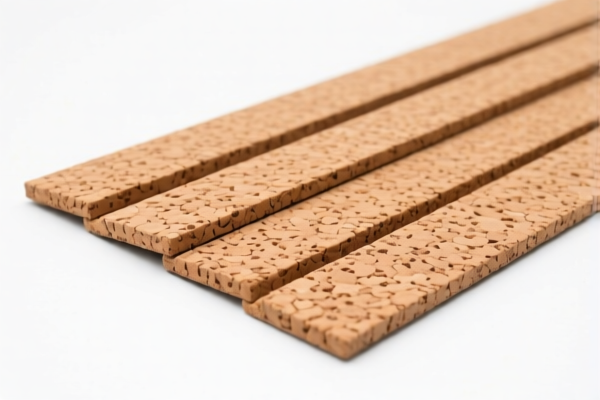
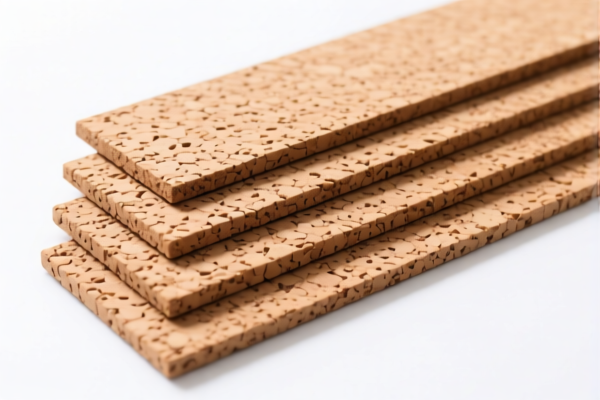
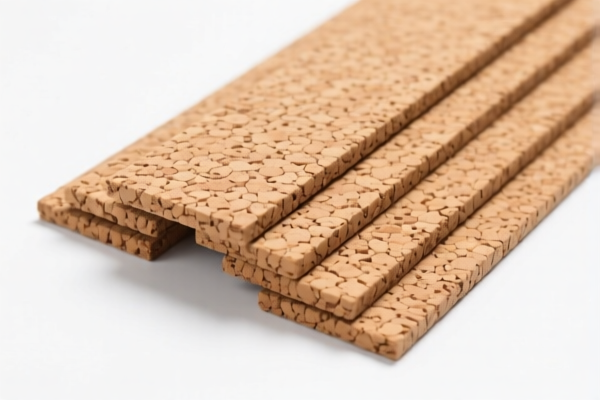
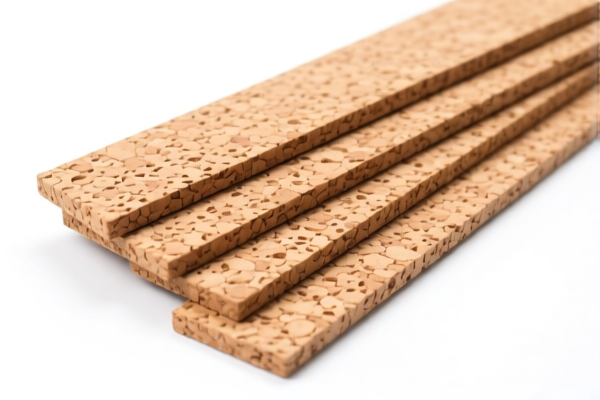
AI Analysis
🏠 Adhesive Cork Flooring Strips (Self-Adhesive Cork Tiles/Strips)
🌐 HS Code Reference & Customs Clearance Guide | 2026 Latest Tariff Analysis | Professional Entry Strategy
📌 Part 1: Product Definition & Classification: Do You Really Understand "Cork Flooring"?
Cork flooring strips (often sold as peel-and-stick tiles or rolls) are resilient floor coverings made from the bark of the cork oak tree (Quercus suber). In international trade, they are NOT classified as simple wood products or natural raw materials. They are considered manufactured floor coverings.
Key Distinction:
- Unprocessed Cork Sheets/Raw Blocks: Raw cork bark without bonding agents or backing → Classified under Chapter 45 or 44.
- Adhesive Cork Flooring Strips: Cork granules bound together with resin/adhesive, often backed with felt, PVC, or self-adhesive tape, and cut into strips/tiles → Classified under Chapter 39 (Plastics) or Chapter 44 (Wood/Wood Products, depending on specific composition and backing).
⚠️ Critical Classification Point:
- If the backing is plastic (PVC/PE) and forms the principal characteristic → HS 3918.10
- If the backing is felt/fabric and cork is the surface → HS 4409.20 (Wood flooring) or HS 3918 depending on binding agents.
- Most common commercial "Peel-and-Stick" Cork Tiles: Typically classified under 3918.10.00.00 (Floor coverings of plastics) or 4409.20.00.00 (Wood flooring) depending on the primary material and binding agent. Note: Many customs authorities treat cork products with resin binders as Wood Products (Chapter 44) if cork is the main bulk, but if heavily plasticized or plastic-backed, they fall under Plastics (Chapter 39).
📦 Part 2: HS Code Classification Details (2026 Latest Tariff Authority Reference)
| HS Code | Product Description | Application Scenario | Primary Material/Backing |
|---|---|---|---|
3918.10.00.00 |
Floor coverings of plastics (including linoleum) | Cork tiles with plastic backing (PVC/PE) or plastic-based adhesive layer dominating | ✅ Plastic Backing |
4409.20.00.00 |
Wood (incl. bamboo) flooring (continuous tongue, groove, etc.) | Natural cork strips bound with natural/resin binders, no plastic backing | ✅ Wood/Cork (Natural) |
4409.90.00.00 |
Other wood (incl. bamboo) flooring | Cork strips treated with preservatives, not continuous tongue-and-groove | ✅ Wood/Cork (Treated) |
3918.90.00.00 |
Other floor coverings of plastics | Non-cork plastic floorings (e.g., vinyl) – Not applicable to cork | ❌ Not Cork |
4009.00.00.00 |
Other articles of vulcanized rubber | Rubber floor mats – Not applicable to cork | ❌ Not Cork |
🔍 Important Reminder:
- "Adhesive" does not automatically mean Chapter 35 (Glues). The flooring itself is the product.
- If the product is "Cork granules bound with synthetic resin", many customs agencies (like US CBP) may classify it under 3918 (Plastics) if the resin acts as a plasticizer/binder creating a homogeneous plastic-like sheet.
- If it is "Solid cork pieces/stripes glued together", it may be 4409 (Wood).
- Recommendation: Check the Material Safety Data Sheet (MSDS) and Commercial Invoice description carefully. For "Peel-and-Stick" cork, 3918.10.00.00 is frequently used if the backing is plastic. 4409.20.00.00 is used if it’s natural cork tongue-and-groove.
💰 Part 3: 2026 Latest Tariff Rate Details (Including Additional Duties & Policy Surcharges)
✅ Applicable Country: United States (US)
✅ Country of Origin: China (CN)
✅ Effective Date: From November 10, 2025 (including subsequent imports)
🎯 1. 3918.10.00.00 —— Floor Coverings of Plastics (Cork with Plastic Backing)
| Item | Content |
|---|---|
| Base Rate | 3.7% (ad valorem) |
| USITC Additional Duty | +25% (from USITC Footnote 9903.88.01 – Section 301) |
| IEEPA Additional Duty | +10% (China/HK products, from Nov 10, 2025) |
| Total Rate | 38.7% |
| Tax Calculation | CIF Value × 38.7% |
| De Minimis Eligibility | ❌ No (deny_de_minimis) |
| Legal Basis Path | IEEPA:9903.01.25 → IEEPA:9903.01.24 → USITC:3918.10.00.00 → FOOTNOTE:9903.88.01 |
📌 Explanation:
- "USITC Additional Duty 25%" is from the Section 301 tariffs;
- "IEEPA 10%" is the new surcharge on Chinese goods;
- Total 38.7% is a high tariff. Must be factored into cost.
🎯 2. 4409.20.00.00 —— Wood Flooring (Natural Cork Strips)
| Item | Content |
|---|---|
| Base Rate | 5.5% (ad valorem) |
| USITC Additional Duty | +25% (from USITC Footnote 9903.88.01 – Section 301) |
| IEEPA Additional Duty | +10% (China/HK products, from Nov 10, 2025) |
| Total Rate | 40.5% |
| Tax Calculation | CIF Value × 40.5% |
| De Minimis Eligibility | ❌ No (deny_de_minimis) |
| Legal Basis Path | IEEPA:9903.01.25 → IEEPA:9903.01.24 → USITC:4409.20.00.00 → FOOTNOTE:9903.88.01 |
📌 Note:
- Even if classified as "Wood," cork flooring from China faces the same 25% Section 301 tariff.
- The 10% IEEPA surcharge applies equally.
- Total 40.5% is slightly higher than plastic-backed due to base rate difference.
🛠️ Part 4: Customs Clearance Practical Advice (Battle-Tested Pitfall Avoidance Guide)
✅ 1. Required Documents Checklist (None Are Optional)
| Document | Must Provide | Description |
|---|---|---|
| ✅ Product Specification Sheet | ✔️ | Material composition (Cork % + Resin %), Backing material (PVC/Felt), Dimensions, Thickness |
| ✅ Commercial Invoice | ✔️ | Clear description: "Cork Flooring Strips, Peel-and-Stick, 12x12 inch" |
| ✅ Packing List | ✔️ | Number of boxes, pieces per box, gross/net weight |
| ✅ Certificate of Origin (CO) | ✔️ | If non-China origin, to claim preferential rates |
| ✅ MSDS (Material Safety Data Sheet) | ✔️ | Required for chemical/adhesive content verification |
| ✅ FCC/CE/RoHS Report (If applicable) | ✔️ | For electronic components if smart flooring, otherwise for chemical compliance |
✅ 2. Declaration Tips (Key Mantra)
🔥 "Back to Back, Cork to Cork, Name is Precise, Tariff is Clear!"
| Situation | Correct Declaration | Wrong Practice |
|---|---|---|
| Cork tiles with plastic backing | 3918.10.00.00 |
Misdeclare as "Wood Flooring" → Audit risk |
| Natural cork tongue-and-groove | 4409.20.00.00 |
Misdeclare as "Plastics" → Over/Under payment |
| Peel-and-stick (Adhesive side exposed) | Declare as "Flooring Strips" | Declare as "Adhesive Tape" → Wrong Chapter (35) |
| Mixed shipments (Cork + Carpet) | Split HS Codes | One HS Code for all → High penalty risk |
✅ 3. Special Circumstances Handling
| Situation | Handling Advice |
|---|---|
| OEM Custom Sizes | Provide order details + design drawings to prove they are "flooring," not "raw cork" |
| Cork with Felt Backing | Still likely 4409 if cork is primary, or 3918 if felt is plastic-based. Consult CBP for pre-ruling. |
| Chemical Treatments | If cork is treated with formaldehyde or other chemicals, ensure MSDS is declared to avoid FDA/EPA holds |
| Samples for Testing | Clearly mark "NOT FOR SALE" but still subject to duties unless using Section 321 (de minimis) eligibility, which is now restricted for China |
🌍 Part 5: Global Market Comparison (2026 Latest)
| Country/Region | Recommended HS Code | Tariff | Certification Requirements | Remarks |
|---|---|---|---|---|
| 🇺🇸 USA | 3918.10.00.00 or 4409.20.00.00 |
38.7% - 40.5% | FCC (if applicable) + RoHS | High tariffs due to Section 301 + IEEPA |
| 🇨🇳 China | 4409.20.00.00 |
5% - 10% | CCC (if applicable) | Lower duties for domestic trade |
| 🇪🇺 EU | 3918.10.00 or 4409.20.00 |
0% - 5% | REACH + CE | No additional surcharges, but strict REACH chemical compliance |
| 🇦🇺 Australia | 3918.10.00 |
5% | RCM | Moderate duties |
| 🇯🇵 Japan | 3918.10.00 |
0% - 5% | PSE | No surcharges |
📌 Conclusion:
- USA has the highest entry barrier due to combined Section 301 + IEEPA tariffs.
- EU, Japan, Australia are more favorable but require strict chemical compliance (REACH, PSE).
- Cost Advantage: Consider sourcing cork flooring from Portugal or Spain (EU origin) to avoid US tariffs if exporting to US via transshipment (but beware of rules of origin fraud).
📌 Part 6: Common Mistakes & Pitfall Guide (Blood & Tears Lessons)
❌ Mistake 1: Declaring "Adhesive Tape" instead of "Flooring Strips"
👉 Consequence: Wrong HS Code (3506/3919) → 30% penalty + delay for misclassification.
❌ Mistake 2: Ignoring the Backing Material
👉 Consequence: If plastic-backed but declared as wood flooring, CBP may assess Plastic tariffs (3918) which have different surcharges or lead to audit.
❌ Mistake 3: Not disclosing Chemical Adhesives
👉 Consequence: If adhesives contain restricted substances (VOCs, formaldehyde), shipment may be rejected by EPA or FDA.
❌ Mistake 4: Using "De Minimis" ($800) for China-Origin Cork Flooring
👉 Consequence: Since Nov 10, 2025, de minimis is denied for Chinese goods under Section 321. All units subject to duties.
✅ Correct Practice:
"Cork Flooring Strips, 12x24 inch, Peel-and-Stick, Plastic Backing, Model ABC, RoHS Compliant"
🎯 Part 7: Conclusion: Professional Declaration, Save Time, Reduce Costs!
🎯 Remember the Mantra:
🔹 "Backing Defines Code, Adhesive Doesn't Count for Chapter, China Origin = 40%+, Plan Ahead!"
🔹 "HS Code Determines Destiny, 2% Difference Means Thousands in Tax!"
📌 Pro Tip:
If your cork flooring is sourced from Portugal, Vietnam, or Mexico, you can apply for IEEPA Exemption (if eligible) or lower Section 301 rates.
Recommend applying for a Customs Ruling (Pre-Ruling) to confirm whether your specific product falls under 3918 or 4409 before shipping.
📣 Immediate Action:
📞 Contact a Professional Broker + Provide Product Samples + Apply for HS Code Pre-Ruling
🚀 Let your cork flooring Pass Customs Smoothly, Export Efficiently, Profit Maximized!
✨ Professional Customs Clearance Starts with Accurate Classification!
💼 Every Penny of Your Cost Deserves Precise Calculation!
Customer Reviews
About HS Code Classification
The Harmonized System (HS) is an internationally standardized nomenclature developed by the World Customs Organization (WCO) to classify traded products. Over 200 countries use the HS system as the basis for customs tariffs, trade statistics, and import/export regulations.
Each HS code follows a hierarchical structure:
- Chapter (2 digits) — Broad category of goods (e.g., Chapter 84: Machinery and Mechanical Appliances)
- Heading (4 digits) — More specific grouping within the chapter
- Subheading (6 digits) — Internationally standardized breakdown, used by all WCO member countries
- National subdivisions (8-10 digits) — Country-specific extensions for further classification, such as US HTSUS 10-digit codes
Correct HS code classification is essential for smooth customs clearance, accurate duty payment, and compliance with trade regulations. Misclassification can lead to customs delays, overpayment of duties, or penalties.
When importing from CN to US, the applicable tariff rates may include:
- Most-Favored-Nation (MFN) rate — The standard duty rate applied to WTO members
- General rate — Applied to countries without trade agreements
- Trade remedy duties — Additional tariffs such as Section 301 (anti-dumping), Section 232 (national security), or countervailing duties
The information provided on this page is for reference purposes only. For official classification, please consult with your local customs authority or a licensed customs broker.