adjustable shoulder strap
CN → US| HS Code | Tariff Rate | Origin | Destination | Doc |
|---|---|---|---|---|
| 3926902500 | 24.0% | CN | US | Official Doc |
| 3926909989 | 22.8% | CN | US | Official Doc |
| 4205004000 | 36.8% | CN | US | Official Doc |
| 4205002000 | 35.0% | CN | US | Official Doc |
| 6307904020 | 17.5% | CN | US | Official Doc |
| 6307904010 | 17.5% | CN | US | Official Doc |
Product Images
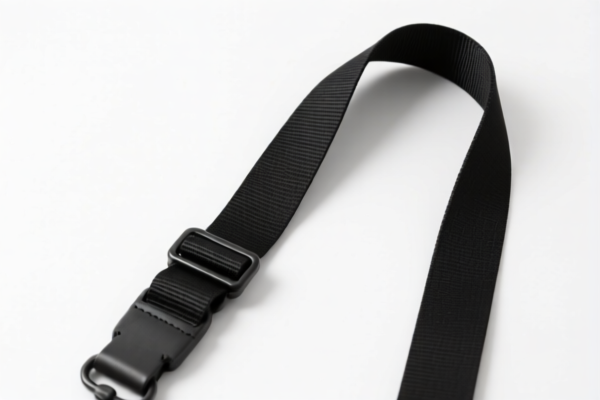
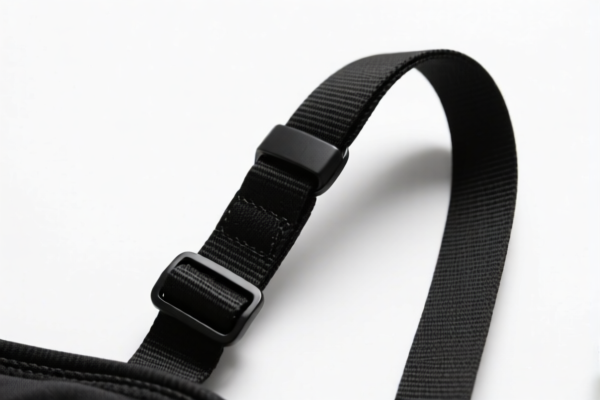
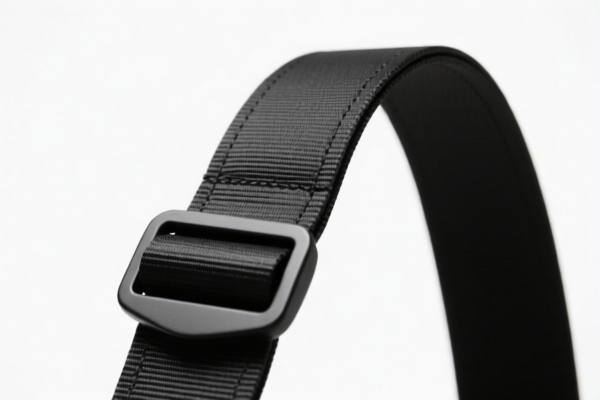
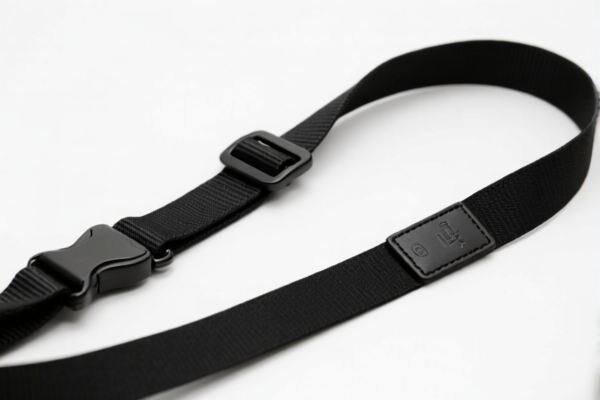
AI Analysis
🎒 Adjustable Shoulder Strap (Versatile Carrying Solutions)
🌐 HS Code Reference & Customs Clearance Guide | 2026 Latest Tariff Analysis | Professional通关 Strategy
📌 I. Product Definition & Classification: Do You Really Know "Shoulder Straps"?
Adjustable shoulder straps are critical accessories in the leather goods and textiles industry, used for bags, luggage, camera equipment, and industrial harnesses. In international trade, they are not a single unified category but are strictly divided based on material composition and functional structure.
Misclassification is the most common pitfall for these items. A strap made of leather follows a completely different tariff path than one made of cotton or plastic.
⚠️ Key Distinction Points:
- If the strap is made of leather or composition leather and functions as a handle/strap → It falls under Chapter 42 (Articles of Leather). - If the strap is made of textiles (e.g., cotton) and functions as a cord/tassel/strap → It often falls under Chapter 63 (Other Made-up Articles). - If the strap is primarily plastic components (e.g., buckles, knobs) → It may fall under Chapter 39 (Articles of Plastics). - Crucial Rule: The classification depends on the primary material of the strap itself, not the hardware (buckles/clasps), unless the hardware constitutes the essential character.
📦 II. HS Code Classification Details (2026 Latest Tariff Authority Comparison)
Based on the provided data, here are the specific HS Codes for "Adjustable Shoulder Straps" depending on their material and construction:
| HS Code | Product Description | Applicable Scenario | Primary Material |
|---|---|---|---|
4205.00.40.00 |
Other articles of leather or of composition leather: Other: Straps and strops | Leather or synthetic leather belts for bags, camera straps made of leather | ✅ Leather / Composition Leather |
4205.00.20.00 |
Other articles of leather or of composition leather: Other: Shoelaces | Note: Typically for footwear, but listed here for leather laces/straps | ✅ Leather / Composition Leather |
6307.90.40.20 |
Other made up articles, including dress patterns: Other: Cords and tassels Other | Textile straps not classified elsewhere, generic textile cords | ✅ Textiles (General) |
6307.90.40.10 |
Other made up articles, including dress patterns: Other: Cords and tassels Of cotton | Cotton straps, canvas bag straps, textile cords | ✅ Cotton |
3926.90.25.00 |
Other articles of plastics...: Other: Handles and knobs... of plastics | Straps where the plastic handle/knob is the main feature (less common for standard straps) | ✅ Plastics |
3926.90.99.89 |
Other articles of plastics...: Other: Other | Plastic clips, plastic-only straps, or mixed goods where plastic is dominant | ✅ Plastics |
🔍 Focus for "Adjustable Shoulder Strap":
The most likely candidates for a general "shoulder strap" are4205.00.40.00(if leather-like) or6307.90.40.10/6307.90.40.20(if textile/cotton). The plastic codes (3926.90...) usually apply to the buckles or adjusters, not the strap fabric itself, unless the item is a specialized plastic harness.
💰 III. 2026 Latest Tariff Rate Details (Detailed Breakdown)
✅ Applicable Country: United States (US)
✅ Origin: China (CN)
✅ Effective Time: Current rates apply as per the provided data (includes Section 301/Additional Tariffs)
🎯 1. 4205.00.40.00 —— Straps and Strops (Leather/Composition Leather)
| Item | Content |
|---|---|
| Base Tariff | 1.8% |
| Additional Tariff (Section 301) | +25.0% |
| Total Tax Rate | 26.8% |
| Tax Calculation | CIF Value × 26.8% |
| De Minimis Exemption | ❌ Not Applicable (High value, specific classification) |
| Legal Basis | HTSUS 4205.00.40.00 + USITC Footnote for China (25%) |
📌 Explanation:
- This is the standard classification for leather or synthetic leather straps.
- The 26.8% total rate is significant. If your strap is made of genuine leather or high-quality PU (composition leather), this is the correct code.
- Warning: Do not misdeclare as "textile" to avoid the 25% add-on unless it is truly fabric-based.
🎯 2. 6307.90.40.10 —— Cords and Tassels Of Cotton (Textile Straps)
| Item | Content |
|---|---|
| Base Tariff | 0.0% |
| Additional Tariff (Section 301) | +7.5% |
| Total Tax Rate | 7.5% |
| Tax Calculation | CIF Value × 7.5% |
| De Minimis Exemption | ❌ Not Applicable |
| Legal Basis | HTSUS 6307.90.40.10 + USITC Footnote for China (7.5%) |
📌 Explanation:
- This code applies to cotton-based straps (e.g., canvas bag straps, woven textile belts).
- The rate is much lower (7.5%) compared to leather straps.
- Key Condition: The strap must be primarily cotton/textile. If it has heavy leather components, it may be reclassified to4205.
🎯 3. 6307.90.40.20 —— Cords and Tassels Other (Other Textiles/Synthetics)
| Item | Content |
|---|---|
| Base Tariff | 0.0% |
| Additional Tariff (Section 301) | +7.5% |
| Total Tax Rate | 7.5% |
| Tax Calculation | CIF Value × 7.5% |
| Legal Basis | HTSUS 6307.90.40.20 + USITC Footnote for China (7.5%) |
📌 Explanation:
- Use this for non-cotton textile straps (e.g., nylon, polyester webbing) if they fall under "other made-up articles."
- Note: Some nylon webbing might also be classified under Chapter 58 or 60 depending on width and construction, but given the dataset,6307.90.40.20is the provided "other" textile option.
🎯 4. 3926.90.25.00 & 3926.90.99.89 —— Plastic Components
| HS Code | Base Tax | Add-on Tax | Total Tax |
|---|---|---|---|
3926.90.25.00 (Handles/Knobs) |
6.5% | +7.5% | 14.0% |
3926.90.99.89 (Other Plastics) |
5.3% | +7.5% | 12.8% |
📌 Explanation:
- These codes are rarely used for full straps unless the product is a rigid plastic harness or the item is primarily a plastic buckle assembly.
- If you are shipping only plastic buckles/clasps separately, use these codes (12.8%-14.0%).
🛠️ IV. Customs Clearance Practical Advice (Real-World Pitfall Avoidance)
✅ 1. Documentation Checklist (Must-Have)
| Document | Mandatory? | Explanation |
|---|---|---|
| ✅ Product Specification Sheet | ✔️ | Must state: Material (Leather/Cotton/Nylon), Width, Length, Adjustability Mechanism. |
| ✅ Material Composition Proof | ✔️ | Critical! Is it "100% Leather" or "100% Cotton"? Misdeclaration leads to severe penalties. |
| ✅ Product Photos | ✔️ | Show the buckle, the strap weave, and any leather patches. |
| ✅ Commercial Invoice | ✔️ | Describe as "Leather Shoulder Strap for Handbag" or "Cotton Webbing Strap." Avoid vague terms like "Accessories." |
| ✅ HS Code Pre-ruling | ✔️ | Highly recommended if the material is mixed (e.g., Leather strap with plastic buckle). |
✅ 2. Declaration Strategy (Key Tips)
🔥 "Material Dictates Code, Not Function!"
| Scenario | Correct HS Code | Why? |
|---|---|---|
| Leather or PU Leather Strap | 4205.00.40.00 |
Chapter 42 covers articles of leather. "Straps" are explicitly listed. |
| Cotton Canvas Strap | 6307.90.40.10 |
Chapter 63 covers made-up textile articles. Cotton is specified. |
| Nylon/Polyester Strap | 6307.90.40.20 |
Falls under "Other" made-up textile articles. |
| Plastic Buckle Only | 3926.90.99.89 |
Plastic fasteners are classified under Chapter 39. |
| Mixed: Leather Strap + Plastic Buckle | 4205.00.40.00 |
The leather defines the essential character. The plastic buckle is incidental. |
✅ 3. Special Cases
| Case | Handling Advice |
|---|---|
| Adjustable Metal Clasp | Still 4205 or 6307 if the strap is leather/cotton. The metal/plastic clasp does not change the chapter. |
| Custom Logo Embroidery | Does not change HS Code. Ensure the invoice reflects the value accurately. |
| Gift Sets (Bag + Strap) | Declare separately if possible. If bundled, the bag's HS code may dominate, but the strap's tax rate should be considered in cost analysis. |
🌍 V. Global Market Comparison (2026)
| Market | Recommended HS Code (Leather) | Tariff (US Origin → US) | Notes |
|---|---|---|---|
| 🇺🇸 USA | 4205.00.40.00 |
26.8% | High due to 301 tariffs. |
| 🇪🇺 EU | 4205.00 | ~5-10% | No US-style punitive tariffs. |
| 🇨🇳 China | 4205.00 | ~5-10% | Import duty for foreign leather straps. |
| 🇦🇺 Australia | 4205.00 | ~5% | Lower overall tariffs. |
📌 Conclusion:
- The US market has the highest barriers for leather straps (26.8%) due to additional tariffs.
- Textile straps (Cotton/Nylon) are more tariff-efficient in the US (7.5%).
- If possible, designing straps with textile materials instead of leather can significantly reduce landed costs in the US.
📌 VI. Common Errors & Pitfalls (Lessons Learned)
❌ Error 1: Declaring a Leather Strap as "Textile" (6307) to save tax
👉 Consequence: Customs inspection will reveal leather. Penalty + Back Taxes + Potential Fraud Charges.
❌ Error 2: Declaring a Cotton Strap as "Leather" (4205)
👉 Consequence: Incorrect declaration. May lead to delays or reclassification. Also, missing the lower 7.5% rate.
❌ Error 3: Ignoring the "Composition Leather" Clause
👉 Consequence: PU/Microfiber is Composition Leather → Still 4205.00.40.00 → 26.8% Tax. Many importers mistakenly think "Synthetic = Textile." It is NOT.
✅ Correct Declaration Example:
"Adjustable Shoulder Strap, Made of Synthetic Leather (Composition Leather), Length 150cm, with Plastic Buckle. HS Code: 4205.00.40.00."
🎯 VII. Conclusion: Professional Declaration, Cost Optimization!
🎯 Remember the Golden Rule:
🔹 "Leather = Chapter 42 (26.8% in US)"
🔹 "Cotton/Textile = Chapter 63 (7.5% in US)"
🔹 "Plastic Buckles Only = Chapter 39 (12.8% in US)"
📌 Pro Tip:
If you are sourcing from China, always verify the material content. If you can switch from "Composition Leather" to "Heavy Cotton Canvas" or "Nylon Webbing," you can save 19.3% in tariffs on the strap component.
📣 Immediate Action:
📞 Consult your freight forwarder with material specs before shipping.
📋 Apply for Pre-Ruling if your product has mixed materials (e.g., Leather + Metal).
🚀 Optimize your BOM (Bill of Materials) to favor lower-tariff materials where feasible.
✨ Professional Customs Clearance Starts with Precise Classification!
💼 Every Percent Saved is Profit Earned!
Customer Reviews
About HS Code Classification
The Harmonized System (HS) is an internationally standardized nomenclature developed by the World Customs Organization (WCO) to classify traded products. Over 200 countries use the HS system as the basis for customs tariffs, trade statistics, and import/export regulations.
Each HS code follows a hierarchical structure:
- Chapter (2 digits) — Broad category of goods (e.g., Chapter 84: Machinery and Mechanical Appliances)
- Heading (4 digits) — More specific grouping within the chapter
- Subheading (6 digits) — Internationally standardized breakdown, used by all WCO member countries
- National subdivisions (8-10 digits) — Country-specific extensions for further classification, such as US HTSUS 10-digit codes
Correct HS code classification is essential for smooth customs clearance, accurate duty payment, and compliance with trade regulations. Misclassification can lead to customs delays, overpayment of duties, or penalties.
When importing from CN to US, the applicable tariff rates may include:
- Most-Favored-Nation (MFN) rate — The standard duty rate applied to WTO members
- General rate — Applied to countries without trade agreements
- Trade remedy duties — Additional tariffs such as Section 301 (anti-dumping), Section 232 (national security), or countervailing duties
The information provided on this page is for reference purposes only. For official classification, please consult with your local customs authority or a licensed customs broker.