advertising textile reinforced plastic sheets
CN → US| HS Code | Tariff Rate | Origin | Destination | Doc |
|---|---|---|---|---|
| 3921904010 | 39.2% | CN | US | Official Doc |
| 3926905700 | 41.5% | CN | US | Official Doc |
| 3926905600 | 40.1% | CN | US | Official Doc |
| 3921902510 | 41.5% | CN | US | Official Doc |
| 5903102090 | 35.0% | CN | US | Official Doc |
Product Images
AI Analysis
🖼️ Advertising Textile Reinforced Plastic Sheets (Textile-Reinforced Plastic Boards)
🌐 HS Code Reference & Customs Clearance Guide | 2026 Latest Tariff Analysis | Professional Strategy for US Imports
📌 I. Product Definition & Classification: What Exactly Are These Sheets?
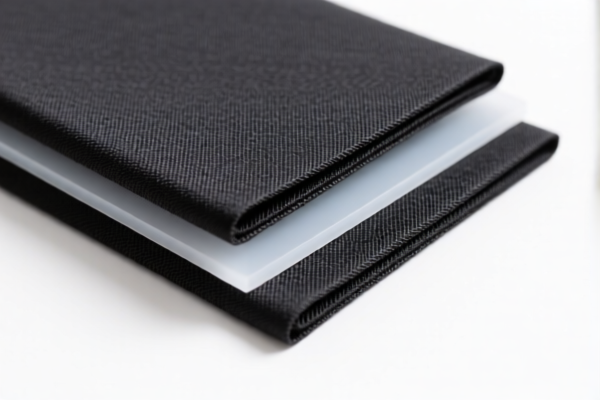
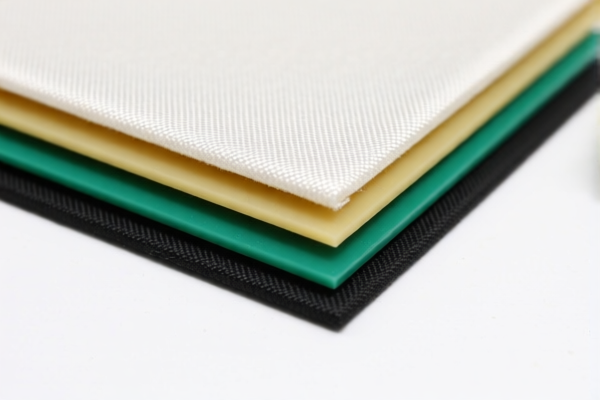
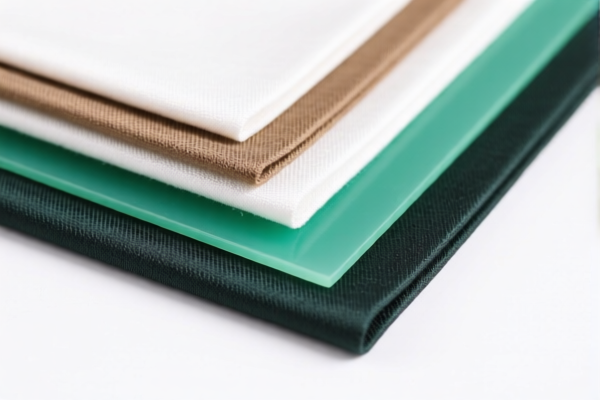
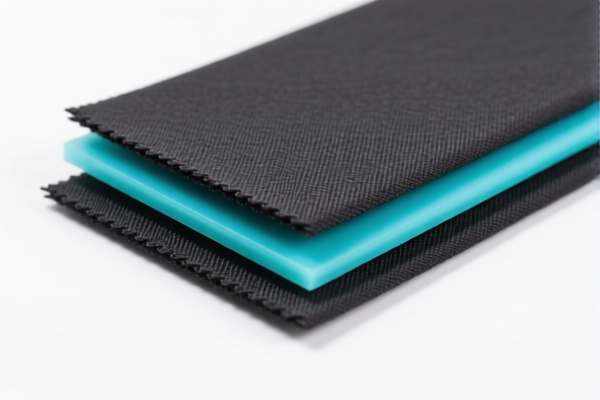
"Advertising Textile Reinforced Plastic Sheets" are composite materials used primarily for outdoor signage, billboards, and structural advertising displays. They combine the durability and weather resistance of plastic (polymers) with the tensile strength of textiles (fiberglass, polyester, or cotton).
In international trade, classification depends heavily on whether the item is viewed primarily as a plastic article or a textile product, and whether it is considered a "board" or a "laminate."
⚠️ Critical Distinction Point:
- If the plastic matrix is dominant and the textile acts as reinforcement (filler) → Chapter 39 (Plastics)
- If the textile structure is dominant and plastic is merely a coating/impregnation → Chapter 59 (Textile Articles)
- No Material Conflict: The "textile reinforcement" logic is consistent across plastic composite categories.
📦 II. HS Code Classification Details (2026 Latest Tariff Authority Comparison)
| HS Code | Product Description | Applicable Scenario | Primary Material Logic |
|---|---|---|---|
3921.90.40.10 |
Plastic plates, sheets, film, foil, and strip, other | Rigid plastic boards with textile reinforcement (filler logic) | ✅ Plastic dominant Textile = Reinforcement |
3926.90.57.00 |
Other articles of plastics and articles of other materials of heading 39.01 to 39.14 | Finished plastic articles (boards) with textile fiber characteristics | ✅ Plastic Article Includes textile fibers |
3926.90.56.00 |
Other articles of plastics and articles of other materials of heading 39.01 to 39.14 | Plastic boards containing textile fibers (explicit match) | ✅ Plastic Article Explicit "Containing Textile Fibers" |
3921.90.25.10 |
Other plates, sheets, film, foil, and strip, composite with textile components | Composite plastic-textile sheets where plastic is dominant | ✅ Composite Plastic Plastic content > Textile |
5903.10.20.90 |
Textile fabrics impregnated, coated, covered or laminated with plastics (PVC) | Laminated textile base with high plastic content (Advertising backing) | ✅ Textile Base Plastic = Coating/Lamination |
🔍 Key Reminder:
- Plastic-Dominant Items (Chapters 39) generally attract higher base tariffs (4.2%-6.5%) but are treated as manufactured plastic goods.
- Textile-Dominant Items (Chapter 59) have a 0% base tariff but are still subject to high punitive tariffs due to trade wars.
- "Board" vs. "Sheet": In customs practice, rigid advertising boards are often classified under3926(Articles) or3921(Plates/Sheets) depending on rigidity.
💰 III. 2026 Latest Tariff Rate Breakdown (Including Surcharge & Policy Add-ons)
✅ Applicable Country: United States (US)
✅ Origin: China (CN)
✅ Effective Date: From November 10, 2025 (including subsequent imports)
🎯 1. 3921.90.40.10 —— Plastic Plates/Sheets (Textile Reinforced)
| Item | Detail |
|---|---|
| Base Tariff | 4.2% |
| Section 301 Surcharge | +25.0% |
| IEEPA Surcharge (122 Clause) | +10.0% |
| Total Effective Rate | 39.2% |
| Tax Calculation | CIF Value × 39.2% |
| De Minimis Exemption | ❌ Not Eligible (deny_de_minimis) |
| Legal Basis Path | IEEPA:9903.01.25 → USITC:3921.90.40.10 → FOOTNOTE:9903.88.01 |
📌 Explanation:
- This code treats the product as a plastic plate/sheet.
- The "textile reinforcement" is considered a minor additive to the plastic matrix.
- Total Duty: 39.2%. This is a moderate-high risk category for compliance audits.
🎯 2. 3926.90.57.00 —— Other Plastic Articles (Textile Characteristic)
| Item | Detail |
|---|---|
| Base Tariff | 6.5% |
| Section 301 Surcharge | +25.0% |
| IEEPA Surcharge (122 Clause) | +10.0% |
| Total Effective Rate | 41.5% |
| Tax Calculation | CIF Value × 41.5% |
| De Minimis Exemption | ❌ Not Eligible |
| Legal Basis Path | IEEPA:9901.25 → IEEPA:9903.01.24 → USITC:3926.90.57.00 → FOOTNOTE:9903.88.01 |
📌 Explanation:
- Classified as a finished plastic article (board).
- Higher base rate (6.5%) due to being a manufactured article rather than raw sheet.
- Total Duty: 41.5%. Highest among plastic classifications.
🎯 3. 3926.90.56.00 —— Plastic Articles (Containing Textile Fibers)
| Item | Detail |
|---|---|
| Base Tariff | 5.1% |
| Section 301 Surcharge | +25.0% |
| IEEPA Surcharge (122 Clause) | +10.0% |
| Total Effective Rate | 40.1% |
| Tax Calculation | CIF Value × 40.1% |
| De Minimis Exemption | ❌ Not Eligible |
| Legal Basis Path | IEEPA:9901.25 → IEEPA:9903.01.24 → USITC:3926.90.56.00 → FOOTNOTE:9903.88.01 |
📌 Explanation:
- Explicitly matches "containing textile fibers."
- Slightly lower base rate than57.00but still high total duty.
- Total Duty: 40.1%.
🎯 4. 3921.90.25.10 —— Composite Plastic-Textile Sheets
| Item | Detail |
|---|---|
| Base Tariff | 6.5% |
| Section 301 Surcharge | +25.0% |
| IEEPA Surcharge (122 Clause) | +10.0% |
| Total Effective Rate | 41.5% |
| Tax Calculation | CIF Value × 41.5% |
| De Minimis Exemption | ❌ Not Eligible |
| Legal Basis Path | IEEPA:9901.25 → IEEPA:9903.01.24 → USITC:3921.90.25.10 → FOOTNOTE:9903.88.01 |
📌 Explanation:
- Used when the product is a composite sheet where plastic is dominant but textile is clearly present.
- Same total duty as3926.57.00.
- Total Duty: 41.5%.
🎯 5. 5903.10.20.90 —— Laminated Textile with Plastics (PVC)
| Item | Detail |
|---|---|
| Base Tariff | 0.0% |
| Section 301 Surcharge | +25.0% |
| IEEPA Surcharge (122 Clause) | +10.0% |
| Total Effective Rate | 35.0% |
| Tax Calculation | CIF Value × 35.0% |
| De Minimis Exemption | ❌ Not Eligible |
| Legal Basis Path | IEEPA:9903.01.25 → IEEPA:9903.01.24 → USITC:5903.10.20.90 → FOOTNOTE:9903.88.01 |
📌 Explanation:
- Lowest Total Duty (35.0%) among all options.
- Classifies the product as a textile fabric that is laminated/impregnated with plastic (e.g., PVC-backed fabric).
- Suitable for flexible advertising banners or semi-rigid boards where the textile base is structurally primary.
- ⚠️ Risk: Customs may challenge this if the plastic layer is too thick/rigid, reclassifying it to Chapter 39.
🛠️ IV. Customs Clearance Practical Advice (Battle-Tested Pitfall Avoidance)
✅ 1. Mandatory Documentation Checklist (Do Not Miss Any)
| Document | Required? | Description |
|---|---|---|
| ✅ Product Specification Sheet | ✔️ | Must detail layers: Plastic type (PVC/PE/PP), Textile type (Fiberglass/Polyester), Thickness, Density. |
| ✅ Material Composition Ratio | ✔️ | Critical: Percentage of Plastic vs. Textile by weight. Determines Ch. 39 vs. Ch. 59. |
| ✅ Product Photos (Clear) | ✔️ | Show cross-section to demonstrate lamination/coating vs. solid board. |
| ✅ Commercial Invoice | ✔️ | Must describe as "Textile-Reinforced Plastic Sheet" or "Laminated Textile Board," not just "Plastic Board." |
| ✅ Origin Certificate (CO) | ✔️ | Required for tariff calculation; China-origin triggers 301 + IEEPA duties. |
| ✅ Packing List | ✔️ | List weight and dimensions; ensure consistency with Invoice. |
✅ 2. Declaration Strategy (Key Mantra)
🔥 “Define Dominance, Describe Layering, Avoid Vague ‘Plastic’!”
| Scenario | Correct Declaration | Wrong Practice |
|---|---|---|
| Rigid Advertising Board | Use 3921 or 3926 series. Describe as "Plastic Board with Textile Reinforcement." |
Calling it "Textile Fabric" → Risk of Class 59 rejection if too rigid. |
| Flexible Banner/Mesh | Use 5903.10.20.90. Describe as "Laminated PVC Textile." |
Calling it "Plastic Sheet" → Overpaying duty (39.2% vs 35.0%). |
| Composite Sheet | Use 3921.90.25.10. Explicitly state "Plastic Dominant Composite." |
Vague term "Mixed Material" → Customs audit/delay. |
| Advertising Display Stand | Separate the sheet from the metal/wood frame. | Shipping stand + sheet together → Misclassification of entire assembly. |
✅ 3. Special Situation Handling
| Situation | Handling Advice |
|---|---|
| High Plastic Content (>60%) | Classify under Chapter 39 (3921/3926). Even with textile, plastic dominates character. |
| High Textile Content (>60%) | Classify under Chapter 59 (5903). If PVC-coated, use 5903.10.20.90 for lower duty (35%). |
| Rigid vs. Flexible | If it bends easily, lean toward 5903. If it snaps, lean toward 3921/3926. |
| Sample Shipment | Still subject to duties. Do not claim "Free Sample" if commercial value is evident. |
🌍 V. Global Market Customs Comparison (2026 Latest)
| Country/Region | Recommended HS Code | Estimated Duty (China Origin) | Certification Requirements | Notes |
|---|---|---|---|---|
| 🇺🇸 USA | 3921.90.40.10 / 5903.10.20.90 |
35.0% - 41.5% | FCC (if electronic), ASTM (if structural) | 301 + IEEPA applies to both. |
| 🇨🇳 China | 3921.90.40.10 |
~4.2% + VAT | N/A | No punitive surcharges. |
| 🇪🇺 EU | 3921.90 / 5903.10 |
~0% - 4.2% | REACH (Chemicals), CE | No "Section 301" equivalent. |
| 🇬🇧 UK | 3921.90 / 5903.10 |
~0% - 4.2% | UKCA | Post-Brexit rules apply. |
| 🇦🇺 Australia | 3921.90 / 5903.10 |
~5.0% | AER (Ecodesign) | No punitive tariffs. |
📌 Conclusion:
- USA is the most expensive market due to the combination of Base Tariff + 301 Surcharge (25%) + IEEPA (10%).
- Choosing5903.10.20.90saves 4.2% - 6.5% in total duty compared to Ch. 39 codes, but requires proving textile dominance.
- No other major market applies these punitive tariffs.
📌 VI. Common Mistakes & Pitfall Guide (Lessons Learned)
❌ Mistake 1: Declaring "Plastic Sheet" when it contains significant textile reinforcement.
👉 Consequence: Customs may reclassify to 3921.90.25.10 (higher base rate) or demand detailed composition proof.
❌ Mistake 2: Declaring "Textile Fabric" for a rigid, thick advertising board.
👉 Consequence: Customs may reject Ch. 59 as it doesn't meet "fabric" criteria, forcing reclassification to 3921/3926.
❌ Mistake 3: Ignoring the IEEPA 10% Surcharge.
👉 Consequence: Underpayment of duty by ~10%, leading to penalties and seizure.
❌ Mistake 4: Splitting the shipment into "Plastic Parts" and "Textile Parts" to avoid bulk classification.
👉 Consequence: Anti-circumvention investigation; total duty rate 89.5% possible if deemed evasion.
✅ Correct Practice:
"Textile-Reinforced PVC Plastic Sheet, Rigid Board for Outdoor Advertising, 5mm Thickness, Fiberglass Core, 39.2% Total Duty Est."
🎯 VII. Conclusion: Professional Declaration, Cost Optimization
🎯 Remember the Mantra:
🔹 "Plastic Dominant = Ch. 39 (39.2%-41.5%)"
🔹 "Textile Dominant = Ch. 59 (35.0%)"
🔹 "Declare Composition Clearly to Avoid Re-Classification Fines!"
📌 Pro Tip:
If your product is flexible (like a banner), strictly use 5903.10.20.90 to save ~4.2-6.5% in duties.
If your product is rigid (like a sign board), you are likely stuck with 3921/3926 (39.2%-41.5%).
Recommendation: Request an Advance Ruling (APA) from CBP before bulk shipping to confirm the 39 vs. 59 classification based on physical samples.
📣 Immediate Action:
📞 Consult a licensed US Customs Broker + Provide Cross-Section Photos + Apply for HS Code Pre-Ruling
🚀 Ensure your advertising sheets pass US Customs smoothly, maximizing your profit margin!
✨ Professional Customs Clearance Starts with Precise Classification!
💼 Every Percentage Point of Duty Saved is Pure Profit!
Customer Reviews
About HS Code Classification
The Harmonized System (HS) is an internationally standardized nomenclature developed by the World Customs Organization (WCO) to classify traded products. Over 200 countries use the HS system as the basis for customs tariffs, trade statistics, and import/export regulations.
Each HS code follows a hierarchical structure:
- Chapter (2 digits) — Broad category of goods (e.g., Chapter 84: Machinery and Mechanical Appliances)
- Heading (4 digits) — More specific grouping within the chapter
- Subheading (6 digits) — Internationally standardized breakdown, used by all WCO member countries
- National subdivisions (8-10 digits) — Country-specific extensions for further classification, such as US HTSUS 10-digit codes
Correct HS code classification is essential for smooth customs clearance, accurate duty payment, and compliance with trade regulations. Misclassification can lead to customs delays, overpayment of duties, or penalties.
When importing from CN to US, the applicable tariff rates may include:
- Most-Favored-Nation (MFN) rate — The standard duty rate applied to WTO members
- General rate — Applied to countries without trade agreements
- Trade remedy duties — Additional tariffs such as Section 301 (anti-dumping), Section 232 (national security), or countervailing duties
The information provided on this page is for reference purposes only. For official classification, please consult with your local customs authority or a licensed customs broker.