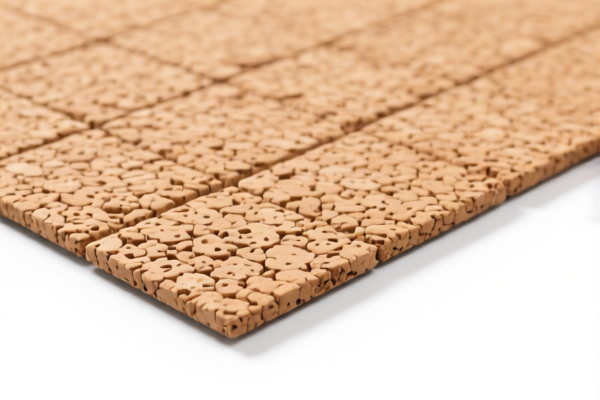
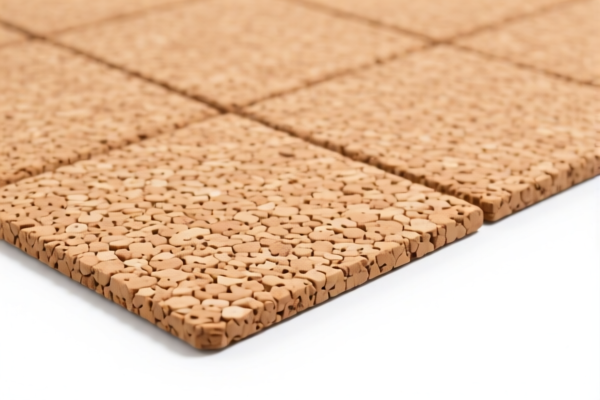
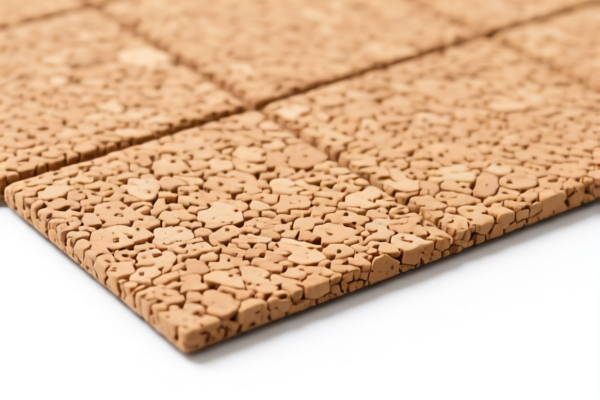
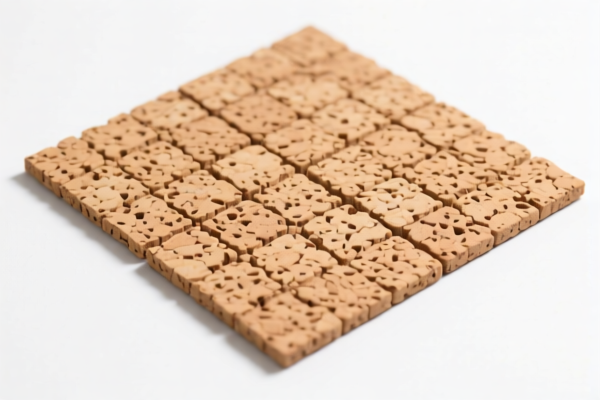
agglomerated mica decorative tile
CN → US| HS Code | Tariff Rate | Origin | Destination | Doc |
|---|---|---|---|---|
| 6814900000 | 37.6% | CN | US | Official Doc |
| 6907409051 | 43.5% | CN | US | Official Doc |
| 6907401051 | 45.0% | CN | US | Official Doc |
Product Images
AI Analysis
🏛️ Agglomerated Mica Decorative Tile (Composite Cladding)
🌐 HS Code Reference & Customs Clearance Guide | 2026 Latest Tariff Analysis | Professional Entry Strategy
📌 I. Product Definition & Classification: What Exactly Is "Agglomerated Mica Tile"?
Agglomerated mica tiles, often referred to as "composite mica" or "reconstituted mica," are engineered stone-like products. They are manufactured by bonding natural mica flakes with synthetic resins, polymers, or cementitious binders under high pressure and temperature.
In international trade, these products sit at the intersection of two major chapters: 1. Chapter 68 (Mineral Products): Specifically, other articles of stone or other mineral substances (including mica). 2. Chapter 69 (Ceramic Products): Specifically, ceramic flags, paving, wall, or roof tiles, and ceramic blocks.
The core classification debate lies in whether the product is viewed primarily as a processed mineral product (Mica) or a ceramic facing material. Based on the material composition and manufacturing process, customs authorities typically analyze them as follows:
⚠️ Key Distinction Point:
- If the product is recognized primarily for its mica content and binding agent (resin/cement) forming a solid slab →归入 6814.90.00.00 (Other Mica Articles).
- If the product is viewed primarily as a ceramic tile where mica is an aggregate/filler within a ceramic body →归入 6907.40.90.51 or 6907.40.10.51.
- Crucial Note: Since the product name "Agglomerated Mica" does not explicitly state if it is glazed, customs often apply the "Other" (兜底) principle for ceramic codes if it lacks explicit glaze confirmation, but prioritizes the "Mica" material definition if the mica structure is dominant.
📦 II. HS Code Classification Details (2026 Latest Tariff Authority Mapping)
| HS Code | Product Description | Application Scenario | Primary Material Basis |
|---|---|---|---|
6814.90.00.00 |
Other articles of mica (including agglomerated mica) | Decorative wall cladding, composite mica slabs, engineered stone with high mica content | ✅ Mica-based (Mineral/Composite) |
6907.40.90.51 |
Other ceramic flags, paving, wall tiles, etc. (Other than glazed) | Decorative ceramic tiles where mica is an aggregate; unglazed or glaze status unclear | ✅ Ceramic-based (Ceramic body) |
6907.40.10.51 |
Ceramic flags, paving, wall tiles, etc. (Decorative/Decorative-like) | Decorative ceramic tiles; classified under "Other" due to lack of specific glaze designation | ✅ Ceramic-based (Decorative Ceramic) |
🔍 Important Reminder:
-6814.90.00.00is the most technically accurate for "Agglomerated" products if the binding mechanism creates a composite mineral article rather than a fired ceramic body. The summary states it matches because the name explicitly contains "Mica."
-6907.40.90.51and6907.40.10.51are applied based on the "Ceramic" material assumption and "Decorative" function. Since "glazed" status is not explicitly confirmed in the generic name "Agglomerated Mica Tile," the "Other" category is used as a fallback.
- No Material Conflict: The classification into ceramic codes assumes no conflict with ceramic material definitions, relying on the "Decorative" purpose.
💰 III. 2026 Latest Tariff Rate Breakdown (Including Surcharges & Policy Add-ons)
✅ Applicable Country: United States (US)
✅ Origin: China (CN)
✅ Effective Date: From November 10, 2025 (including subsequent imports)
🎯 1. 6814.90.00.00 —— Other Articles of Mica
| Item | Content |
|---|---|
| Basic Tariff Rate | 2.6% (Ad Valorem) |
| Section 301 Surcharge | +25.0% (From USITC Footnote 9903.88.01 / Section 301) |
| Section 122 Clause Tariff | +10.0% (Specific clause for certain mineral/composite products) |
| Total Tariff Rate | 37.6% |
| Tax Calculation | CIF Value × 37.6% |
| De Minimis Exemption Available? | ❌ No (deny_de_minimis applies due to high combined rate) |
| Legal Basis Path | Basic Tariff: 2.6% + Section 301: 25.0% + Section 122 Clause: 10% |
📌 Explanation:
- This code benefits from the lowest base rate (2.6%) among the options.
- However, it is still heavily impacted by the Section 301 25% surcharge (targeting Chinese manufactured goods) and a specific 10% Section 122 clause tariff.
- Total 37.6% is high but lower than the ceramic options. This is often the preferred code for engineered/composite mica products to minimize base duty, though surcharges remain unavoidable for Chinese origin.
🎯 2. 6907.40.90.51 —— Other Ceramic Tiles (Other/Unglazed)
| Item | Content |
|---|---|
| Basic Tariff Rate | 8.5% (Ad Valorem) |
| Section 301 Surcharge | +25.0% (From USITC Footnote 9903.88.01 / Section 301) |
| Section 122 Clause Tariff | +10.0% |
| Total Tariff Rate | 43.5% |
| Tax Calculation | CIF Value × 43.5% |
| De Minimis Exemption Available? | ❌ No |
| Legal Basis Path | Basic Tariff: 8.5% + Section 301: 25.0% + Section 122 Clause: 10% |
📌 Explanation:
- Classified under "Other" because the product name does not explicitly confirm "Glazed."
- The base rate (8.5%) is significantly higher than the mica code (2.6%).
- With the same surcharges, the total cost is 43.5%, making it 5.9% more expensive than6814.90.00.00.
🎯 3. 6907.40.10.51 —— Decorative Ceramic Tiles
| Item | Content |
|---|---|
| Basic Tariff Rate | 10.0% (Ad Valorem) |
| Section 301 Surcharge | +25.0% (From USITC Footnote 9903.88.01 / Section 301) |
| Section 122 Clause Tariff | +10.0% |
| Total Tariff Rate | 45.0% |
| Tax Calculation | CIF Value × 45.0% |
| De Minimis Exemption Available? | ❌ No |
| Legal Basis Path | Basic Tariff: 10.0% + Section 301: 25.0% + Section 122 Clause: 10% |
📌 Explanation:
- Classified under "Decorative" because the purpose is "Decoration."
- The base rate (10.0%) is the highest among the three.
- Total 45.0% is the most expensive option. This code should only be used if the product is strictly defined as a ceramic decorative tile with no ambiguity about its ceramic nature, overriding the "Mica composite" classification.
🛠️ IV. Customs Clearance Practical Advice (Battle-Tested Pitfall Avoidance)
✅ 1. Preparation Checklist (Non-negotiable)
| Document | Required | Explanation |
|---|---|---|
| ✅ Product Specification Sheet | ✔️ | Must detail: Mica content %, binding resin/cement type, hardness, density. |
| ✅ Material Safety Data Sheet (MSDS) | ✔️ | Proves composition (organic vs. inorganic binders). Critical for distinguishing from pure ceramic. |
| ✅ Product Photos (Close-up) | ✔️ | Show the flaky mica structure to support 6814 classification over 6907. |
| ✅ Commercial Invoice | ✔️ | Describe as "Agglomerated Mica Composite Slab for Wall Cladding" (avoid generic "Ceramic Tile"). |
| ✅ Packing List | ✔️ | Ensure weight and dimensions match the declared material density. |
| ✅ Country of Origin Certificate | ✔️ | Essential for calculating Section 301 and Section 122 surcharges. |
✅ 2. Declaration Strategy (Key Mantra)
🔥 "Declare Material, Not Just Shape; Show Mica, Not Just Tile!"
| Scenario | Correct Declaration | Wrong Practice | Consequence |
|---|---|---|---|
| Product is resin-bound mica composite | 6814.90.00.00 |
Declare as "Ceramic Tile" → 6907 |
Overpay 5.9%~10.6% |
| Product is fired ceramic with mica dust | 6907.40.90.51 |
Declare as "Mica Article" → 6814 |
Under-declaration Risk (Penalty) |
| Glaze status is unknown/unclear | Use "Other" subcodes (.90.51 or .10.51) |
Assume "Glazed" | Incorrect Base Rate (10% vs 8.5%) |
| Generic Name "Mica Tile" | Provide Specification proving "Agglomeration" process | Just write "Tile" | Customs Ruling Delay |
✅ 3. Special Case Handling
| Scenario | Recommendation |
|---|---|
| High Mica Content (>50%) | Strongly argue for 6814.90.00.00. The product is essentially a processed mineral article, not a ceramic. |
| Low Mica Content (Filler) | If mica is just a decorative additive in a ceramic body, use 6907.40.90.51. |
| Ambiguous Binding Agent | If resin is used → 6814. If cement/clay is used and fired → 6907. Provide MSDS. |
| Section 122 Clause Applicability | Ensure the 10% surcharge is correctly applied. It applies to specific mineral/composite imports. Verify if your specific product composition triggers this clause. |
🌍 V. Global Market Comparison (2026 Latest)
| Country/Region | Recommended HS Code | Total Tariff (China Origin) | Certification Req. | Notes |
|---|---|---|---|---|
| 🇺🇸 USA | 6814.90.00.00 |
37.6% | None (General) | Best Option for composite mica. Avoids higher ceramic base rates. |
| 🇺🇸 USA | 6907.40.90.51 |
43.5% | None (General) | Higher cost. Only if clearly ceramic. |
| 🇪🇺 EU | 6814.90.00 |
6.0% | REACH | No Section 301/122 surcharges. |
| 🇨🇳 China | 6814.90.00.00 |
8.0% | CCC (if applicable) | Import duty to China. |
| 🇦🇺 Australia | 6814.90.00 |
5.0% | GTS | Lower tariffs, no major surcharges. |
📌 Conclusion:
- USA Tariff Arbitrage:6814.90.00.00is 37.6%, while ceramic equivalents are 43.5%-45.0%.
- Savings: Choosing the correct "Mica Article" code saves 5.9% to 7.4% on the CIF value compared to ceramic classification.
- Evidence is Key: To secure the 37.6% rate, you MUST prove the product is an "Agglomerated Mica Article" (Chapter 68) and not a "Ceramic Tile" (Chapter 69).
📌 VI. Common Errors & Pitfalls (Lessons Learned)
❌ Error 1: Declaring "Agglomerated Mica Tile" as "Ceramic Tile" (6907) without justification.
👉 Consequence: Paying 43.5%~45.0% instead of 37.6%. Loss of 5.9%+ margin.
❌ Error 2: Assuming "Tile" automatically means "Ceramic."
👉 Consequence: Customs may reclassify if product specs show resin binding. Penalty for misdeclaration.
❌ Error 3: Ignoring the "Section 122 Clause."
👉 Consequence: Underpaying the 10% surcharge. Audits and back taxes.
✅ Correct Action:
"Agglomerated Mica Composite Slab, Resin-Bound, 30% Mica Content, for Wall Cladding. HS Code 6814.90.00.00."
🎯 VII. Conclusion: Precision Classification, Cost Optimization!
🎯 Remember the Mantra:
🔹 "Mica Composite = Chapter 68 (37.6%) vs. Ceramic Tile = Chapter 69 (43.5%+)."
🔹 "Base Rate Matters: 2.6% vs. 8.5%+ saves thousands on large volumes!"
🔹 "Document the Bind: Resin/Cement vs. Clay/Firing defines the Chapter."
📌 Pro Tip:
If your product is 100% natural mica plates bonded, it might even qualify for different subheadings, but for "Agglomerated" (crushed/flaked bound), 6814.90.00.00 is the strongest candidate for cost efficiency.
Apply for an Advance Ruling (Binding Tariff Information) if possible to lock in the 37.6% rate and avoid future disputes.
📣 Immediate Action:
📞 Contact your customs broker + Provide MSDS & Product Specs + Justify Chapter 68 Classification
🚀 Save 5.9%~7.4% in tariffs. Optimize your supply chain for maximum profit!
✨ Professional Clearance Starts with Accurate Classification!
💼 Every percentage point counts in international trade!
Customer Reviews
About HS Code Classification
The Harmonized System (HS) is an internationally standardized nomenclature developed by the World Customs Organization (WCO) to classify traded products. Over 200 countries use the HS system as the basis for customs tariffs, trade statistics, and import/export regulations.
Each HS code follows a hierarchical structure:
- Chapter (2 digits) — Broad category of goods (e.g., Chapter 84: Machinery and Mechanical Appliances)
- Heading (4 digits) — More specific grouping within the chapter
- Subheading (6 digits) — Internationally standardized breakdown, used by all WCO member countries
- National subdivisions (8-10 digits) — Country-specific extensions for further classification, such as US HTSUS 10-digit codes
Correct HS code classification is essential for smooth customs clearance, accurate duty payment, and compliance with trade regulations. Misclassification can lead to customs delays, overpayment of duties, or penalties.
When importing from CN to US, the applicable tariff rates may include:
- Most-Favored-Nation (MFN) rate — The standard duty rate applied to WTO members
- General rate — Applied to countries without trade agreements
- Trade remedy duties — Additional tariffs such as Section 301 (anti-dumping), Section 232 (national security), or countervailing duties
The information provided on this page is for reference purposes only. For official classification, please consult with your local customs authority or a licensed customs broker.