agricultural cellulose plastic strips
CN → US| HS Code | Tariff Rate | Origin | Destination | Doc |
|---|---|---|---|---|
| 3916905000 | 40.8% | CN | US | Official Doc |
| 3916100000 | 40.8% | CN | US | Official Doc |
| 3912900090 | 40.2% | CN | US | Official Doc |
| 3912390000 | 39.2% | CN | US | Official Doc |
| 4601999000 | 38.3% | CN | US | Official Doc |
| 4601990500 | 37.7% | CN | US | Official Doc |
Product Images
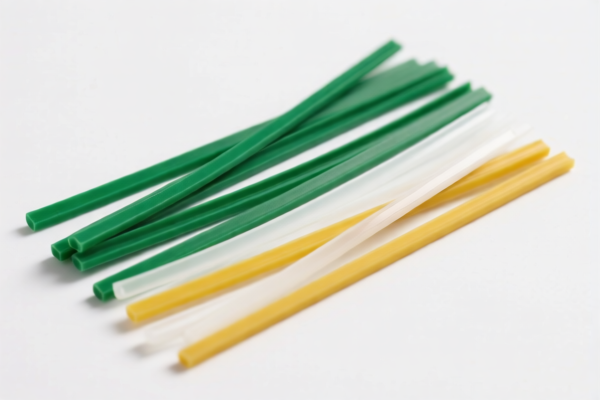
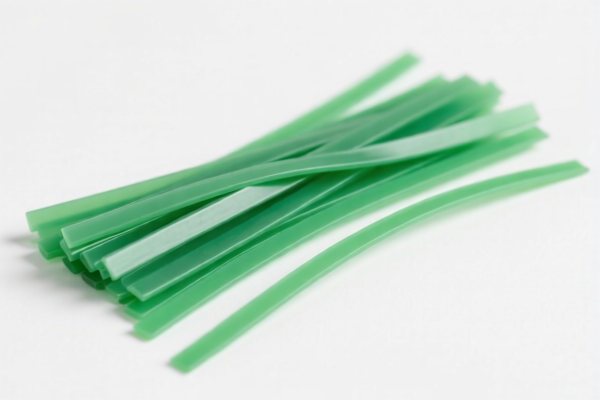
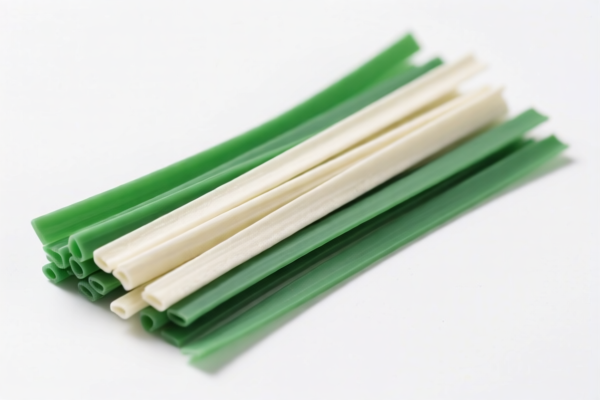
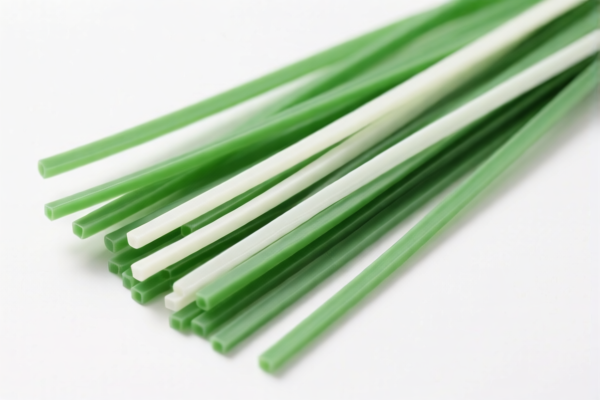
AI Analysis
🌿 Agricultural Cellulose Plastic Strips (Bio-based Packaging & Binding Materials)
🌐 HS Code Reference & Customs Clearance Guide | 2026 Latest Tariff Analysis | Professional Entry Strategies 📌 I. Product Definition & Classification: What Exactly Are "Agricultural Cellulose Plastic Straps"?
In international trade, "Agricultural Cellulose Plastic Strips" typically refer to plaited or woven materials used for bundling, packaging, or agricultural support (e.g., binding crops, packaging produce). These materials are often made from regenerated cellulose (viscose/rayon) or natural fiber blends, shaped into strips or mats.
The key to correct classification lies in determining the form and material composition:
- Plaited/Woven Strips: If the product is made by plaiting, weaving, or binding strands together into strips or sheets (like mats), it falls under Chapter 46.
- Monofilament/Rods: If the product is a single solid strand (monofilament) with a cross-section >1mm, it falls under Chapter 39.
- Raw Cellulose Derivatives: If it is an unworked chemical form (not yet shaped into strips), it falls under Chapter 39, Heading 3912.
⚠️ Critical Distinction:
- If it is a finished strip/mat used for binding → 4601.xx.xx
- If it is a plastic rod/filament (even if cellulose-based) → 3916.xx.xx
- If it is raw cellulose ether/derivative (powder/flake) → 3912.xx.xx
📦 II. HS Code Classification Details (2026 Latest Tariff Reference)
Based on the provided data, here are the applicable HS Codes and their descriptions:
| HS Code | Product Description | Applicable Scenario | Material/Form |
|---|---|---|---|
| 4601.99.90.00 | Plaits and similar products...: Other: Other: Other | Finished plaited strips, mats, or binding materials made from cellulose/natural fibers. | ✅ Plaited/Woven |
| 4601.99.05.00 | Plaits and similar products...: Plaits and similar products of plaiting materials, whether or not assembled into strips | Specific category for plaited strips used in packaging/binding. | ✅ Plaited Strips |
| 3916.90.50.00 | Monofilament of which any cross-sectional dimension exceeds 1 mm, rods, sticks... of plastics: Other: Other: Other | If the "cellulose plastic" is actually a synthetic polymer rod/filament >1mm thick. | ✅ Solid Rod/Filament |
| 3916.10.00.00 | Monofilament... of plastics: Of polymers of ethylene | If the material is Polyethylene (PE) based, not cellulose. | ✅ PE Filament |
| 3912.90.00.90 | Cellulose and its chemical derivatives...: Other | Raw cellulose derivatives (e.g., cellulose acetate pellets) not yet formed into strips. | ❌ Raw Material |
| 3912.39.00.00 | Cellulose and its chemical derivatives...: Cellulose ethers: Other | Specific cellulose ethers (e.g., CMC, HPMC) in primary forms. | ❌ Raw Chemical |
🔍 Key Insight:
- For agricultural binding strips, 4601.99.05.00 is the most likely fit if they are plaited.
- If the product is a solid plastic rod (e.g., rigid cellulose acetate rod), 3916.90.50.00 applies.
- Do not confuse "cellulose plastic strips" with "raw cellulose derivatives." The former is a manufactured good; the latter is a chemical raw material.
💰 III. 2026 Latest Tariff Rate Breakdown (Including Additional Taxes)
✅ Applicable Country: United States (US)
✅ Origin: China (CN)
✅ Effective Date: 2025/2026 (Check current IEEPA/301 status)
🎯 1. 4601.99.05.00 – Plaited Strips (Most Likely for Agricultural Bundles)
| Item | Content |
|---|---|
| Base Tariff | 0.0% |
| Additional Tariff (Section 301) | 0.0% |
| Total Tariff | 0.0% |
| Tax Calculation | CIF Value × 0.0% = $0 |
| De Minimis Eligibility | ❌ No (If value < $800, may be exempt via Section 321, but HS classification still matters for compliance) |
| Legal Path | USITC:4601.99.05.00 |
📌 Explanation:
- This code enjoys 0% tariff under current US trade rules.
- No Section 301 additional taxes apply to this specific subheading.
- Recommendation: This is the most cost-effective classification for plaited agricultural binding strips.
🎯 2. 4601.99.90.00 – Other Plaited Products (If Not Specifically "Strips")
| Item | Content |
|---|---|
| Base Tariff | 3.3% |
| Additional Tariff (Section 301) | 25.0% |
| Total Tariff | 28.3% |
| Tax Calculation | CIF Value × 28.3% |
| De Minimis Eligibility | ❌ No |
| Legal Path | USITC:4601.99.90.00 → USITC:301:Footnote 9903.88.01 |
📌 Explanation:
- If the product is classified as "Other" (e.g., mats, screens, or non-strip plaited goods), it incurs a 28.3% total tariff.
- Risk: Misclassifying "strips" as "other plaited products" can lead to 28.3% duty instead of 0%.
🎯 3. 3916.90.50.00 – Plastic Rods/Monofilament (>1mm)
| Item | Content |
|---|---|
| Base Tariff | 5.8% |
| Additional Tariff (Section 301) | 25.0% |
| Total Tariff | 30.8% |
| Tax Calculation | CIF Value × 30.8% |
| De Minimis Eligibility | ❌ No |
| Legal Path | USITC:3916.90.50.00 → USITC:301:Footnote 9903.88.01 |
📌 Explanation:
- If the "cellulose plastic" is considered a plastic rod (e.g., rigid cellulose acetate), it falls here.
- High Tariff: 30.8% is significant. Avoid this classification if the product is plaited/woven.
🎯 4. 3912.90.00.90 & 3912.39.00.00 – Raw Cellulose Derivatives
| Item | Content |
|---|---|
| Base Tariff | 0.0% |
| Additional Tariff | 0.0% |
| Total Tariff | 0.0% |
| Applicability | Only for raw materials (pellets, powders), not finished strips. |
📌 Explanation:
- These codes are for chemical intermediates, not agricultural packaging products.
- Do not use for finished strips; customs may reject as "misdeclared."
🛠️ IV. Customs Clearance Practical Advice (Avoid Pitfalls)
✅ 1. Documentation Checklist (Must-Have)
| Document | Required? | Description |
|---|---|---|
| ✅ Product Specification Sheet | ✔️ | Detail the material (e.g., "100% Viscose Rayon"), diameter, width, tensile strength. |
| ✅ Photos of Product | ✔️ | Show the plaited/weaved structure clearly to prove it’s not a solid rod. |
| ✅ Composition Statement | ✔️ | Explicitly state: "Made of plaited cellulose fibers, not solid plastic monofilament." |
| ✅ Commercial Invoice | ✔️ | Use precise description: "Plaited Cellulose Strips for Agricultural Bundling." |
| ✅ HS Code Pre-Ruling | ✔️ | Recommended: Apply for an ITC pre-ruling to confirm 4601.99.05.00. |
✅ 2. Classification Strategy (Key Rules)
🔥 "Plaited = 4601, Solid = 3916, Raw = 3912"
| Scenario | Correct HS Code | Tariff | Risk if Wrong |
|---|---|---|---|
| Plaited binding strips | 4601.99.05.00 |
0% | Misclassifying as 3916 → 30.8% duty |
| Solid cellulose acetate rod | 3916.90.50.00 |
30.8% | Misclassifying as 4601 → Penalty + Back Duties |
| Raw cellulose powder | 3912.90.00.90 |
0% | Misclassifying as 4601 → Rejected Shipment |
| Mats/Screens | 4601.99.90.00 |
28.3% | Misclassifying as 4601.99.05.00 → Underpayment |
✅ 3. Special Notes for Agricultural Products
- "Cellulose Plastic" Terminology:
- Avoid using "Plastic" if the material is natural cellulose (viscose/rayon). Customs may interpret "plastic" as synthetic polymer → 3916.
-
Use terms like "Viscose Rayon Strips" or "Regenerated Cellulose Plaits" to align with Chapter 46.
-
Biodegradable Claims:
-
Even if biodegradable, if it’s plaited, it stays in 4601. Biodegradability does not change the HS code unless it’s a raw chemical.
-
Customs Scrutiny:
- CBP may inspect samples to determine if the product is plaited (soft, flexible) or solid (rigid rod).
- Provide physical samples with the shipment if possible.
🌍 V. Global Market Comparison (2026)
| Country/Region | Recommended HS Code | Tariff (China Origin) | Notes |
|---|---|---|---|
| 🇺🇸 USA | 4601.99.05.00 |
0% | Best option for plaited strips. |
| 🇨🇳 China | 4601.99.05.00 |
5% | Standard import duty. |
| 🇪🇺 EU | 4601.99.90 |
0-2.5% | Varies by specific subheading. |
| 🇬🇧 UK | 4601.99.00 |
0-2.5% | Post-Brexit rates may vary. |
📌 Conclusion:
- USA offers the best tariff advantage (0%) for plaited cellulose strips under 4601.99.05.00.
- Avoid misclassification as plastic rods (3916) or raw materials (3912) to prevent unexpected duties.
📌 VI. Common Mistakes & Pitfalls (Lessons Learned)
❌ Mistake 1: Calling the product "Plastic Strips" when it’s made of Viscose Rayon.
👉 Result: Customs may assign 3916.90.50.00 → 30.8% duty instead of 0%.
✅ Fix: Use "Cellulose Plaited Strips" or "Viscose Binding Strips."
❌ Mistake 2: Classifying plaited strips as "Raw Cellulose" (3912).
👉 Result: Shipment rejected for misdeclaration.
✅ Fix: Ensure the product is in finished form (strips/mats).
❌ Mistake 3: Ignoring the 301 Additional Tariff for non-4601 codes.
👉 Result: Unexpected 25-28% duty on top of base tariff.
✅ Fix: Confirm the HS Code is 0% tariff-bearing before shipment.
🎯 VII. Conclusion: Precision Classification Saves Money!
🎯 Remember the Key Rule:
🔹 "Plaited = 4601 (0%) | Solid Rod = 3916 (30.8%) | Raw = 3912 (0%)"
🔹 "Use 'Viscose' not 'Plastic' to stay in Chapter 46!"
📌 Pro Tip:
If your product is biodegradable cellulose, emphasize "Natural Fiber" or "Regenerated Cellulose" in the description to align with 4601. Apply for an HS Code Pre-Ruling with CBP to lock in the 0% tariff rate before shipping.
📣 Next Steps:
📞 Contact a Customs Broker: Provide product photos and material specs.
🚀 Apply for Pre-Ruling: Secure the 4601.99.05.00 classification.
💼 Accurate Documentation: Avoid "Plastic" if not synthetic; use "Cellulose Plaited Strips."
✨ Smart Classification, Lower Duties, Faster Clearance!
💼 Your supply chain efficiency starts with the right HS Code!
Customer Reviews
About HS Code Classification
The Harmonized System (HS) is an internationally standardized nomenclature developed by the World Customs Organization (WCO) to classify traded products. Over 200 countries use the HS system as the basis for customs tariffs, trade statistics, and import/export regulations.
Each HS code follows a hierarchical structure:
- Chapter (2 digits) — Broad category of goods (e.g., Chapter 84: Machinery and Mechanical Appliances)
- Heading (4 digits) — More specific grouping within the chapter
- Subheading (6 digits) — Internationally standardized breakdown, used by all WCO member countries
- National subdivisions (8-10 digits) — Country-specific extensions for further classification, such as US HTSUS 10-digit codes
Correct HS code classification is essential for smooth customs clearance, accurate duty payment, and compliance with trade regulations. Misclassification can lead to customs delays, overpayment of duties, or penalties.
When importing from CN to US, the applicable tariff rates may include:
- Most-Favored-Nation (MFN) rate — The standard duty rate applied to WTO members
- General rate — Applied to countries without trade agreements
- Trade remedy duties — Additional tariffs such as Section 301 (anti-dumping), Section 232 (national security), or countervailing duties
The information provided on this page is for reference purposes only. For official classification, please consult with your local customs authority or a licensed customs broker.