air fryer
CN → US| HS Code | Tariff Rate | Origin | Destination | Doc |
|---|---|---|---|---|
| 8438800000 | 35.0% | CN | US | Official Doc |
| 8516604074 | 35.0% | CN | US | Official Doc |
| 8516604070 | 35.0% | CN | US | Official Doc |
Product Images
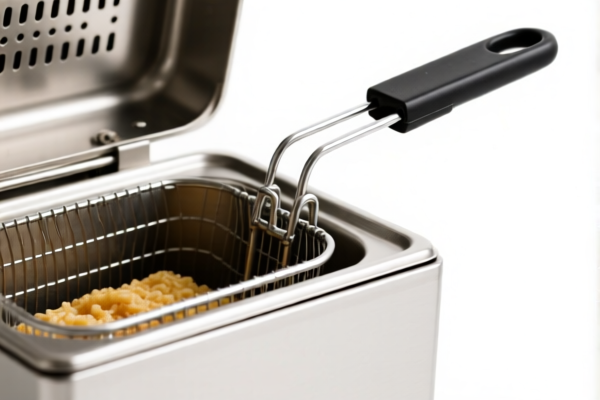

AI Analysis
🍟 Air Fryers: The Ultimate HS Code Classification & Customs Clearance Guide (2026)
🌐 HS Code Reference & Clearance Strategy | 2026 Tax Regime Analysis | Professional Customs Protocols
📌 I. Product Definition & Classification: Is Your Air Fryer a "Kitchen Appliance" or a "Food Machine"?
The Air Fryer is a revolutionary kitchen appliance designed to simulate deep-frying using rapid hot air circulation. In international trade, its classification is a high-stakes game because the HS Code dictates whether you face a 35% total tax burden (US Import from China) or a completely different tariff structure elsewhere.
Air Fryers fall into a critical ambiguity zone between: 1. Food Processing Machinery (Chapter 84): If viewed as a small-scale industrial food processor. 2. Electrical Heating Appliances (Chapter 85): If viewed as a compact home cooking device (like an oven).
⚠️ Key Distinction Point:
- Industrial/Commercial Focus: If designed for high-volume, continuous food prep (rare for consumer units) → 8438.
- Home/Kitchen Focus: If it's a standalone electric unit with a basket for home cooking → 8516.
- Form Factor: Does it fit under 70cm width and look like a standard home oven?
📦 II. HS Code Classification Breakdown (2026 US Tariff Reference)
Based on the provided data for Air Fryers imported into the US (China Origin), here are the three primary classification scenarios:
| HS Code | Product Description & Logic | Application Scenario |
|---|---|---|
| 8438.80.00.00 | Food/Drink Preparation Machinery | Classified as "Other Machinery" for preparing food. Fits the description of industrial or home food prep equipment not covered elsewhere. |
| 8516.60.40.74 | Electric Cooking Appliances | Classified as "Other Ovens". Non-portable, home-use electric heating appliance, width typically ≤ 70 cm. |
| 8516.60.40.70 | Portable/Compact Electric Cooking | Classified as a portable or small home electric appliance. Function aligns with stoves/ovens for home use. |
🔍 Critical Insight:
- All three classifications currently share the exact same tax profile for US imports from China in this dataset.
- 8516.60.40.74 is the most common for standard home units (Oven-type).
- 8516.60.40.70 applies to smaller, more "portable" units.
- 8438.80.00.00 is a fallback for units deemed as general "food preparation machinery."
💰 III. 2026 Latest Tariff Rate Breakdown (Detailed Analysis)
✅ Target Market: USA (US)
✅ Country of Origin: China (CN)
✅ Effective Period: Current 2026 Regime
🎯 Unified Tax Structure for All Listed HS Codes
(Applicable to 8438.80.00.00, 8516.60.40.74, and 8516.60.40.70)
| Tax Component | Rate | Description & Legal Basis |
|---|---|---|
| 🔹 Base Duty | 0.0% | Standard Most-Favored-Nation (MFN) rate is 0% for these appliances. |
| 🔹 "Add-On" Tariff | +25.0% | Section 301 Tariffs: Additional duties imposed on Chinese goods under Trade Act 301. |
| 🔹 "122 Section" Tariff | +10.0% | Section 122 Tariffs: Specific additional duties (likely related to supply chain or strategic sectors). |
| 💥 Total Duty | 35.0% | Sum of all applicable duties (0% + 25% + 10%). |
📌 Tax Explanation:
- Base Duty (0%): The US normally taxes these appliances at a low or zero rate if they are not subject to Section 301.
- The "Add-On" (25%): This is the heavy hitter. It is a punitive tariff targeting Chinese electronics and appliances.
- The "122 Clause" (10%): A specific surcharge added on top of the Section 301 duties.
- Result: For every $100 of Air Fryer value, $35 goes to US Customs duties. This is a massive cost impact.
🛠️ IV. Customs Clearance Operational Advice (Action Plan)
✅ 1. Documentation Checklist (Mandatory for Success)
| Document | Requirement | Why It Matters |
|---|---|---|
| ✅ Detailed Product Spec Sheet | Must explicitly state "Electric Heating," "Air Circulation," "Max Width < 70cm" | Proves classification under 8516 (Heating) vs. generic machinery. |
| ✅ Schematic/Circuit Diagram | Must show heating element and fan control system | Crucial for proving it is an electrical appliance (8516) and not a mechanical press. |
| ✅ Commercial Invoice | Must clearly list "Air Fryer, Electric, Home Use" | Vague descriptions lead to "misdeclaration" penalties. |
| ✅ Origin Certificate (CO) | Must certify Made in China | Required to calculate the 25% + 10% surcharges correctly. |
| ✅ UL/ETL Safety Report | Mandatory for US electrical safety compliance | Without this, goods are seized regardless of HS Code. |
✅ 2. Classification Strategy & "Pitfall Avoidance"
🔥 Golden Rule: "Define the Function, Not Just the Name."
| Scenario | Correct Classification | Risk of Error |
|---|---|---|
| Standard Home Air Fryer (Basket + Fan + Heater) | 8516.60.40.74 (Oven Category) | Low risk if declared as "Electric Cooking Appliance." |
| Mini/Portable Air Fryer (Small, < 3L) | 8516.60.40.70 (Portable Category) | Must emphasize "Portability" to avoid being stuck in the larger oven category if rates differ (though same here). |
| Industrial Batch Fryer | 8438.80.00.00 | Only for commercial, non-electric (or heavy-duty electric) units. Misclassifying home units here can trigger audits. |
⚠️ Warning:
- Do NOT declare as "Frying Pan" or "Non-electric" to avoid Section 301. Customs will catch this via the heating element detection.
- Do NOT split the shipment (e.g., declaring the basket as a part and the body as a machine). This leads to 100% higher tax rates on the "parts."
✅ 3. Cost Optimization & Planning
| Strategy | Action | Impact |
|---|---|---|
| 📉 Verify "Small Quantity" Rules | Check if your product value falls under de minimis limits for certain channels. | Note: Data indicates NO de minimis exemption for these specific codes (deny_de_minimis). |
| 🏭 Supply Chain Shift | Consider final assembly in Vietnam, Malaysia, or Mexico. | If re-originated, you might avoid the 25% + 10% China-specific surcharges. |
| ⚖️ Pre-Ruling Application | Apply for a Binding Tariff Ruling (BTR) from US CBP. | Guarantees the 35% rate is correct and prevents future disputes. |
🌍 V. Global Market Comparison (Quick View)
| Region | Typical HS Code | Base Duty | China-Specific Surcharges | Total Effective Rate |
|---|---|---|---|---|
| 🇺🇸 USA | 8516.60.40.74 |
0% | +25% (Sec 301) +10% (Sec 122) | 35% ⚠️ HIGH |
| 🇨🇳 China | 8516.60.40.74 |
10-15% | None | ~10-15% |
| 🇪🇺 EU | 8516.60.00 |
~1.7% | None (unless counter-subsidy) | ~1.7% |
| 🇦🇺 Australia | 8516.60.00 |
5% | None | ~5% |
📌 Conclusion:
The US market is uniquely punitive for Air Fryers due to the combination of Section 301 and Section 122 tariffs. The 35% total duty is a significant barrier.
📌 VI. Common Mistakes & "Blood-Test" Lessons
❌ Mistake 1: Declaring "Kitchen Appliance" without specifying "Electric Heating."
👉 Consequence: Customs may reclassify to a different code with unexpected duties or reject the entry for insufficient detail.
❌ Mistake 2: Assuming the "10% 122 Clause" is optional.
👉 Consequence: Underpayment of duties leads to seizure + penalties. The 10% is mandatory for Chinese origin goods.
❌ Mistake 3: Trying to hide the heating element.
👉 Consequence: X-ray scans detect heating coils. Penalties for fraud can reach 4x the duty amount.
✅ Correct Declaration Phrase:
"Air Fryer, Electric, Resistance Heating, 120V, 1500W, Home Use Kitchen Appliance, Width 60cm, Model XYZ, HS Code: 8516.60.40.74"
🎯 VII. Final Verdict: Professional Clearance Strategy
🔹 "The 35% Trap"
For US imports, the 35% total duty (0% Base + 25% Sec 301 + 10% Sec 122) is the reality. There is no de minimis exception in the provided data.🔹 Actionable Advice:
1. Confirm Origin: Ensure your supply chain can prove origin outside China if you want to avoid the surcharges.
2. Use Specific HS: Prefer 8516.60.40.74 for standard ovens, 8516.60.40.70 for portable units.
3. Budget Accurately: Factor the 35% into your FOB + Shipping + Insurance (CIF) calculation immediately.
4. Pre-Arrival: Submit data to CBP in advance to avoid delays at the border.
📣 Immediate Next Steps:
📞 Contact a Licensed Customs Broker to file a Binding Tariff Ruling for your specific Air Fryer model.
🚀 Re-evaluate your US Pricing Model – A 35% duty hike may require a price increase or a supply chain pivot.
✨ Professional Clearance Starts with Precision!
💼 Your profit margin depends on getting this 35% right!
Customer Reviews
About HS Code Classification
The Harmonized System (HS) is an internationally standardized nomenclature developed by the World Customs Organization (WCO) to classify traded products. Over 200 countries use the HS system as the basis for customs tariffs, trade statistics, and import/export regulations.
Each HS code follows a hierarchical structure:
- Chapter (2 digits) — Broad category of goods (e.g., Chapter 84: Machinery and Mechanical Appliances)
- Heading (4 digits) — More specific grouping within the chapter
- Subheading (6 digits) — Internationally standardized breakdown, used by all WCO member countries
- National subdivisions (8-10 digits) — Country-specific extensions for further classification, such as US HTSUS 10-digit codes
Correct HS code classification is essential for smooth customs clearance, accurate duty payment, and compliance with trade regulations. Misclassification can lead to customs delays, overpayment of duties, or penalties.
When importing from CN to US, the applicable tariff rates may include:
- Most-Favored-Nation (MFN) rate — The standard duty rate applied to WTO members
- General rate — Applied to countries without trade agreements
- Trade remedy duties — Additional tariffs such as Section 301 (anti-dumping), Section 232 (national security), or countervailing duties
The information provided on this page is for reference purposes only. For official classification, please consult with your local customs authority or a licensed customs broker.