alarm system components
CN → US| HS Code | Tariff Rate | Origin | Destination | Doc |
|---|---|---|---|---|
| 8531903000 | 35.0% | CN | US | Official Doc |
| 8531901500 | 35.0% | CN | US | Official Doc |
Product Images
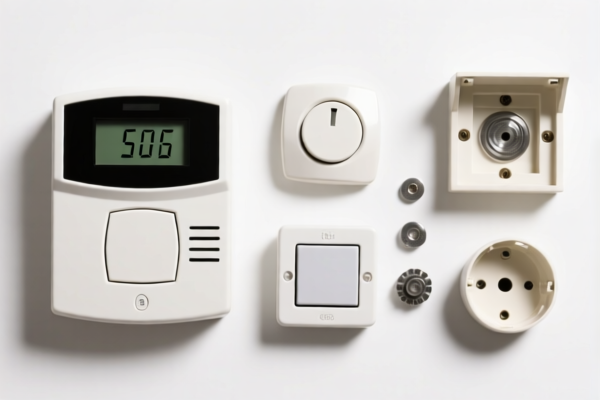
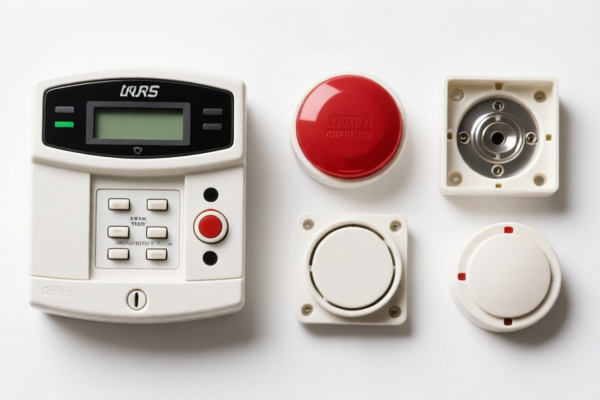
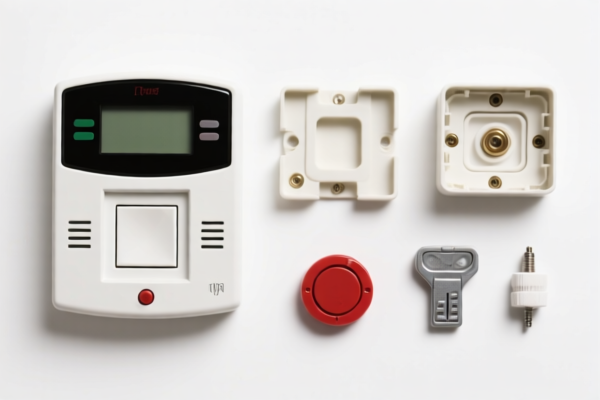
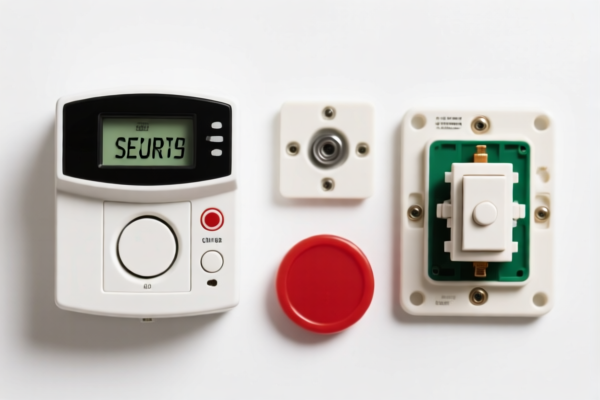
AI Analysis
🚨 Alarm System Components (Electric Signaling Apparatus)
🌐 HS Code Reference & Customs Clearance Guide | 2026 Latest Tariff Analysis | Professional-Level Clearance Strategy
📌 I. Product Definition and Classification: Do You Really Understand "Alarm Components"?
Alarm system components are critical parts of security, fire safety, and industrial signaling networks. In international trade, these items are generally classified under Heading 8531 (Electric sound or visual signaling apparatus... other than those of heading 8512 or 8530).
However, a crucial distinction exists in the US Harmonized Tariff Schedule (HTSUS) for Parts:
Printed Circuit Assemblies (PCAs):
These are the "brains" of the system. They contain electronic components soldered onto a board.
Key Distinction: The classification depends heavily on what specific part of the alarm system* the PCA supports.
⚠️ Key Differentiation Point:
- If the PCA is for indicator panels (subheading 8531.20, e.g., fire alarm control panels, burglar alarm keypads) → It falls under 8531.90.15.00.
- If the PCA is for other signaling apparatus (e.g., sirens, bells, generic indicator lights not tied to specific panels) → It falls under 8531.90.30.00.
📦 II. HS Code Classification Details (2026 Latest Tariff Authoritative Comparison)
| HS Code | Product Description | Applicable Scenario | Specific Function |
|---|---|---|---|
8531.90.15.00 |
Printed circuit assemblies of the panels of subheading 8531.20 | Fire alarm control panels, burglar alarm interfaces, main indicator boards | ✅ Supports Panels (Visual/Audible output devices) |
8531.90.30.00 |
Other parts of electric sound/visual signaling apparatus | Sirens, bells, generic alarm indicators, auxiliary signaling units | ✅ Supports Other Signaling Devices (Non-panel specific) |
🔍 Important Reminder:
- Heading 8512 (parts of lighting/signaling equipment of vehicles) and Heading 8530 (parts of electrical lighting/signaling equipment of vehicles) are EXCLUDED from this group. Ensure the alarm is NOT for automotive use.
- "Panels" (8531.20) typically refer to devices that display status (e.g., "Fire Zone 1 Active") or provide audio-visual alerts in a fixed location.
- "Other" (8531.90.30.00) catches everything else that signals but isn't a main panel or vehicle part.
💰 III. 2026 Latest Tariff Rate Detailed Explanation (Including Surtaxes and Policy Add-ons)
✅ Applicable Country: United States (US)
✅ Country of Origin: China (CN)
✅ Effective Date: Subject to current USITC/IEEPA enforcement (check for latest updates)
🎯 1. 8531.90.15.00 — Printed Circuit Assemblies for Panels
| Item | Content |
|---|---|
| Base Tariff | 0.0% (ad valorem) |
| Section 301 Surtax | +25.0% |
| Total Tariff | 25.0% |
| Tax Calculation | CIF Value × 25% |
| De Minimis Exemption | ❌ Not Eligible (Deny De Minimis for Section 301 goods) |
| Legal Basis Path | HTSUS:8531.90.15.00 → USITC Footnote 9903.88.01 (Section 301 List 4) |
📌 Explanation:
- Although the base duty is 0%, the 25% Section 301 surtax applies specifically to parts and accessories from China.
- This code is for PCAs dedicated to panels. If you misclassify a panel PCA as "other," you risk penalties for under-declaration or misclassification.
🎯 2. 8531.90.30.00 — Other Parts of Signaling Apparatus
| Item | Content |
|---|---|
| Base Tariff | 0.0% (ad valorem) |
| Section 301 Surtax | +25.0% |
| Total Tariff | 25.0% |
| Tax Calculation | CIF Value × 25% |
| De Minimis Exemption | ❌ Not Eligible (Deny De Minimis for Section 301 goods) |
| Legal Basis Path | HTSUS:8531.90.30.00 → USITC Footnote 9903.88.01 (Section 301 List 4) |
📌 Note:
- Same tariff rate as above (25% total).
- This code is a "catch-all" for PCAs or parts of sirens, bells, and other non-panel signaling devices.
- Crucial: Do not confuse with automotive signaling (8512/8530) or general electronics.
🛠️ IV. Customs Clearance Practical Advice (Battlefield Avoidance Guide)
✅ 1. Document Preparation Checklist (Non-negotiable)
| Document | Required | Description |
|---|---|---|
| ✅ Technical Specification Sheet | ✔️ | Must detail: Input voltage, PCB dimensions, connector types, and function (Panel vs. Siren/Other). |
| ✅ Circuit Diagram / Block Diagram | ✔️ | Proves the board is a "part" of the signaling apparatus and not a standalone computer or controller. |
| ✅ Product Photos (Clear) | ✔️ | Show the PCB without the housing (if possible) to prove it’s a "Printed Circuit Assembly." |
| ✅ Commercial Invoice | ✔️ | Must state: "Part for Electric Signaling Apparatus" and include HS Code. |
| ✅ Country of Origin Certificate | ✔️ | Critical for Section 301 determination. Must confirm CN origin. |
| ✅ Packing List | ✔️ | Clearly separate alarm components from other goods (e.g., cables, mounts) to avoid mixed HS codes. |
✅ 2. Declaration Tips (Key Mantra)
🔥 “Function Defines Code: Panel vs. Other!”
| Scenario | Correct Declaration | Wrong Practice |
|---|---|---|
| PCA for Fire Alarm Control Panel | 8531.90.15.00 |
Declaring as 8531.90.30.00 (Risk of misclassification) |
| PCA for Siren/Strobe Light | 8531.90.30.00 |
Declaring as 8531.90.15.00 (Only for panels) |
| Complete Alarm Unit (with box) | Not Parts (likely 8531.10/8531.20/8531.30) | Declaring as "Part" → 89.5%+ Penalty Risk |
| Automotive Alarm Component | Heading 8512 or 8530 | Declaring as 8531 → Wrong Heading |
✅ 3. Special Case Handling
| Situation | Handling Advice |
|---|---|
| Mixed PCB (Panel + Siren Control) | If the board controls both, classify based on primary function. If equal, consult a customs broker for a binding ruling. |
| PCB with Firmware Loaded | Still considered a "Part" if installed in the alarm system. Do not classify as "Software" or "Controller." |
| Kit with PCB + Casing + Siren | Declare as Complete Assembly (likely 8531.10, 8531.20, or 8531.30), NOT as parts. Parts rate is 25%, but complete units may have different base rates (though often still 25% surtax). |
| Non-Chinese Origin | If PCB is made in Vietnam/Malaysia, Section 301 surtax does NOT apply (Base duty may still apply). |
🌍 V. Global Market Clearance Comparison (2026 Latest)
| Country/Region | Recommended HS Code | Tariff (CN Origin) | Certification Requirements | Notes |
|---|---|---|---|---|
| 🇺🇸 USA | 8531.90.15.00 / 8531.90.30.00 |
25% (Section 301) | UL, FCC, NFPA 72 (Fire) | High Surcharge. Strict origin checks. |
| 🇨🇳 China | 8531.90.15.00 / 8531.90.30.00 |
0%~2.5% | CCC (if applicable) | Low duty, but check RoHS compliance. |
| 🇪🇺 EU | 8531.90.99 (General) |
0%~2.7% | CE, EN 54 (Fire), EN 50131 (Security) | No Section 301. CE marking mandatory. |
| 🇬🇧 UK | 8531.90.99 |
0%~2.7% | UKCA, BS EN Standards | Post-Brexit rules apply. |
| 🇦🇺 Australia | 8531.90.90 |
0%~5% | RCM, AS/NZS Standards | Check for trade agreements. |
📌 Conclusion:
- The USA imposes a heavy 25% surtax on these specific parts.
- EU/UK/AU are more cost-friendly but have stricter safety standards (CE/UKCA/AS).
- Fire Alarm (EN54/NFPA) and Security (EN50131) certifications are often more critical than tariff rates for market access.
📌 VI. Common Errors & Pitfalls (Blood & Tears Lessons)
❌ Error 1: Declaring a Complete Alarm System as "Parts" (8531.90.xx)
👉 Consequence: If the item is a complete unit, it should be classified under 8531.10/20/30. Misclassification can lead to higher duties or seizure if the complete unit rate is significantly different or if documentation mismatches.
❌ Error 2: Misclassifying Panel PCBs as "Other Parts" (8531.90.30.00)
👉 Consequence: While both are 25% in the US now, the legal description is different. Incorrect description leads to customs holds and audits.
❌ Error 3: Ignoring Automotive Exclusions
👉 Consequence: If the alarm component is for a car (e.g., car alarm siren), it belongs to 8512 or 8530. Declaring it as 8531 is wrong and may attract different surtaxes or regulatory requirements.
❌ Error 4: Missing Section 301 Footnotes
👉 Consequence: Failing to note the 25% surtax in commercial invoices can lead to delayed clearance and unexpected charges at the US port.
✅ Correct Approach:
"Printed Circuit Assembly, for Fire Alarm Control Panel Model XYZ, DC 24V, No Software, CN Origin"
🎯 VII. Conclusion: Professional Declaration Saves Money!
🎯 Remember the Mantra:
🔹 "Panel PCB → 8531.90.15.00"
🔹 "Other Siren/Bell PCB → 8531.90.30.00"
🔹 "Both Carry 25% US Surtax (CN Origin)"
🔹 "Complete Unit ≠ Parts!"
📌 Pro Tip:
If your company imports high volumes of alarm PCBs, consider applying for a Section 301 Exclusion (if available) or restructuring the supply chain to source from non-China countries to avoid the 25% surtax.
📣 Immediate Action Required:
📞 Contact your customs broker with detailed PCB function docs.
🚀 Ensure your Commercial Invoice explicitly states "Part for Electric Signaling Apparatus, Heading 8531."
🌍 Check FCC/UL/CE compliance early to avoid port delays.
✨ Professional Clearance Starts with Precise Classification!
💼 Every 25% Saved is Pure Profit!
Customer Reviews
About HS Code Classification
The Harmonized System (HS) is an internationally standardized nomenclature developed by the World Customs Organization (WCO) to classify traded products. Over 200 countries use the HS system as the basis for customs tariffs, trade statistics, and import/export regulations.
Each HS code follows a hierarchical structure:
- Chapter (2 digits) — Broad category of goods (e.g., Chapter 84: Machinery and Mechanical Appliances)
- Heading (4 digits) — More specific grouping within the chapter
- Subheading (6 digits) — Internationally standardized breakdown, used by all WCO member countries
- National subdivisions (8-10 digits) — Country-specific extensions for further classification, such as US HTSUS 10-digit codes
Correct HS code classification is essential for smooth customs clearance, accurate duty payment, and compliance with trade regulations. Misclassification can lead to customs delays, overpayment of duties, or penalties.
When importing from CN to US, the applicable tariff rates may include:
- Most-Favored-Nation (MFN) rate — The standard duty rate applied to WTO members
- General rate — Applied to countries without trade agreements
- Trade remedy duties — Additional tariffs such as Section 301 (anti-dumping), Section 232 (national security), or countervailing duties
The information provided on this page is for reference purposes only. For official classification, please consult with your local customs authority or a licensed customs broker.