alcohol based rust preventive mixture
CN → US| HS Code | Tariff Rate | Origin | Destination | Doc |
|---|---|---|---|---|
| 3814005090 | 41.0% | CN | US | Official Doc |
| 3814001000 | 41.5% | CN | US | Official Doc |
Product Images
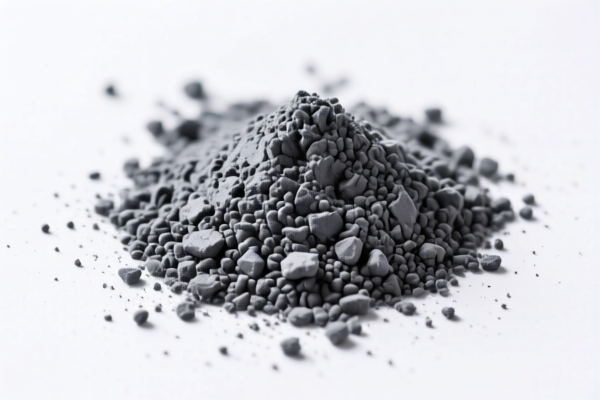
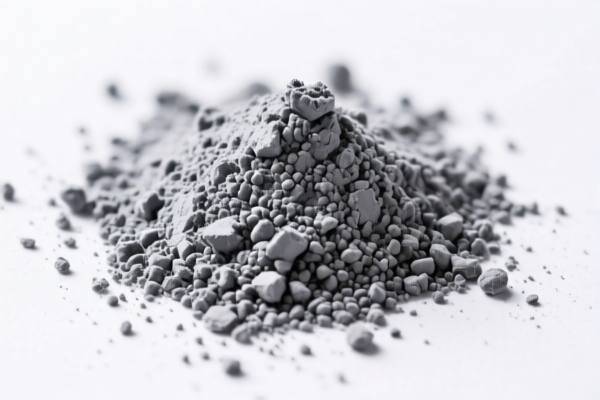
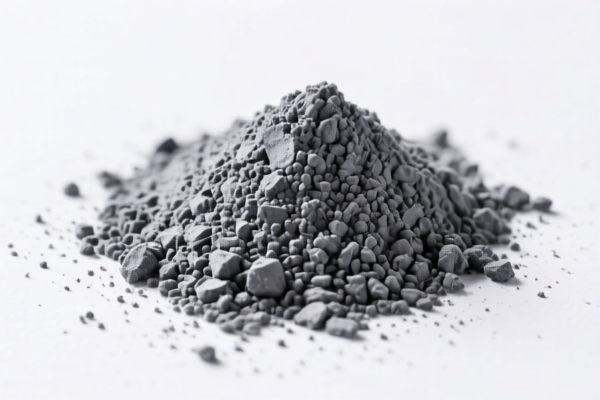
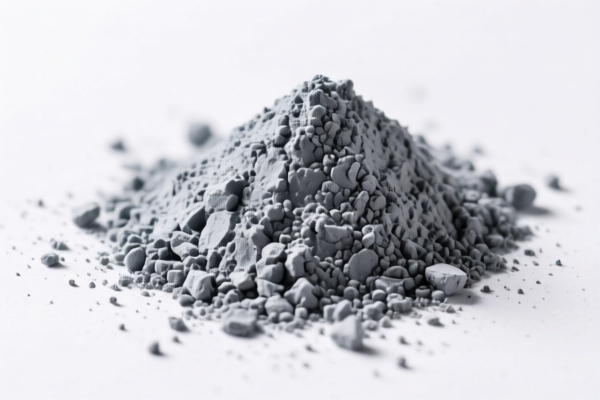
AI Analysis
🛡️ Alcohol-Based Rust Preventive Mixture
🌐 HS Code Reference & Clearance Guide | 2026 Latest Tariff Analysis | Professional Customs Strategy
📌 I. Product Definition and Classification: What Exactly is this Mixture?
An Alcohol-Based Rust Preventive Mixture is a specialized chemical formulation designed to protect metal surfaces from oxidation and corrosion. Unlike water-based rust preventives, these products use volatile organic solvents (primarily alcohols) as the carrier, allowing for rapid drying and immediate protection without leaving a wet residue.
In international trade, the classification hinges entirely on the chemical composition—specifically, the percentage and type of aromatic substances present. The Harmonized System (HS) distinguishes between general organic solvents and those with specific aromatic properties.
⚠️ Critical Distinction:
- If the mixture contains 5% to 25% by weight of aromatic or modified aromatic substances → It falls under 3814.00.10.00.
- If the mixture is an "organic composite solvent" not elsewhere specified (typically containing less than 5% aromatic substances or no specific aromatic threshold met) → It falls under 3814.00.50.90.
📦 II. HS Code Classification Details (2026 Latest Tariff Alignment)
| HS Code | Product Description | Application Scenario | Aromatic Content Threshold |
|---|---|---|---|
3814.00.10.00 |
Organic composite solvents; Prepared paint or varnish removers: Containing 5% or more but not more than 25% by weight of one or more aromatic or modified aromatic substances | High-performance rust preventives, industrial degreasers with strong aromatic carriers | ✅ 5% – 25% |
3814.00.50.90 |
Organic composite solvents; Prepared paint or varnish removers: Other (Not elsewhere specified) | General-purpose alcohol-based cleaners, mild rust inhibitors with low/no aromatic content | ❌ < 5% or unspecified |
🔍 Key Reminder:
- The presence and quantity of aromatic substances (e.g., benzene derivatives, toluene, xylene) are the deciding factors.
- Even if the primary carrier is "alcohol," if aromatic solvents are added as co-solvents above 5%, it must be classified under3814.00.10.00.
- Misclassification can lead to severe penalties, as the tariff rates differ slightly due to regulatory scrutiny on volatile organic compounds (VOCs).
💰 III. 2026 Latest Tariff Rate Details (Including Surcharge Taxes)
✅ Applicable Country: United States (US)
✅ Country of Origin: China (CN)
✅ Effective Date: November 10, 2025 onwards (for subsequent imports)
🎯 1. 3814.00.50.90 —— Organic Composite Solvents (Other/Not Elsewhere Specified)
| Item | Content |
|---|---|
| Base Tariff Rate | 6.0% (ad valorem) |
| Section 301 Surcharge | +25.0% (USITC Footnote for Chinese Goods) |
| Total Tax Rate | 31.0% |
| Tax Calculation | CIF Value × 31.0% |
| De Minimis Eligibility | ❌ No (Denied under current trade restrictions) |
| Legal Basis Path | USITC:3814.00.50.90 → FOOTNOTE:Section301 |
📌 Explanation:
- This code applies to mixtures that do not meet the specific aromatic threshold of3814.00.10.00.
- The 31% total duty is high, reflecting the protectionist trade policies on Chinese chemical products.
- Cost Impact: For a $10,000 shipment, the duty alone is $3,100.
🎯 2. 3814.00.10.00 —— Containing 5%–25% Aromatic Substances
| Item | Content |
|---|---|
| Base Tariff Rate | 6.5% (ad valorem) |
| Section 301 Surcharge | +25.0% (USITC Footnote for Chinese Goods) |
| Total Tax Rate | 31.5% |
| Tax Calculation | CIF Value × 31.5% |
| De Minimis Eligibility | ❌ No (Denied) |
| Legal Basis Path | USITC:3814.00.10.00 → FOOTNOTE:Section301 |
📌 Note:
- The 0.5% difference in base tariff arises because aromatic substances are often subject to stricter environmental and health regulations, leading to a slightly higher base rate.
- The 25% surcharge remains identical.
- Cost Impact: For a $10,000 shipment, the duty is $3,150.
- Critical: You must provide a Chemical Analysis Report to prove the aromatic content is ≥5%. If it is <5%, using this code will result in misclassification penalties.
🛠️ IV. Customs Clearance Practical Advice (Real-World Pitfall Guide)
✅ 1. Required Documentation Checklist (Non-negotiable)
| Document | Mandatory? | Description |
|---|---|---|
| ✅ Safety Data Sheet (SDS) | ✔️ | Must explicitly state ingredients, including percentages of aromatic solvents. |
| ✅ Certificate of Origin (CO) | ✔️ | Proves origin (China) to apply correct surcharges. |
| ✅ Commercial Invoice | ✔️ | Must clearly state "Alcohol-Based Rust Preventive Mixture" and value. |
| ✅ Packing List | ✔️ | Details net/gross weight and number of packages. |
| ✅ Chemical Composition Report | ✔️ | Crucial: Lab report confirming if aromatic content is ≥5%. |
| ✅ UN3082/UN1993 Labeling | ✔️ | For flammable liquids, ensure proper hazard labeling per IMDG/IATA. |
✅ 2. Declaration Tips (Key Mantras)
🔥 “Check Aromatics, Declare Accurately, Avoid 31% Shock!”
| Scenario | Correct Declaration | Incorrect Practice |
|---|---|---|
| Aromatic content 5%–25% | HS: 3814.00.10.00Name: "Rust Preventive with Aromatics" |
Declare as "Other Solvents" (3814.00.50.90) → Under-declaration risk |
| Aromatic content <5% | HS: 3814.00.50.90Name: "Alcohol-Based Rust Inhibitor" |
Declare as "Aromatic Mixture" → Over-classification, higher base rate |
| Pure Alcohol (No aromatics) | May qualify for other codes (e.g., 2905) if not a "prepared mixture" | Declare as "Composite Solvent" → Wrong category |
| Mixed with Water | Not a "composite solvent" → Likely 3808 or 3402 | Declare as 3814 → Rejection/Seizure |
✅ 3. Special Handling Cases
| Case | Handling Advice |
|---|---|
| OEM/Private Label | Provide manufacturer’s formula sheet to verify aromatic %, even if branding changes. |
| Flammable Hazard | Ensure package complies with DOT/UN3082 (Flammable Liquid, N.O.S.) for air/sea freight. |
| Small Samples | No De Minimis Exemption. Even samples under $800 are subject to 31%+ duty if from China. |
| Aromatic Threshold Borderline | If aromatic content is 4.9% vs 5.1%, the HS code changes completely. Lab test is mandatory. |
🌍 V. Global Market Clearance Comparison (2026 Latest)
| Country/Region | Recommended HS Code | Tariff Rate | Certification Requirements | Notes |
|---|---|---|---|---|
| 🇺🇸 USA | 3814.00.10.00 / 3814.00.50.90 |
31.0% – 31.5% (China) | SDS, DOT Hazmat | High surcharges apply. No de minimis. |
| 🇨🇳 China | 3814.00.10.00 / 3814.00.50.90 |
~6.5% | CCC (if applicable) | Lower base rates. |
| 🇪🇺 EU | 3814.00.10 / 3814.00.90 |
0% – 6.5% | REACH Registration | REACH compliance is critical for aromatic substances. |
| 🇬🇧 UK | 3814.00.10 / 3814.00.90 |
0% – 6.5% | UK REACH | Post-Brexit rules apply. |
| 🇯🇵 Japan | 3814.00.10 / 3814.00.90 |
6.0% – 6.5% | JIS Standards | No additional surcharges. |
📌 Conclusion:
- The USA imposes the highest effective tariff due to Section 301 surcharges.
- EU/UK focus on REACH/UK REACH registration for aromatic substances. Ensure your supplier has provided this registration number.
- Japan has no surcharges, making it a more cost-effective market for these products.
📌 VI. Common Errors & Pitfall Guide (Lessons Learned)
❌ Error 1: Assuming "Alcohol-Based" means it’s not a "Composite Solvent"
👉 Consequence: If mixed with other chemicals (aromatics, esters), it is a composite solvent. Misclassification leads to back taxes + fines.
❌ Error 2: Ignoring the 5% Aromatic Threshold
👉 Consequence: Declaring 3814.00.50.90 when aromatic content is 10% → Under-declaration of value and wrong HS code. Customs will audit your chemical composition.
❌ Error 3: Not declaring Hazmat (Flammable)
👉 Consequence: Air/Sea freight rejection, detention fees, and potential fire hazard penalties.
❌ Error 4: Assuming De Minimis ($800) Applies
👉 Consequence: Since November 2025, Section 301 goods (including these chemicals from China) do not qualify for de minimis exemption. Even small packages are taxed.
✅ Correct Approach:
"Alcohol-Based Rust Preventive Mixture, 20% Aromatic Solvents, 80% Alcohols & Additives, UN3082, SDS Available, CIF Value $X, Origin China"
🎯 VII. Conclusion: Precision in Classification Saves Money
🎯 Remember the Mantras:
🔹 "Aromatics ≥5%? Code .10. .90 is for <5%."
🔹 "31% Duty is Inevitable from China. Plan Ahead."
🔹 "SDS is Your Best Friend. No SDS, No Clearance."
📌 Pro Tip:
If your aromatic content is just below 5% (e.g., 4.8%), consider reformulating to ensure consistency or provide a lab report proving it is <5% to safely use
3814.00.50.90.
Apply for an Advance Ruling with US Customs (CBP) if you have a high-volume shipment to lock in the correct HS code and avoid surprise audits.
📣 Immediate Action:
📞 Contact your Customs Broker with the SDS and Chemical Composition Report.
🚀 Verify the Aromatic Percentage before booking freight.
💼 Your Profit Margin Depends on Correct Classification!
✨ Professional Clearance Starts with Precise Classification!
💼 Every Percent Counts in Chemical Trade!
Customer Reviews
About HS Code Classification
The Harmonized System (HS) is an internationally standardized nomenclature developed by the World Customs Organization (WCO) to classify traded products. Over 200 countries use the HS system as the basis for customs tariffs, trade statistics, and import/export regulations.
Each HS code follows a hierarchical structure:
- Chapter (2 digits) — Broad category of goods (e.g., Chapter 84: Machinery and Mechanical Appliances)
- Heading (4 digits) — More specific grouping within the chapter
- Subheading (6 digits) — Internationally standardized breakdown, used by all WCO member countries
- National subdivisions (8-10 digits) — Country-specific extensions for further classification, such as US HTSUS 10-digit codes
Correct HS code classification is essential for smooth customs clearance, accurate duty payment, and compliance with trade regulations. Misclassification can lead to customs delays, overpayment of duties, or penalties.
When importing from CN to US, the applicable tariff rates may include:
- Most-Favored-Nation (MFN) rate — The standard duty rate applied to WTO members
- General rate — Applied to countries without trade agreements
- Trade remedy duties — Additional tariffs such as Section 301 (anti-dumping), Section 232 (national security), or countervailing duties
The information provided on this page is for reference purposes only. For official classification, please consult with your local customs authority or a licensed customs broker.