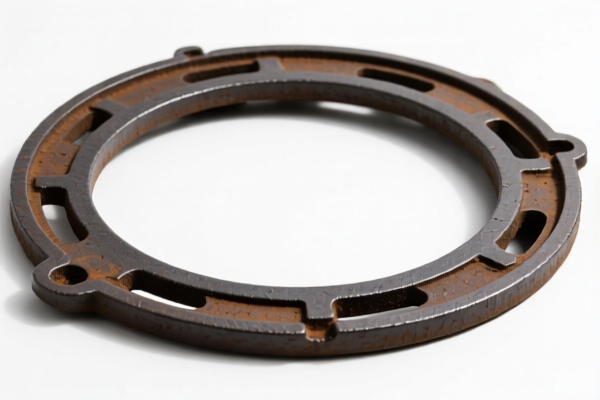
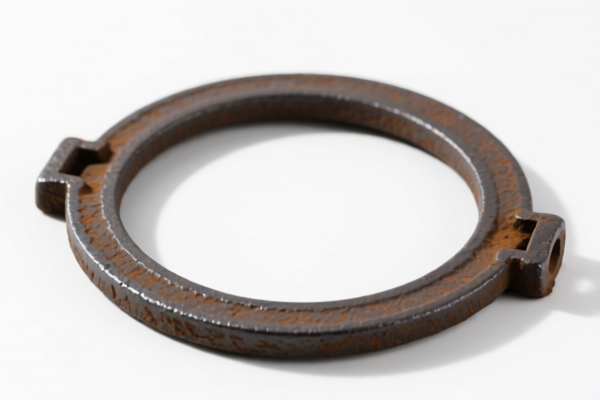
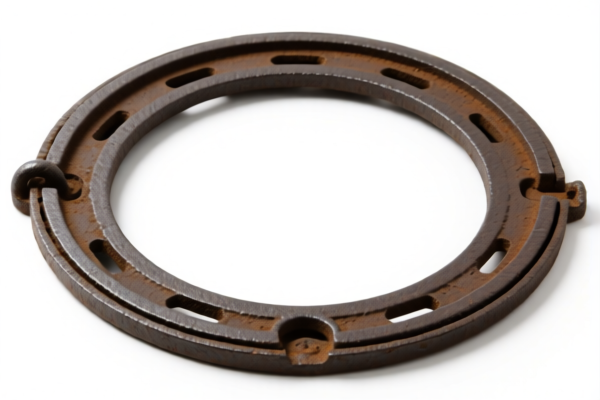
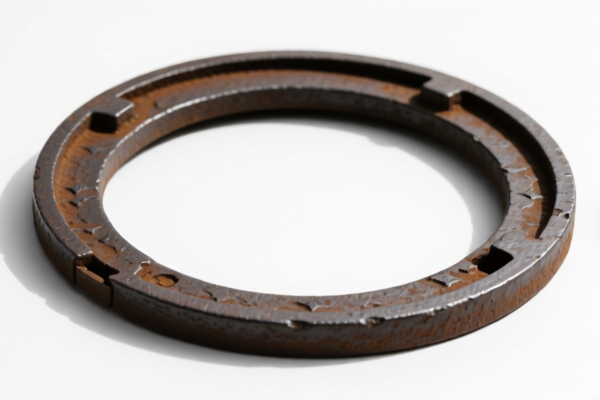
alloy ring
CN → US| HS Code | Tariff Rate | Origin | Destination | Doc |
|---|---|---|---|---|
| 7117909000 | 28.5% | CN | US | Official Doc |
| 9601908000 | 21.2% | CN | US | Official Doc |
| 7113195091 | 23.0% | CN | US | Official Doc |
| 7115903000 | 38.9% | CN | US | Official Doc |
| 7115904000 | 38.0% | CN | US | Official Doc |
Product Images
AI Analysis
💍 Alloy Rings (Jewelry & Metal Crafts)
🌐 HS Code Reference & Clearance Guide | 2026 Latest Tariff Analysis | Strategic Compliance for Metallurgical Goods
📌 I. Product Definition & Classification: What Exactly Is an "Alloy Ring"?
An alloy ring is a wearable accessory made primarily from non-precious metal mixtures (such as zinc, copper, or steel alloys). In international trade, these items are frequently misclassified due to the ambiguity between "imitation jewelry," "miscellaneous metal articles," or "precious metal items." The correct classification depends strictly on the material composition, manufacturing process, and intended use.
⚠️ Critical Distinction Point:
- If the ring is made of base metals with no precious metal coating → Imitation Jewelry (7117)
- If the ring involves intricate animal/human motifs using special alloys → Other Worked Materials (9601)
- If the ring contains gold/platinum layers or is classified as precious metal jewelry → 7113 or 7115
- If it is a general metal article for industrial or decorative use → 7115 (Other Precious Metal Articles)
📦 II. HS Code Classification Details (2026 Latest Tariff Alignment)
| HS Code | Product Description | Applicable Scenario | Precious Metal Content? |
|---|---|---|---|
7117.90.90.00 |
Imitation Jewelry, including rings, made of non-precious metals/alloys | Standard fashion rings, costume jewelry, zinc/copper alloys | ❌ No |
9601.90.80.00 |
Other articles of carved animal/horn/ivory/pearl/etc., or special material works | Rings with intricate carving, bone/wood/alloy composite, artistic crafts | ❌ No (Special Material) |
7113.19.50.91 |
Gold or other precious metal jewelry, including imitation jewelry made of precious metals | Rings plated with gold/silver, or classified under precious metal definitions | ✅ Yes (Precious) |
7115.90.30.00 |
Articles of gold or gold-plated metal, other than jewelry | Metal alloy rings classified under general precious metal articles (non-jewelry context or specific alloy form) | ✅ Yes (Precious/Plated) |
7115.90.40.00 |
Other articles of precious metal or silver, other than jewelry | Catch-all classification for alloy rings not fitting other specific precious metal categories | ✅ Yes (Misc. Precious) |
🔍 Key Reminder:
- Fashion Rings (base metal) should ideally fall under 7117.90.90.00.
- If the ring is marketed as "Gold-plated" or contains significant precious metal value, customs may reclassify it to 7113 or 7115, drastically increasing the tariff burden.
- Do not split shipments: Sending "rings" and "rings" as different categories to reduce tax is high-risk. Declare accurately based on material.
💰 III. 2026 Latest Tariff Rate Breakdown (Including Surtaxes & Policy Levies)
✅ Applicable Country: United States (US)
✅ Origin: China (CN)
✅ Effective Date: From Nov 10, 2025 (including subsequent imports)
🎯 1. 7117.90.90.00 —— Imitation Jewelry (Non-Precious Alloy Rings)
| Item | Content |
|---|---|
| Base Tariff | 11.0% |
| Section 301 Surtax | +7.5% |
| Section 122 Tariff | +10% |
| Total Tariff Rate | 28.5% |
| Tax Calculation | CIF Value × 28.5% |
| De Minimis Eligibility | ❌ No (Deny De Minimis) |
| Legal Basis Path | Base: 11.0% → Surtax: 7.5% → 122 Clause: 10% |
📌 Explanation:
- This is the most common classification for standard fashion alloy rings.
- Total Cost Impact: Nearly 30% of the product value goes to taxes.
- Note: The "Section 122 Tariff" applies specifically to certain imports under new regulatory frameworks.
🎯 2. 9601.90.80.00 —— Other Carved Material Articles (Special Alloy Rings)
| Item | Content |
|---|---|
| Base Tariff | 3.7% |
| Section 301 Surtax | +7.5% |
| Section 122 Tariff | +10% |
| Total Tariff Rate | 21.2% |
| Tax Calculation | CIF Value × 21.2% |
| De Minimis Eligibility | ❌ No (Deny De Minimis) |
| Legal Basis Path | Base: 3.7% → Surtax: 7.5% → 122 Clause: 10% |
📌 Explanation:
- Applicable if the ring is considered a "carved article" or "special material craft" rather than standard jewelry.
- Cost Advantage: Lower total rate (21.2%) compared to imitation jewelry (28.5%), but documentation must prove the "carved/special material" nature.
- Risk: Customs may reject this if the item is perceived as simple jewelry, leading to reclassification and penalties.
🎯 3. 7113.19.50.91 —— Gold/Precious Metal Jewelry (Gold-Plated Alloy Rings)
| Item | Content |
|---|---|
| Base Tariff | 5.5% |
| Section 301 Surtax | +7.5% |
| Section 122 Tariff | +10% |
| Total Tariff Rate | 23.0% |
| Tax Calculation | CIF Value × 23.0% |
| De Minimis Eligibility | ❌ No (Deny De Minimis) |
| Legal Basis Path | Base: 5.5% → Surtax: 7.5% → 122 Clause: 10% |
📌 Explanation:
- Applies if the ring is classified as "Precious Metal Jewelry" (e.g., gold-plated with significant thickness or marketed as such).
- Moderate Cost: 23.0% is lower than imitation jewelry but requires proof of precious metal content.
- Documentation: Must provide assay reports or plating thickness certificates.
🎯 4. 7115.90.30.00 —— Gold/Gold-Plated Metal Articles (Metal Alloy Rings)
| Item | Content |
|---|---|
| Base Tariff | 3.9% |
| Section 301 Surtax | +25.0% |
| Section 122 Tariff | +10% |
| Total Tariff Rate | 38.9% |
| Tax Calculation | CIF Value × 38.9% |
| De Minimis Eligibility | ❌ No (Deny De Minimis) |
| Legal Basis Path | Base: 3.9% → Surtax: 25.0% → 122 Clause: 10% |
📌 Explanation:
- High Cost Warning: This category incurs a 25% Section 301 surtax (likely due to broader metal/steel tariffs or specific trade actions).
- Only Use If Necessary: Do not use this code unless the product is strictly a "metal article" (not jewelry) and made of gold/gold-plated.
- Risk: High tariff makes this commercially unviable for most fashion rings.
🎯 5. 7115.90.40.00 —— Other Precious/Base Metal Articles (Catch-All Alloy Rings)
| Item | Content |
|---|---|
| Base Tariff | 3.0% |
| Section 301 Surtax | +25.0% |
| Section 122 Tariff | +10% |
| Total Tariff Rate | 38.0% |
| Tax Calculation | CIF Value × 38.0% |
| De Minimis Eligibility | ❌ No (Deny De Minimis) |
| Legal Basis Path | Base: 3.0% → Surtax: 25.0% → 122 Clause: 10% |
📌 Explanation:
- The "catch-all" for precious/base metal articles not elsewhere specified.
- High Surtax: The 25% Section 301 surtax applies here as well.
- Not Recommended: Unless the ring is clearly NOT jewelry (e.g., industrial component), avoid this code due to high tax.
🛠️ IV. Clearance Practical Advice (Avoiding Pitfalls)
✅ 1. Essential Documentation Checklist
| Document | Required? | Purpose |
|---|---|---|
| ✅ Product Spec Sheet | ✔️ | Detailed material composition (e.g., "Zinc Alloy, Zinc-Copper-Nickel"), weight, dimensions |
| ✅ Material Certificate | ✔️ | Proof of non-precious metals to support 7117 classification |
| ✅ Plating Thickness Report | ✔️ | If claiming gold-plated, provide microns to support 7113 vs 7117 |
| ✅ Product Photos | ✔️ | Clear images showing design, marking (if any), and packaging |
| ✅ Commercial Invoice | ✔️ | Accurate description: "Fashion Alloy Ring, Zinc-Based" |
| ✅ Packing List | ✔️ | Weight and quantity details |
✅ 2. Declaration Tips (Key Strategy)
🔥 “Material Defines Code, Not Name!”
| Scenario | Correct Declaration | Incorrect Declaration |
|---|---|---|
| Standard Zinc/Copper Ring | 7117.90.90.00 (Imitation Jewelry) |
"Metal Ring" → Risk of reclassification to 7115 (38.9%) |
| Gold-Plated Ring (<0.5 microns) | 7117.90.90.00 (Still imitation) |
"Gold Ring" → Risk of 7113 (23.0%) or higher |
| Artistic Carved Alloy Ring | 9601.90.80.00 (If proven carved/special) |
"Ring" → Risk of 7117 (28.5%) |
| Industrial Metal Component | 7115.90.30.00 (If not jewelry) |
"Ring" → Customs may reject if it looks like jewelry |
📌 Critical Rule:
- If the product is wearable jewelry, it must be classified under Chapter 71 (Jewelry).
- Do not try to hide jewelry as "general metal parts" to avoid Chapter 71 tariffs; customs will seize or reclassify.
- 7117 (28.5%) is often the lowest total tax for standard fashion rings compared to 7115 (38.0%+) or 7113 (23.0%) if the precious metal claim is weak.
✅ 3. Special Cases & Handling
| Situation | Handling Advice |
|---|---|
| OEM/White Label Rings | Provide client’s design drawings and material specs. Avoid generic "Ring" descriptions. |
| Packaged Sets (Ring + Box) | Declare as one unit. Do not split box and ring. |
| Mixed Materials | If ring has stone/crystal, still 7117.90.90.00 if base is non-precious. |
| Suspiciously Low Value | Ensure declared value is accurate. Low-value shipments (<$800) may still be subject to scrutiny if "De Minimis" is denied for China origin. |
🌍 V. Global Market Comparison (2026)
| Market | Recommended HS Code | Total Tax (Approx.) | Key Certification | Notes |
|---|---|---|---|---|
| 🇺🇸 USA | 7117.90.90.00 |
28.5% | None (General) | High surtaxes apply to all China-origin jewelry. |
| 🇨🇳 China | 7117.90.90.00 |
5-10% | None | Lower base tariffs. |
| 🇪🇺 EU | 7117.90.90.00 |
2.5-4.7% | REACH (Nickel/Cobalt limits) | Strict chemical regulations on alloys. |
| 🇬🇧 UK | 7117.90.90.00 |
4.5-12% | CE/UKCA | Post-Brexit rules apply. |
📌 Conclusion:
- The USA market is the most expensive for alloy rings due to Section 301 + Section 122 tariffs.
- EU has lower tariffs but strict chemical compliance (REACH) for alloys (nickel, lead, cadmium limits).
- Optimize for USA: Use 7117.90.90.00 for standard rings. Avoid 7115 unless necessary.
📌 VI. Common Errors & Pitfalls (Lessons Learned)
❌ Error 1: Declaring "Gold Ring" for a zinc alloy ring
👉 Consequence: Customs reclassifies to 7117.90.90.00 (28.5%) or penalties for misdeclaration.
👉 Solution: Declare accurately as "Zinc Alloy Ring."
❌ Error 2: Trying to classify jewelry as "General Metal Parts" (7115) to avoid Chapter 71
👉 Consequence: High tariff (38.9%) + seizure risk.
👉 Solution: Use Chapter 71 codes.
❌ Error 3: Ignoring Section 122 Tariff
👉 Consequence: Underpayment of 10% on every shipment.
👉 Solution: Include 122 Clause in all US import calculations.
❌ Error 4: Splitting shipment to avoid threshold
👉 Consequence: De Minimis is denied for China origin. Every package is taxed.
👉 Solution: Factor in full 28.5%+ tax from the start.
✅ Correct Declaration Example:
"Women's Fashion Alloy Ring, Material: Zinc Alloy, Plating: Nickel-Free, HS Code: 7117.90.90.00"
🎯 VII. Conclusion: Precision Classification Saves Money!
🎯 Remember These Rules:
🔹 "If it's worn as jewelry, it's Chapter 71."
🔹 "7117 is often the safest bet for fashion rings (28.5%)."
🔹 "7115 looks cheaper (base 3%) but surtaxes hit hard (38.9% total)."
🔹 "Section 122 (10%) and Section 301 (7.5% or 25%) are unavoidable for China origin."
📌 Pro Tip:
- For high-volume shipments, consider Advance Rulings from US Customs (CBP) to lock in classification.
- Always test alloys for Nickel Release if selling to EU/UK, even if US taxes are the primary concern.
📣 Immediate Action Required:
📞 Consult Customs Brokers with material specs.
📄 Prepare Material Certificates to support 7117 classification.
🚀 Calculate Landed Cost including 28.5% total tax for USA imports.
✨ Accurate Classification is Your Best Defense Against High Tariffs!
💼 Every percentage point saved in duties is pure profit!
Customer Reviews
About HS Code Classification
The Harmonized System (HS) is an internationally standardized nomenclature developed by the World Customs Organization (WCO) to classify traded products. Over 200 countries use the HS system as the basis for customs tariffs, trade statistics, and import/export regulations.
Each HS code follows a hierarchical structure:
- Chapter (2 digits) — Broad category of goods (e.g., Chapter 84: Machinery and Mechanical Appliances)
- Heading (4 digits) — More specific grouping within the chapter
- Subheading (6 digits) — Internationally standardized breakdown, used by all WCO member countries
- National subdivisions (8-10 digits) — Country-specific extensions for further classification, such as US HTSUS 10-digit codes
Correct HS code classification is essential for smooth customs clearance, accurate duty payment, and compliance with trade regulations. Misclassification can lead to customs delays, overpayment of duties, or penalties.
When importing from CN to US, the applicable tariff rates may include:
- Most-Favored-Nation (MFN) rate — The standard duty rate applied to WTO members
- General rate — Applied to countries without trade agreements
- Trade remedy duties — Additional tariffs such as Section 301 (anti-dumping), Section 232 (national security), or countervailing duties
The information provided on this page is for reference purposes only. For official classification, please consult with your local customs authority or a licensed customs broker.