amino flame retardant board
CN → US| HS Code | Tariff Rate | Origin | Destination | Doc |
|---|---|---|---|---|
| 3921905050 | 39.8% | CN | US | Official Doc |
| 3921190090 | 41.5% | CN | US | Official Doc |
| 4410190030 | 35.0% | CN | US | Official Doc |
| 4410190060 | 35.0% | CN | US | Official Doc |
Product Images
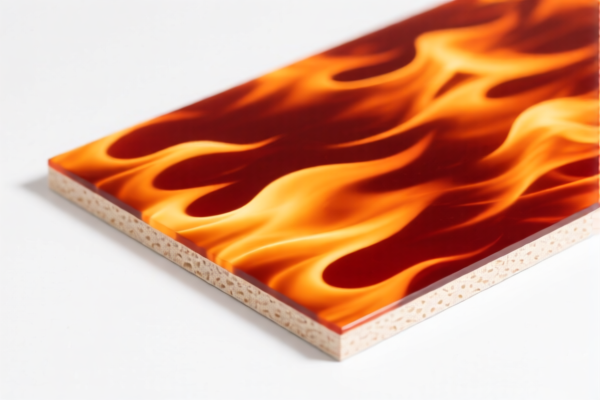
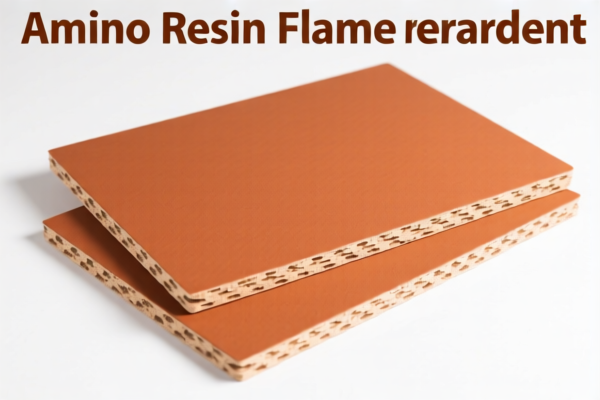
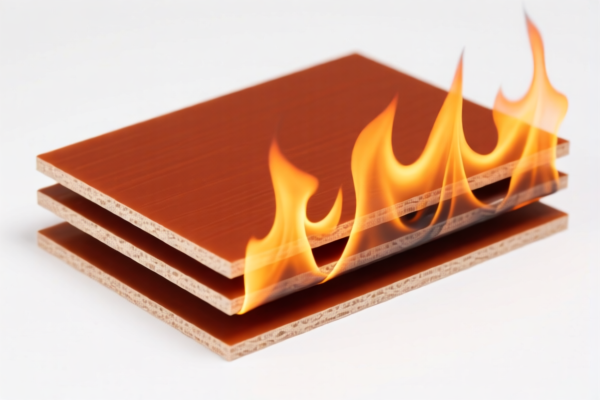
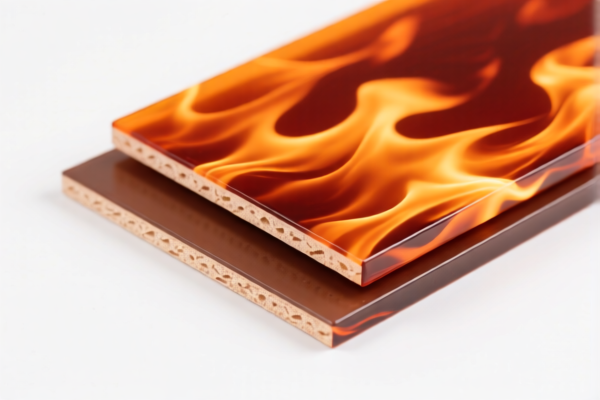
AI Analysis
🧱 Amino Flame Retardant Board (氨基树脂阻燃板)
🌐 HS Code Reference & Customs Clearance Guide | 2026 Latest Tariff Analysis | Professional Clearance Strategy
📌 I. Product Definition & Classification: What is an "Amino Flame Retardant Board"?
An Amino Flame Retardant Board is a rigid sheet or panel material primarily composed of Amino Resins (such as melamine or urea-formaldehyde resins), often reinforced with fillers or substrates to achieve flame-retardant properties. In international trade, its classification hinges on the primary material and structural form:
Category A: Pure Plastic/Resin Board
If the board is predominantly made of synthetic amino resin (plastic-like properties), it falls under Chapter 39 (Plastics).
Category B: Wood-Based/Composite Board
If the board consists of a wooden core (particle board, fiberboard) coated or impregnated with amino resin for surface treatment and fire resistance, it falls under Chapter 44 (Wood and Wood Products).
⚠️ Critical Distinction Point:
- If the material behaves like plastic (homogeneous resin, high durability, non-wooden core) →归类 to Chapter 39
- If the material behaves like wood (wood fibers/particles bonded with resin, or wood substrate with resin surface) →归类 to Chapter 44
📦 II. HS Code Classification Details (2026 Latest Tariff Authority Comparison)
| HS Code | Product Description | Application Scenario | Material Nature |
|---|---|---|---|
3921.90.50.50 |
Amino Resin Flame Retardant Board, classified as "Other" plastic plates/sheets/films | Pure plastic boards, high-density resin sheets without wooden core | ✅ Plastic/Resin |
3921.19.00.90 |
Amino Resin Flame Retardant Board, plastic/ resin plates/sheets/films, other | Standard plastic resin boards, generic amino resin sheets | ✅ Plastic/Resin |
4410.19.00.30 |
Amino Resin Anti-Corrosion Board, inferred as wood-based | Wood or wood-like substrate chemically treated; surface-treated wood boards | ✅ Wood-Based |
4410.19.00.60 |
Amino Resin Anti-Corrosion Board, resin + wood fiber composite | Particle board, OSB (Oriented Strand Board), or similar wood fiber composites bonded with resin | ✅ Wood-Based |
🔍 Key Reminder:
- Chapter 39 Codes apply when the board is essentially a plastic product.
- Chapter 44 Codes apply when the board is essentially a wood product (even if treated with resin for flame retardancy/corrosion resistance).
- Misclassification can lead to significant tariff differences (e.g., 0% vs 6.5% base duty).
💰 III. 2026 Latest Tariff Rate Breakdown (Including Surtaxes & Policy Add-ons)
✅ Applicable Country: United States (US)
✅ Country of Origin: China (CN)
✅ Effective Date: November 10, 2025 onwards (for subsequent imports)
🎯 1. 3921.90.50.50 —— Plastic-Based Amino Resin Board
| Item | Content |
|---|---|
| Base Duty | 4.8% (Ad Valorem) |
| Section 301 Surtax | +25.0% |
| Section 122 Tariff | +10.0% |
| Total Effective Rate | 39.8% |
| Tax Calculation | CIF Value × 39.8% |
| De Minimis Exemption | ❌ Not Eligible (Denied under current policies for China-origin goods in this category) |
| Legal Basis Path | Section 301: Footnote 9903.88.01 → Section 122: 9903.01.24 → USITC: 3921.90.50.50 |
📌 Explanation:
- The 4.8% base duty is standard for other plastic plates.
- The +25% is the Section 301 surtax on Chinese plastics.
- The +10% is the Section 122 tariff (often related to specific trade remedies or administrative tariffs).
- Total 39.8% is a high tariff burden, requiring precise cost planning.
🎯 2. 3921.19.00.90 —— Other Plastic/Resin Plates (Amino Resin)
| Item | Content |
|---|---|
| Base Duty | 6.5% (Ad Valorem) |
| Section 301 Surtax | +25.0% |
| Section 122 Tariff | +10.0% |
| Total Effective Rate | 41.5% |
| Tax Calculation | CIF Value × 41.5% |
| De Minimis Exemption | ❌ Not Eligible |
| Legal Basis Path | Section 301: Footnote 9903.88.01 → Section 122: 9903.01.24 → USITC: 3921.19.00.90 |
📌 Note:
- Slightly higher base duty (6.5%) than the previous code.
- Total rate reaches 41.5%, making this one of the most expensive classifications.
- Must ensure the product does not qualify for a lower-duty wood-based classification if it has wooden components.
🎯 3. 4410.19.00.30 —— Wood-Based Amino Resin Board
| Item | Content |
|---|---|
| Base Duty | 0.0% (Ad Valorem) |
| Section 301 Surtax | +25.0% |
| Section 122 Tariff | +10.0% |
| Total Effective Rate | 35.0% |
| Tax Calculation | CIF Value × 35.0% |
| De Minimis Exemption | ❌ Not Eligible |
| Legal Basis Path | Section 301: Footnote 9903.88.01 → Section 122: 9903.01.24 → USITC: 4410.19.00.30 |
📌 Explanation:
- Zero Base Duty is a significant advantage for wood-based products.
- However, the 35% total tariff is still substantial due to the 25% + 10% surcharges.
- This code is optimal if the board is confirmed to be wood-fiber/particle based.
🎯 4. 4410.19.00.60 —— Composite Wood Resin Board (Particle/OSB)
| Item | Content |
|---|---|
| Base Duty | 0.0% (Ad Valorem) |
| Section 301 Surtax | +25.0% |
| Section 122 Tariff | +10.0% |
| Total Effective Rate | 35.0% |
| Tax Calculation | CIF Value × 35.0% |
| De Minimis Exemption | ❌ Not Eligible |
| Legal Basis Path | Section 301: Footnote 9903.88.01 → Section 122: 9903.01.24 → USITC: 4410.19.00.60 |
📌 Note:
- Applies to Particle Board, OSB, or similar wood fiber composites impregnated with amino resin.
- Same 35% total rate as4410.19.00.30.
- Crucial: If you can prove the product is wood-based, you save 4.8%–6.5% in base duties compared to plastic classifications.
🛠️ IV. Customs Clearance Operational Advice (Practical Pitfall Avoidance)
✅ 1. Documentation Checklist (Mandatory)
| Document | Required | Description |
|---|---|---|
| ✅ Product Spec Sheet | ✔️ | Must clearly state material composition (e.g., "100% Amino Resin" vs. "Wood Particle Core with Amino Resin Surface"). |
| ✅ Material Safety Data Sheet (MSDS) | ✔️ | Confirms chemical composition and flame retardant properties. |
| ✅ Product Photos (Labeled) | ✔️ | Show cross-section (to reveal core material) and surface finish. |
| ✅ Third-Party Test Report | ✔️ | Flame retardancy test results (UL94, etc.) and material analysis. |
| ✅ Commercial Invoice | ✔️ | Precise description: e.g., "Amino Resin Coated Particle Board" vs. "Solid Amino Plastic Sheet". |
| ✅ Packing List | ✔️ | Dimensions, weight, and quantity. |
✅ 2. Declaration Strategy (Key Rules)
🔥 "Core Matters: Plastic is 40%, Wood is 35%. Provenance is Key!"
| Scenario | Correct Declaration | Wrong Practice |
|---|---|---|
| Pure Resin Board | 3921.90.50.50 or 3921.19.00.90 |
Misdeclare as wood to avoid tariffs → Fraud Risk |
| Wood Core + Resin Surface | 4410.19.00.30 or 4410.19.00.60 |
Declare as plastic → Higher Duty (39.8%-41.5%) |
| Mixed Materials (Unclear) | Provide cross-section photos + material analysis | Vague description "Resin Board" → Audit Delay |
| Sample for Testing | Declare as "Commercial Sample" with low value | Declare as bulk shipment → Seizure Risk |
✅ 3. Special Cases
| Scenario | Handling Advice |
|---|---|
| OEM Custom Boards | Provide client specs showing material structure to justify HS Code. |
| Hybrid Boards (e.g., Metal-Resin) | May fall under different chapters; consult advanced ruling. |
| Flame Retardant Certification | Ensure UL94 or similar certification is available to prove "Flame Retardant" status, though this doesn't change HS Code directly, it supports the "specialized use" argument. |
| Wood Origin Verification | For Chapter 44, ensure wood is not from prohibited sources (e.g., certain Chinese provinces may have specific restrictions, though generally Lacey Act applies to timber). |
🌍 V. Global Market Comparison (2026 Latest)
| Country/Region | Recommended HS Code | Base Duty | Surtaxes | Total Rate | Remarks |
|---|---|---|---|---|---|
| 🇺🇸 USA | 3921.xxxx or 4410.xxxx |
0–6.5% | +35% (301+122) | 35–41.5% | High tariff impact; classification is critical. |
| 🇨🇳 China | 3921.xxxx or 4410.xxxx |
0–6.5% | None | 0–6.5% | No surtaxes; standard MFN rates apply. |
| 🇪🇺 EU | 3921.xxxx or 4410.xxxx |
0–4% | None | 0–4% | Generally low duties; REACH compliance needed. |
| 🇬🇧 UK | 3921.xxxx or 4410.xxxx |
0–4% | None | 0–4% | Post-Brexit, similar to EU for most goods. |
📌 Conclusion:
- USA is the most challenging market due to Section 301 and Section 122 tariffs.
- Correct classification (Wood vs. Plastic) can save 4.8%–6.5% in base duties, which is significant for high-value shipments.
📌 VI. Common Errors & Pitfalls (Blood & Tears Lessons)
❌ Error 1: Declaring a wood-particle board as plastic
👉 Consequence: Pay 39.8–41.5% instead of 35% → Unnecessary extra cost.
❌ Error 2: Declaring a pure resin board as wood
👉 Consequence: Customs audit, potential fraud penalty, and back taxes + interest.
❌ Error 3: Not providing cross-section photos
👉 Consequence: Customs cannot verify material core → Shipment held for inspection → Delay.
❌ Error 4: Ignoring Section 122 Tariff
👉 Consequence: Underestimating total cost by 10% → Profit margin erosion.
✅ Correct Approach:
"Amino Resin Coated Particle Board, Wood Core, Flame Retardant, US/UK/EU Certified"
OR
"Solid Melamine Amino Resin Plate, Plastic Base, Flame Retardant"
🎯 VII. Conclusion: Precision Classification, Cost Efficiency
🎯 Remember the Mantra:
🔹 "Plastic 40%, Wood 35%. Core defines Code."
🔹 "Section 301 + 122 = 35%+ Burden. Document Your Core."
🔹 "Clear Photos, Clear Code, Clear Customs."
📌 Pro Tip:
If your product is borderline (e.g., resin-coated fiberboard), consider applying for an Advance Ruling from US Customs and Border Protection (CBP) to get a binding decision before shipment. This avoids post-clearance audits and penalties.
📣 Action Required:
📞 Engage a Licensed Customs Broker
📸 Provide High-Resolution Cross-Section Photos
📝 Submit Material Composition Details
🚀 Optimize Supply Chain Costs with Accurate HS Codes
✨ Professional Clearance Starts with Accurate Classification!
💼 Every Percent Saved is Pure Profit!
Customer Reviews
About HS Code Classification
The Harmonized System (HS) is an internationally standardized nomenclature developed by the World Customs Organization (WCO) to classify traded products. Over 200 countries use the HS system as the basis for customs tariffs, trade statistics, and import/export regulations.
Each HS code follows a hierarchical structure:
- Chapter (2 digits) — Broad category of goods (e.g., Chapter 84: Machinery and Mechanical Appliances)
- Heading (4 digits) — More specific grouping within the chapter
- Subheading (6 digits) — Internationally standardized breakdown, used by all WCO member countries
- National subdivisions (8-10 digits) — Country-specific extensions for further classification, such as US HTSUS 10-digit codes
Correct HS code classification is essential for smooth customs clearance, accurate duty payment, and compliance with trade regulations. Misclassification can lead to customs delays, overpayment of duties, or penalties.
When importing from CN to US, the applicable tariff rates may include:
- Most-Favored-Nation (MFN) rate — The standard duty rate applied to WTO members
- General rate — Applied to countries without trade agreements
- Trade remedy duties — Additional tariffs such as Section 301 (anti-dumping), Section 232 (national security), or countervailing duties
The information provided on this page is for reference purposes only. For official classification, please consult with your local customs authority or a licensed customs broker.