animal hair carpet non tufted/non flocked, unfinished
CN → US| HS Code | Tariff Rate | Origin | Destination | Doc |
|---|---|---|---|---|
| 5701109000 | 39.5% | CN | US | Official Doc |
| 5701101600 | 35.0% | CN | US | Official Doc |
Product Images
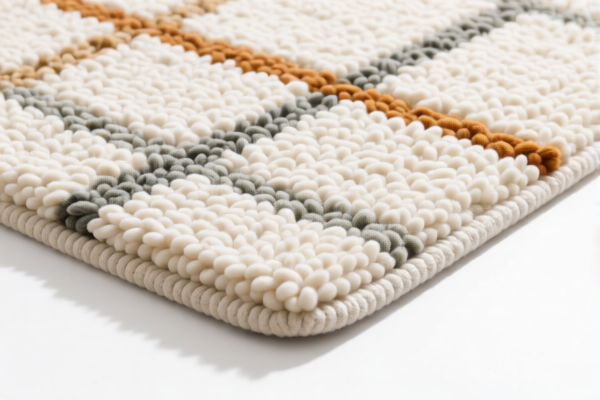
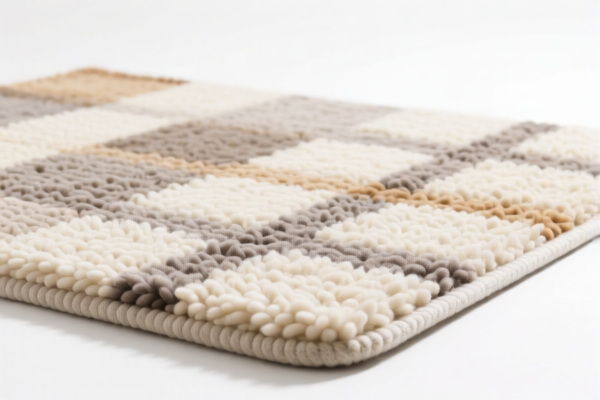
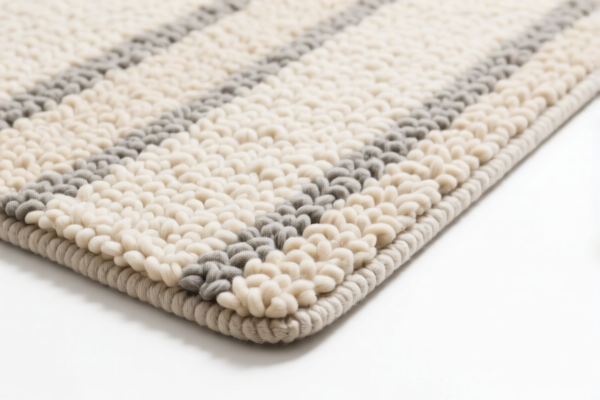
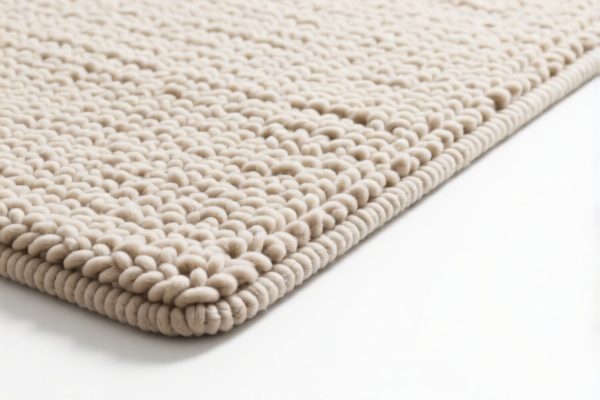
AI Analysis
🧶 Hand-Knotted Animal Hair Carpets (Non-Tufted/Non-Flocked & Unfinished)
🌐 HS Code Reference & Customs Clearance Guide | 2026 Latest Tariff Analysis | Professional Clearance Strategy
📌 I. Product Definition & Classification: What Exactly Are You Declaring?
The term "animal hair carpet, non-tufted, non-flocked, unfinished" points specifically to Hand-Knotted Carpets. In international trade, the method of construction is the single most critical factor for classification.
- Knotted (Hand-Knotted): Each knot is tied individually into the warp threads. This is a labor-intensive, traditional weaving method.
- NOT Tufted/Flocked: These are machine-made methods where yarn is pushed through a backing. Your product is explicitly excluded from these categories.
- Unfinished: The carpet is woven but lacks final finishing steps (like shearing, washing, or backing application). However, if it is "made up" (has edges finished or is ready for use), it may still be classified as a finished good depending on national interpretation. For HS Code purposes under Chapter 57, we look at the structure.
⚠️ Critical Distinction Point:
- If the pile is hand-inserted/knotted → It falls under 5701.
- If the pile is machine-tufted or glued/flocked → It falls under 5702, 5703, or 5704 (Not applicable here based on your description).
- Animal Hair Type Matters: "Fine animal hair" (Alpaca, Llama, Guanaco, Vicuña) vs. "Wool" vs. "Coarse Hair" (Camel, Horse) triggers different sub-codes.
📦 II. HS Code Classification Details (Based on Provided Data)
Based strictly on the <DATA> provided, here are the two applicable HS Codes for animal hair carpets. Note that the data implies a hierarchy based on the type of animal hair and the method of knotting.
| HS Code | Product Description | Key Differentiator | Tax Rate (Total) |
|---|---|---|---|
| 5701.10.16.00 | Hand-Knotted Alpaca/Llama Hair Carpets Carpets knotted, of wool or fine animal hair: In which the pile was hand-inserted or hand-knotted during weaving/knitting, with over 50% by weight of the pile being hair of alpaca, guanaco, huarizo, llama, misti, suri, or combinations thereof. |
✅ High-Tax Category Specific to premium South American camelid fibers (Alpaca/Llama) where >50% of pile weight is these specific hairs. |
25.0% (Base: 0% + Additional: 25%) |
| 5701.10.90.00 | Other Hand-Knotted Animal Hair Carpets Carpets knotted, of wool or fine animal hair: Other (e.g., Wool, Coarse Animal Hair, or Alpaca/Llama < 50% weight). |
✅ Low-Tax Category Includes wool, camel hair, horse hair, or mixed animal hair carpets that do not meet the specific >50% Alpaca/Llama criteria of the previous code. |
0.0% (Base: 0% + Additional: 0%) |
🔍 Important Note on "Unfinished":
The HS Code 5701 covers carpets "whether or not made up." An "unfinished" carpet that is still in the loom or immediately post-weaving (with raw edges) may sometimes be classified differently (e.g., as textile materials in Chapter 50-63) if it is not "made up." However, if it is a complete carpet piece, even if just cut, it typically falls under 5701. The data provided assumes these are complete carpet products.
💰 III. 2026 Tariff Rate Detailed Explanation
🎯 1. 5701.10.16.00 — Premium Alpaca/Llama Hand-Knotted Carpets
| Item | Detail |
|---|---|
| Base Tariff | 0.0% (Standard Most-Favored-Nation or General rate) |
| Additional Tariff | +25.0% (Likely Section 301 or IEEPA Additional Duties for Chinese Origin) |
| Total Tax | 25.0% |
| Applicability | Applies ONLY if the pile contains >50% by weight of Alpaca, Guanaco, Llama, Huarizo, Misti, or Suri hair. |
| Key Risk | Misclassification is the biggest risk. If your carpet is 60% Alpaca, you pay 25%. If it is 49% Alpaca, you likely fall under 5701.10.90.00 and pay 0%. |
📌 Explanation:
This high tariff reflects protectionist policies targeting specific luxury textile imports. The 25% is an additional duty on top of the base 0%. It is non-negotiable for eligible imports from China.
🎯 2. 5701.10.90.00 — Other Animal Hair Carpets (Wool, Coarse Hair, etc.)
| Item | Detail |
|---|---|
| Base Tariff | 0.0% |
| Additional Tariff | 0.0% |
| Total Tax | 0.0% |
| Applicability | Applies to: 1. Wool carpets. 2. Carpets with coarse animal hair (camel, horse). 3. Carpets with Alpaca/Llama hair < 50% by weight of the pile. 4. Mixed fibers where animal hair is not the dominant >50% component of the specific listed types. |
| Key Advantage | Duty-Free Entry |
📌 Explanation:
This is the "catch-all" for hand-knotted animal hair carpets that do not qualify for the specific Alpaca/Llama premium category. It offers significant cost savings.
🛠️ IV. Customs Clearance Practical Advice (Step-by-Step)
✅ 1. Documentation Checklist (Mandatory)
| Document | Required? | Why? |
|---|---|---|
| Detailed Product Description | ✔️ | Must state: "Hand-knotted," "Animal Hair," "Pile Weight Composition" (e.g., "60% Alpaca, 40% Wool"). |
| Fiber Composition Certificate | ✔️ | Critical! Issued by a third-party lab to prove the % weight of Alpaca/Llama vs. other hairs. Without this, Customs may default to the highest tax or reject. |
| Photos of Back & Front | ✔️ | Show the knotting method (hand-knotted) to rule out tufted/flocked. Show raw edges if "unfinished." |
| Commercial Invoice | ✔️ | Must clearly describe the item as "Hand-Knotted Carpet," NOT "Tufted Rug" or "Floor Mat." |
| Packing List | ✔️ | Include dimensions and weight. |
✅ 2. Classification Strategy & Tips
🔥 "Composition is King, Knotting is Queen!"
| Scenario | Recommended HS Code | Tax | Action |
|---|---|---|---|
| >50% Alpaca/Llama Hair | 5701.10.16.00 |
25% | Prepare for high duty. Verify origin for potential exemptions (rare). |
| <50% Alpaca/Llama Hair | 5701.10.90.00 |
0% | Optimize here! If possible, blend with wool or other fibers to drop Alpaca content below 50%. |
| Pure Wool | 5701.10.90.00 |
0% | Safe, low-risk classification. |
| Camel/Horse Hair | 5701.10.90.00 |
0% | Clearly label as "Coarse Animal Hair" to avoid confusion with "Fine Animal Hair." |
| Machine-Tufted | ❌ Not 5701 | Varies | Do NOT use these codes. Tufted carpets go to 5703. Using 5701 for tufted goods is fraud. |
✅ 3. Handling "Unfinished" Status
- If Truly Unfinished (in the loom or raw cut): Ensure the description states "Unfinished Hand-Knotted Carpet, Not Yet Sheared/Washed."
- Risk: Customs may classify it as a "textile fabric" rather than a "carpet." However, if it has a distinct carpet structure (thick pile, knots), it stays in 5701.
- Advice: Provide photos showing the knotting technique to prove it is a carpet structure, not just a flat weave or fabric.
🌍 V. Global Market Comparison (2026)
| Country | Recommended HS Code | Tariff | Notes |
|---|---|---|---|
| 🇺🇸 USA | 5701.10.16.00 |
25% | High additional duty for Alpaca/Llama. |
| 🇺🇸 USA | 5701.10.90.00 |
0% | Duty-free for wool/coarse hair. |
| 🇪🇺 EU | 5701.10 |
~4-6% | No Section 301-style penalties. Standard MFN rates apply. |
| 🇨🇳 China | 5701.10 |
0% | China often has lower import duties on these categories. |
| 🇬🇧 UK | 5701.10 |
~6% | Post-Brexit tariffs, no US-style penalties. |
📌 Conclusion:
The US market is the only one with a punitive 25% tariff for high-quality Alpaca/Llama carpets. To avoid this, consider: 1. Blending: Ensure Alpaca content is <50%. 2. Origin: If exported from a country with a Free Trade Agreement (FTA) with the US (e.g., Mexico, Canada), check for rules of origin exemptions. 3. Material: Use wool or camel hair instead of Alpaca if the market allows.
📌 VI. Common Errors & Pitfalls (Learn from Others' Mistakes)
❌ Error 1: Claiming "Alpaca" but the lab test shows 48% Alpaca.
👉 Result: Still classified under 5701.10.16.00 if Customs uses a rounding rule, OR rejected for inaccurate declaration.
✅ Fix: Be precise. If it's 49%, classify under 5701.10.90.00.
❌ Error 2: Calling it a "Rug" or "Mat" to avoid scrutiny.
👉 Result: Customs will inspect and reclassify, leading to delays and penalties.
✅ Fix: Use "Hand-Knotted Carpet" and provide photos.
❌ Error 3: Ignoring the "Unfinished" label.
👉 Result: If it's "made up" (edges finished), it's a finished good. If it's not, it might be classified differently.
✅ Fix: Be transparent. "Unfinished" does not automatically mean "Duty-Free."
🎯 VII. Conclusion: Strategic Pricing & Compliance
🎯 Key Takeaway:
"For Alpaca/Llama Carpets, every 1% of fiber composition changes your tax bill by 25%!"
✅ Action Plan: 1. Get a Lab Test: Know your exact fiber weight %. 2. Choose HS Code Wisely: If >50% Alpaca, budget for 25%. If <50%, aim for 0%. 3. Document Everything: Photos, invoices, and composition certificates must match perfectly. 4. Consider Blending: If feasible, blend Alpaca with wool to stay below the 50% threshold.
📣 Immediate Next Step:
📞 Consult a Customs Broker: Provide them with your fiber composition report.
🚀 Do Not Declare Without It: Misdeclaring a 60% Alpaca carpet as "Other" (5701.10.90.00) is a serious violation.
✨ Precision in Classification Saves 25% in Costs!
💼 Your carpet is more than a floor covering; it's a financial asset. Protect its value with accurate HS Codes.
Customer Reviews
About HS Code Classification
The Harmonized System (HS) is an internationally standardized nomenclature developed by the World Customs Organization (WCO) to classify traded products. Over 200 countries use the HS system as the basis for customs tariffs, trade statistics, and import/export regulations.
Each HS code follows a hierarchical structure:
- Chapter (2 digits) — Broad category of goods (e.g., Chapter 84: Machinery and Mechanical Appliances)
- Heading (4 digits) — More specific grouping within the chapter
- Subheading (6 digits) — Internationally standardized breakdown, used by all WCO member countries
- National subdivisions (8-10 digits) — Country-specific extensions for further classification, such as US HTSUS 10-digit codes
Correct HS code classification is essential for smooth customs clearance, accurate duty payment, and compliance with trade regulations. Misclassification can lead to customs delays, overpayment of duties, or penalties.
When importing from CN to US, the applicable tariff rates may include:
- Most-Favored-Nation (MFN) rate — The standard duty rate applied to WTO members
- General rate — Applied to countries without trade agreements
- Trade remedy duties — Additional tariffs such as Section 301 (anti-dumping), Section 232 (national security), or countervailing duties
The information provided on this page is for reference purposes only. For official classification, please consult with your local customs authority or a licensed customs broker.