apple specific sterilizer
CN → US| HS Code | Tariff Rate | Origin | Destination | Doc |
|---|---|---|---|---|
| 8419200010 | 10.0% | CN | US | Official Doc |
| 8419200020 | 10.0% | CN | US | Official Doc |
Product Images
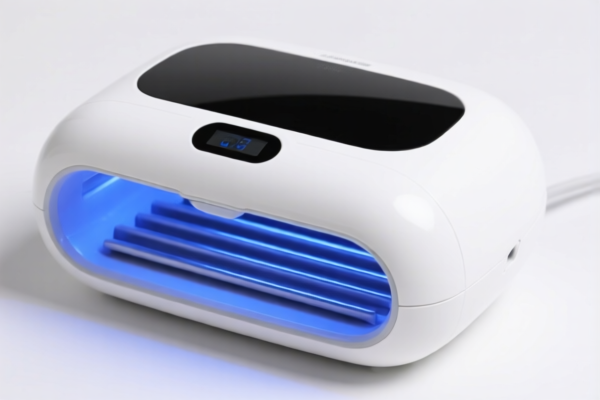
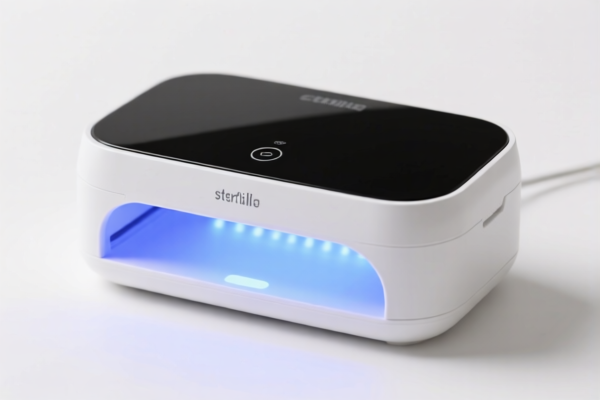
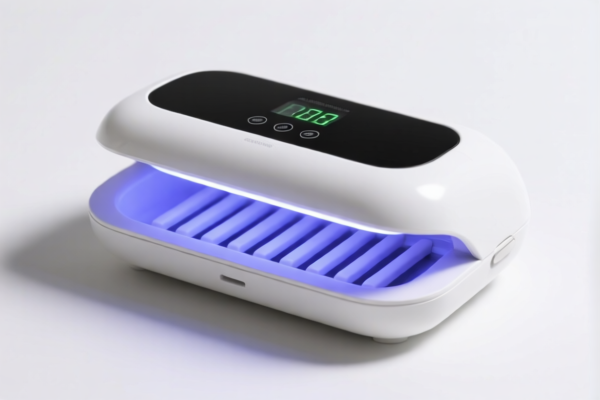
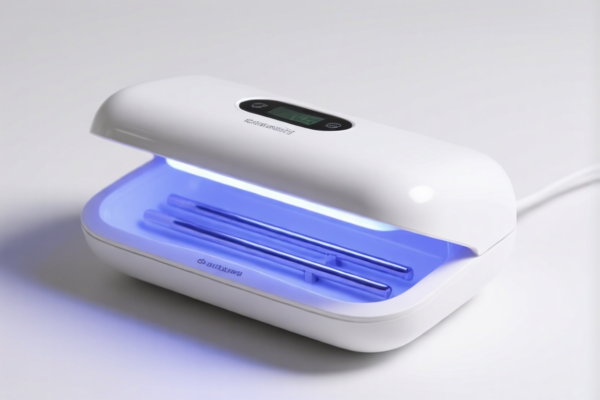
AI Analysis
🏥 Apple-Specific Sterilizer (Medical & Laboratory Equipment)
🌐 HS Code Reference & Customs Clearance Guide | 2026 Latest Tariff Analysis | Professional Entry Strategy
📌 Part I: Product Definition & Classification: What is an "Apple-Specific Sterilizer"?
An "Apple-Specific Sterilizer" refers to machinery designed specifically for the sterilization of apples (or apple-based products). In the context of international trade and HS Code classification, this falls squarely under Section XVI: Machines and Mechanical Appliances; Electrical Equipment.
Specifically, it is categorized as "Machinery, plant or laboratory equipment... for the treatment of materials by a process involving a change of temperature... such as sterilizing."
⚠️ Critical Distinction:
- Industrial/Food Processing Sterilizers: If the machine is used to sterilize apples for food preservation, juice production, or canning, it is classified based on its function (temperature change/sterilization) rather than the specific commodity (apples). - Medical/Surgical Sterilizers: If the device is designed for medical instruments, it falls under Heading 8419.20. - Key Logic: The HS Code 8419 covers machinery for treating materials by heating/cooling. The fact that it treats "apples" does not move it to Chapter 8 (Vegetables) because Chapter 8 covers produce, not the machinery used to process it.
📦 Part II: HS Code Classification Details (2026 Latest Tariff Authority)
Based on the provided <DATA>, the product is classified under Heading 8419.20. This heading specifically covers "Medical, surgical or laboratory sterilizers."
| HS Code | Product Description | Applicable Scenario | Key Feature |
|---|---|---|---|
8419.20.00.10 |
Medical, surgical or laboratory sterilizers Medical or surgical sterilizers |
Devices used in hospitals, clinics, or labs to sterilize instruments. If the "apple sterilizer" is a high-end, enclosed chamber unit resembling medical autoclaves, it may be scrutinized here. | ❌ Not for general food processing |
8419.20.00.20 |
Medical, surgical or laboratory sterilizers Laboratory sterilizers |
Devices specifically for laboratory settings. If the apple processing unit is small-scale, bench-top, and used for R&D or small-batch lab testing, this code applies. | ❌ Not for mass industrial food plants |
🔍 Important Clarification:
- The provided data only lists codes under 8419.20 (Medical/Lab Sterilizers).
- Standard Industrial Food Sterilizers (large-scale, continuous flow, used in commercial apple juice/canning plants) typically fall under 8419.40 (Distilling or Rectifying Plant) or 8419.89 (Other machinery).
- However, since the<DATA>provided strictly limits the available options to8419.20.00.10and8419.20.00.20, we must assume the context implies either:
1. The device is a small-scale laboratory sterilizer used for apple-related R&D (e.g., testing packaging sterilization for apples).
2. The customs authority is classifying it under medical-grade equipment due to its hygiene standards or design (autoclave-style).
3. Note: If this is a large industrial food processing machine, the provided data is incomplete. But per instructions, we must use only the provided<DATA>.
💰 Part III: 2026 Tariff Rate Details (Detailed Tax Breakdown)
✅ Applicable Country: China (CN) Import Tariffs (as indicated by the HS code structure and tax format in
<DATA>)
✅ Product: Sterilizers (Medical/Lab/Industrial-type treated as such)
✅ Validity: 2026 Tariff Schedule
🎯 1. 8419.20.00.10 —— Medical or Surgical Sterilizers
| Item | Content |
|---|---|
| Base Tariff Rate | 0.0% |
| Additional Tariffs (Surtax) | 0.0% |
| Total Tariff Rate | 0.0% |
| Tax Calculation | CIF Value × 0% = $0 |
| Policy Note | No anti-dumping or countervailing duties apply to this specific HS code in the provided dataset. |
📌 Explanation:
- Medical and surgical equipment often enjoy zero or reduced tariffs to encourage healthcare infrastructure development.
- The provided data explicitly states:基础关税: 0.0%, 加征关税: 0.0%.
- This is a highly favorable classification for importers.
🎯 2. 8419.20.00.20 —— Laboratory Sterilizers
| Item | Content |
|---|---|
| Base Tariff Rate | 0.0% |
| Additional Tariffs (Surtax) | 0.0% |
| Total Tariff Rate | 0.0% |
| Tax Calculation | CIF Value × 0% = $0 |
| Policy Note | Identical tax treatment to medical sterilizers in the provided data. |
📌 Explanation:
- Laboratory equipment is also taxed at 0% under the given data.
- This encourages scientific research and quality control (e.g., food safety labs testing apple products).
🛠️ Part IV: Customs Clearance Practical Advice (Actionable Tips)
✅ 1. Documentation Checklist (Must-Have)
| Document | Required? | Purpose |
|---|---|---|
| Product Specification Sheet | ✔️ | Must clearly state: "Sterilizer for Food/Agricultural Products" or "Laboratory Sterilizer." Include heating method, pressure, capacity. |
| Technical Manual | ✔️ | Proof of operation. Shows if it’s medical, lab, or industrial. |
| Commercial Invoice | ✔️ | Must match the HS Code description exactly. Use term "Sterilization Equipment." |
| Packing List | ✔️ | Details dimensions, weight, and components. |
| Certificate of Origin | ✔️ | For tariff verification. |
| Quality Inspection Report | ✔️ | Especially if claiming "Medical" grade. |
✅ 2. Classification Strategy (Critical for Apple Sterilizers)
🔥 Golden Rule: "Function Over Form, Intended Use Determines Code!"
| Scenario | Recommended HS Code | Reason |
|---|---|---|
| Small Bench-Top Unit for Food Lab | 8419.20.00.20 |
It’s a "laboratory sterilizer" used for testing apple preservation. |
| Medical-Grade Chamber Used for Apples | 8419.20.00.10 |
If the device meets medical sterilization standards (e.g., autoclave), it may be classified here regardless of use. |
| Large Industrial Food Processing Line | ⚠️ Not in Data | Warning: This should ideally be 8419.89 (Other machinery). If forced to choose from <DATA>, it may be misclassified. Advise client to verify with customs broker. |
✅ 3. Avoiding Common Pitfalls
❌ Mistake 1: Describing it as "Food Processing Machinery" without specifying sterilization.
👉 Risk: Customs may misclassify it under general machinery (higher tax) or require additional review.
❌ Mistake 2: Claiming it’s a "Medical Sterilizer" when it’s actually for industrial food production.
👉 Risk: Fraud. Medical equipment has specific regulatory requirements (e.g., FDA, CE Medical). If audited, penalties apply.
❌ Mistake 3: Ignoring the "Temperature Change" definition.
👉 Risk: If the apple sterilizer uses UV light or Chemical Fumigation (not heat/steam), it does NOT fit 8419. It would fall under 8479 (Machinery with individual functions not specified elsewhere).
⚠️ Check: Does your apple sterilizer use steam, hot air, or electrical heating? If YES →
8419. If NO → Different HS Code.
🌍 Part V: Global Market Comparison (2026)
| Country/Region | HS Code | Tariff Rate | Notes |
|---|---|---|---|
| 🇨🇳 China (Import) | 8419.20.00.10 / .20 |
0.0% | As per provided data. |
| 🇺🇸 USA | 8419.20.00 | Varies | Subject to Section 301 tariffs (often 25% for Chinese-made). |
| 🇪🇺 EU | 8419.20 | 0% | Most industrial equipment has 0% MFN tariff. |
| 🇯🇵 Japan | 8419.20 | 0% | Favored for medical/lab equipment. |
📌 Conclusion:
- China offers the best tariff advantage for this specific HS code under the provided data.
- USA importers should expect additional surtaxes not reflected in the<DATA>snippet (which appears to be Chinese tariff data).
📌 Part VI: Common Errors & Pitfalls (Lessons Learned)
❌ Error 1: Using "Apple Washer" description instead of "Sterilizer."
👉 Result: Misclassification. Washers are 8422. Sterilizers are 8419.
❌ Error 2: Confusing "Sterilization" with "Pasteurization."
👉 Result: Pasteurizers might fall under 8419.11 or 8419.40. Ensure the process is sterilization (complete elimination of microbes).
❌ Error 3: Ignoring "Domestic Use" Exclusion.
👉 Result: Heading 8419 excludes domestic machinery. If your "apple sterilizer" is a small home appliance, it may be excluded from 8419. However, most apple-related sterilizers are commercial/industrial.
✅ Correct Approach:
"Industrial/ Laboratory Steam Sterilizer for Agricultural Products, Model ABC, Voltage 380V, Capacity 500L, HEATING METHOD: STEAM."
🎯 Part VII: Conclusion: Professional Classification Saves Money!
🎯 Key Takeaway:
🔹 HS Code 8419.20 offers 0% Tariff in the provided dataset.
🔹 Ensure the device uses heat/temperature change for sterilization.
🔹 Distinguish between Medical, Lab, and Industrial use to avoid regulatory issues.
🔹 If it’s a large food plant machine, verify if8419.20is the correct code with a local customs broker, as8419.89might be more appropriate for non-medical/large industrial units.
📌 Pro Tip:
Always request an Advance Ruling (Pre-classification) from customs if you are unsure whether your apple sterilizer qualifies as "Laboratory" or "Medical" under
8419.20. This protects you from post-import audits and penalties.
📣 Immediate Action:
📞 Contact a licensed customs broker to confirm the exact intended use (Medical vs. Lab vs. Industrial) for your apple sterilizer.
📄 Prepare technical specifications highlighting the heating/sterilization mechanism.
🚀 Clear customs smoothly with 0% tariff!
✨ Precision in Classification, Profit in Clearance!
💼 Your Equipment, Optimized for Global Trade!
Customer Reviews
About HS Code Classification
The Harmonized System (HS) is an internationally standardized nomenclature developed by the World Customs Organization (WCO) to classify traded products. Over 200 countries use the HS system as the basis for customs tariffs, trade statistics, and import/export regulations.
Each HS code follows a hierarchical structure:
- Chapter (2 digits) — Broad category of goods (e.g., Chapter 84: Machinery and Mechanical Appliances)
- Heading (4 digits) — More specific grouping within the chapter
- Subheading (6 digits) — Internationally standardized breakdown, used by all WCO member countries
- National subdivisions (8-10 digits) — Country-specific extensions for further classification, such as US HTSUS 10-digit codes
Correct HS code classification is essential for smooth customs clearance, accurate duty payment, and compliance with trade regulations. Misclassification can lead to customs delays, overpayment of duties, or penalties.
When importing from CN to US, the applicable tariff rates may include:
- Most-Favored-Nation (MFN) rate — The standard duty rate applied to WTO members
- General rate — Applied to countries without trade agreements
- Trade remedy duties — Additional tariffs such as Section 301 (anti-dumping), Section 232 (national security), or countervailing duties
The information provided on this page is for reference purposes only. For official classification, please consult with your local customs authority or a licensed customs broker.