art grade cotton paper rolls
CN → US| HS Code | Tariff Rate | Origin | Destination | Doc |
|---|---|---|---|---|
| 4802613191 | 35.0% | CN | US | Official Doc |
| 4802612000 | 35.0% | CN | US | Official Doc |
| 4805911090 | 35.0% | CN | US | Official Doc |
| 4805911010 | 35.0% | CN | US | Official Doc |
| 4811906010 | 35.0% | CN | US | Official Doc |
Product Images
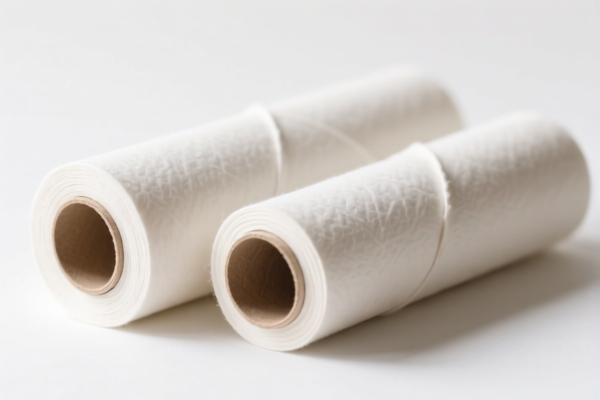
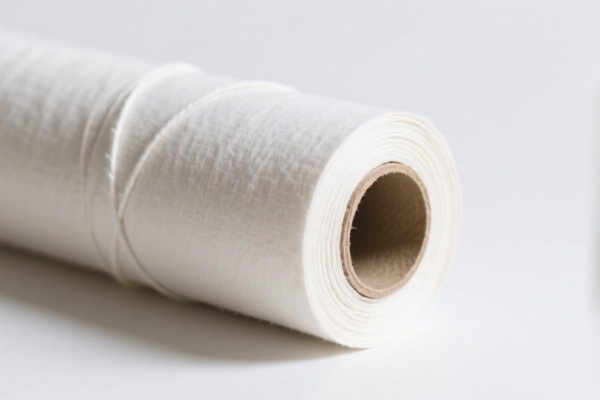
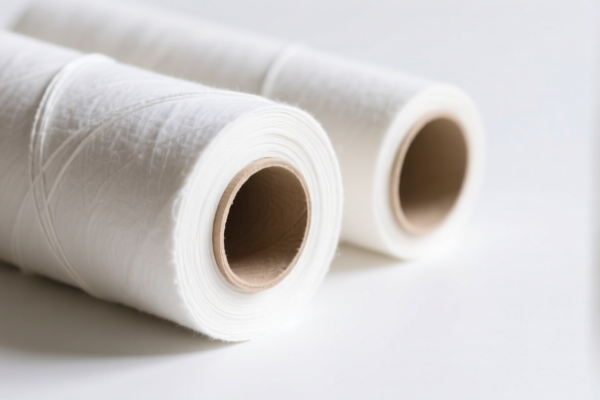

AI Analysis
🖨️ Art Grade Cotton Paper Rolls
🌐 HS Code Reference & Customs Clearance Guide | 2026 Latest Tariff Analysis | Professional Entry Strategy
📌 Part 1: Product Definition & Classification: Do You Really Understand "Cotton Paper"?
Art-grade cotton paper rolls are premium writing, printing, and graphic-purpose papers made from high-percentage cotton fibers. In international trade, their classification depends heavily on two factors:
1. Fiber Origin: Whether the paper contains fibers obtained by mechanical/chemi-mechanical processes (e.g., wood pulp) and the percentage thereof.
2. Coating & Surface Treatment: Whether it is coated with kaolin (China clay) or other inorganic substances.
⚠️ Key Distinction Points:
- If the paper is uncoated or only surface-decorated/printed but contains ≤10% mechanical/chemi-mechanical fibers → It falls under 4810.13.70.20.
- If the paper is light-weight coated (kaolin/inorganic coating) AND contains >10% mechanical/chemi-mechanical fibers → It falls under 4810.22.70.20.
- Crucial Note: Both codes specifically require that the paper contains ≥25% cotton fiber by weight to qualify for these specific subheadings in this context.
📦 Part 2: HS Code Classification Details (2026 Latest Tariff Authority Comparison)
| HS Code | Product Description | Key Features | Cotton Content Requirement |
|---|---|---|---|
4810.13.70.20 |
Paper/paperboard, coated (one/both sides) with kaolin/inorganic substances, no other coating. Used for writing/printing/graphic purposes. Not more than 10% by weight of total fiber content consists of fibers from mechanical/chemi-mechanical processes. In rolls. Other. | Low Mechanical Fiber Content. Typically used for high-quality art prints, archival drawing, or fine art reproduction where purity is key. | ≥25% Cotton (by weight) |
4810.22.70.20 |
Paper/paperboard, coated (one/both sides) with kaolin/inorganic substances, no other coating. Used for writing/printing/graphic purposes. More than 10% by weight of total fiber content consists of fibers from mechanical/chemi-mechanical processes. Light-weight coated paper. | Higher Mechanical Fiber Content. Often used for lighter weight art papers, sketching pads, or specific printing stocks where some bulk/cost reduction via mechanical pulp is acceptable. | ≥25% Cotton (by weight) |
🔍 Critical Reminder:
- Both codes apply to rolls of paper.
- Both codes require coating with kaolin/inorganic substances (even if minor or binder-added).
- Both codes strictly require ≥25% cotton fiber by weight for this specific 10-digit subheading structure in the provided data.
- The primary differentiator is the percentage of mechanical/chemi-mechanical fibers (≤10% vs. >10%).
💰 Part 3: 2026 Latest Tariff Rate Breakdown (Including Surcharges & Policy Add-ons)
✅ Applicable Country: United States (US)
✅ Country of Origin: China (CN)
✅ Effective Date: As per USITC regulations (current trade policy)
🎯 1. 4810.13.70.20 —— Art Grade Cotton Paper Rolls (≤10% Mechanical Fibers)
| Item | Content |
|---|---|
| Base Tariff Rate | 0.0% (ad valorem) |
| Additional Tariff (Section 301) | +25.0% |
| Total Tariff Rate | 25.0% |
| Tax Calculation | CIF Value × 25.0% |
| De Minimis Exemption Available? | ❌ No (Not eligible for low-value shipment exemptions) |
| Legal Basis Path | USITC:4810.13.70.20 → SECTION:301 → Footnote:Related to Chinese Origin |
📌 Explanation:
- The base tariff is 0% because coated paper of this kind generally enjoys low entry duties.
- The 25% additional tariff is applied due to Section 301 of the Trade Act of 1974, targeting specific Chinese imports.
- No other surcharges (like IEEPA 10%) are listed in the provided data for this HS code, so the total remains 25.0%.
- This is a significant cost factor that must be factored into pricing.
🎯 2. 4810.22.70.20 —— Light-Weight Coated Art Paper Rolls (>10% Mechanical Fibers)
| Item | Content |
|---|---|
| Base Tariff Rate | 0.0% (ad valorem) |
| Additional Tariff (Section 301) | +25.0% |
| Total Tariff Rate | 25.0% |
| Tax Calculation | CIF Value × 25.0% |
| De Minimis Exemption Available? | ❌ No |
| Legal Basis Path | USITC:4810.22.70.20 → SECTION:301 → Footnote:Related to Chinese Origin |
📌 Note:
- Identical tariff structure to4810.13.70.20.
- Despite being "light-weight coated," the origin-based surcharge dominates the cost.
- Even with higher mechanical fiber content, the cotton requirement (≥25%) keeps it in this premium bracket, attracting the same 25% duty.
🛠️ Part 4: Customs Clearance Practical Advice (Real-World Pitfall Avoidance Guide)
✅ 1. Required Documentation Checklist (All Mandatory)
| Document | Required | Notes |
|---|---|---|
| ✅ Product Specification Sheet | ✔️ | Must specify: % Cotton, % Mechanical Fibers, Coating Type (Kaolin/Inorganic), Weight (GSM), Roll Dimensions |
| ✅ Fiber Composition Statement | ✔️ | Critical! Must explicitly state: "Contains XX% Cotton, YY% Mechanical Fibers, ZZ% Other" to prove ≤10% or >10% classification |
| ✅ Product Photos (Roll Ends & Surface) | ✔️ | Show texture, coating, and any markings |
| ✅ Commercial Invoice | ✔️ | Clearly state: "Coated Art Grade Cotton Paper Rolls, HS Code 4810.13.70.20 or 4810.22.70.20, Chinese Origin" |
| ✅ Packing List | ✔️ | Detail roll count, weight, dimensions |
| ✅ Certificate of Origin (CO) | ✔️ | Required to confirm Chinese origin for Section 301 application |
| ✅ Material Safety Data Sheet (MSDS) | ✔️ | If coating chemicals are present, may be requested |
✅ 2. Declaration Tips (Key Mantras)
🔥 "Fiber % Decides Code, Coating Defines Type, Cotton ≥25% Is Mandatory!"
| Scenario | Correct Declaration | Wrong Action |
|---|---|---|
| Paper has ≤10% mechanical fibers + coated | 4810.13.70.20 |
Misdeclare as 4810.22.70.20 → Audit risk |
| Paper has >10% mechanical fibers + coated | 4810.22.70.20 |
Misdeclare as 4810.13.70.20 → Under-declaration penalty |
| Paper has <25% cotton | Not eligible for these codes | Force misclassification → Seizure/Fine |
| Paper is uncoated | Wrong HS Code | These codes require kaolin/inorganic coating |
✅ 3. Special Handling Cases
| Case | Handling Advice |
|---|---|
| Mixed Rolls (Different Fiber %) | Declare each roll separately with its correct HS Code. Do not average. |
| OEM Branded Art Paper | Provide customer contract + fiber analysis report. Avoid generic names. |
| Sample Shipments | Still subject to 25% duty. Not exempt. Declare fully. |
| Paper with Only Binder (No Kaolin) | If no inorganic coating, neither code applies. Likely 4802 or 4804. Verify coating composition. |
🌍 Part 5: Global Market Comparison (2026 Latest)
| Country/Region | Recommended HS Code | Tariff (CN Origin) | Key Requirement | Notes |
|---|---|---|---|---|
| 🇺🇸 USA | 4810.13.70.20 or 4810.22.70.20 |
25% | Fiber % Declaration | Section 301 applies. High cost. |
| 🇨🇳 China | 4810.13.70.20 or 4810.22.70.20 |
~5-8% | Fiber % Declaration | Lower base tariff, no Section 301. |
| 🇪🇺 EU | 4810.13 or 4810.22 |
0-6.5% | CE/REACH (if coated) | No additional surcharges. |
| 🇬🇧 UK | 4810.13 or 4810.22 |
0-6.5% | UKCA | Post-Brexit alignment with EU. |
| 🇯🇵 Japan | 4810.13 or 4810.22 |
3-5% | JIS Standards | Moderate duty, no surcharges. |
📌 Conclusion:
- USA has the highest effective tariff (25%) for Chinese-origin cotton art paper rolls due to Section 301.
- Fiber composition proof is critical. Misclassification can lead to back-duties, penalties, and shipment delays.
- Consider non-Chinese origins (e.g., Thailand, Vietnam) if targeting US market to avoid 25% surcharge.
📌 Part 6: Common Mistakes & Pitfall Guide (Lessons Learned)
❌ Mistake 1: Assuming "Cotton Paper" means low duty because of "cotton"
👉 Reality: It’s still subject to 25% Section 301 if from China. The 25% is not waived by cotton content.
❌ Mistake 2: Confusing 4810.13 and 4810.22 based on "weight" alone
👉 Reality: 4810.22 is for light-weight coated paper with >10% mechanical fibers. 4810.13 is for ≤10% mechanical fibers. Fiber % is the key, not just weight.
❌ Mistake 3: Failing to declare coating type
👉 Reality: Both codes require kaolin/inorganic coating. If uncoated, wrong code. Expect customs interrogation.
❌ Mistake 4: Not providing fiber composition report
👉 Reality: Customs may reject classification without proof of ≤10% or >10% mechanical fiber content. Demand third-party lab report.
✅ Correct Declaration Example:
"Coated Art Grade Paper Rolls, 100% Kaolin-Coated, 25% Cotton Fiber, 70% Mechanical Pulp, 5% Other Fibers, 120 GSM, 1m Width, HS Code 4810.22.70.20, Origin: China"
🎯 Part 7: Conclusion: Precision in Classification Saves Money!
🎯 Remember the Mantra:
🔹 "Coating + Cotton ≥25% + Fiber % = Code Choice"
🔹 "25% Duty for CN Origin, No Exemptions, Prove Your Fibers!"
🔹 "≤10% Mechanical → .13, >10% Mechanical → .22, Don’t Guess!"
📌 Pro Tip:
- If your paper has <25% cotton, it does not qualify for these specific 10-digit codes in this data set. Re-evaluate HS Code (e.g.,
4802.56etc.).- Pre-Ruling Request: Submit a binding ruling request to CBP before shipment to lock in HS Code and avoid disputes.
- Supply Chain Diversification: For US-bound art paper, consider sourcing from non-China origins to avoid 25% surcharge.
📣 Immediate Action:
📞 Verify Fiber % with Lab Report → Select Correct HS Code → Prepare Full Documentation → Ship with Confidence
🚀 Avoid Customs Delays, Penalties, and Unexpected Costs!
✨ Professional Customs Clearance Starts with Accurate Classification!
💼 Your Profit Margin Depends on Correct Duty Calculation!
Customer Reviews
About HS Code Classification
The Harmonized System (HS) is an internationally standardized nomenclature developed by the World Customs Organization (WCO) to classify traded products. Over 200 countries use the HS system as the basis for customs tariffs, trade statistics, and import/export regulations.
Each HS code follows a hierarchical structure:
- Chapter (2 digits) — Broad category of goods (e.g., Chapter 84: Machinery and Mechanical Appliances)
- Heading (4 digits) — More specific grouping within the chapter
- Subheading (6 digits) — Internationally standardized breakdown, used by all WCO member countries
- National subdivisions (8-10 digits) — Country-specific extensions for further classification, such as US HTSUS 10-digit codes
Correct HS code classification is essential for smooth customs clearance, accurate duty payment, and compliance with trade regulations. Misclassification can lead to customs delays, overpayment of duties, or penalties.
When importing from CN to US, the applicable tariff rates may include:
- Most-Favored-Nation (MFN) rate — The standard duty rate applied to WTO members
- General rate — Applied to countries without trade agreements
- Trade remedy duties — Additional tariffs such as Section 301 (anti-dumping), Section 232 (national security), or countervailing duties
The information provided on this page is for reference purposes only. For official classification, please consult with your local customs authority or a licensed customs broker.