art prints
CN → US| HS Code | Tariff Rate | Origin | Destination | Doc |
|---|---|---|---|---|
| 4911914040 | 17.5% | CN | US | Official Doc |
| 4911912020 | 10.0% | CN | US | Official Doc |
Product Images
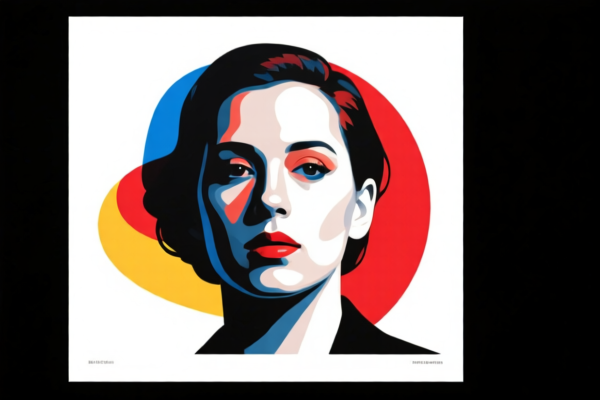

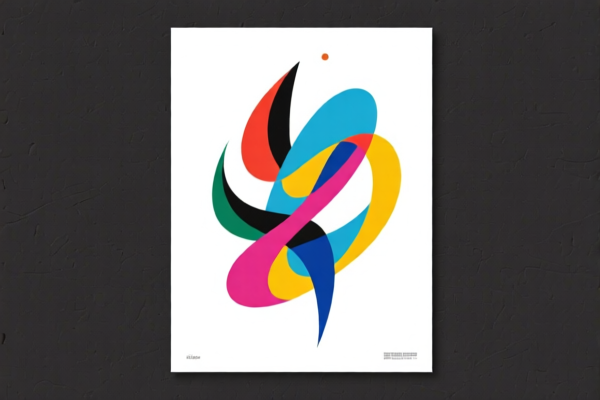

AI Analysis
🎨 Art Prints & Printed Photographs (Visual Merchandise)
🌐 HS Code Reference & Customs Clearance Guide | 2024/2025 Latest Tariff Analysis | Professional Clearance Strategy
📌 I. Product Definition & Classification: What Exactly Are "Art Prints"?
In international trade, "Art Prints" (including posters, lithographs, and photographs) are broadly categorized under Chapter 49: Printed Books, Newspapers, Pictures and Other Products of the Printing Industry. However, the specific HS Code and resulting Tax Rate depend heavily on two critical factors: 1. Manufacturing Process: How was it printed? (e.g., Lithograph vs. Digital/Other) 2. Physical Characteristics: Is it on paper? What is its thickness?
The provided <DATA> highlights two distinct classifications for imported prints, primarily driven by the production method (Lithography vs. Others) and tariff policies.
⚠️ Key Distinction Point:
- Lithographs (Traditional offset printing on paper/board) have specific sub-categories based on thickness and type (e.g., Posters). - Other Prints (Digital, inkjet, screen prints, etc.) fall under "Other" categories. - Age Restriction: The data specifies prints "Printed not over 20 years at time of importation." This generally excludes antiques (20+ years old), which may fall under Chapter 97 (Works of Art).
📦 II. HS Code Classification Details (Based on Provided Data)
| HS Code | Product Description | Applicable Scenario | Key Determinant |
|---|---|---|---|
4911.91.40.40 |
Other Printed Matter: Pictures, designs, photographs (Other method) | Digital art prints, Inkjet posters, Photogravures, Digital reproductions | Not Lithographs; "Other" production method |
4911.91.20.20 |
Other Printed Matter: Lithographs on paper/board, Posters (<0.51 mm thick) | Traditional Offset Lithograph Posters, Art Posters | Lithograph + Poster + <0.51 mm Thickness |
🔍 Important Note:
- Both codes apply to items printed not over 20 years ago. - If your product is an original hand-made painting, it is NOT an art print and falls under Chapter 97. These codes are for reproductions. - Thickness Matters: For Lithographs, being under 0.51 mm is crucial for classification as a "Poster."
💰 III. 2024/2025 Latest Tariff Rate Breakdown
✅ Scope: Based on the provided
<TAX>data.
✅ Context: The tax details indicate a mix of Base Tariff and Additional/Retaliatory Tariffs (likely reflecting US-China trade tensions or specific country-of-origin rules).
🎯 1. 4911.91.40.40 — "Other" Printed Pictures/Designs (Non-Litho)
| Item | Content |
|---|---|
| Product | Other printed matter (e.g., digital prints, non-lithographic photographs) |
| Base Tariff | 0.0% |
| Additional Tariff | 7.5% |
| Total Tax Rate | 7.5% |
| Tax Detail | "Base Tariff: 0.0%, Additional Tariff: 7.5%" |
📌 Explanation:
- While the base WTO tariff is 0%, an additional tariff of 7.5% applies. - This typically reflects Section 301 tariffs or specific country-of-origin surcharges (often applied to Chinese imports in US customs contexts). - Cost Impact: You must budget for 7.5% of the CIF (Cost, Insurance, Freight) value.
🎯 2. 4911.91.20.20 — Lithograph Posters (Thin Paper)
| Item | Content |
|---|---|
| Product | Lithographs on paper/paperboard, thickness <0.51mm, classified as Posters |
| Base Tariff | 0.0% |
| Additional Tariff | 0.0% |
| Total Tax Rate | 0.0% |
| Tax Detail | "Base Tariff: 0.0%, Additional Tariff: 0.0%" |
📌 Explanation:
- This code enjoys a duty-free (0%) rate under the provided data. - Why the difference? Lithographic posters (especially thin ones) are often treated as standard printed matter with lower strategic value, thus escaping the additional surcharges applied to "other" high-value art reproductions. - Strategic Advantage: If your product qualifies as a Lithograph Poster <0.51mm, you save 7.5% in tariffs compared to other print types.
🛠️ IV. Customs Clearance Operational Advice (Avoid Pitfalls)
✅ 1. Documentation Checklist (Non-Negotiable)
| Document | Required? | Purpose |
|---|---|---|
| ✅ Commercial Invoice | ✔️ | Must clearly state: "Art Prints," "Lithograph Poster," or "Digital Print." Avoid vague terms like "Decoration." |
| ✅ Product Description | ✔️ | Specify: Material (Paper/Cardboard), Printing Method (Litho/Digital), Thickness (<0.51mm for Posters), and Date of Production. |
| ✅ Certificate of Origin | ✔️ | To determine applicability of additional tariffs. |
| ✅ Photos of Product | ✔️ | Show texture and edges to prove it is not a painting (Chapter 97) but a print. |
| ✅ Thickness Measurement | ✔️ | Critical for 4911.91.20.20. If >0.51mm, it may not qualify as a "Poster" under this specific sub-heading, potentially shifting risk. |
✅ 2. Declaration Strategy (Key Mantra)
🔥 "Litho Poster <0.51mm = 0% Tax! Other Prints = 7.5% Tax!"
| Scenario | Recommended HS Code | Tax Rate | Reason |
|---|---|---|---|
| Traditional Offset Poster (Paper, <0.51mm) | 4911.91.20.20 |
0.0% | Qualifies as Lithograph Poster |
| Digital Inkjet Art Print (Canvas/Paper) | 4911.91.40.40 |
7.5% | Does not fit Lithograph/Poster definition |
| Heavy Cardstock Print (>0.51mm) | Risk of Misclassification | Check Other Codes | May not qualify as "Poster" under 4911.91.20.20 |
| Vintage Art (>20 years old) | Chapter 97 | Varies | Excluded by "Not over 20 years" clause |
✅ 3. Special Handling Tips
| Situation | Handling Advice |
|---|---|
| Mixed Shipments | If you ship both Litho Posters and Digital Prints in one container, declare separately. Do not mix under one HS code to avoid full shipment audit. |
| Thickness Verification | Provide a lab test report or manufacturer spec sheet confirming thickness <0.51mm for litho posters. Customs may measure upon arrival. |
| Origin Labeling | Clearly mark the Country of Origin. If the 7.5% tariff is origin-specific (e.g., China), ensure proper declaration to avoid penalties for misdeclaration. |
| "Posters" Definition | Ensure the item is indeed a "Poster" (large single sheet, for display). Small book plates or maps might fall under different sub-headings. |
🌍 V. Global Market Comparison (Hypothetical Context)
| Market | Recommended HS Code | Est. Tariff | Notes |
|---|---|---|---|
| 🇺🇸 USA (Based on Data) | 4911.91.20.20 |
0.0% | Litho Posters <0.51mm are duty-free |
| 🇺🇸 USA (Based on Data) | 4911.91.40.40 |
7.5% | Other prints incur additional tariff |
| 🇪🇺 EU | 4911.91.00 |
Varies (0-6%) | EU does not typically apply Section 301-style tariffs |
| 🇨🇳 China (Export) | 4911.91.00 |
0% | China often exports with low VAT rebate |
📌 Conclusion:
- The 0% tariff for4911.91.20.20is a significant competitive advantage. - If you are producing Digital Prints (e.g., Giclée on canvas), be prepared for the 7.5% additional cost.
📌 VI. Common Mistakes & Pitfalls (Blood Lessons)
❌ Mistake 1: Labeling a Digital Print as a "Lithograph" to get 0% tax.
👉 Consequence: Customs audit finds mismatch in printing method → Fines + Back Taxes + Audit.
❌ Mistake 2: Shipping Art Prints >20 years old under this code.
👉 Consequence: Incorrect classification (should be Chapter 97) → Delay, Seizure, or Penalty.
❌ Mistake 3: Ignoring Thickness for Litho Posters.
👉 Consequence: If >0.51mm, 4911.91.20.20 is invalid → Risk of reclassification to "Other" → 7.5% Tax Hit.
✅ Correct Practice:
"100% Cotton Paper, Offset Lithograph Poster, 24x36 inch, Thickness 0.4mm, Printed 2023, Art Reproduction"
🎯 VII. Conclusion: Smart Classification, Maximum Savings!
🎯 Remember the Mantra:
🔹 "Litho Poster <0.51mm? Zero Tax! Digital Print? Seven-Five Percent!"
🔹 "Don't Call Digital 'Litho', Don't Ship Antiques Here!"
📌 Pro Tip:
If your product is hand-painted, it is NOT an art print. Do not use these codes. Use 9701 (Drawings) or 9702 (Engravings). Misclassification can lead to severe penalties.
📣 Immediate Action:
📞 Verify Printing Method & Thickness with your manufacturer.
📄 Prepare Precise Descriptions for Customs.
🚀 Optimize your HS Code to secure the 0% rate if eligible!
✨ Professional Clearance Starts with Accurate Classification!
💼 Every Percent Saved is Pure Profit!
Customer Reviews
About HS Code Classification
The Harmonized System (HS) is an internationally standardized nomenclature developed by the World Customs Organization (WCO) to classify traded products. Over 200 countries use the HS system as the basis for customs tariffs, trade statistics, and import/export regulations.
Each HS code follows a hierarchical structure:
- Chapter (2 digits) — Broad category of goods (e.g., Chapter 84: Machinery and Mechanical Appliances)
- Heading (4 digits) — More specific grouping within the chapter
- Subheading (6 digits) — Internationally standardized breakdown, used by all WCO member countries
- National subdivisions (8-10 digits) — Country-specific extensions for further classification, such as US HTSUS 10-digit codes
Correct HS code classification is essential for smooth customs clearance, accurate duty payment, and compliance with trade regulations. Misclassification can lead to customs delays, overpayment of duties, or penalties.
When importing from CN to US, the applicable tariff rates may include:
- Most-Favored-Nation (MFN) rate — The standard duty rate applied to WTO members
- General rate — Applied to countries without trade agreements
- Trade remedy duties — Additional tariffs such as Section 301 (anti-dumping), Section 232 (national security), or countervailing duties
The information provided on this page is for reference purposes only. For official classification, please consult with your local customs authority or a licensed customs broker.