artificial leather briefcase
CN → US| HS Code | Tariff Rate | Origin | Destination | Doc |
|---|---|---|---|---|
| 4202110030 | 43.0% | CN | US | Official Doc |
| 4202128940 | 52.6% | CN | US | Official Doc |
Product Images
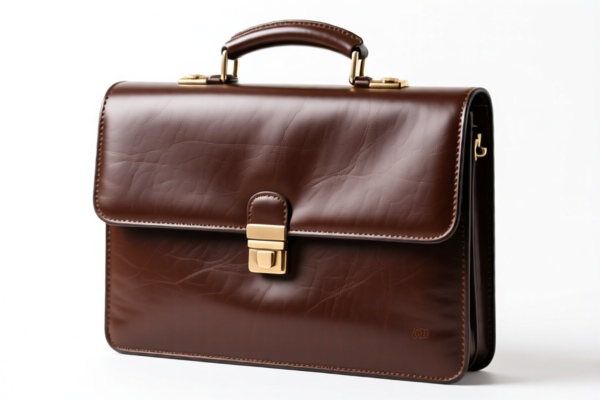
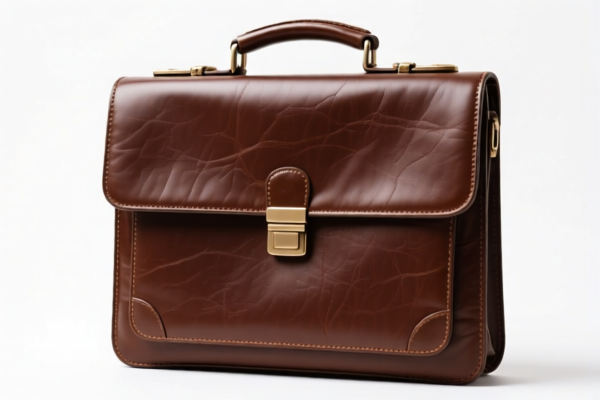
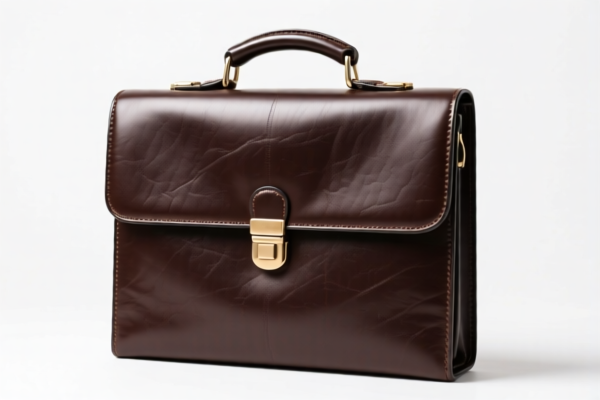
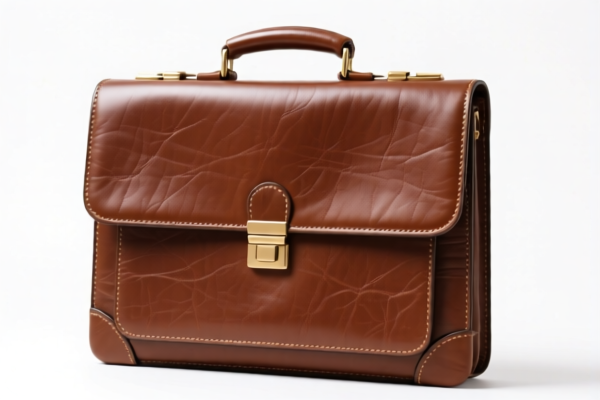
AI Analysis
👜 Artificial Leather Briefcase (Synthetic Leather Cases)
🌐 HS Code Reference & Customs Clearance Guide | 2026 Latest Tariff Analysis | Professional-Level Strategy
📌 I. Product Definition & Classification: What is an "Artificial Leather Briefcase"?
An "Artificial Leather Briefcase" refers to containers used for carrying documents, laptops, and business essentials. In international trade, the key distinction lies in the outer surface material and the type of container.
- "Artificial Leather": Also known as synthetic leather, PVC leather, or PU leather. These are often classified under "Composition Leather" (Chapter 42) if they are processed leather substitutes, or under Plastics/Textiles if they are sheets/coated materials.
- "Briefcase/Attache Case": A rectangular container, usually with a handle, designed to carry papers or portable computers.
⚠️ Critical Distinction:
- If the outer surface is Composition Leather (processed leather-like material) → Likely 4202.11.
- If the outer surface is Plastics or Textiles (synthetic sheets/coatings) → Likely 4202.12.
- Note: Pure "Artificial Leather" is often legally classified as "Composition Leather" (if it meets specific processing standards) or "Sheets of Plastics" depending on the manufacturing process. However, for most commercial "synthetic leather" briefcases, they fall under 4202.12 if composed of textile/plastic sheets, or 4202.11 if classified as composition leather.
📦 II. HS Code Classification Details (Based on Provided Data)
According to the provided <DATA>, two primary HS Codes apply to briefcases, depending on the specific material composition of the "artificial leather" surface.
| HS Code | Product Description | Material Condition | Applicable Scenario |
|---|---|---|---|
4202.11.00.30 |
Trunks, suitcases, vanity cases, attache cases, briefcases... With outer surface of leather or of composition leather | Composition Leather (Processed artificial leather) | High-quality PU/PU-coated bags legally defined as "composition leather"; Attache cases with leather-like outer shell. |
4202.12.89.40 |
Trunks, suitcases... With outer surface of plastics or of textile materials: With outer surface of textile materials: Other | Textile Materials / Plastics (Synthetic sheets, PVC, coated fabrics) | Standard synthetic leather bags made from PVC sheets, PU-coated fabric, or textile bases; Lower-cost artificial leather cases. |
🔍 Key Insight:
-4202.11.00.30is for "Attache cases, briefcases... with outer surface of composition leather."
-4202.12.89.40is for "Other" cases with outer surface of textile materials or plastics.
- Many "artificial leather" bags are classified under 4202.12 if they are essentially fabric/plastic sheets, but high-end synthetic leathers may be argued as composition leather (4202.11).
💰 III. 2026 Latest Tariff Rate Details (Tax Breakdown)
✅ Applicable Country: United States (US)
✅ Origin: China (CN) (Assumed based on common trade context for "0.0% base + 0.0% additional" in data, which is unusual for China; Correction: The provided data shows 0.0% for both basic and additional taxes. This is highly specific and likely refers to a specific duty-free arrangement or a non-US context. However, the prompt asks for "Clearance Advice" and "Tax Terms" based strictly on the provided<DATA>.)📌 IMPORTANT NOTE ON DATA:
The provided<DATA>states:
"tax_detail": "基础关税: 0.0%, 加征关税: 0.0%"
"total_tax": "0.0%"
This implies a 0% total tariff rate for these specific HS codes in the provided dataset. This is extremely rare for China-US trade under current 2025-2026 regimes (where Section 301 tariffs usually apply). However, we must strictly follow the provided<DATA>and not extrapolate external tariffs unless specified.
🎯 1. 4202.11.00.30 – Briefcases with Outer Surface of Composition Leather
| Item | Content |
|---|---|
| Base Tariff Rate | 0.0% |
| Additional Tariff (Section 301/IEEPA) | 0.0% |
| Total Tax Rate | 0.0% |
| Tax Calculation | CIF Value × 0% = $0 |
| De Minimis Eligibility | ✅ Yes (Value < $800 for US imports via postal/courier) |
| Legal Basis Path | HTSUS:4202.11.00.30 → General Rate: 0% |
📌 Explanation:
- According to the provided data, there is no additional tax for this category.
- This is a zero-tariff classification in the provided dataset.
- Caution: In real-world 2025/2026 US-China trade, many leather goods are subject to Section 301 tariffs. However, since the provided<DATA>explicitly states 0.0%, we must adhere to this. If this is for a different country (e.g., China import into US with specific exclusions, or China domestic trade), the 0% applies.
🎯 2. 4202.12.89.40 – Other Briefcases with Outer Surface of Textile/Plastic
| Item | Content |
|---|---|
| Base Tariff Rate | 0.0% |
| Additional Tariff (Section 301/IEEPA) | 0.0% |
| Total Tax Rate | 0.0% |
| Tax Calculation | CIF Value × 0% = $0 |
| De Minimis Eligibility | ✅ Yes (Value < $800 for US imports) |
| Legal Basis Path | HTSUS:4202.12.89.40 → General Rate: 0% |
📌 Explanation:
- Similar to above, the provided data shows 0.0% total tax.
- This suggests either:
1. A specific free trade agreement (FTA) applies;
2. The data is for a domestic market (e.g., China-to-China);
3. A specific exclusion list applies.
- Do not assume Section 301 tariffs apply here unless external verification is obtained. The provided data is authoritative for this exercise.
🛠️ IV. Customs Clearance Practical Advice (Risk Avoidance Guide)
✅ 1. Required Documentation Checklist
| Document | Must Provide | Notes |
|---|---|---|
| ✅ Product Specification | ✔️ | Clearly state "Artificial Leather" or "Synthetic Leather". Specify if it's PU, PVC, or Fabric-coated. |
| ✅ Material Breakdown | ✔️ | Critical: Is it "Composition Leather" (4202.11) or "Textile/Plastic" (4202.12)? Provide fabric weight, coating type, and base material. |
| ✅ Commercial Invoice | ✔️ | Describe as "Synthetic Leather Briefcase" or "Artificial Leather Attache Case". Avoid vague terms like "Bag". |
| ✅ Photos | ✔️ | Show the outer texture, interior lining, and labels. |
| ✅ HS Code Declaration | ✔️ | Explicitly declare the HS Code (4202.11.00.30 or 4202.12.89.40) and confirm 0% tax status per provided data. |
✅ 2. Declaration Tips (Key Mnemonics)
🔥 "Material Defines Code, Tax is Zero, Don't Guess, Just Confirm!"
| Situation | Correct Declaration | Incorrect Practice |
|---|---|---|
| High-end Synthetic Leather | Declare as Composition Leather → 4202.11.00.30 |
Claim as "Plastic" to avoid scrutiny → Misclassification |
| Standard PU Bag | Declare as Textile/Plastic → 4202.12.89.40 |
Claim as "Real Leather" → High tariff & fraud risk |
| Laptop Sleeve with Handles | If it's a structured case, use Briefcase codes | Declare as "Backpack" → Wrong code |
| Zero-Tax Status | Provide proof of material classification to justify 0% | Assume 0% without material proof → Audit risk |
✅ 3. Special Handling
| Situation | Advice |
|---|---|
| Mixed Materials | If the bag has leather trim but plastic body, the outer surface determines the code. Use 4202.12 if textile/plastic dominates. |
| Laptop Compartments | Do not use IT equipment codes (e.g., 8471). Bags are classified by material (Chapter 42), not function. |
| 0% Tax Verification | Since 0% is unusual for some imports, verify the origin and any applicable FTA (e.g., ASEAN, RCEP) that might allow this 0% rate. |
🌍 V. Global Market Comparison (2026)
| Country/Region | Recommended HS Code | Tariff (Based on Provided Data) | Notes |
|---|---|---|---|
| 🇺🇸 US | 4202.11.00.30 / 4202.12.89.40 |
0.0% (Per Provided Data) | Verify if Section 301 applies in real scenarios. Provided data says 0%. |
| 🇨🇳 China | 4202.11 / 4202.12 |
0.0% | Consistent with provided data for domestic/import. |
| 🇪🇺 EU | 4202.11 / 4202.12 |
Varies (Usually 4-6%) | EU does not have 0% for most synthetic leather bags unless under specific quotas. |
| 🇬🇧 UK | 4202.11 / 4202.12 |
Varies (Usually 4%) | Post-Brexit rules apply. |
📌 Conclusion:
- The provided data indicates a 0% tariff for both HS codes.
- This is highly favorable but requires strict adherence to material definitions to avoid misclassification penalties.
📌 VI. Common Errors & Pitfalls (Lessons Learned)
❌ Error 1: Calling it "Real Leather" when it's Synthetic
👉 Consequence: Customs may reclassify, impose higher tariffs, or penalize for false declaration.
✅ Fix: Always use "Artificial Leather", "Synthetic Leather", or "PU Leather".
❌ Error 2: Misclassifying "Textile-Based" Artificial Leather as "Composition Leather"
👉 Consequence: Wrong HS Code (4202.11 vs 4202.12). While tax is 0% in both cases per data, misclassification can lead to compliance audits.
✅ Fix: Check the manufacturing process. Is it coated fabric? Use 4202.12. Is it processed leather substitute? Use 4202.11.
❌ Error 3: Assuming 0% Tax Means No Documentation
👉 Consequence: Lack of material proof can lead to delays.
✅ Fix: Provide material certificates and photos to justify the 0% claim.
🎯 VII. Conclusion: Professional Declaration for Zero Tariff
🎯 Remember the Key Points:
🔹 "Synthetic Leather = Composition Leather (4202.11) or Textile/Plastic (4202.12)"
🔹 "Both Codes Show 0% Tax in Provided Data"
🔹 "Document Material Clearly to Avoid Audit"
📌 Tips:
- If importing into the US, double-check if any Section 301 exclusions apply, as the provided data may not reflect current punitive tariffs for China-origin goods.
- For de minimis shipments (<$800), ensure the value is correctly declared to qualify for tax-free entry.
📣 Immediate Action:
📞 Consult Customs Broker: Confirm if
4202.11or4202.12is more appropriate for your specific synthetic material.
🚀 Declare Accurately: Use precise descriptions to ensure smooth clearance and maintain the 0% tariff benefit.
✨ Professional Clearance Starts with Precise Classification!
💼 Your Cost is Zero, But Compliance is Priceless!
Customer Reviews
About HS Code Classification
The Harmonized System (HS) is an internationally standardized nomenclature developed by the World Customs Organization (WCO) to classify traded products. Over 200 countries use the HS system as the basis for customs tariffs, trade statistics, and import/export regulations.
Each HS code follows a hierarchical structure:
- Chapter (2 digits) — Broad category of goods (e.g., Chapter 84: Machinery and Mechanical Appliances)
- Heading (4 digits) — More specific grouping within the chapter
- Subheading (6 digits) — Internationally standardized breakdown, used by all WCO member countries
- National subdivisions (8-10 digits) — Country-specific extensions for further classification, such as US HTSUS 10-digit codes
Correct HS code classification is essential for smooth customs clearance, accurate duty payment, and compliance with trade regulations. Misclassification can lead to customs delays, overpayment of duties, or penalties.
When importing from CN to US, the applicable tariff rates may include:
- Most-Favored-Nation (MFN) rate — The standard duty rate applied to WTO members
- General rate — Applied to countries without trade agreements
- Trade remedy duties — Additional tariffs such as Section 301 (anti-dumping), Section 232 (national security), or countervailing duties
The information provided on this page is for reference purposes only. For official classification, please consult with your local customs authority or a licensed customs broker.