artificial leather pen holder
CN → US| HS Code | Tariff Rate | Origin | Destination | Doc |
|---|---|---|---|---|
| 4205008000 | 35.0% | CN | US | Official Doc |
| 4205004000 | 36.8% | CN | US | Official Doc |
| 3926909989 | 22.8% | CN | US | Official Doc |
Product Images
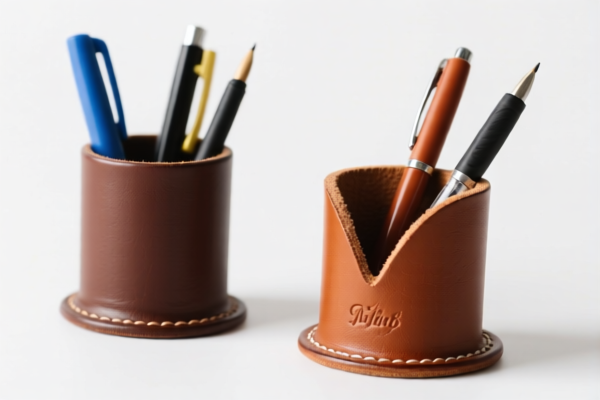
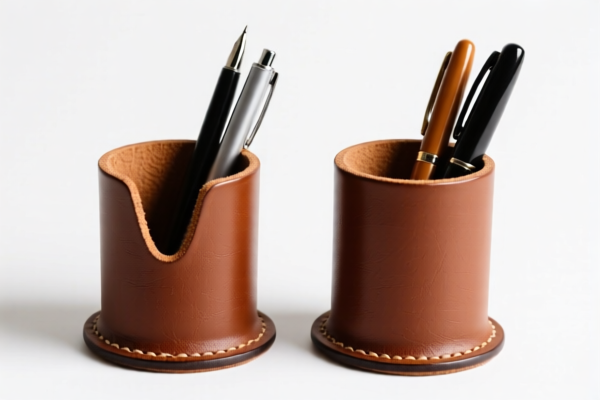
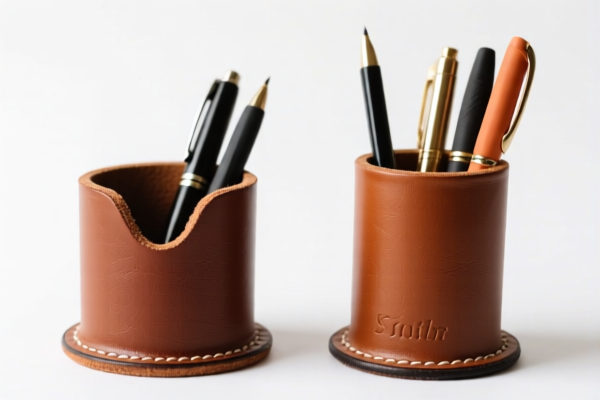
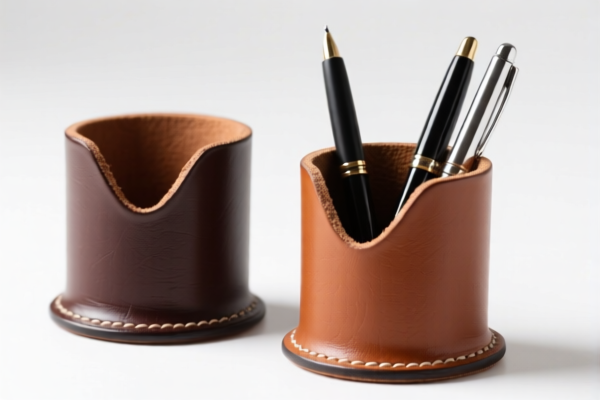
AI Analysis
✒️ Artificial Leather Pen Holder
🌐 HS Code Reference & Customs Clearance Guide | 2026 Latest Tariff Analysis | Professional Level Clearance Strategy
📌 Part 1: Product Definition and Classification: Do You Really Understand "Artificial Leather Pen Holder"?
An Artificial Leather Pen Holder is a common office accessory used to organize writing instruments. In international trade, its classification depends heavily on the specific material composition (whether it is strictly classified as "leather goods" or "plastic/synthetic resin products") and its functional design.
⚠️ Key Distinction Point:
- If classified as "Leather Goods" (Chapter 42): The focus is on the surface material resembling leather.
- If classified as "Plastic/Synthetic Resin" (Chapter 39): The focus is on the polymer base or synthetic nature of the artificial leather.
📦 Part 2: HS Code Classification Details (2026 Latest Tariff Authority Comparison)
Based on the provided data, here are the three potential HS Code classifications for an Artificial Leather Pen Holder:
| HS Code | Product Description | Basis for Classification |
|---|---|---|
4205.00.80.00 |
Artificial Leather Pen Holder classified as leather goods. | Treated as an article of leather or recovered leather, specifically under "other articles of leather." |
4205.00.40.00 |
Artificial Leather Pen Holder classified under other subheadings of leather/recovered leather products. | Treated as a leather article but falling into a different specific sub-category within Chapter 42. |
3926.90.99.89 |
Artificial Leather Pen Holder classified as plastic/synthetic resin products. | Treated as an article of plastics because "artificial leather" is often chemically defined as a plastic sheet/laminated material. |
🔍 Important Note:
- The choice between Chapter 42 (Leather) and Chapter 39 (Plastics) is critical for tax purposes.
- Customs authorities may look at the core material or the primary function. If the "leather" is merely a coating on plastic, Chapter 39 might apply. If it meets the legal definition of "artificial leather goods" under Chapter 41/42, Chapter 42 applies.
💰 Part 3: 2026 Latest Tariff Rate Details (Including Surcharges & Policy Add-ons)
✅ Applicable Country: United States (US)
✅ Country of Origin: China (CN)
✅ Effective Time: Current rates including trade restrictions.
🎯 1. 4205.00.80.00 — Classified as Leather Goods (Article of Artificial Leather)
| Item | Content |
|---|---|
| Base Tariff | 0.0% |
| Section 301 Surtax | 25.0% |
| Section 122 Tariff | 10.0% |
| Total Tax Rate | 35.0% |
| Tax Calculation | CIF Value × 35.0% |
| Legal Basis Path | USITC:4205.00.80.00 → Section 301: 25% → Section 122: 10% |
📌 Explanation:
- Base Tariff 0%: Under normal MFN (Most Favored Nation) treatment, leather articles often have low or zero base duties.
- Section 301 (25%): Applies to many Chinese-origin goods as part of the trade war tariffs.
- Section 122 (10%): An additional surcharge applied to certain imports.
- Total 35%: This is the standard high-tariff scenario for leather-like office supplies from China.
🎯 2. 4205.00.40.00 — Classified as Other Leather/Recovered Leather Articles
| Item | Content |
|---|---|
| Base Tariff | 1.8% |
| Section 301 Surtax | 25.0% |
| Section 122 Tariff | 10.0% |
| Total Tax Rate | 36.8% |
| Tax Calculation | CIF Value × 36.8% |
| Legal Basis Path | USITC:4205.00.40.00 → Section 301: 25% → Section 122: 10% |
📌 Note:
- This classification results in the highest total tax rate (36.8%) among the options.
- The higher base tariff (1.8%) makes this category less favorable than4205.00.80.00if you are already subject to the same surcharges.
- Ensure your product description does not inadvertently fall into this "other" sub-category if you can justify the80.00subheading.
🎯 3. 3926.90.99.89 — Classified as Plastic/Synthetic Resin Articles
| Item | Content |
|---|---|
| Base Tariff | 5.3% |
| Section 301 Surtax | 7.5% |
| Section 122 Tariff | 10.0% |
| Total Tax Rate | 22.8% |
| Tax Calculation | CIF Value × 22.8% |
| Legal Basis Path | USITC:3926.90.99.89 → Section 301: 7.5% → Section 122: 10% |
📌 Crucial Advantage:
- Lowest Total Tax Rate (22.8%).
- Why? The Section 301 surtax for plastic articles is significantly lower (7.5%) compared to leather articles (25%).
- Strategy: If your "artificial leather" is primarily a PVC/PU plastic sheet laminated to a backing, argue for Chapter 39. This can save you 12.2% - 14.0% in taxes compared to Chapter 42.
- Risk: Must withstand customs scrutiny regarding the definition of "plastic article" vs. "leather article."
🛠️ Part 4: Practical Customs Clearance Advice (Expert Pitfall Avoidance Guide)
✅ 1. Preparation Checklist (Must-Have Documents)
| Document | Required | Explanation |
|---|---|---|
| ✅ Product Specifications | ✔️ | Detail the material composition: e.g., "PVC coating on fabric backing" vs. "Synthetic leather sheet." |
| ✅ Material Composition Sheet | ✔️ | Specify the percentage of plastic vs. textile/leather components. Critical for choosing Chapter 39 vs. 42. |
| ✅ Product Photos | ✔️ | Clear images showing texture, seams, and lining. |
| ✅ Commercial Invoice | ✔️ | Clearly state "Artificial Leather Pen Holder" or "Plastic Office Organizer." Avoid vague terms like "Leather Case" if it's synthetic. |
| ✅ Packing List | ✔️ | Confirm weight and dimensions. |
✅ 2. Declaration Tips (Key Rules)
🔥 “Material Dictates Chapter, Surcharge Dictates Cost!”
| Scenario | Recommended HS Code | Total Tax | Risk/Note |
|---|---|---|---|
| Strictly Synthetic Leather (Plastic-heavy) | 3926.90.99.89 |
22.8% | Best for Cost. Justify as plastic article. |
| Leather-Like Finish, Textile/Leather Base | 4205.00.80.00 |
35.0% | Standard for leather goods. |
| Unclear Composition | 4205.00.40.00 |
36.8% | Avoid. Highest tax. Only use if clearly defined as "other leather." |
✅ 3. Special Situation Handling
| Situation | Handling Advice |
|---|---|
| High Volume Import | Consider applying for an Exclusion under Section 301 if available for specific plastic office goods. |
| "Artificial Leather" Ambiguity | If the product is >50% plastic by weight/value, push for 3926.90.99.89. Provide material safety data sheets (MSDS) if needed. |
| Gift Sets | If sold as a pen + holder set, the whole set may be classified based on the essential character. If the holder is the main component, its classification applies. |
🌍 Part 5: Global Market Comparison (2026 Latest)
| Country/Region | Recommended HS Code | Approx. Tariff | Note |
|---|---|---|---|
| 🇺🇸 USA | 3926.90.99.89 |
22.8% | Lowest US Tax. Leverage plastic classification. |
| 🇺🇸 USA | 4205.00.80.00 |
35.0% | High tax due to Section 301. |
| 🇪🇺 EU | 3926.90.99 |
~4-6% | No Section 301. Lower base duty for plastics. |
| 🇨🇳 China | 3926.90.99 |
~5-6% | Import duty for entry into China. |
📌 Conclusion:
- For US Imports: The Plastic Classification (3926.90.99.89) is significantly cheaper (22.8%) than the Leather Classification (4205.00.80.00) (35.0%).
- Strategy: Prioritize proving the product's nature as a plastic/synthetic resin article to benefit from the lower Section 301 rate (7.5% vs 25%).
📌 Part 6: Common Errors & Pitfalls (Lessons Learned)
❌ Mistake 1: Calling it "Genuine Leather Pen Holder" when it is artificial.
👉 Consequence: Fraud, heavy fines, and seizure.
❌ Mistake 2: Always using 4205.00 because it says "Leather" in the name.
👉 Consequence: Paying 35%+ tax when you could have paid 22.8% by correctly classifying as plastic.
❌ Mistake 3: Ignoring the Section 122 Tariff.
👉 Consequence: Underestimating total landed cost by 10%. Always add the 10% surcharge to your calculations.
✅ Correct Approach:
"Pen Holder, Artificial Leather (PVC-coated fabric), for Office Use.
HS Code: 3926.90.99.89 (Plastic Articles).
Justification: Primary material is synthetic plastic sheet; functions as a plastic office accessory."
🎯 Part 7: Conclusion: Smart Classification, Lower Costs!
🎯 Remember This Rule:
🔹 "Artificial Leather" ≠ Automatically Chapter 42.
🔹 Check the Base Material: If it's Plastic/PU/PVC → Chapter 39 saves you 12%+ in US tariffs.
🔹 Always Include: Base Duty + Section 301 + Section 122 for accurate Landed Cost.
📌 Pro Tip:
If you are importing large volumes, consider pre-classification rulings from US Customs (CBP) to lock in the 3926.90.99.89 classification and avoid disputes.
📣 Immediate Action:
📞 Review your supplier's material composition sheet.
📊 Calculate landed costs for both3926.90.99.89(22.8%) and4205.00.80.00(35.0%).
🚀 Choose the Plastic Classification if valid to maximize profit margins!
✨ Professional Clearance Starts with Accurate Classification!
💼 Every Percent Saved is Pure Profit!
Customer Reviews
About HS Code Classification
The Harmonized System (HS) is an internationally standardized nomenclature developed by the World Customs Organization (WCO) to classify traded products. Over 200 countries use the HS system as the basis for customs tariffs, trade statistics, and import/export regulations.
Each HS code follows a hierarchical structure:
- Chapter (2 digits) — Broad category of goods (e.g., Chapter 84: Machinery and Mechanical Appliances)
- Heading (4 digits) — More specific grouping within the chapter
- Subheading (6 digits) — Internationally standardized breakdown, used by all WCO member countries
- National subdivisions (8-10 digits) — Country-specific extensions for further classification, such as US HTSUS 10-digit codes
Correct HS code classification is essential for smooth customs clearance, accurate duty payment, and compliance with trade regulations. Misclassification can lead to customs delays, overpayment of duties, or penalties.
When importing from CN to US, the applicable tariff rates may include:
- Most-Favored-Nation (MFN) rate — The standard duty rate applied to WTO members
- General rate — Applied to countries without trade agreements
- Trade remedy duties — Additional tariffs such as Section 301 (anti-dumping), Section 232 (national security), or countervailing duties
The information provided on this page is for reference purposes only. For official classification, please consult with your local customs authority or a licensed customs broker.