astronomical telescope
CN → US| HS Code | Tariff Rate | Origin | Destination | Doc |
|---|---|---|---|---|
| 9005804040 | 18.0% | CN | US | Official Doc |
| 9002190000 | 35.0% | CN | US | Official Doc |
| 9002909500 | 35.0% | CN | US | Official Doc |
| 9013104500 | 35.0% | CN | US | Official Doc |
| 9013105000 | 22.8% | CN | US | Official Doc |
Product Images
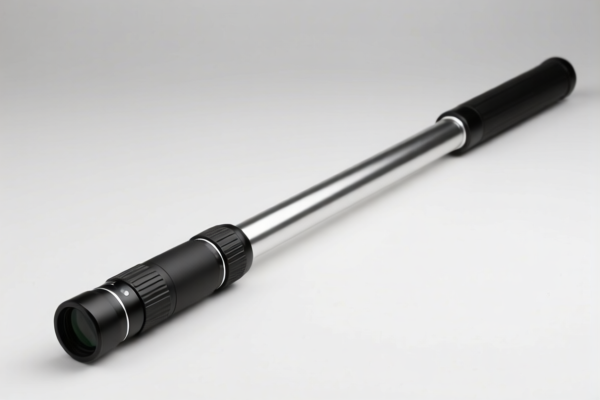
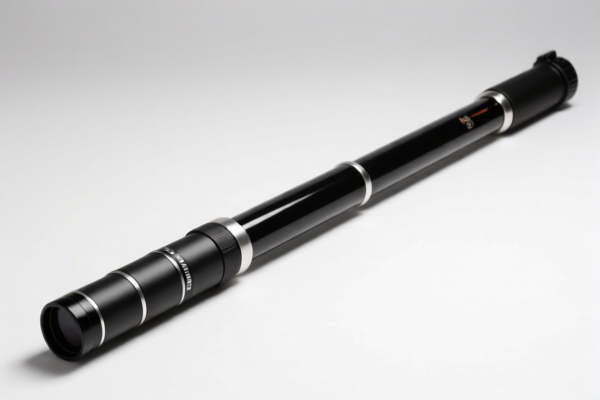
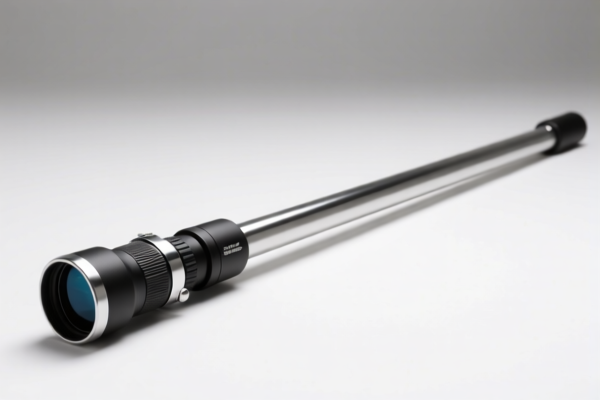
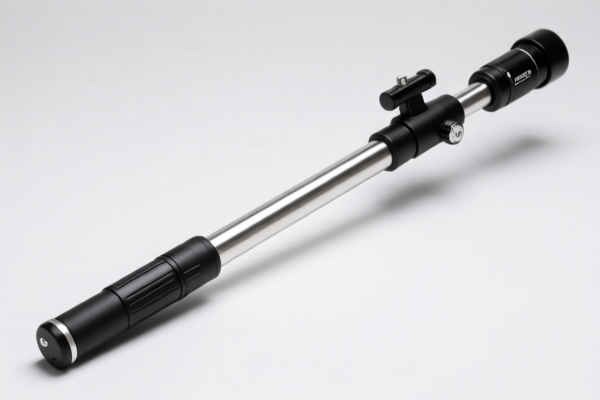
AI Analysis
🔭 Astronomical Telescope (Optical Instruments)
🌌 HS Code Reference & Customs Clearance Guide | 2026 Latest Tariff Analysis | Professional Strategy for Optical Gear
📌 I. Product Definition & Classification: Decoding the "Astronomical Telescope"
An Astronomical Telescope is a precision optical instrument designed to collect and focus light from distant celestial bodies. In international trade, the classification depends heavily on whether the item is classified as a complete instrument or its constituent optical components. Misclassification can lead to drastically different tax liabilities due to Section 301 and IEEPA tariffs.
⚠️ Key Distinction:
- Complete Instrument: If the device includes the tube, mount, eyepieces, and is ready for use as a whole → Often falls under 9005 (Binoculars, other optical telescopes) or 9013 (Laser devices/optical instruments not elsewhere specified).
- Components/Parts: If declared as lenses, prisms, or mirrors alone → Falls under 9002 (Optical elements) or 9013 (Parts/Accessories).
📦 II. HS Code Classification Details (2026 Latest Tariff Alignment)
Based on the provided data, here are the five potential HS Codes and their rationales. Note that while 9005.80.40.40 offers the lowest tax, 9013 and 9002 classifications carry significantly higher penalties due to US trade policies.
| HS Code | Summary / Rationale | Total Tax Rate | Tax Detail Breakdown |
|---|---|---|---|
| 9005.80.40.40 | Complete Optical Telescope: The item fits the definition of an optical telescope in form and function. Classified under "Other." | 18.0% | Base: 8.0% Add'l: 0.0% Sec 122: 10% |
| 9002.19.00.00 | Objective Lens/Objective: The core component (objective lens) is classified as an optical element. | 35.0% | Base: 0.0% Add'l: 25.0% Sec 122: 10% |
| 9002.90.95.00 | Optical Accessories (Prisms/Lenses): Internal lenses/prisms are treated as instrument accessories/attachments. | 35.0% | Base: 0.0% Add'l: 25.0% Sec 122: 10% |
| 9013.10.45.00 | Specific Optical Instrument: Matches the core usage and name description exactly in Section 9013. | 35.0% | Base: 0.0% Add'l: 25.0% Sec 122: 10% |
| 9013.10.50.00 | Instrument Component/Part: Fits the description of telescopes used as specific machine parts or instruments. | 22.8% | Base: 5.3% Add'l: 7.5% Sec 122: 10% |
🔍 Critical Analysis:
- 9005.80.40.40 is the most favorable classification, attracting only an 8% base tariff and no Section 301 (25%) add-on.
- 9002 and 9013 classifications are high-risk/high-cost, incurring a 25% Section 301 tariff on top of base rates, totaling 35% or 22.8%.
- Note: "122条款" refers to specific Section 122 or similar emergency tariffs included in the summary.
💰 III. 2026 Latest Tariff Rate Breakdown (Detailed Tax Clauses)
✅ Applicable Jurisdiction: United States (US)
✅ Origin: China (CN) (Implied by the "Section 122" and typical tariff structures in the data)
✅ Key Policy Drivers: Base MFN Tariffs + Section 301 (Trump Era/Continued) + Section 122/Emergency Tariffs.
🎯 1. 9005.80.40.40 —— Other Optical Telescopes (Best Case Scenario)
| Item | Content |
|---|---|
| Base MFN Tariff | 8.0% (Ad Valorem) |
| Section 301 Add-on | 0.0% (Exempt or not applicable to this specific subheading) |
| Section 122 / Special Tariff | 10.0% |
| Total Effective Rate | 18.0% |
| Tax Calculation | CIF Value × 18.0% |
| De Minimis Exemption | ❌ Not Applicable (De Minimis usually applies to duties, but Section 301/122 may override; however, at 18%, it is manageable compared to 35%+) |
📌 Explanation:
- This classification treats the telescope as a finished good under Chapter 90 (Instruments).
- The 0% Section 301 rate is the primary advantage here.
- The 10% Section 122 is a specific surcharge applied to this category.
- Result: The lowest landed cost among all options.
🎯 2. 9002.19.00.00 & 9002.90.95.00 —— Optical Elements & Accessories (High Cost)
| Item | Content |
|---|---|
| Base MFN Tariff | 0.0% (Many optical glass items have 0% base) |
| Section 301 Add-on | +25.0% (Heavily penalized under US-China trade war) |
| Section 122 / Special Tariff | +10.0% |
| Total Effective Rate | 35.0% |
| Tax Calculation | CIF Value × 35.0% |
| De Minimis Exemption | ❌ Not Applicable |
📌 Warning:
- Even though the base tariff is 0%, the 25% Section 301 tariff doubles the effective tax burden when combined with the 10% special tariff.
- Declaring parts (lenses/prisms) separately to avoid the 8% base tariff is financially disastrous compared to declaring the whole unit.
🎯 3. 9013.10.45.00 —— Specific Optical Instruments (High Cost)
| Item | Content |
|---|---|
| Base MFN Tariff | 0.0% |
| Section 301 Add-on | +25.0% |
| Section 122 / Special Tariff | +10.0% |
| Total Effective Rate | 35.0% |
| Tax Calculation | CIF Value × 35.0% |
📌 Explanation:
- Category 9013 covers "Laser beams... other optical appliances."
- If the telescope is seen as a specialized instrument not fitting "Binoculars" (9005), it may fall here.
- Same 35% penalty applies. Do not use this unless 9005 is legally impossible.
🎯 4. 9013.10.50.00 —— Intermediate Cost / Component Use
| Item | Content |
|---|---|
| Base MFN Tariff | 5.3% |
| Section 301 Add-on | +7.5% (Partial relief or different schedule) |
| Section 122 / Special Tariff | +10.0% |
| Total Effective Rate | 22.8% |
| Tax Calculation | CIF Value × 22.8% |
📌 Explanation:
- This is a middle-ground classification.
- It applies a reduced Section 301 rate (7.5% vs 25%).
- Useful if the item is considered a "part" of a larger system rather than a standalone telescope.
🛠️ IV. Customs Clearance Practical Advice (Avoid Pitfalls)
✅ 1. Documentation Checklist (Must-Haves)
| Document | Requirement | Reason |
|---|---|---|
| Product Specifications | ✔️ Detailed optical specs (Aperture, Focal Length, Magnification) | To prove it is a "Telescope" (9005) and not a "Part" (9002/9013). |
| Product Photos | ✔️ Clear view of the entire assembly (Tube, Mount, Eyepieces) | Visual evidence of it being a complete instrument. |
| Commercial Invoice | ✔️ Description: "Astronomical Optical Telescope, Complete, Model XYZ" | Precise naming supports 9005.80.40.40. Avoid words like "Lens" or "Glass" as primary descriptors. |
| Packing List | ✔️ Item as a single unit | Prevents customs from splitting the shipment into components (which would trigger 35% taxes). |
✅ 2. Declaration Strategy (Key Mantra)
🔥 "Declare the Whole, Not the Part; Name it Telescope, Not Lens!"
| Scenario | Correct Declaration | Risk if Incorrect |
|---|---|---|
| Full Telescope Set | 9005.80.40.40 |
Tax: 18% (Safe) |
| Declared as "Lens Kit" | 9002.19.00.00 |
Tax: 35% (Loss of 17% margin) |
| Declared as "Prism" | 9002.90.95.00 |
Tax: 35% (Loss of 17% margin) |
| Declared as "Optical Instrument" | 9013.10.45.00 |
Tax: 35% (Loss of 17% margin) |
✅ 3. Special Considerations
| Issue | Advice |
|---|---|
| Kit Contents | If the telescope comes with tripod, eyepiece, and finder scope, declare them together. Do not ship tripod separately as "Metal Parts" (which may have different tariffs). |
| Electronics | If it is an "Electronic/AutogoTo" telescope, ensure the electronic parts are integrated. If shipped separately, they might fall under 8528 (Monitors) or 8517 (Phones/Computers), but for pure optics, 9005 is still preferred for the optical head. |
| Pre-Ruling | Given the 17% difference (18% vs 35%), apply for a Customs Ruling from CBP if the shipment value is high. Confirm that 9005.80.40.40 applies to your specific model. |
🌍 V. Global Market Comparison (2026)
| Market | Recommended HS Code | Est. Total Tax (China Origin) | Notes |
|---|---|---|---|
| 🇺🇸 USA | 9005.80.40.40 |
18.0% | Best Option. Avoids 25% Sec 301. |
| 🇪🇺 EU | 9005.80 |
4.5% + VAT | No Section 301. Lower base tariffs. |
| 🇨🇳 China | 9005.80 |
8.0% | Base tariff. No Section 301/122. |
| 🇯🇵 Japan | 9005.80 |
3.9% | Low base tariff. |
📌 Conclusion for US Market:
- The 17% tariff gap between9005(18%) and9002/9013(35%) is critical.
- Ensure your commercial invoice reads "Astronomical Telescope" and shows the item as a single, complete unit.
- Never describe the shipment as "Glass Lenses" or "Optical Components" if they are assembled into a telescope.
📌 VI. Common Mistakes & Pitfalls (Lessons Learned)
❌ Mistake 1: Shipping telescope lenses separately from the tube.
👉 Consequence: Customs classifies lenses as 9002.19.00.00 → 35% Tax.
❌ Mistake 2: Using generic terms like "Optical Device" on the invoice.
👉 Consequence: Customs has discretion to assign 9013.10.45.00 → 35% Tax.
❌ Mistake 3: Forgetting to declare the full value (including eyepieces and mounts).
👉 Consequence: Under-declaration penalties + re-classification to higher-tax components.
✅ Correct Approach:
"1 x Astronomical Refractor Telescope, Complete with Mount, Eyepieces, and Finder Scope. Optical Glass. Model ABC."
🎯 VII. Conclusion: Optimize for Clearance
🎯 Remember the Mantra:
🔹 "Telescope Whole = 18% Tax."
🔹 "Parts Separate = 35% Tax."
🔹 "Clarity Saves Thousands!"
📌 Pro Tip:
If your telescope includes significant electronic components (e.g., GoTo motors, digital encoders), verify that they do not change the essential character of the good to a computer peripheral (Chapter 84/85). However, for most astronomical telescopes, the optical character dominates, justifying 9005.
📣 Immediate Action:
📞 Consult a licensed customs broker to file a Pre-Ruling if the shipment value exceeds $10,000.
🚀 Clear the skies and your customs clearance!
✨ Precision in Classification, Profit in Trade!
💼 Your Telescope, Your Tax Strategy.
Customer Reviews
About HS Code Classification
The Harmonized System (HS) is an internationally standardized nomenclature developed by the World Customs Organization (WCO) to classify traded products. Over 200 countries use the HS system as the basis for customs tariffs, trade statistics, and import/export regulations.
Each HS code follows a hierarchical structure:
- Chapter (2 digits) — Broad category of goods (e.g., Chapter 84: Machinery and Mechanical Appliances)
- Heading (4 digits) — More specific grouping within the chapter
- Subheading (6 digits) — Internationally standardized breakdown, used by all WCO member countries
- National subdivisions (8-10 digits) — Country-specific extensions for further classification, such as US HTSUS 10-digit codes
Correct HS code classification is essential for smooth customs clearance, accurate duty payment, and compliance with trade regulations. Misclassification can lead to customs delays, overpayment of duties, or penalties.
When importing from CN to US, the applicable tariff rates may include:
- Most-Favored-Nation (MFN) rate — The standard duty rate applied to WTO members
- General rate — Applied to countries without trade agreements
- Trade remedy duties — Additional tariffs such as Section 301 (anti-dumping), Section 232 (national security), or countervailing duties
The information provided on this page is for reference purposes only. For official classification, please consult with your local customs authority or a licensed customs broker.