audio adapter
CN → US| HS Code | Tariff Rate | Origin | Destination | Doc |
|---|---|---|---|---|
| 8504406007 | 35.0% | CN | US | Official Doc |
| 8504407007 | 35.0% | CN | US | Official Doc |
| 8536694010 | 35.0% | CN | US | Official Doc |
| 8536698000 | 37.7% | CN | US | Official Doc |
| 8517790000 | 67.5% | CN | US | Official Doc |
Product Images


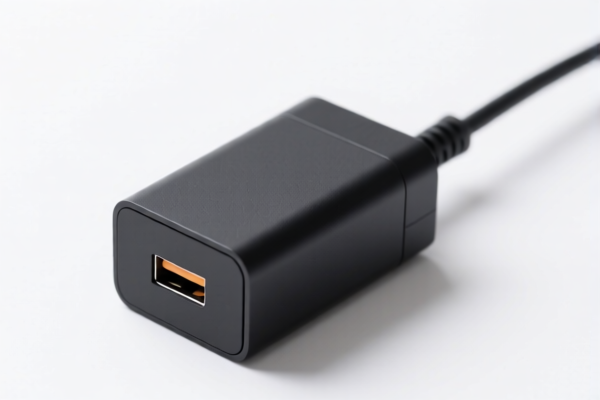
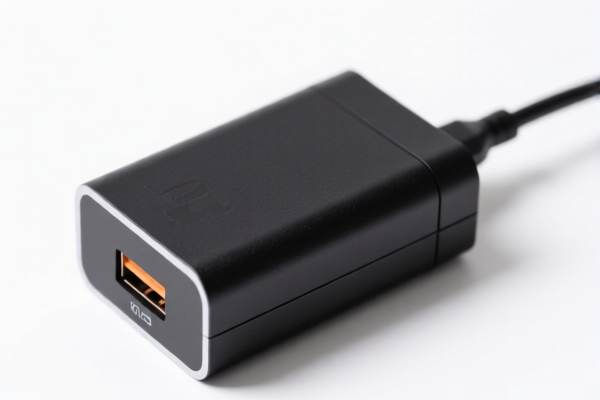
AI Analysis
🎧 Audio Adapter (Audio Converter/Interface)
🌐 HS Code Reference & Customs Clearance Guide | 2026 Latest Tariff Analysis | Professional Compliance Strategy
📌 1. Product Definition & Classification: What is an "Audio Adapter"?
An Audio Adapter is a broad term in international trade, typically referring to devices that convert audio signals (analog to digital, digital to analog) or adapt physical connectors (e.g., 3.5mm to USB, RCA to Optical). In customs classification, the HS Code depends entirely on the device's primary function and internal circuitry.
⚠️ Critical Distinction:
- If it is a passive connector/cable with no active electronics → It may be classified under electrical connectors (8536).
- If it contains active circuitry for signal conversion/processing → It is likely an electrical apparatus for making connections or a power converter/adapter (8504 or 8517).
- Warning: Misclassification between "Power Adapter" and "Signal Adapter" leads to massive duty discrepancies!
📦 2. HS Code Classification Details (Based on Provided Data)
The following HS Codes are derived from your specific data set. Note that different interpretations of "Adapter" lead to vastly different tax liabilities.
| HS Code | Product Description | Tax Rate | Key Classification Logic |
|---|---|---|---|
8504.40.60.07 |
Static Converter for Electronic Equipment | 35.0% | Classified as a power supply/adapter providing static conversion for electronic devices. |
8504.40.70.07 |
Stationary Power Converter | 35.0% | Similar to above; considered a stationary power converter with no material/form conflict. |
8536.69.40.10 |
Coaxial Connector/Adapter | 35.0% | Classified as an electrical connection/transition device (coaxial), voltage ≤ 1,000V. |
8536.69.80.00 |
Plugs, Sockets & Other Connectors | 37.7% | Classified as electrical connection/transition apparatus (plugs/sockets), voltage ≤ 1,000V. Highest Base Duty. |
8517.79.00.00 |
Parts of Communication Equipment | 67.5% | Classified as a part of a telecommunications apparatus. Highest Total Duty. |
💰 3. 2026 Latest Tariff Rate Breakdown (Detailed Policy Analysis)
✅ Applicable Country: United States (US)
✅ Origin: China (CN)
✅ Effective Date: Post-2025 policies included
🎯 1. 8504.40.60.07 & 8504.40.70.07 — Power Adapter Classification
Total Duty: 35.0%
| Item | Content |
|---|---|
| Base Duty | 0.0% (Ad Valorem) |
| Section 301 Additional Duty | +25.0% |
| Section 122 Duty | +10.0% |
| Total Effective Rate | 35.0% |
| Calculation | CIF Value × 35% |
| De Minimis Exemption | ❌ Not Eligible (Usually Section 321 does not apply to these HS codes from China due to specific exclusions) |
📌 Explanation:
- The 25% is the standard Section 301 tariff on Chinese goods in this subheading.
- The 10% is the Section 122 tariff (often applied to specific electronic components or under emergency trade provisions).
- Why this code? If your "Audio Adapter" is primarily seen as a power supply unit (e.g., a box that plugs into the wall to power an external DAC), customs may classify it as a power converter (8504).
🎯 2. 8536.69.40.10 & 8536.69.80.00 — Electrical Connector Classification
Total Duty: 35.0% (Coaxial) or 37.7% (Plugs/Sockets)
| HS Code | Base Duty | Section 301 | Section 122 | Total Duty |
|---|---|---|---|---|
8536.69.40.10 (Coaxial) |
0.0% | +25.0% | +10.0% | 35.0% |
8536.69.80.00 (Other) |
2.7% | +25.0% | +10.0% | 37.7% |
📌 Explanation:
-8536.69.40.10: If the adapter is strictly a coaxial connector (e.g., BNC to RCA adapter) and not an active electronic device, it falls here.
-8536.69.80.00: If it is a generic plug/socket adapter without coaxial specific characteristics, it hits the 2.7% base duty, pushing the total to 37.7%.
- Key Point: These codes treat the product as a passive connection device, not an active signal processor.
🎯 3. 8517.79.00.00 — Parts of Communication Equipment
Total Duty: 67.5%
| Item | Content |
|---|---|
| Base Duty | 0.0% |
| Section 301 Additional Duty | +7.5% |
| Section 122 Duty | +10.0% |
| Steel/Aluminum/Copper Add-on | +50.0% (If applicable materials are used) |
| Total Effective Rate | 67.5% |
📌 Explanation:
- This is the most dangerous classification for audio adapters. If customs determines your adapter is a "part of a machine" used for transmitting/receiving voice/data (e.g., a VoIP adapter or network audio interface), it falls under telecommunications equipment (8517).
- The 50% surcharge for metal components (steel/aluminum/copper) can further escalate costs if the housing is metallic.
- Recommendation: Avoid this classification if possible; it is punitive.
🛠️ 4. Customs Clearance Operational Advice (Risk Avoidance Guide)
✅ 1. Document Preparation Checklist
| Document | Must Provide | Purpose |
|---|---|---|
| Product Spec Sheet | ✔️ | Clearly state: "Passive Adapter" vs. "Active Converter". List input/output voltages and signal types. |
| Circuit Diagram | ✔️ | Crucial! If there is no active chip, prove it is a passive connector (8536). If there is a DAC/ADC chip, it may be 8504 or 8517. |
| Product Photos | ✔️ | Show connectors, labels, and any internal visible components (if possible). |
| Commercial Invoice | ✔️ | Use precise descriptions: "Audio Cable Adapter, Passive, 3.5mm to RCA" vs. "USB Audio Interface". |
| Material Declaration | ✔️ | Specify materials (Plastic vs. Metal) to avoid unexpected metal surcharges under 8517. |
✅ 2. Classification Strategy & Pitfalls
| Scenario | Recommended HS Code | Reason |
|---|---|---|
| Simple Cable/Connector (e.g., 3.5mm jack to USB plug, no electronics) | 8536.69.40.10 or 8536.69.80.00 |
It is purely an electrical connection device. Lower risk than 8517. |
| Powered Adapter (e.g., Wall-wart for a sound card) | 8504.40.60.07 |
It is a power supply/transformer. |
| Active DAC/USB Sound Card | High Risk for 8517 |
If it processes digital signals for communication, it may be seen as telecom equipment. Fight for 8504 or 8543 if possible, but data shows 8517 is a common misclassification trap. |
| Bluetooth Audio Adapter | Avoid 8517 if possible |
Bluetooth is wireless radio. Sometimes classified under 8517.62 (Radio apparatus). Check if it falls under 8517.79 as a "part". |
✅ 3. Special Handling Tips
- Avoid "Generic" Descriptions: Do not just write "Audio Adapter". Write "Passive Audio Connector Adapter, No Active Electronics" to steer towards
8536. - Check for Metal Content: If classifying under
8517, ensure your housing is primarily plastic to avoid the 50% metal surcharge. - Pre-Ruling Request: Given the 35%–67.5% variance, file for a US CBP Advance Ruling before shipping. Provide the circuit diagram and a sample. This locks in your classification for 5 years.
🌍 5. Global Market Comparison (2026 Outlook)
| Market | Typical HS Code for Audio Adapter | Est. Duty (China Origin) | Notes |
|---|---|---|---|
| 🇺🇸 USA | 8536.69.80.00 or 8504.40 |
35.0% – 37.7% | High Section 301 impact. |
| 🇨🇳 China | 8536.69.90.00 or 8504.40 |
0% – 5% | No Section 301. |
| 🇪🇺 EU | 8536.69.00 or 8543.70 |
0% – 4% | Often 0% for connectors; may require CE. |
| 🇬🇧 UK | 8536.69.00 |
0% | Post-Brexit, many electronics are 0%. |
📌 Conclusion:
- USA is the most expensive market due to Section 301 and Section 122 tariffs.
- Passive adapters (8536) are slightly cheaper than Power adapters (8504) if you can claim 0% base duty, but still hit 35% with add-ons.
- Active devices (8517) are prohibitively expensive at 67.5%.
📌 6. Common Mistakes & Blood-Pain Lessons
❌ Mistake 1: Calling an Active DAC an "Audio Cable"
👉 Consequence: Customs opens the package, finds a chip, reclassifies to 8517 or 8504, and assesses 67.5% instead of a lower rate.
❌ Mistake 2: Using Metal Housing for 8517 classification
👉 Consequence: Unexpected 50% surcharge on the value of the steel/aluminum casing.
❌ Mistake 3: Ignoring Section 122
👉 Consequence: Assuming only Section 301 (25%) applies. Section 122 adds another 10%, bringing the total to 35% or more.
✅ Correct Approach:
"Passive Audio Connector Adapter, Model XYZ, Plastic Housing, No Active Electronics, 3.5mm to RCA"
→ Supports HS Code8536.69.40.10→ 35.0% Total Duty.
🎯 7. Conclusion: Precision Saves Money!
🎯 Key Takeaway:
🔹 "Passive = 35% | Active = 67.5%"
🔹 "Metal = +50% Surcharge Risk"
🔹 "Always get a Pre-Ruling for Audio Adapters!"
📌 Pro Tip:
If your product is a simple cable/adapter, insist on 8536.69 (Connectors). If it has power conversion, use 8504.40. If it is a smart audio device, be prepared for 8517.79 (67.5%) or negotiate a better classification with legal counsel.
📣 Immediate Action:
📞 Contact your Customs Broker TODAY
📄 Prepare Circuit Diagrams + Material Specs
🚀 Apply for CBP Advance Ruling to lock in the 35% rate, not 67.5%!
✨ Professional Clearance Starts with Accurate Classification!
💼 Don't let a "small adapter" cost you half its value in duties!
Customer Reviews
About HS Code Classification
The Harmonized System (HS) is an internationally standardized nomenclature developed by the World Customs Organization (WCO) to classify traded products. Over 200 countries use the HS system as the basis for customs tariffs, trade statistics, and import/export regulations.
Each HS code follows a hierarchical structure:
- Chapter (2 digits) — Broad category of goods (e.g., Chapter 84: Machinery and Mechanical Appliances)
- Heading (4 digits) — More specific grouping within the chapter
- Subheading (6 digits) — Internationally standardized breakdown, used by all WCO member countries
- National subdivisions (8-10 digits) — Country-specific extensions for further classification, such as US HTSUS 10-digit codes
Correct HS code classification is essential for smooth customs clearance, accurate duty payment, and compliance with trade regulations. Misclassification can lead to customs delays, overpayment of duties, or penalties.
When importing from CN to US, the applicable tariff rates may include:
- Most-Favored-Nation (MFN) rate — The standard duty rate applied to WTO members
- General rate — Applied to countries without trade agreements
- Trade remedy duties — Additional tariffs such as Section 301 (anti-dumping), Section 232 (national security), or countervailing duties
The information provided on this page is for reference purposes only. For official classification, please consult with your local customs authority or a licensed customs broker.