automatic loom
CN → US| HS Code | Tariff Rate | Origin | Destination | Doc |
|---|---|---|---|---|
| 8446305030 | 38.7% | CN | US | Official Doc |
| 8447204000 | 17.5% | CN | US | Official Doc |
| 8447206000 | 17.5% | CN | US | Official Doc |
| 8446100090 | 17.5% | CN | US | Official Doc |
Product Images
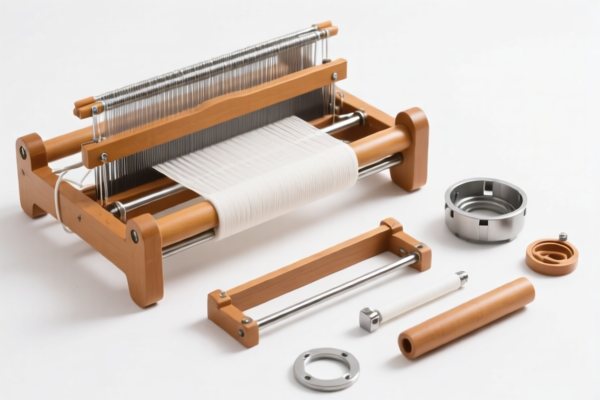
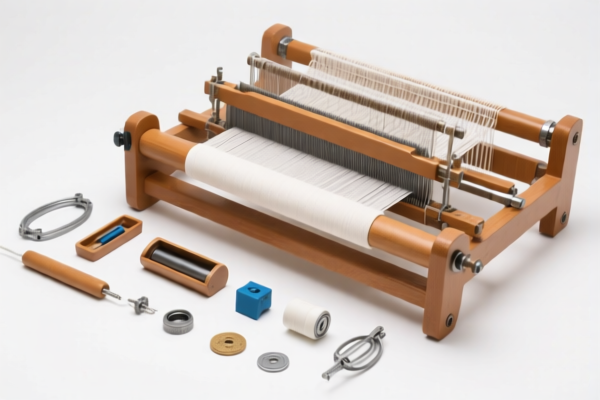
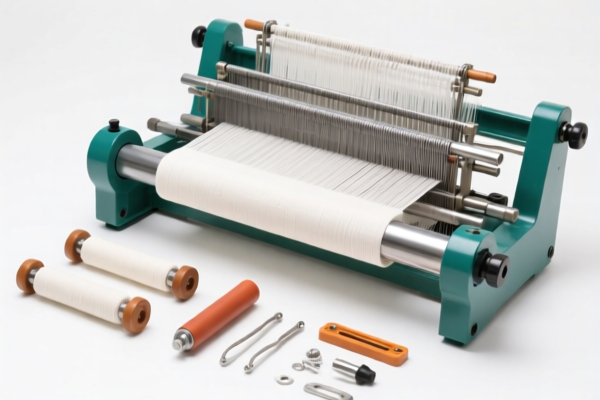
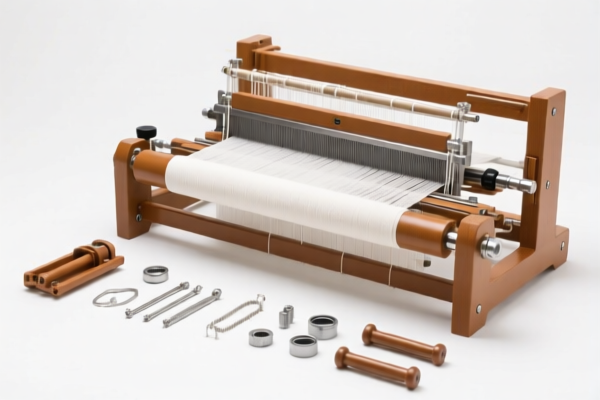
AI Analysis
🧵 Automatic Looms: Precision Classification, High Tariff Alerts & Clearance Strategy
🌐 HS Code Reference & Clearance Guide | 2026 Latest Tariff Analysis | Professional Customs Strategy
📌 I. Product Definition: What Exactly is an "Automatic Loom"?
In the textile industry, an Automatic Loom is a high-speed weaving machine that automatically weaves fabric from warp and weft threads. In international trade, these machines are not monolithic; they are classified based on their mechanism (shedding/weft insertion) and application (warp knitting vs. weft knitting vs. traditional weaving).
Misclassification here is critical because the tariff difference can be massive (from 17.5% to 38.7%).
⚠️ Key Distinction:
- Shuttleless Looms (No-Shuttle): Typically used for high-quality fabrics, often classified under 8446.30.
- Knitting/Braiding Machines: Used for knitted fabrics (T-shirts, socks, lace), classified under 8447.20.
- Traditional/Older Weaving Machines: Classified under 8446.10.
📦 II. HS Code Classification Details (2026 Latest Tariff Authority)
| HS Code | Product Description | Application Scenario | Tax Rate (US/CN) |
|---|---|---|---|
8446.30.50.30 |
Shuttleless Looms (Other types) | High-speed industrial weaving, synthetic fiber processing | 38.7% ⚠️ |
8447.20.40.00 |
Knitting Machines / Raschel Looms | Making knitted fabrics, lace, nets, braids | 17.5% ✅ |
8447.20.60.00 |
Weft Insertion / Interlocking Machines | Knitting machines connected to sewing or interlocking devices | 17.5% ✅ |
8446.10.00.90 |
Shuttle Looms (Other traditional types) | Traditional weaving, heavy-duty industrial applications | 17.5% ✅ |
🔍 Critical Insight:
- 8446.30.50.30 carries the highest tariff (38.7%). This is usually for specific "other" shuttleless looms not covered elsewhere.
- 8447.20 series and 8446.10.00.90 carry a lower 17.5%.
- Do not confuse a "Loom" with a "Knitting Machine". If it produces knitted fabric (loops), it’s 8447. If it produces woven fabric (interlaced threads), it’s 8446.
💰 III. 2026 Latest Tariff Rate Breakdown (Including Surcharges & Policy Add-ons)
✅ Applicable Country: United States (US)
✅ Country of Origin: China (CN)
✅ Effective Date: From November 10, 2025 (including subsequent imports)
🎯 1. 8446.30.50.30 —— Shuttleless Looms (The "Heavy Hitter")
| Item | Content |
|---|---|
| Base Tariff | 3.7% (ad valorem) |
| Section 301 Surcharge | +25.0% (USITC Footnote 9903.84.66) |
| IEEPA Surcharge | +10.0% (Targeting Chinese/HK products, effective Nov 10, 2025) |
| Total Rate | 38.7% |
| Tax Calculation | CIF Value × 38.7% |
| De Minimis Eligibility | ❌ NO (deny_de_minimis) |
| Legal Basis Path | IEEPA:9903.01.25 → IEEPA:9903.01.24 → USITC:8446.30.50.30 → FOOTNOTE:9903.84.66 |
📌 Explanation:
- "Section 301 Surcharge 25%": From the Trade Act Section 301, targeting Chinese manufacturing goods.
- "IEEPA 10%": International Emergency Economic Powers Act surcharge, a new/additional layer for Chinese-origin industrial machinery.
- Total 38.7% is extremely high. This erodes profit margins significantly. Must be factored into pricing!
🎯 2. 8447.20.40.00 & 8447.20.60.00 —— Knitting/Braiding Machines
| Item | Content |
|---|---|
| Base Tariff | 0.0% |
| Section 301 Surcharge | +7.5% (USITC Footnote 9903.84.67) |
| IEEPA Surcharge | +10.0% (Targeting Chinese/HK products) |
| Total Rate | 17.5% |
| Tax Calculation | CIF Value × 17.5% |
| De Minimis Eligibility | ❌ NO (deny_de_minimis) |
| Legal Basis Path | IEEPA:9903.01.25 → IEEPA:9903.01.24 → USITC:8447.20.40.00 → FOOTNOTE:9903.84.67 |
📌 Note:
- These are considered knitting/braiding equipment.
- Even though the base tariff is 0%, the 301 surcharge (7.5%) and IEEPA (10%) bring the total to 17.5%.
- This is much more favorable than the 38.7% for certain looms.
🎯 3. 8446.10.00.90 —— Traditional Shuttle Looms
| Item | Content |
|---|---|
| Base Tariff | 0.0% |
| Section 301 Surcharge | +7.5% (USITC Footnote 9903.84.66) |
| IEEPA Surcharge | +10.0% (Targeting Chinese/HK products) |
| Total Rate | 17.5% |
| Tax Calculation | CIF Value × 17.5% |
| De Minimis Eligibility | ❌ NO (deny_de_minimis) |
| Legal Basis Path | IEEPA:9903.01.25 → IEEPA:9903.01.24 → USITC:8446.10.00.90 → FOOTNOTE:9903.84.66 |
📌 Note:
- Traditional looms fall under 8446.10.
- Like the knitting machines, they benefit from 0% base tariff but still face 17.5% total.
- Crucial: Ensure the machine is indeed a "Shuttle Loom" (uses a traditional shuttle) to qualify for this lower rate. If it’s "Shuttleless," it likely falls into the expensive8446.30category.
🛠️ IV. Clearance Practical Advice (Battle-Tested Pitfall Guide)
✅ 1. Preparation Checklist (Non-Negotiable)
| Document | Required | Explanation |
|---|---|---|
| ✅ Product Spec Sheet | ✔️ | Must detail: Type (Shuttle/Shuttleless/Knitting), Speed (RPM), Width, Power. |
| ✅ Technical Diagrams | ✔️ | Critical to prove it’s NOT a shuttleless loom if claiming 17.5% rate. |
| ✅ Product Photos | ✔️ | Clear view of the mechanism (e.g., presence/absence of a shuttle). |
| ✅ Commercial Invoice | ✔️ | Describe as "Automatic Knitting Machine" or "Industrial Loom", specify function. |
| ✅ Origin Certificate (CO) | ✔️ | Mandatory for proving Chinese origin to apply surcharges/exemptions. |
| ✅ Packing List | ✔️ | List main machine vs. spare parts separately to avoid misclassification of accessories. |
✅ 2. Declaration Tips (Key Mantra)
🔥 "Knitting is 8447, Weaving is 8446. Shuttleless is Expensive, Shuttle/Knitting is Cheaper!"
| Scenario | Correct Declaration | Wrong Practice |
|---|---|---|
| Knitting Machine (makes loops) | 8447.20.40.00 or 8447.20.60.00 → 17.5% |
Misdeclare as "Weaving Loom" → 38.7% |
| Traditional Shuttle Loom | 8446.10.00.90 → 17.5% |
Misdeclare as "Shuttleless" → 38.7% |
| Shuttleless Loom (No shuttle) | 8446.30.50.30 → 38.7% |
Try to declare as "Knitting" → Customs Rejection/Fine |
| Spare Parts | Declare separately if significant value | Bundle into machine → Potential misclassification |
✅ 3. Special Case Handling
| Scenario | Handling Advice |
|---|---|
| Multi-Function Machines | If a machine can both weave and knit, declare based on primary function. Provide proof. |
| Semi-Automatic vs. Automatic | "Semi-automatic" might still fall under these HS codes, but verify if it meets the "Automatic" definition in HTSUS. |
| Used Machinery | Provide service history/manuals. Customs may inspect more closely for condition. |
| Export to Non-US Markets | Tariffs vary. EU may be 0-4%, ASEAN may be 0%. Always check destination-specific rules. |
🌍 V. Global Market Clearance Comparison (2026 Latest)
| Country/Region | Recommended HS Code | Tariff Rate (China Origin) | Certification | Notes |
|---|---|---|---|---|
| 🇺🇸 USA | 8446.30.50.30 (Shuttleless) |
38.7% | N/A | Highest tariff. Avoid if possible. |
| 🇺🇸 USA | 8447.20.40.00 (Knitting) |
17.5% | N/A | Better option for knitted fabric machinery. |
| 🇪🇺 EU | 8446.30 |
0% - 4% | CE | No Section 301/IEEPA surcharges. |
| 🇨🇳 China | 8446.30 |
3.7% | N/A | Import duty only. No surcharges. |
| 🇻🇳 Vietnam | 8446.30 |
0% - 7% | N/A | Potential for RCEP benefits if applicable. |
📌 Conclusion:
- USA is the most expensive market for automatic looms due to Section 301 + IEEPA.
- Divergence is Key: If your machine can be classified as a Knitting Machine (8447) or Traditional Shuttle Loom (8446.10), you save 21.2% in tariffs compared to Shuttleless Looms (8446.30).
📌 VI. Common Mistakes & Pitfalls (Lessons Learned)
❌ Mistake 1: Calling all looms "Automatic Looms" in the invoice.
👉 Consequence: Customs assigns the highest default rate (38.7%).
Fix: Specify "Shuttleless Loom" or "Knitting Machine".
❌ Mistake 2: Confusing "Weaving" (interlacing) with "Knitting" (looping).
👉 Consequence: Misclassification leads to audits, penalties, and delayed clearance.
Fix: Understand the fabric type produced. Woven fabric = Loom (8446). Knitted fabric = Knitting Machine (8447).
❌ Mistake 3: Ignoring IEEPA 10% Surcharge.
👉 Consequence: Budgeting only for Section 301 (25% or 7.5%) leads to unexpected costs.
Fix: Always add 10% IEEPA to Chinese-origin machinery entering the US.
❌ Mistake 4: Not providing technical diagrams.
👉 Consequence: Customs cannot verify if it’s a "Shuttleless" or "Shuttle" loom.
Fix: Always include a mechanism diagram showing the absence/presence of a shuttle.
✅ Correct Approach:
"Automatic Raschel Knitting Machine, Model XYZ, for Lace Production, No Shuttle, Made in China"
🎯 VII. Conclusion: Precision Classification Saves Money!
🎯 Remember the Mantra:
🔹 "Knitting is 8447 (17.5%), Shuttleless is 8446.30 (38.7%). Choose wisely!"
🔹 "No Shuttle = High Tax. Shuttle or Knitting = Lower Tax. Check IEEPA!"
📌 Pro Tip:
If your loom is exclusively for weaving, but you can argue it fits 8446.10.00.90 (Traditional Shuttle), you save 21.2%. However, this is risky if it’s truly shuttleless. Consult a customs broker for a Pre-Ruling (Advance Ruling) before shipping.
📣 Immediate Action:
📞 Contact a Customs Broker + Provide Technical Specs + Request HS Code Pre-Ruling
🚀 Ensure your loom clears US Customs smoothly, avoiding the 38.7% trap!
✨ Professional Clearance, Starts with Accurate Classification!
💼 Every Percent Saved is Pure Profit!
Customer Reviews
About HS Code Classification
The Harmonized System (HS) is an internationally standardized nomenclature developed by the World Customs Organization (WCO) to classify traded products. Over 200 countries use the HS system as the basis for customs tariffs, trade statistics, and import/export regulations.
Each HS code follows a hierarchical structure:
- Chapter (2 digits) — Broad category of goods (e.g., Chapter 84: Machinery and Mechanical Appliances)
- Heading (4 digits) — More specific grouping within the chapter
- Subheading (6 digits) — Internationally standardized breakdown, used by all WCO member countries
- National subdivisions (8-10 digits) — Country-specific extensions for further classification, such as US HTSUS 10-digit codes
Correct HS code classification is essential for smooth customs clearance, accurate duty payment, and compliance with trade regulations. Misclassification can lead to customs delays, overpayment of duties, or penalties.
When importing from CN to US, the applicable tariff rates may include:
- Most-Favored-Nation (MFN) rate — The standard duty rate applied to WTO members
- General rate — Applied to countries without trade agreements
- Trade remedy duties — Additional tariffs such as Section 301 (anti-dumping), Section 232 (national security), or countervailing duties
The information provided on this page is for reference purposes only. For official classification, please consult with your local customs authority or a licensed customs broker.