automatic pencil
CN → US| HS Code | Tariff Rate | Origin | Destination | Doc |
|---|---|---|---|---|
| 4421919820 | 38.3% | CN | US | Official Doc |
| 4421999820 | 38.3% | CN | US | Official Doc |
| 9609202000 | 17.5% | CN | US | Official Doc |
| 9609100000 | 0.0% | CN | US | Official Doc |
Product Images
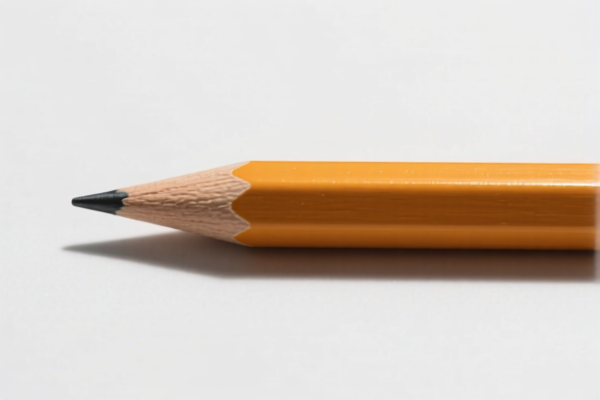
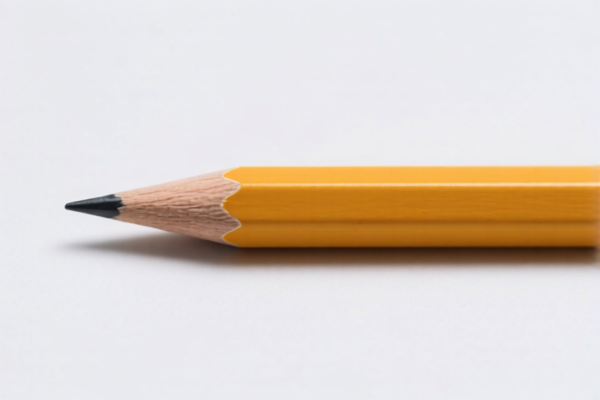
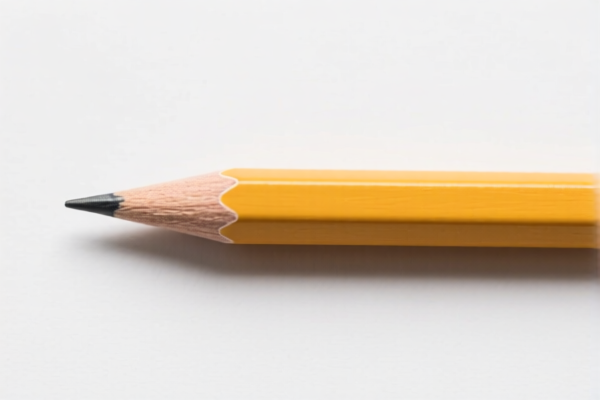
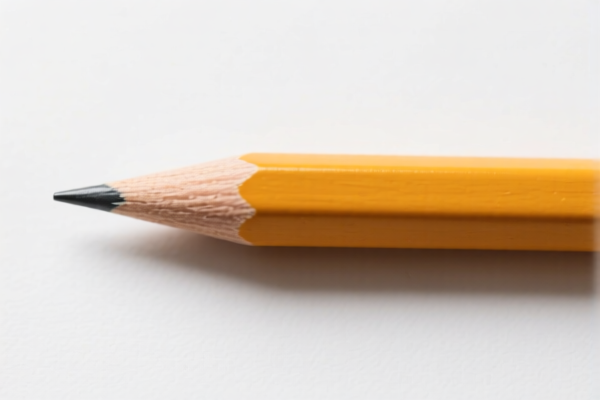
AI Analysis
✏️ Automatic Pencils (Mechanical Pencils)
🌐 HS Code Reference & Customs Clearance Guide | 2026 Latest Tariff Analysis | Professional Clearance Strategy
📌 I. Product Definition & Classification: Do You Really Understand “Automatic Pencils”?
Automatic pencils (also known as mechanical pencils) are precision writing instruments that use replaceable lead cores of a fixed diameter (typically 0.3mm, 0.5mm, 0.7mm, or 0.9mm), instead of a sharpenable wooden pencil body. In international trade, classification depends heavily on material composition, structural form, and whether it is a finished product or a core component.
Wooden Shell + Lead Core (Finished Product):
- Contains a wooden outer casing and a mechanism to advance the lead.
- Classified under Chapter 44 (Wood and Wood Products) if the primary material is wood, OR Chapter 96 (Miscellaneous Manufactured Articles) if considered a writing instrument.
Lead Core Only:
- Pure graphite/clay mix rods without casing.
- Classified under Chapter 96 (Pencil Leads).
⚠️ Key Distinction Point:
- If the product is a complete wooden-cased automatic pencil → It is often classified as a wooden product (Chapter 44) due to material dominance, OR as a writing instrument (Chapter 96) depending on national interpretation.
- If it is just the lead refill → It is strictly a pencil lead (Chapter 96).
- If it is a plastic/metal-cased automatic pencil → It falls squarely under Chapter 96 (Writing Instruments).
📦 II. HS Code Classification Details (2026 Latest Tariff Authoritative Comparison)
| HS Code | Product Description | Applicable Scenario | Material/Form |
|---|---|---|---|
4421.91.98.20 |
Pencil blanks / Wooden pencil components | Wooden automatic pencils where wood is the primary structural material | ✅ Wood dominant |
4421.99.98.20 |
Other wooden articles (incl. wooden pencils) | Wooden automatic pencils not specifically listed elsewhere | ✅ Wood dominant |
9609.20.20.00 |
Pencil leads (graphite/clay) | Refill leads for automatic pencils; core component only | ❌ No shell |
9609.10.00.00 |
Pencil leads, in cases, tubes, etc. | Finished automatic pencils with integrated lead advancement mechanism | ✅ Finished instrument |
🔍 Key Reminder:
- Wooden automatic pencils are controversially classified under Chapter 44 (Wood) by some customs authorities because the wooden barrel constitutes the bulk of the volume/mass.
- Plastic/Metal automatic pencils are unequivocally under Chapter 96 (Writing Instruments).
- Lead refills alone are under 9609.20 and 9609.10 (depending on packaging).
💰 III. 2026 Latest Tariff Rate Breakdown (Including Surtaxes & Policy Add-ons)
✅ Applicable Country: United States (US)
✅ Origin: China (CN)
✅ Effective Time: From November 10, 2025 (including subsequent imports)
🎯 1. 4421.91.98.20 & 4421.99.98.20 —— Wooden Automatic Pencils (Classified as Wooden Products)
| Item | Content |
|---|---|
| Base Tariff | 3.3% (ad valorem) |
| Section 301 Surtax | +25.0% (Under USITC Footnote) |
| Section 122 Surtax | +10.0% (Specific to certain Chinese imports) |
| Total Tax Rate | 38.3% |
| Tax Calculation | CIF Value × 38.3% |
| De Minimis Eligibility | ❌ No (deny_de_minimis) |
| Legal Basis Path | USITC:4421.91.98.20 → Section 301:3.3%+25% → Section 122:10% |
📌 Explanation:
- The 38.3% total rate is extremely high.
- Base 3.3% is the standard MFN rate for wooden articles.
- 25% Section 301 applies to most Chinese-made consumer goods.
- 10% Section 122 is an additional layer for specific categories.
- Warning: Misclassifying a wooden pencil as a non-wooden item to avoid this tax can lead to severe penalties.
🎯 2. 9609.20.20.00 —— Pencil Leads (Refill Only)
| Item | Content |
|---|---|
| Base Tariff | 0.0% (ad valorem) |
| Section 301 Surtax | +7.5% |
| Section 122 Surtax | +10.0% |
| Total Tax Rate | 17.5% |
| Tax Calculation | CIF Value × 17.5% |
| De Minimis Eligibility | ❌ No |
| Legal Basis Path | USITC:9609.20.20.00 → Section 301:7.5% → Section 122:10% |
📌 Note:
- Lead refills have a lower total tax rate (17.5%) compared to complete wooden pencils (38.3%).
- However, they are still subject to Section 122 and Section 301 taxes.
🎯 3. 9609.10.00.00 —— Finished Automatic Pencils (Writing Instruments)
| Item | Content |
|---|---|
| Base Tariff | 14¢/gross + 4.3% (ad valorem) |
| Section 301 Surtax | +7.5% |
| Section 122 Surtax | +10.0% |
| Total Tax Rate | 14¢/gross + 4.3% + 7.5% + 10% = ~21.8% + per-unit fee |
| Tax Calculation | Per-unit fee + CIF × 21.8% |
| De Minimis Eligibility | ❌ No |
| Legal Basis Path | USITC:9609.10.00.00 → Section 301:7.5% → Section 122:10% |
📌 Note:
- This classification applies to finished writing instruments (including plastic/metal automatic pencils and some wooden ones interpreted as instruments).
- The base rate includes a specific duty (14¢/gross) which is negligible for high-volume shipments but adds complexity.
- Total effective rate is approximately 21.8%, significantly lower than the 38.3% for wooden pencils.
🛠️ IV. Customs Clearance Practical Advice (Battle-Tested Pitfall Avoidance Guide)
✅ 1. Required Documentation Checklist (Missing Items = Delay)
| Document | Required? | Explanation |
|---|---|---|
| ✅ Product Specification Sheet | ✔️ | Must specify: Lead diameter (0.5mm, etc.), Material (Wood/Plastic/Metal), Mechanism type. |
| ✅ Product Photos (Clear) | ✔️ | Show the tip, lead advancement mechanism, and overall structure. |
| ✅ Commercial Invoice | ✔️ | Clearly state "Automatic Pencil" or "Mechanical Pencil", not just "Pencil". |
| ✅ Packing List | ✔️ | Detail items per carton. |
| ✅ Origin Certificate (CO) | ✔️ | If non-Chinese origin, may reduce taxes. |
| ✅ Third-Party Test Reports | ✔️ | Non-mandatory but helpful for proving material composition (e.g., wood vs. plastic). |
✅ 2. Declaration Strategy (Key Mantras)
🔥 “Material Determines Chapter, Finished vs. Core Matters!”
| Scenario | Correct HS Code | Mistake to Avoid |
|---|---|---|
| Wooden Automatic Pencil | 4421.91.98.20 or 4421.99.98.20 |
Misdeclaring as 9609.10.00.00 → Underpayment tax → Penalty |
| Plastic/Metal Automatic Pencil | 9609.10.00.00 |
Misdeclaring as 4421... → Overpayment tax → Loss of profit |
| Lead Refills Only | 9609.20.20.00 |
Misdeclaring as finished pencil → 38.3% tax instead of 17.5% |
| Mixed Shipments (Wood + Plastic) | Separate declarations! | Consolidating under one code → Customs seizure |
✅ 3. Special Situation Handling
| Situation | Handling Advice |
|---|---|
| OEM Custom Pencils | Provide client design specs to prove it’s not a standard "wooden pencil" if aiming for Chapter 96. |
| Pencils with Erasers Attached | Still classified as pencils. Eraser is considered an accessory. |
| High-End Metal Mechanical Pencils | Clearly declare as "Metal Automatic Pencil" to target 9609.10.00.00 (lower tax than wooden). |
| Samples for Evaluation | Even samples are subject to duty if value > $800 (de minimis threshold is often blocked for Section 301/122 goods). |
🌍 V. Global Market Clearance Comparison (2026 Latest)
| Country/Region | Recommended HS Code | Tariff (China Origin) | Certification Required | Notes |
|---|---|---|---|---|
| 🇺🇸 USA | 4421.91.98.20 (Wood) |
38.3% | No special cert | High tax due to Sec 301 & 122 |
| 🇺🇸 USA | 9609.10.00.00 (Plastic/Metal) |
~21.8% + 14¢/gross | No special cert | Lower tax than wood |
| 🇨🇳 China | 4421.91.00.00 / 9609.10.00.00 |
5% - 15% | CCC (if applicable) | Lower tariffs for domestic production |
| 🇪🇺 EU | 9609.10.00 |
0% - 2.5% | REACH, CE (if electronic) | Generally low tariff; focus on chemical safety |
| 🇬🇧 UK | 9609.10.00 |
0% - 2.5% | UKCA | Similar to EU post-Brexit |
| 🇦🇺 Australia | 9609.10.00 |
5% | GSR | No special surtaxes |
📌 Conclusion:
- USA is the only major market with heavy surtaxes for Chinese-made pencils.
- Material classification is critical: Wooden pencils face 38.3%, while plastic/metal face ~21.8%.
- EU/UK/AU: Tariffs are low; focus on chemical safety compliance (e.g., lead-free, non-toxic paints).
📌 VI. Common Errors & Pitfall Guide (Lessons from Blood and Tears)
❌ Mistake 1: Declaring Wooden Automatic Pencils as Plastic Pencils (9609.10.00.00) to save tax.
👉 Consequence: Customs inspection reveals wood fiber → Tax evasion penalty + 100% fine + seizure.
❌ Mistake 2: Declaring Lead Refills as Finished Pencils (9609.10.00.00).
👉 Consequence: Overpaying tax (38.3% or 21.8% vs. 17.5%). No financial benefit, just inefficiency.
❌ Mistake 3: Ignoring Section 122 on invoices.
👉 Consequence: Customs may apply a higher generic rate or hold shipment for "unclear duty applicability".
❌ Mistake 4: Using generic "Pencil" in description.
👉 Consequence: Customs may default to the highest-risk classification (often Chapter 44 for wood).
✅ Correct Practice:
“Automatic Mechanical Pencil, 0.5mm Lead, Wooden Barrel, Plastic Tip, Model XYZ, Made in China”
🎯 VII. Conclusion: Precision Classification Saves Money!
🎯 Remember the Mantra:
🔹 “Wooden = 38.3%, Plastic/Metal = ~21.8%, Lead = 17.5%!”
🔹 “Specify material clearly! ‘Pencil’ is too vague!”
📌 Pro Tip:
- If your product is plastic or metal, always use 9609.10.00.00 to save ~16.5% compared to wooden classification.
- If you import refills only, use 9609.20.20.00 for the lowest rate (17.5%).
- For wooden pencils, consider shifting supply chain to Vietnam/Thailand to avoid Section 301/122 taxes (if eligible).
📣 Act Now:
📞 Consult a licensed customs broker to confirm classification based on actual material composition.
🚀 Ensure your commercial invoice explicitly states “Automatic Mechanical Pencil” + Material.
📊 Calculate landed cost with 38.3% (Wood) vs. 21.8% (Plastic) before finalizing orders.
✨ Professional Clearance Starts with Accurate HS Codes!
💼 Every Percent Saved is Pure Profit!
Customer Reviews
About HS Code Classification
The Harmonized System (HS) is an internationally standardized nomenclature developed by the World Customs Organization (WCO) to classify traded products. Over 200 countries use the HS system as the basis for customs tariffs, trade statistics, and import/export regulations.
Each HS code follows a hierarchical structure:
- Chapter (2 digits) — Broad category of goods (e.g., Chapter 84: Machinery and Mechanical Appliances)
- Heading (4 digits) — More specific grouping within the chapter
- Subheading (6 digits) — Internationally standardized breakdown, used by all WCO member countries
- National subdivisions (8-10 digits) — Country-specific extensions for further classification, such as US HTSUS 10-digit codes
Correct HS code classification is essential for smooth customs clearance, accurate duty payment, and compliance with trade regulations. Misclassification can lead to customs delays, overpayment of duties, or penalties.
When importing from CN to US, the applicable tariff rates may include:
- Most-Favored-Nation (MFN) rate — The standard duty rate applied to WTO members
- General rate — Applied to countries without trade agreements
- Trade remedy duties — Additional tariffs such as Section 301 (anti-dumping), Section 232 (national security), or countervailing duties
The information provided on this page is for reference purposes only. For official classification, please consult with your local customs authority or a licensed customs broker.