avocado pattern carpet
CN → US| HS Code | Tariff Rate | Origin | Destination | Doc |
|---|---|---|---|---|
| 5703392090 | 41.0% | CN | US | Official Doc |
| 5701901090 | 35.0% | CN | US | Official Doc |
| 5702422080 | 35.0% | CN | US | Official Doc |
| 5702491080 | 35.0% | CN | US | Official Doc |
| 5703292090 | 41.7% | CN | US | Official Doc |
Product Images
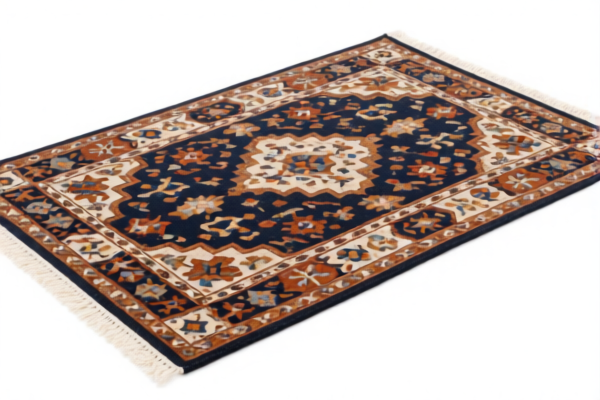
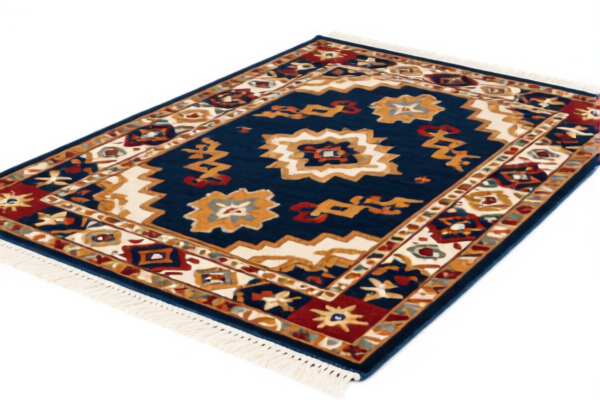
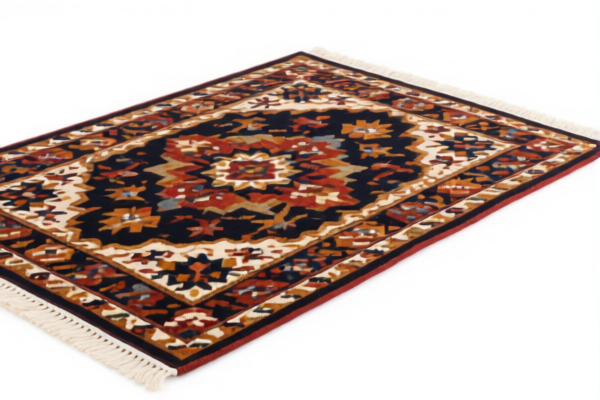
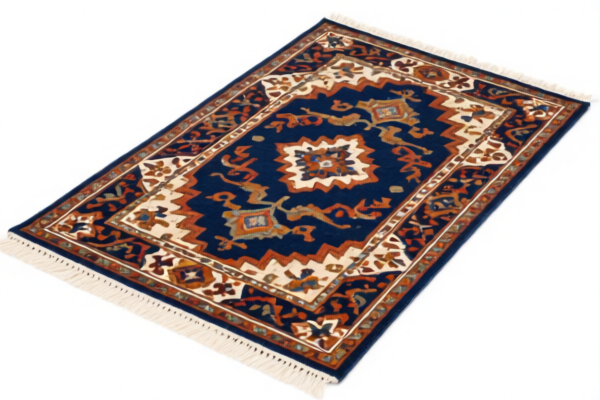
AI Analysis
🥑 Avocado Pattern Carpet (Textile Floor Coverings)
🌐 HS Code Reference & Customs Clearance Guide | 2026 Latest Tariff Analysis | Professional Strategy for Textile Imports
📌 I. Product Definition & Classification: Understanding the "Avocado Pattern Carpet"
An "Avocado Pattern Carpet" is a decorative floor covering characterized by specific visual motifs (resembling avocados) and constructed from textile materials. In international trade, the classification depends heavily on: 1. Form: Is it a rug/carpet (tufted, woven, needle-punched)? 2. Material: Is it made of synthetic fibers (nylon, polyester), man-made fibers, or natural fibers? 3. Backing/Construction: How is it manufactured?
⚠️ Key Classification Point:
- If the carpet is tufted (most common for patterned carpets) → Likely Chapter 57, Heading 5703.
- If the carpet is woven → Likely Chapter 57, Heading 5701 or 5702.
- Crucial: The "Avocado Pattern" is a design feature, not a material specifier. Classification defaults to textile material type if not explicitly stated.
📦 II. HS Code Classification Details (2026 Latest Tariff Authority)
Based on the provided data, here are the most likely HS Codes for an Avocado Pattern Carpet, ranked by logical fit:
| HS Code | Product Description | Material/Construction Fit | Tax Rate (Total) |
|---|---|---|---|
5703.39.20.90 |
Other carpet of textile materials, tufted, other, other | ✅ High Fit: Tufted carpets (common for patterns). "Other man-made textile materials" or generic textile fit. | 41.0% |
5701.90.10.90 |
Carpets & other floor coverings, woven, of other textile materials, other | ✅ Medium-High Fit: Woven carpets. "Other" category for non-specified textile materials. | 35.0% |
5702.42.20.80 |
Other floor coverings, woven, of synthetic fibers, other, other | ✅ Medium Fit: Woven floor coverings made of synthetic fibers. | 35.0% |
5702.49.10.80 |
Other floor coverings, woven, of other textile materials, other, other | ✅ Medium Fit: Woven floor coverings of non-synthetic/non-man-made textile materials (e.g., cotton blends). | 35.0% |
5703.29.20.90 |
Other carpet of textile materials, tufted, of other textile materials, other | ✅ Medium-High Fit: Tufted carpets of other textile materials (non-synthetic/non-man-made). | 41.7% |
🔍 Important Note:
-5703items (Tufted) generally carry higher base tariffs (6.0%-6.7%) than5701/5702(Woven), which often have 0% base tariffs.
- The "Avocado Pattern" does not change the HS code; only the material (synthetic vs. natural) and construction method (tufted vs. woven) matter.
💰 III. 2026 Latest Tariff Rate Breakdown (Including Surtaxes & Policy Add-ons)
✅ Applicable Country: United States (US)
✅ Origin: China (CN)
✅ Effective Date: November 10, 2025 (and subsequent imports)
🎯 1. 5703.39.20.90 — Tufted Carpet (Other Textile Materials)
| Item | Content |
|---|---|
| Base Tariff | 6.0% (ad valorem) |
| Section 301 Surcharge | +25.0% (USITC Footnote 9903.88.01) |
| IEEPA Surcharge | +10.0% (China-specific, effective Nov 10, 2025) |
| Total Tariff Rate | 41.0% |
| Tax Calculation | CIF Value × 41.0% |
| De Minimis Exemption? | ❌ NO (Denied) |
| Legal Basis Path | IEEPA:9903.01.25 → IEEPA:9903.01.24 → USITC:5703.39.20.90 → FOOTNOTE:9903.88.01 |
📌 Explanation:
- Tufted carpets face a 6.0% base duty, which is significantly higher than woven counterparts.
- The 25% Section 301 and 10% IEEPA surcharges are applied on top, resulting in a 41.0% total burden.
🎯 2. 5701.90.10.90 — Woven Carpet (Other Textile Materials)
| Item | Content |
|---|---|
| Base Tariff | 0.0% (ad valorem) |
| Section 301 Surcharge | +25.0% |
| IEEPA Surcharge | +10.0% |
| Total Tariff Rate | 35.0% |
| Tax Calculation | CIF Value × 35.0% |
| De Minimis Exemption? | ❌ NO (Denied) |
| Legal Basis Path | IEEPA:9901.25 → IEEPA:9903.01.24 → USITC:5701.90.10.90 → FOOTNOTE:9903.88.01 |
📌 Note:
- Woven carpets often enjoy 0% base duty, making them 6 percentage points cheaper than tufted carpets in this category.
- Suitable if the "Avocado Pattern" is achieved through weaving techniques.
🎯 3. 5702.42.20.80 — Woven Floor Covering (Synthetic Fibers)
| Item | Content |
|---|---|
| Base Tariff | 0.0% |
| Section 301 Surcharge | +25.0% |
| IEEPA Surcharge | +10.0% |
| Total Tariff Rate | 35.0% |
| Tax Calculation | CIF Value × 35.0% |
| De Minimis Exemption? | ❌ NO (Denied) |
| Legal Basis Path | IEEPA:9901.25 → IEEPA:9903.01.24 → USITC:5702.42.20.80 → FOOTNOTE:9903.88.01 |
📌 Note:
- If the carpet is made of polyester or nylon (synthetic), this is a strong candidate.
- Same 35% total rate as other woven categories.
🎯 4. 5702.49.10.80 — Woven Floor Covering (Other Textile Materials)
| Item | Content |
|---|---|
| Base Tariff | 0.0% |
| Section 301 Surcharge | +25.0% |
| IEEPA Surcharge | +10.0% |
| Total Tariff Rate | 35.0% |
| Tax Calculation | CIF Value × 35.0% |
| De Minimis Exemption? | ❌ NO (Denied) |
| Legal Basis Path | IEEPA:9901.25 → IEEPA:9903.01.24 → USITC:5702.49.10.80 → FOOTNOTE:9903.88.01 |
📌 Note:
- Covers woven carpets not specified as synthetic or man-made (e.g., cotton blends, wool blends).
- Same 35% total rate.
🎯 5. 5703.29.20.90 — Tufted Carpet (Other Textile Materials)
| Item | Content |
|---|---|
| Base Tariff | 6.7% (ad valorem) |
| Section 301 Surcharge | +25.0% |
| IEEPA Surcharge | +10.0% |
| Total Tariff Rate | 41.7% |
| Tax Calculation | CIF Value × 41.7% |
| De Minimis Exemption? | ❌ NO (Denied) |
| Legal Basis Path | IEEPA:9903.01.25 → IEEPA:9903.01.24 → USITC:5703.29.20.90 → FOOTNOTE:9903.88.01 |
📌 Note:
- This is the most expensive category due to the 6.7% base duty.
- Use only if the material cannot be classified under5703.39(e.g., specific non-synthetic/non-man-made fibers).
🛠️ IV. Customs Clearance Practical Advice (Pitfall Avoidance Guide)
✅ 1. Documentation Checklist (Non-Negotiable)
| Document | Required | Description |
|---|---|---|
| ✅ Product Specification Sheet | ✔️ | Must specify: Material composition (e.g., 100% Polyester, 80% Nylon/20% Wool), Construction method (Tufted/Woven), Backing type. |
| ✅ High-Res Product Photos | ✔️ | Show the "Avocado Pattern" clearly, plus close-ups of the pile/backing to prove construction type. |
| ✅ Commercial Invoice | ✔️ | Must describe item as "Textile Floor Covering - Carpet" with accurate HS Code. Avoid vague terms like "Decorative Mat." |
| ✅ Packing List | ✔️ | Detail weight, dimensions, and quantity. |
| ✅ Material Test Report | ✔️ | Third-party lab report confirming fiber content (Critical for 5702.42 vs 5702.49 distinction). |
| ✅ Certificate of Origin (CO) | ✔️ | Essential for determining US origin vs. China origin for surtax application. |
✅ 2. Declaration Tips (Key Mnemonic)
🔥 "Material Dictates Code, Construction Defines Chapter! Name Precisely, Avoid Misclassification!"
| Scenario | Correct Declaration | Wrong Declaration |
|---|---|---|
| Tufted Carpet (Synthetic) | 5703.39.20.90 ("Tufted Carpet, Synthetic") |
"Carpet" (Too vague) → Risk of audit |
| Woven Carpet (Synthetic) | 5702.42.20.80 ("Woven Floor Covering, Synthetic") |
"Rug" → May be misclassified as 5703 |
| Woven Carpet (Cotton/Natural) | 5702.49.10.80 ("Woven Floor Covering, Cotton") |
"Textile Rug" → Ambiguous |
| Avocado Pattern Only | Do NOT use "Avocado Pattern" as HS basis. Use Material + Construction. | "Avocado Carpet" → Not a valid HS description |
✅ 3. Special Circumstances Handling
| Situation | Handling Advice |
|---|---|
| OEM/Custom Pattern | Provide design proof + material spec. Ensure material is declared accurately; pattern does not change tax rate. |
| Mixed Materials | If carpet has multiple layers (e.g., jute backing + polyester pile), declare based on principal material or outer layer as per GRI 3. |
| Small Samples | Even samples are subject to 41.0% or 35.0%. No de minimis exemption for China-origin textiles. |
| Anti-Dumping/Countervailing | Check for any active AD/CVD orders on specific carpet types (though less common for general patterned carpets, verify if made of specific fibers). |
🌍 V. Global Market Comparison (2026 Latest)
| Country/Region | Recommended HS Code | Tariff (China Origin) | Certification Requirements | Notes |
|---|---|---|---|---|
| 🇺🇸 USA | 5703.39.20.90 / 5702.42.20.80 |
35.0% - 41.7% | None specific for carpets, but ensure truthful material declaration | High tariff burden due to Section 301 + IEEPA |
| 🇨🇳 China | 5703.39.20.90 / 5702.42.20.80 |
~8.0% - 10.0% | None | No surtaxes |
| 🇪🇺 EU | 5703.39 / 5702.42 |
4.0% - 6.0% | REACH (Chemical compliance) | No Section 301/IEEPA equivalent |
| 🇬🇧 UK | 5703.39 / 5702.42 |
4.0% - 6.0% | UKCA (if applicable) | Post-Brexit rules apply |
| 🇯🇵 Japan | 5703.39 / 5702.42 |
~5.0% - 8.0% | JIS standards (if marketed) | Moderate tariff |
📌 Conclusion:
- USA is the most expensive market for Chinese-origin carpets due to the 35%-41.7% effective rate.
- Material composition is critical: Woven (5702) is cheaper than Tufted (5703) due to 0% base duty.
📌 VI. Common Errors & Pitfalls (Lessons Learned)
❌ Error 1: Declaring "Carpet" without specifying Material or Construction
👉 Consequence: CBP may reclassify to a higher-duty category or issue a CBP Form 28 for missing information.
❌ Error 2: Misclassifying Tufted carpets as Woven to save 6% base duty
👉 Consequence: Audit failure, back taxes, penalties. Tufted carpets have distinct pile structures visible in photos.
❌ Error 3: Ignoring the 10% IEEPA Surcharge
👉 Consequence: Underpayment of duties. This surcharge is mandatory for China-origin goods since Nov 10, 2025.
❌ Error 4: Assuming "Avocado Pattern" allows for lower tariff
👉 Consequence: Design features do not affect HS classification. Only material and construction matter.
✅ Correct Declaration Example:
"TEXTILE FLOOR COVERING, TUFTED CARPET, 100% POLYESTER PILE, SYNTHETIC BACKING, AVOCADO PATTERN, MODEL #XYZ"
HS Code:5703.39.20.90
Total Duty: 41.0%
🎯 VII. Conclusion: Precision in Classification Saves Money!
🎯 Remember the Mnemonic:
🔹 "Tufted = 6% Base, Woven = 0% Base; Add 35% Surtax, Don't Miss!"
🔹 "Material Defines the Code, Construction Defines the Chapter; Pattern is Just for Decoration!"
📌 Pro Tip:
If you are importing from Vietnam, Mexico, or Thailand, you may qualify for IEEPA exemptions (0% surcharge), reducing the total tariff to 4.0% - 6.7%.
Recommendation: Apply for an Advance Ruling from CBP if unsure about material composition.
📣 Immediate Action:
📞 Contact your freight forwarder + Provide Material Test Report + Apply for CBP Advance Ruling
🚀 Ensure smooth customs clearance, avoid delays, and optimize your landed cost!
✨ Professional Customs Clearance Starts with Accurate Classification!
💼 Every Percent of Duty Counts!
Customer Reviews
About HS Code Classification
The Harmonized System (HS) is an internationally standardized nomenclature developed by the World Customs Organization (WCO) to classify traded products. Over 200 countries use the HS system as the basis for customs tariffs, trade statistics, and import/export regulations.
Each HS code follows a hierarchical structure:
- Chapter (2 digits) — Broad category of goods (e.g., Chapter 84: Machinery and Mechanical Appliances)
- Heading (4 digits) — More specific grouping within the chapter
- Subheading (6 digits) — Internationally standardized breakdown, used by all WCO member countries
- National subdivisions (8-10 digits) — Country-specific extensions for further classification, such as US HTSUS 10-digit codes
Correct HS code classification is essential for smooth customs clearance, accurate duty payment, and compliance with trade regulations. Misclassification can lead to customs delays, overpayment of duties, or penalties.
When importing from CN to US, the applicable tariff rates may include:
- Most-Favored-Nation (MFN) rate — The standard duty rate applied to WTO members
- General rate — Applied to countries without trade agreements
- Trade remedy duties — Additional tariffs such as Section 301 (anti-dumping), Section 232 (national security), or countervailing duties
The information provided on this page is for reference purposes only. For official classification, please consult with your local customs authority or a licensed customs broker.