baby bottle
CN → US| HS Code | Tariff Rate | Origin | Destination | Doc |
|---|---|---|---|---|
| 3924104000 | 13.4% | CN | US | Official Doc |
| 3924900500 | 20.6% | CN | US | Official Doc |
| 7013492090 | 32.5% | CN | US | Official Doc |
| 3923300010 | 38.0% | CN | US | Official Doc |
Product Images
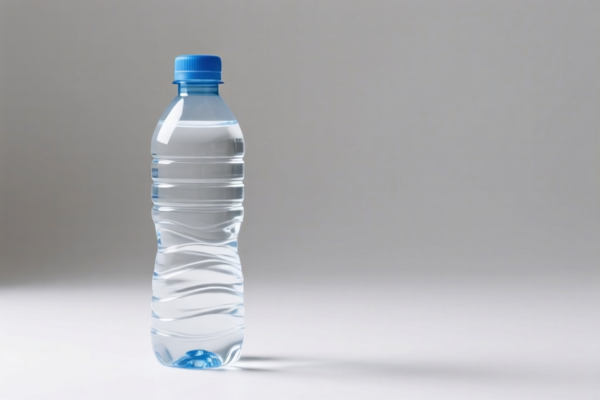

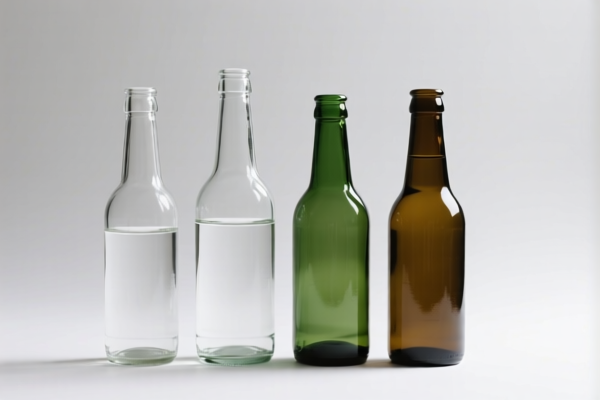
AI Analysis
🍼 Baby Bottle (Plastic & Glass Feeding Bottles)
🌐 HS Code Reference & Customs Clearance Guide | 2026 Tax Regime Deep Dive | Professional Strategy for Infant Feeding Products
📌 I. Product Definition & Classification: Do You Really Know Your "Baby Bottle"?
The baby bottle is a critical infant feeding device used globally. In international trade, it is strictly categorized based on material, function, and design, leading to vastly different tariff outcomes:
Plastic Baby Bottles (Dedicated for Infants):
- Made of plastic (typically PP, PPSU, or Tritan).
- Designed specifically for infant feeding (teats, handles, anti-colic vents).
- Classified under Plastic Articles of Chapter 39.
Glass/Plastic Feeding Bottles (Tableware Use):
- May include glass components.
- Often grouped under Glass Tableware if marketed for general kitchen use rather than infant-specific design.
⚠️ Critical Classification Distinction:
- Infant-specific plastic bottles → HS 3924.10.40.00 (Lower tariff).
- Other plastic baby items (non-bottle) → HS 3924.90.05.00 (Higher tariff).
- Glass or mixed-material bottles (tableware function) → HS 7013.49.20.90 (Highest tariff).
- Plastic bottles used for general packaging (not feeding) → HS 3923.30.00.10 (Very high tariff due to punitive measures).
📦 II. HS Code Classification Details (2026 Latest Tariff Schedule)
| HS Code | Product Description | Application Scenario | Material & Function |
|---|---|---|---|
3924.10.40.00 |
Plastic Baby Bottles – Dedicated infant feeding bottles | Infant feeding, nursery use | ✅ Plastic, specifically for infants |
3924.90.05.00 |
Other Plastic Baby Items (non-bottle) | Baby wipes, spoons, other accessories | ✅ Plastic, baby items but not bottles |
7013.49.20.90 |
Glass or Plastic Feeding Bottles (Tableware) | Kitchen/tableware use, general feeding | ✅ Glass or mixed, tableware category |
3923.30.00.10 |
Plastic Bottles for Packaging (non-feeding) | Industrial packaging, water bottles, condiments | ✅ Plastic, packaging purpose only |
🔍 Key Warning:
- Do NOT misclassify infant bottles as "packaging bottles" (3923.30.00.10) → 38.0% total tariff vs. 13.4% for correct classification!
- Glass bottles intended for infants but marketed as tableware will be taxed at 32.5%, not the lower infant-specific rate.
💰 III. 2026 Tariff Rate Breakdown (Including Additional Taxes & Policy Surcharges)
✅ Applicable Country: United States (US)
✅ Country of Origin: China (CN)
✅ Effective Date: November 10, 2025 onwards
🎯 1. 3924.10.40.00 – Plastic Baby Bottles (Infant-Specific)
The most cost-effective classification for true baby feeding bottles.
| Item | Content |
|---|---|
| Base Tariff | 3.4% (Ad Valorem) |
| Additional Tariff (Section 301) | 0.0% |
| 122 Tariff (Section 222) | 10.0% |
| Total Tariff | 13.4% |
| Tax Calculation | CIF Value × 13.4% |
| De Minimis Eligibility | ❌ No (Not exempt) |
| Legal Path | 3924.10.40.00 → Section 222 → Section 301 |
📌 Explanation:
- This is the correct classification for dedicated infant plastic bottles.
- Only 10% surcharge applies (Section 222), no Section 301 penalties.
- Lowest possible tariff for baby bottles imported from China.
🎯 2. 3924.90.05.00 – Other Plastic Baby Items
For baby products that are NOT bottles (e.g., spoons, pacifiers, bottles with complex non-feeding features).
| Item | Content |
|---|---|
| Base Tariff | 3.1% |
| Additional Tariff (Section 301) | 7.5% |
| 122 Tariff (Section 222) | 10.0% |
| Total Tariff | 20.6% |
| Tax Calculation | CIF Value × 20.6% |
| De Minimis Eligibility | ❌ No |
| Legal Path | 3924.90.05.00 → Section 301 → Section 222 |
📌 Warning:
- If your "baby bottle" has non-standard features (e.g., electronic parts, complex mechanisms) or is not clearly a feeding bottle, it may be misclassified here → +7.5% extra tax!
- Avoid if possible; ensure product is a standard feeding bottle.
🎯 3. 7013.49.20.90 – Glass/Plastic Feeding Bottles (Tableware)
If marketed as kitchen/tableware rather than infant-specific.
| Item | Content |
|---|---|
| Base Tariff | 22.5% |
| Additional Tariff (Section 301) | 0.0% |
| 122 Tariff (Section 222) | 10.0% |
| Total Tariff | 32.5% |
| Tax Calculation | CIF Value × 32.5% |
| De Minimis Eligibility | ❌ No |
| Legal Path | 7013.49.20.90 → Section 222 |
📌 Critical Risk:
- Glass bottles or mixed-material bottles marketed as tableware will be taxed at 32.5%.
- Do NOT claim "tableware" status for infant bottles → Overpay 19.1% more than necessary!
🎯 4. 3923.30.00.10 – Plastic Bottles for Packaging (Non-Feeding)
Only for industrial or general-purpose plastic bottles, NOT for infant feeding.
| Item | Content |
|---|---|
| Base Tariff | 3.0% |
| Additional Tariff (Section 301) | 25.0% |
| 122 Tariff (Section 222) | 10.0% |
| Total Tariff | 38.0% |
| Tax Calculation | CIF Value × 38.0% |
| De Minimis Eligibility | ❌ No |
| Legal Path | 3923.30.00.10 → Section 301 → Section 222 |
📌 DANGER ZONE:
- NEVER classify a baby bottle as a "packaging bottle" (3923.30.00.10).
- This triggers the highest Section 301 penalty (25%) → 38.0% total tariff.
- Misclassification here = Massive overpayment + potential customs penalties.
🛠️ IV. Customs Clearance Practical Advice (Avoid Pitfalls!)
✅ 1. Documentation Checklist (Non-Negotiable)
| Document | Required | Purpose |
|---|---|---|
| ✅ Product Specification Sheet | ✔️ | Must state: "Dedicated Infant Feeding Bottle", Material (PP/PET), No electronic components |
| ✅ Technical Drawings | ✔️ | Show bottle shape, teat design, volume markings |
| ✅ Product Photos (Labeled) | ✔️ | Clear images of bottle, teat, packaging with "Baby Bottle" label |
| ✅ Safety Certifications | ✔️ | FDA, CPSIA, BPA-Free, LFGB (if applicable) |
| ✅ Commercial Invoice | ✔️ | Must explicitly state "Plastic Baby Feeding Bottle" (NOT "packaging" or "tableware") |
| ✅ Origin Certificate | ✔️ | For China origin, verify HS Code eligibility |
| ✅ Packing List | ✔️ | Confirm no non-bottle items included |
✅ 2. Declaration Tips (Golden Rules)
🔥 “Be Specific: ‘Baby Bottle’ = 13.4%, ‘Packaging’ = 38%!”
| Scenario | Correct Declaration | Incorrect Declaration | Consequence |
|---|---|---|---|
| True infant plastic bottle | 3924.10.40.00 + "Baby Bottle" |
"Plastic Bottle" (vague) | Risk of audit, delayed clearance |
| Glass baby bottle | 7013.49.20.90 + "Glass Baby Bottle" |
"Tableware Bottle" | 32.5% tax (vs. 13.4% if misclassified) |
| Plastic baby bottle + accessories | Single HS Code (3924.10.40.00) |
Split into "bottle" + "cap" | 38.0% if cap classified as packaging |
| General plastic bottle (water) | 3923.30.00.10 + "Packaging Bottle" |
"Baby Bottle" | 38.0% tax for baby product! |
✅ 3. Special Situations
| Situation | Recommendation |
|---|---|
| OEM Custom Baby Bottles | Provide design proof + client order to confirm infant-specific use |
| Bottles with Teat + Cap | Declare as single item under 3924.10.40.00; do not separate components |
| Bottles for Medical Use | If truly medical (e.g., hospital use), may qualify for exemption, but rare |
| Bottles with Electronic Parts | Do NOT claim infant use → Risk of misclassification penalty |
🌍 V. Global Market Comparison (2026 Tariff Snapshot)
| Country/Region | Recommended HS Code | Tariff | Certification | Notes |
|---|---|---|---|---|
| 🇺🇸 USA | 3924.10.40.00 |
13.4% (China) | FDA + CPSIA | Highest risk for misclassification |
| 🇨🇳 China | 3924.10.40.00 |
5% (if imported) | CCC + RoHS | No Section 301/222 |
| 🇪🇺 EU | 3924.10.40.00 |
0% (if compliant) | CE + LFGB | No Section 301 |
| 🇦🇺 Australia | 3924.10.40.00 |
5% | RCM + AS/NZS | No Section 301 |
| 🇯🇵 Japan | 3924.10.40.00 |
0% | PSE + JIS | No Section 301 |
📌 Conclusion:
- USA is the only market with Section 222/301 surcharges on baby bottles.
- Correct classification is the #1 cost-saving strategy (13.4% vs. 38.0% = 24.6% savings!).
📌 VI. Common Mistakes & Pitfalls (Lessons Learned!)
❌ Mistake 1: Calling a "baby bottle" a "plastic packaging bottle"
👉 Result: 38.0% tax instead of 13.4% → Loss of 24.6%!
❌ Mistake 2: Claiming "tableware" for a glass baby bottle
👉 Result: 32.5% tax instead of 13.4% → Overpayment!
❌ Mistake 3: Declaring "baby bottle" without proof of infant-specific design
👉 Result: Customs audit → Delayed clearance + penalties
❌ Mistake 4: Splitting bottle components (cap, teat, bottle) into separate HS codes
👉 Result: 38.0% if cap is misclassified → Total tax explosion!
✅ Correct Approach:
"Plastic Baby Feeding Bottle, BPA-Free, 250ml, with Silicone Teat, FDA-Certified, Model XYZ"
HS Code:3924.10.40.00
🎯 VII. Final Takeaway: Precision Classification = Profit Protection!
🎯 Remember:
🔹 "Baby Bottle = 13.4%, Packaging = 38%! One word makes the difference."
🔹 "Glass or Tableware? = 32.5%! Only true infant bottles get 13.4%."
🔹 "Split components? = Tax Disaster! Declare as ONE item."
📌 Pro Tip:
If your baby bottles are manufactured in Vietnam, Mexico, or Thailand, you may qualify for Section 222 exemption → Tariff = Base Rate Only (3.4%)!
Always apply for Advance Ruling (Pre-Classification) before shipping to avoid surprises.
📣 Action Now:
📞 Contact Customs Broker + Submit Product Photos + Request HS Code Pre-Ruling
🚀 Ship Your Baby Bottles with Confidence: 13.4% Tax, Not 38%!
✨ Expert Customs Clearance Starts with Correct HS Code!
💼 Every Dollar Saved is Pure Profit!
Customer Reviews
About HS Code Classification
The Harmonized System (HS) is an internationally standardized nomenclature developed by the World Customs Organization (WCO) to classify traded products. Over 200 countries use the HS system as the basis for customs tariffs, trade statistics, and import/export regulations.
Each HS code follows a hierarchical structure:
- Chapter (2 digits) — Broad category of goods (e.g., Chapter 84: Machinery and Mechanical Appliances)
- Heading (4 digits) — More specific grouping within the chapter
- Subheading (6 digits) — Internationally standardized breakdown, used by all WCO member countries
- National subdivisions (8-10 digits) — Country-specific extensions for further classification, such as US HTSUS 10-digit codes
Correct HS code classification is essential for smooth customs clearance, accurate duty payment, and compliance with trade regulations. Misclassification can lead to customs delays, overpayment of duties, or penalties.
When importing from CN to US, the applicable tariff rates may include:
- Most-Favored-Nation (MFN) rate — The standard duty rate applied to WTO members
- General rate — Applied to countries without trade agreements
- Trade remedy duties — Additional tariffs such as Section 301 (anti-dumping), Section 232 (national security), or countervailing duties
The information provided on this page is for reference purposes only. For official classification, please consult with your local customs authority or a licensed customs broker.