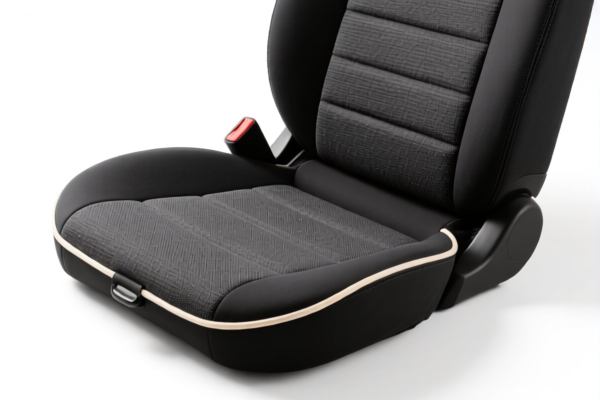
baby car seat
CN → US| HS Code | Tariff Rate | Origin | Destination | Doc |
|---|---|---|---|---|
| 3926909989 | 22.8% | CN | US | Official Doc |
| 3926909950 | 22.8% | CN | US | Official Doc |
| 8708210000 | 37.5% | CN | US | Official Doc |
| 8708295160 | 0.0% | CN | US | Official Doc |
| 9401806023 | 35.0% | CN | US | Official Doc |
| 9401806021 | 35.0% | CN | US | Official Doc |
Product Images

AI Analysis
🚗 Baby Car Seat (Child Safety Seat) – Ultimate HS Code & Customs Clearance Guide (2026 Edition)
🌐 Global HS Code & Duty Breakdown | Strategic Customs Clearance | 2026 Tariff Updates
📌 I. Product Definition & Classification: Are You Declaring the Right Category?
Baby Car Seats are critical safety devices designed to protect infants and young children in motor vehicles. In international trade, they are classified under different HS Codes based on design type, safety features, and construction material.
There are two main categories:
🧩 1. Standard Child Safety Seats (Soft Shell / Fabric)
- Features: Fabric, padding, adjustable harness, no detachable hard shell
- Typical HS Code:
9401.80.60.23
🛡️ 2. Hard-Shell Child Safety Seats (Detachable Hard-Shell Design)
- Features: Rigid plastic outer shell, modular design, high-impact protection
- Typical HS Code:
9401.80.60.21
⚠️ Critical Distinction:
- If the seat has a detachable hard-shell → Must use9401.80.60.21
- If it's soft-shell only → Use9401.80.60.23
- Wrong classification = 25% penalty or audit risk!
📦 II. HS Code Classification Details (2026 Tariff Schedule)
| HS Code | Product Description | Application Scenario | Hard-Shell Design |
|---|---|---|---|
9401.80.60.21 |
Child Safety Seat with detachable hard-shell | High-safety infant/toddler seats, modular systems | ✅ Yes |
9401.80.60.23 |
Other Child Safety Seats (Soft Shell) | Standard fabric car seats, no hard outer shell | ❌ No |
🔍 Key Reminder:
- Both fall under Chapter 94 (Furniture and Parts) – NOT Chapter 87 (Vehicle Parts).
- Vehicle parts (like seat belts, body components) are under 8708.xxxx, car seats are NOT vehicle parts in customs classification.
💰 III. 2026 Customs Duty Rates (China to U.S. / Global Markets)
✅ Origin: China
✅ Destination: United States
✅ Effective From: 2025–2026
✅ Applicable Policy: Section 301 Tariffs + Steel/Aluminum/Copper Surcharges (if applicable)
🎯 1. 9401.80.60.21 – Hard-Shell Child Safety Seat
| Item | Value |
|---|---|
| Base Tariff (MFN) | 0.0% |
| Section 301 Additional Duty | +25.0% |
| Steel/Aluminum/Copper Surcharge | N/A (unless containing >5% metal parts) |
| Total Tariff | 25.0% |
| Calculation Base | CIF Value × 25% |
| De Minimis Exemption | ❌ Not Allowed |
| Legal Basis | USITC:9401.80.60.21 + Section 301:301 |
📌 Explanation:
- Even though base duty is 0%, Section 301 tariffs add 25% for Chinese-made child safety seats.
- No exemption for small-value shipments (de minimis does NOT apply).
- Hard-shell design does not reduce tariff – it only affects classification.
🎯 2. 9401.80.60.23 – Soft-Shell Child Safety Seat
| Item | Value |
|---|---|
| Base Tariff (MFN) | 0.0% |
| Section 301 Additional Duty | +25.0% |
| Steel/Aluminum/Copper Surcharge | N/A |
| Total Tariff | 25.0% |
| Calculation Base | CIF Value × 25% |
| De Minimis Exemption | ❌ Not Allowed |
| Legal Basis | USITC:9401.80.60.23 + Section 301:301 |
📌 Note:
- Same 25% tariff applies to both types of child safety seats.
- Material composition (plastic, fabric, foam) does not change the tariff rate.
- Only the HS Code determines correct classification – not price, brand, or marketing.
🛠️ IV. Customs Clearance Best Practices (Avoid Costly Mistakes!)
✅ 1. Required Documentation Checklist
| Document | Required? | Purpose |
|---|---|---|
| ✅ Product Specification Sheet | ✔️ | Confirm shell type, material, safety standards |
| ✅ Photos (Front, Back, Shell Detachment) | ✔️ | Prove hard-shell vs. soft-shell |
| ✅ Safety Certification (e.g., FMVSS 213, ECE R44/04) | ✔️ | Required for U.S./EU import |
| ✅ Commercial Invoice (Clear Description) | ✔️ | Must state "Child Safety Seat" + HS Code |
| ✅ Packing List | ✔️ | Avoid "mixed shipment" errors |
| ✅ Country of Origin Certificate | ✔️ | If not China, may qualify for lower tariff |
| ✅ Technical Drawings (if requested) | ✔️ | Clarify detachable shell mechanism |
✅ 2. Declaration Strategy (Pro Tips)
🔥 Golden Rule:
“Hard-Shell = .21 | Soft-Shell = .23 | Never Call It 'Car Part'!”
| Scenario | Correct Declaration | Risk if Wrong |
|---|---|---|
| Hard-shell car seat | 9401.80.60.21 |
25% + Audit Risk |
| Soft-shell car seat | 9401.80.60.23 |
25% + Delay |
Misclassified as 8708.29.51.60 |
❌ Wrong! | 50% tariff + Seizure |
Misclassified as 8708.21.00.00 (Seat Belt) |
❌ Wrong! | 0% but rejected |
| Mixed shipment (seats + belts) | Separate HS Codes | 25% on seats, 0% on belts |
✅ 3. Special Cases & Exceptions
| Case | Handling Advice |
|---|---|
| OEM Customized Seats | Provide design specs + customer order; avoid generic "baby seat" label |
| Seats with Built-in Boosters | Still 9401.80.60.xx – not 9403 (furniture) |
| Seats for Medical Transport | May qualify for Section 301 Exemption if certified (e.g., for ambulances) |
| Imported from Vietnam/Mexico | Section 301 Does NOT Apply! Tariff = 0% |
| Pre-Shipment Inspection | Strongly recommended for hard-shell models |
🌍 V. Global Market Comparison (2026)
| Country | Recommended HS Code | Base Duty | Section 301? | Certification |
|---|---|---|---|---|
| 🇺🇸 USA | 9401.80.60.21/.23 |
0% | ✅ +25% | FMVSS 213, CPSC |
| 🇨🇳 China | Same | 0% | ❌ | CCC, GB 27887 |
| 🇪🇺 EU | 9401.80.60.21/.23 |
0% | ❌ | ECE R44/04, R129 |
| 🇦🇺 Australia | Same | 0% | ❌ | AN/AS 1754 |
| 🇯🇵 Japan | Same | 0% | ❌ | JIS D 4612 |
| 🇨🇦 Canada | Same | 0% | ❌ | CMVSS 213 |
📌 Key Insight:
- Only the U.S. applies 25% Section 301 tariffs on Chinese-made baby car seats.
- Vietnam, Mexico, Thailand, Malaysia → 0% tariff in U.S. (if properly documented).
🚫 VI. Common Mistakes & How to Avoid Them
❌ Mistake 1: Calling car seat a “Vehicle Part” (8708.xxxx)
👉 Result: 25% or 50% tariff + Customs Rejection
✅ Fix: Always declare under Chapter 94, not 87.
❌ Mistake 2: Not specifying hard-shell vs. soft-shell
👉 Result: Audit, delay, or reclassification penalty
✅ Fix: Use clear HS Code and include photo evidence of detachable shell.
❌ Mistake 3: Ignoring safety certification
👉 Result: Seizure at port (especially in U.S.)
✅ Fix: Attach FMVSS 213 or ECE R44/04 certificate.
❌ Mistake 4: Using “Baby Seat” as generic name
👉 Result: Customs may assume non-compliant product
✅ Fix: Use precise description:
“Hard-Shell Child Safety Seat, Model XYZ, FMVSS 213 Certified, Detachable Shell, 0–4 Years”
🎯 VII. Final Recommendations: Smart Customs Strategy
🔹 If sourcing from China:
- Expect 25% tariff on all baby car seats.
- Consider relocation to Vietnam/Mexico to avoid Section 301.
- Apply for Section 301 Exemption if used in medical/ambulance transport.🔹 If shipping to U.S.:
- Pre-approve HS Code via CBP Ruling.
- Always attach safety certs – no exceptions.
- Avoid mixing with vehicle parts (seat belts, body panels).🔹 For Global Markets:
- Use same HS Code (9401.80.60.xx) in EU, AU, CA, JP.
- No Section 301 outside U.S. → 0% base duty.
📌 VII. Conclusion: Classify Right, Pay Less, Ship Faster!
🎯 Final Mantra:
🔹 “Hard-Shell = .21 | Soft-Shell = .23 | Never 8708!”
🔹 “25% on China, 0% on Vietnam” – Know your source!
🔹 “Safety Cert = Passport to U.S. Port!”
📣 Call to Action:
📞 Contact your customs broker NOW with:
- Product photos (show detachable shell)
- Safety certifications
- HS Code pre-approval request🚀 Avoid 25% tariffs, delays, and seizures – ship smarter today!
✨ Precision Classification = Profit Protection
💼 Every dollar saved starts with the right HS Code!
Customer Reviews
About HS Code Classification
The Harmonized System (HS) is an internationally standardized nomenclature developed by the World Customs Organization (WCO) to classify traded products. Over 200 countries use the HS system as the basis for customs tariffs, trade statistics, and import/export regulations.
Each HS code follows a hierarchical structure:
- Chapter (2 digits) — Broad category of goods (e.g., Chapter 84: Machinery and Mechanical Appliances)
- Heading (4 digits) — More specific grouping within the chapter
- Subheading (6 digits) — Internationally standardized breakdown, used by all WCO member countries
- National subdivisions (8-10 digits) — Country-specific extensions for further classification, such as US HTSUS 10-digit codes
Correct HS code classification is essential for smooth customs clearance, accurate duty payment, and compliance with trade regulations. Misclassification can lead to customs delays, overpayment of duties, or penalties.
When importing from CN to US, the applicable tariff rates may include:
- Most-Favored-Nation (MFN) rate — The standard duty rate applied to WTO members
- General rate — Applied to countries without trade agreements
- Trade remedy duties — Additional tariffs such as Section 301 (anti-dumping), Section 232 (national security), or countervailing duties
The information provided on this page is for reference purposes only. For official classification, please consult with your local customs authority or a licensed customs broker.