baby stroller
CN → US| HS Code | Tariff Rate | Origin | Destination | Doc |
|---|---|---|---|---|
| 9503000071 | 10.0% | CN | US | Official Doc |
| 9503000090 | 10.0% | CN | US | Official Doc |
| 8715000020 | 14.4% | CN | US | Official Doc |
Product Images
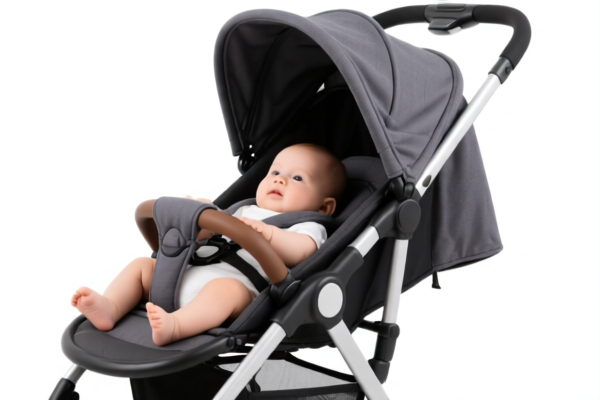
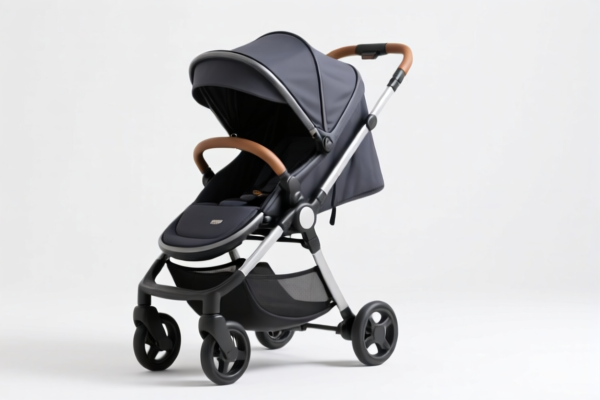
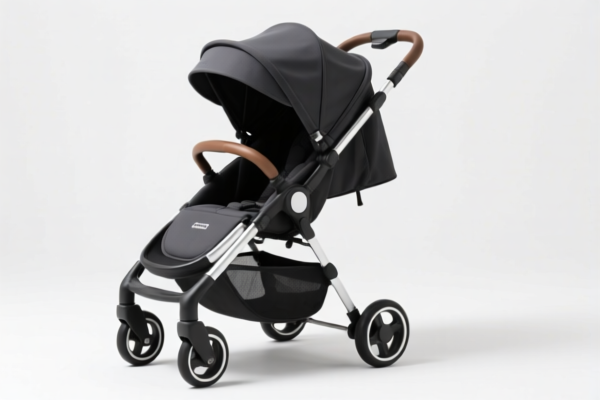
AI Analysis
🛒 Baby Stroller (Infant Pushchairs) – HS Code Guide & US Customs Strategy (2026 Edition)
🌐 HS Code Reference & Customs Clearance Guide | 2026 Latest Tariff Analysis | Professional Entry Strategy
📌 Section 1: Product Definition & Classification – Do You Really Know What a "Baby Stroller" Is?
A baby stroller is a wheeled transport device designed to carry infants or toddlers. In international trade, its classification depends on function, design intent, and regulatory intent (toy vs. child safety device).
There are three major classification pathways under the Harmonized System (HS):
- As a Toy/Amusement Device → Classified under Chapter 95 (Toys)
- If marketed as a "play item" or "toy car" (e.g., with cartoon characters, bright colors, non-functional features for play)
- As a General Child Transport Device → Classified under Chapter 87 (Vehicles)
- If intended primarily for transportation, with functional safety features (brakes, harness, suspension, foldable frame)
- As a "Similar" Device → May still fall under Chapter 95 if deemed a "toy-like" stroller
⚠️ Critical Classification Distinction:
- Toy-style stroller (e.g., with loud music, lights, no safety belt) → 9503.00.00.71 / 9503.00.00.90
- Functional stroller (with seatbelt, brakes, foldable frame) → 8715.00.00.20
- Ambiguous cases may face audits unless clearly documented.
📦 Section 2: HS Code Classification Details (2026 Tariff Authority)
| HS Code | Product Description | Application Scenario | Key Feature |
|---|---|---|---|
9503.00.00.71 |
Baby stroller classified under "doll carriages and similar wheeled toys" | Toy strollers, novelty items, character-themed play vehicles | ❌ Not primarily for transport |
9503.00.00.90 |
Baby stroller under "other toys / doll carriages" | General toy category, non-safety-focused models | ❌ Not for actual infant transport |
8715.00.00.20 |
Baby stroller as a "child carriage" (including pushchairs) | Real-world infant transport with safety features (seatbelt, brake, foldable) | ✅ Designed for transport |
🔍 Key Reminder:
- If the stroller has functional safety features (e.g., 5-point harness, brake, adjustable handle), it should be declared under 8715.00.00.20.
- If it is a toy version (e.g., for play, no safety belt, light weight, no brakes), use 9503.
- Do not mix: Misclassification can lead to audits, penalties, or cargo delays.
💰 Section 3: 2026 US Tariff Rate Breakdown (Including Additional Taxes)
✅ Applicable Country: United States (US)
✅ Country of Origin: China (CN)
✅ Effective Date: From November 10, 2025 onward (including future imports)
🎯 1. 9503.00.00.71 – Baby Stroller (Toy/Doll Carriage)
| Item | Content |
|---|---|
| Base Tariff | 0% (ad valorem) |
| Section 232 Tariff | +0% (not applicable) |
| Section 122 Tariff | +10% (specific to China-origin toys) |
| Total Tariff | 10% |
| Duty Calculation | CIF Value × 10% |
| De Minimis Exemption | ❌ Not Allowed (denied under 301/122) |
| Legal Path | Section 122: 9903.15.16 → 9503.00.00.71 |
📌 Explanation:
- This is a toy-category stroller, not a safety transport device.
- Subject to Section 122 tariff (10%) due to China origin.
- No de minimis exemption for low-value shipments.
🎯 2. 9503.00.00.90 – Baby Stroller (Other Toy Category)
| Item | Content |
|---|---|
| Base Tariff | 0% |
| Section 232 Tariff | +0% |
| Section 122 Tariff | +10% |
| Total Tariff | 10% |
| Duty Calculation | CIF × 10% |
| De Minimis Exemption | ❌ Not Allowed |
| Legal Path | Section 122: 9903.15.16 → 9503.00.00.90 |
📌 Note:
- Same tax treatment as 9503.00.00.71.
- Applies to toy-like strollers without safety features.
- Even if branded as "luxury toy," the function determines the code.
🎯 3. 8715.00.00.20 – Baby Stroller (Child Carriage / Functional Transport)
| Item | Content |
|---|---|
| Base Tariff | 4.4% |
| Section 232 Tariff | +0% |
| Section 122 Tariff | +10% |
| Total Tariff | 14.4% |
| Duty Calculation | CIF × 14.4% |
| De Minimis Exemption | ❌ Not Allowed |
| Legal Path | Section 122: 9903.15.16 → 8715.00.00.20 |
📌 Explanation:
- This is the correct classification for real baby strollers with safety features.
- Higher base rate (4.4%) due to vehicle category, plus 10% Section 122.
- Must be documented with safety standards (e.g., CPSC, ASTM F833).
🛠️ Section 4: Customs Clearance Practical Tips (Avoiding Pitfalls)
✅ 1. Document Checklist (All Required)
| Document | Required? | Explanation |
|---|---|---|
| ✅ Product Specs Sheet | ✔️ | Include dimensions, weight, safety features, materials |
| ✅ Safety Test Reports | ✔️ | ASTM F833, CPSC, EN 1888 (if applicable) |
| ✅ Product Photos | ✔️ | Show harness, brakes, foldable mechanism |
| ✅ Commercial Invoice | ✔️ | Clearly state "Baby Stroller" or "Toy Stroller" |
| ✅ Origin Certificate (CO) | ✔️ | If not China origin, may reduce Section 122 |
| ✅ Packing List | ✔️ | Avoid splitting parts (e.g., wheels, seat) |
| ✅ User Manual (English) | ✔️ | Required for safety compliance |
✅ 2. Declaration Strategy (Golden Rule)
🔥 “Safety = 8715, Toy = 9503. Name Matters, Code Saves!”
| Scenario | Correct Declaration | Wrong Declaration |
|---|---|---|
| Real stroller (with seatbelt, brakes) | 8715.00.00.20 |
9503.00.00.71 → 14.4% vs 10%? Wait! No, 10% is lower, but risk of audit! |
| Toy stroller (no brakes, cartoon design) | 9503.00.00.71 |
8715.00.00.20 → Overpaying, but safer if misclassified |
| Hybrid (safety + toy features) | Declare as 8715.00.00.20 |
Risk of audit if toy features dominate |
⚠️ Critical:
- Even if 10% is lower, misdeclaring a safety stroller as a toy can lead to fines, seizure, or import ban under CPSC rules.
- Better to pay 14.4% safely than risk 10% with compliance issues.
✅ 3. Special Cases
| Case | Recommendation |
|---|---|
| OEM Custom Strollers | Provide design specs + customer order to prove safety intent |
| Stroller with Wheels Only | Must still declare as complete unit; don’t split |
| Used/Stroller Rentals | May need additional documentation for "used goods" |
| Military/Medical Strollers | Can request special classification; rare case |
🌍 Section 5: Global Market Comparison (2026 Tariffs)
| Country/Region | Recommended HS Code | Tariff | Certification | Notes |
|---|---|---|---|---|
| 🇺🇸 USA | 8715.00.00.20 |
14.4% (China) | CPSC + ASTM | Toy version 10% but high audit risk |
| 🇨🇳 China | 8715.00.00.20 |
4.4% | CCC + RoHS | No Section 122 |
| 🇪🇺 EU | 8715.00.00.20 |
0–4% | CE + EN 1888 | No Section 122 |
| 🇦🇺 Australia | 8715.00.00.20 |
5% | RCM | No Section 122 |
| 🇯🇵 Japan | 8715.00.00.20 |
0–5% | PSE | No Section 122 |
📌 Conclusion:
- USA is the only market with Section 122 (10%) on toys and high safety compliance on vehicles.
- Always declare functional strollers under 8715 to avoid CPSC issues.
📌 Section 6: Common Mistakes & How to Avoid Them
❌ Mistake 1: Declaring a safety stroller as a toy to save 4.4%
👉 Result: CPSC audit, cargo hold, or recall
✅ Fix: Use 8715.00.00.20 + provide safety docs
❌ Mistake 2: Splitting stroller into "frame + wheels + seat"
👉 Result: Each part taxed separately → 14.4% × 3 = 43.2%
✅ Fix: Declare as complete unit
❌ Mistake 3: Using vague terms like "wheeled carrier"
👉 Result: Customs ambiguity → Delay or re-classification
✅ Fix: Use "Baby Stroller with 5-point harness, foldable frame, brake"
🎯 Section 7: Conclusion – Smart Declaration, Smooth Clearance, Max Profit!
🎯 Remember:
🔹 "Safety = 8715, Toy = 9503. Name matters, code saves!"
🔹 "10% or 14.4%? Pay the right one, avoid the fine!"
🔹 "Don't split, don't fake, declare clean!"
📌 Pro Tip:
If your stroller is made in Vietnam, Mexico, or Thailand, you may avoid Section 122 (10% extra).
👉 Apply for Advance Ruling to confirm classification before shipping.
📣 Take Action Now:
📞 Contact customs broker + Submit product photos + Apply for HS Code Pre-Ruling
🚀 Ensure your baby strollers clear US customs fast, safely, and profitably!
✨ Precision Classification is the Key to Efficient Export!
💼 Every dollar saved starts with the right HS Code!
Customer Reviews
About HS Code Classification
The Harmonized System (HS) is an internationally standardized nomenclature developed by the World Customs Organization (WCO) to classify traded products. Over 200 countries use the HS system as the basis for customs tariffs, trade statistics, and import/export regulations.
Each HS code follows a hierarchical structure:
- Chapter (2 digits) — Broad category of goods (e.g., Chapter 84: Machinery and Mechanical Appliances)
- Heading (4 digits) — More specific grouping within the chapter
- Subheading (6 digits) — Internationally standardized breakdown, used by all WCO member countries
- National subdivisions (8-10 digits) — Country-specific extensions for further classification, such as US HTSUS 10-digit codes
Correct HS code classification is essential for smooth customs clearance, accurate duty payment, and compliance with trade regulations. Misclassification can lead to customs delays, overpayment of duties, or penalties.
When importing from CN to US, the applicable tariff rates may include:
- Most-Favored-Nation (MFN) rate — The standard duty rate applied to WTO members
- General rate — Applied to countries without trade agreements
- Trade remedy duties — Additional tariffs such as Section 301 (anti-dumping), Section 232 (national security), or countervailing duties
The information provided on this page is for reference purposes only. For official classification, please consult with your local customs authority or a licensed customs broker.