baby stroller sleep sack
CN → US| HS Code | Tariff Rate | Origin | Destination | Doc |
|---|---|---|---|---|
| 8715000020 | 14.4% | CN | US | Official Doc |
| 9503000090 | 10.0% | CN | US | Official Doc |
| 9503000071 | 10.0% | CN | US | Official Doc |
Product Images
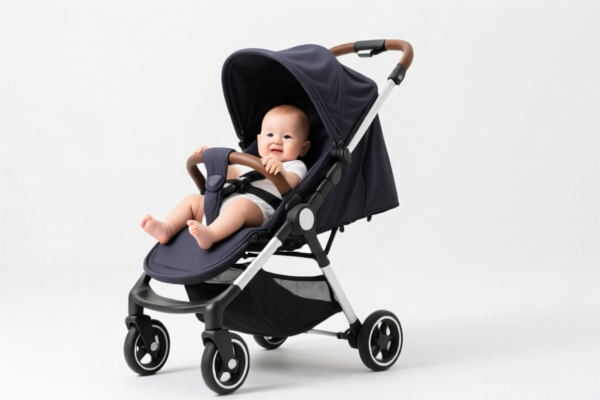
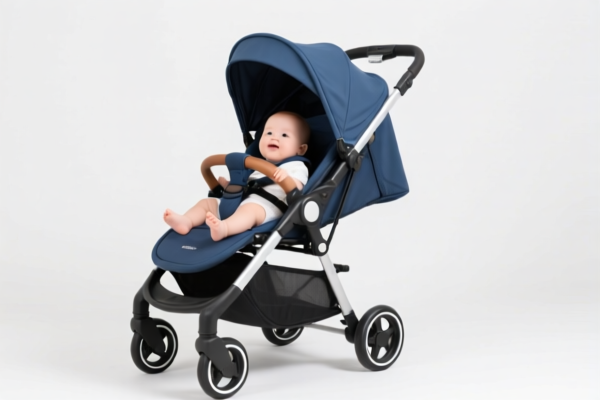
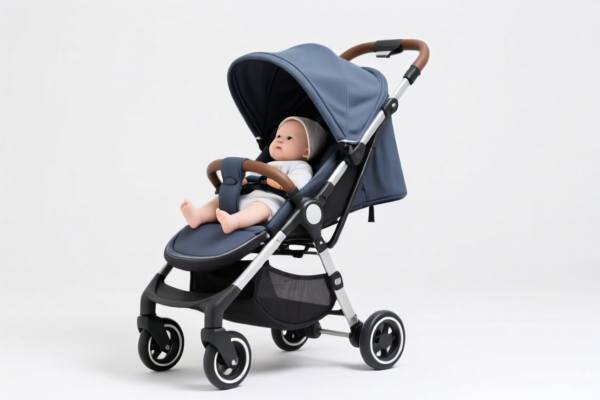
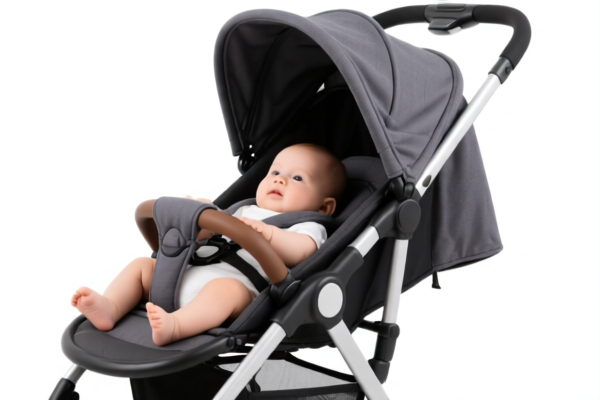
AI Analysis
🚼 Baby Stroller Sleep Sack (and Related Products)
🌐 HS Code Reference & Customs Clearance Guide | 2026 Latest Tariff Analysis | Professional Strategy for "Stroller-Sleep" Hybrid Goods
📌 One, Product Definition & Classification: What Exactly Is a "Baby Stroller Sleep Sack"?
This product category represents a unique intersection of infant mobility and infant bedding/sleepwear. In international trade, customs authorities struggle to classify items that blend the functions of a "stroller" (transport device) with a "sleep sack" (textile/bedding item).
Based on the latest tariff data, these products are typically categorized into two distinct legal paths depending on their primary function, structural complexity, and market perception:
1. The "Stroller" Path (Chapter 87):
If the item is viewed as an accessory or integral part of a stroller system (e.g., a stroller-specific sleeping bag designed to clip into the chassis), it may fall under Chapter 87. This path is often chosen when the item is marketed as an essential component of the stroller ecosystem.
2. The "Toy/Wheel Toy" Path (Chapter 95):
If the item is marketed as a "doll pram" accessory, a "wheel toy" accessory, or if it lacks the structural rigidity and safety standards of a full-sized stroller, it may fall under Chapter 95. This path is critical for products that are essentially "toys" or "accessories for toys" rather than functional transport devices.
⚠️ Key Distinction Point:
- If the item is a functional, safety-certified stroller with wheels, frame, and braking system → It is a Stroller (Chapter 87).
- If the item is a sleep sack that is bundled with a stroller, or a toy stroller accessory → It is likely a Toy/Accessory (Chapter 95).
- Crucial Note: Even if it’s a "stroller," if it’s deemed a "toy" or "doll pram" due to size/quality, it shifts to Chapter 95.
📦 Two, HS Code Classification Details (2026 Latest Tariff Authority Comparison)
Based on the provided data, here are the three potential HS Codes and their rationale:
| HS Code | Product Description | Applicability Scenario | Tax Rate (Total) |
|---|---|---|---|
| 8715.00.00.20 | Baby Stroller (Primary Function) Goods consistent with the use and form of a stroller. |
High-End/Functional Strollers: Items that are genuine strollers, including those with integrated sleep systems, carrying capabilities, and structural frames. The "summary" explicitly states: "consistent with the use and form of a stroller." | 14.4% |
| 9503.00.00.90 | Toys/Doll Prams (Accessory Category) Other toys not elsewhere specified; includes doll prams. |
Toy-Like or Accessory Items: If the "stroller" is primarily a toy, a doll pram, or a sleep sack marketed as a "stroller accessory" without full stroller functionality. The summary states: "belongs to the category of toys/doll prams, fits the definition of other items." | 10.0% |
| 9503.00.00.71 | Wheel Toys & Similar Doll prams and similar wheeled toys. |
Doll Prams/Child Ride-Ons: Specifically for wheeled toys for children, such as doll strollers or ride-on toys that resemble strollers but are not for actual infant transport. | 10.0% |
🔍 Key Reminder:
- 8715.00.00.20 is for functional strollers. If your product is a real stroller that also has a sleep sack attachment, this is the most likely code.
- 9503.00.00.90 and 9503.00.00.71 are for toys/accessories. If your product is a sleep sack that is shipped with a toy stroller, or a toy stroller itself, these codes apply.
- Do not misclassify: A functional stroller declared as a "toy" may be rejected for safety reasons. A toy declared as a "stroller" may be subject to higher duties and stricter safety standards.
💰 Three, 2026 Latest Tariff Rate Details (Including Additional Taxes & Policy Surcharges)
✅ Applicable Country: United States (US)
✅ Country of Origin: China (CN)
✅ Effective Date: From November 10, 2025 (including subsequent imports)
🎯 1. 8715.00.00.20 —— Functional Baby Stroller
| Item | Content |
|---|---|
| Base Tariff | 4.4% (ad valorem) |
| Section 301 Additional Tariff | 0.0% |
| Section 122 Tariff | 10.0% (Specific tariff for certain Chinese goods) |
| Total Rate | 14.4% |
| Tax Calculation | CIF Value × 14.4% |
| De Minimis Exemption | ❌ Not Eligible (Standard for strollers) |
| Legal Basis Path | HTSUS:8715.00.00.20 → Section 122 |
📌 Explanation:
- The 14.4% total tariff consists of the 4.4% base duty plus the 10% Section 122 tariff.
- Section 122 is a specific tariff provision applied to certain goods from China. It is not the 25% Section 301 tariff, which is listed as 0.0% for this code.
- This is a moderate-high tariff for baby products. Importers must budget accordingly.
🎯 2. 9503.00.00.90 —— Other Toys (Including Doll Prams/Accessories)
| Item | Content |
|---|---|
| Base Tariff | 0.0% (ad valorem) |
| Section 301 Additional Tariff | 0.0% |
| Section 122 Tariff | 10.0% |
| Total Rate | 10.0% |
| Tax Calculation | CIF Value × 10.0% |
| De Minimis Exemption | ❌ Not Eligible |
| Legal Basis Path | HTSUS:9503.00.00.90 → Section 122 |
📌 Note:
- Toys often have a 0% base tariff, making them appear cheaper.
- However, the 10% Section 122 tariff still applies, bringing the total to 10.0%.
- This is 4.4% lower than the functional stroller code (8715.00.00.20).
- Risk: If customs determines the item is a functional stroller and not a toy, you will owe the difference + penalties.
🎯 3. 9503.00.00.71 —— Doll Prams and Similar Wheeled Toys
| Item | Content |
|---|---|
| Base Tariff | 0.0% (ad valorem) |
| Section 301 Additional Tariff | 0.0% |
| Section 122 Tariff | 10.0% |
| Total Rate | 10.0% |
| Tax Calculation | CIF Value × 10.0% |
| De Minimis Exemption | ❌ Not Eligible |
| Legal Basis Path | HTSUS:9503.00.00.71 → Section 122 |
📌 Note:
- This code is for doll prams (toys for children to push dolls).
- If your "Baby Stroller Sleep Sack" is marketed as a toy for toddlers (not for actual babies), this code is appropriate.
- Same 10.0% total rate as 9503.00.00.90.
🛠️ Four, Customs Clearance Practical Advice (Real-World Pitfall Avoidance Guide)
✅ 1. Document Preparation Checklist (None of the Above Can Be Missing)
| Document | Required | Description |
|---|---|---|
| ✅ Product Specification Sheet | ✔️ | Must clearly state: Is it a stroller or a toy? Does it have wheels? Does it sleep? |
| ✅ Product Photos | ✔️ | Clear images of the product in use, showing size, materials, and safety features (or lack thereof). |
| ✅ Commercial Invoice | ✔️ | Critical: The description must match the HS Code. E.g., "Doll Pram" vs. "Baby Stroller." |
| ✅ Packing List | ✔️ | Detail contents: Is the sleep sack separate or attached? |
| ✅ Safety Certifications (CPSC/FCC) | ✔️ | If classified as a stroller (8715), US safety standards (CPSC) are strict. If a toy (9503), different ASTM standards apply. |
| ✅ Origin Certificate | ✔️ | Proof of Origin to confirm China origin and apply Section 122 tariffs. |
✅ 2. Declaration Strategy (Key Mnemonics)
🔥 "Function Dictates Code, Toy vs. Stroller, Tax Difference is Real!"
| Scenario | Correct HS Code | Incorrect Action | Consequence |
|---|---|---|---|
| Real Stroller with Sleep Sack | 8715.00.00.20 |
Declare as "Toy" | Customs rejects for safety non-compliance. Higher duty + fine. |
| Doll Pram / Toy Stroller | 9503.00.00.71 |
Declare as "Stroller" | Overpaying 4.4% (14.4% vs 10%). |
| Sleep Sack (Accessory) | 9503.00.00.90 (or 9619 if textile) |
Declare as "Stroller" | Misclassification. If deemed a textile, duty may differ. |
| Bundle (Stroller + Sleep Sack) | 8715.00.00.20 (GRI 1) |
Split declaration | Complexity. Usually, the main item dictates the code. |
📌 Strategic Tip:
- If your product is primarily a sleep sack that comes with a small wheeled toy, declare the toy under 9503.
- If it is a full-sized stroller with a removable sleep sack, declare the stroller under 8715.
- Do not try to "trick" customs by calling a stroller a toy. The structural differences (safety belts, braking systems, weight capacity) are obvious to inspectors.
✅ 3. Special Case Handling
| Situation | Handling Advice |
|---|---|
| Sleep Sack Only (No Wheels) | ❌ Not covered in provided data. Likely falls under 9619.00.00.00 (Diapers/Nappies/Bedding) or 6109/6116 (Textiles). Check with a customs broker. |
| Hybrid Product (Stroller + Sleep Sack) | Declare as Stroller (8715.00.00.20). The sleep sack is an accessory. |
| Doll Stroller for Toddlers | Declare as Toy (9503.00.00.71). |
| Sleep Sack for Stroller (Accessory) | If sold separately, check textile codes. If sold as a bundle, the stroller code (8715) likely applies. |
🌍 Five, Global Market Comparison (2026 Latest)
| Country/Region | Recommended HS Code | Tariff | Certification | Remarks |
|---|---|---|---|---|
| 🇺🇸 USA | 8715.00.00.20 (Stroller) 9503.00.00.71 (Toy) |
14.4% (Stroller) 10.0% (Toy) |
CPSC (Stroller) ASTM F963 (Toy) |
Section 122 (10%) applies to both. |
| 🇨🇳 China | 8715.00.00.20 |
~10-14% | CCC (if applicable) | Lower base duty in some cases. |
| 🇪🇺 EU | 8715.00.00.90 |
0% (Free) | CE + EN1888 | No Section 122. Significantly cheaper. |
| 🇬🇧 UK | 8715.00.00.00 |
0-6% | UKCA | Post-Brexit rules apply. |
📌 Conclusion:
- USA is expensive due to Section 122 tariffs (10% added).
- EU is cheaper (0% base) but requires strict CE certification.
- Strategy: If targeting the US, consider if your product can be legally classified as a toy (9503) to save 4.4%. Only do this if it truly qualifies as a toy.
📌 Six, Common Mistakes & Pitfalls (Lessons Learned)
❌ Mistake 1: Calling a functional stroller a "Doll Pram" to save tax.
👉 Consequence: Customs inspection finds safety features (5-point harness, brakes). Seizure + Penalty.
❌ Mistake 2: Not declaring the sleep sack as part of the stroller.
👉 Consequence: If declared separately, the sleep sack might be taxed under textile codes (higher or lower, depending). Inconsistent valuation.
❌ Mistake 3: Ignoring Section 122.
👉 Consequence: Assuming 4.4% for strollers or 0% for toys. Unexpected 10% charge at customs.
✅ Correct Practice:
"Baby Stroller, Model XYZ, with Integrated Sleep Sack, US CPSC Certified, Origin: China" → 8715.00.00.20
"Doll Pram, Pink, for Toddlers, No Safety Harness, Toy" → 9503.00.00.71
🎯 Seven, Conclusion: Precision in Classification Saves Money!
🎯 Remember the Mnemonic:
🔹 "Stroller is 14.4%, Toy is 10.0%, Section 122 is the 10% kicker!"
🔹 "Function First, Tax Second, Safety Always!"
📌 Pro Tip:
- If your product is borderline (e.g., a small, lightweight stroller for infants that looks like a toy), consult a customs broker for a Binding Ruling before shipping.
- Section 122 is a critical factor in 2026. Budget for the extra 10% on top of the base duty.
📣 Immediate Action:
📞 Verify Product Function: Is it for transport (Stroller) or play (Toy)?
📄 Prepare Documentation: Specs, Photos, Certifications.
🚀 Declare Accurately: Avoid penalties.
✨ Professional Clearance Starts with Accurate Classification!
💼 Your Cost Efficiency Depends on the Right HS Code!
Customer Reviews
About HS Code Classification
The Harmonized System (HS) is an internationally standardized nomenclature developed by the World Customs Organization (WCO) to classify traded products. Over 200 countries use the HS system as the basis for customs tariffs, trade statistics, and import/export regulations.
Each HS code follows a hierarchical structure:
- Chapter (2 digits) — Broad category of goods (e.g., Chapter 84: Machinery and Mechanical Appliances)
- Heading (4 digits) — More specific grouping within the chapter
- Subheading (6 digits) — Internationally standardized breakdown, used by all WCO member countries
- National subdivisions (8-10 digits) — Country-specific extensions for further classification, such as US HTSUS 10-digit codes
Correct HS code classification is essential for smooth customs clearance, accurate duty payment, and compliance with trade regulations. Misclassification can lead to customs delays, overpayment of duties, or penalties.
When importing from CN to US, the applicable tariff rates may include:
- Most-Favored-Nation (MFN) rate — The standard duty rate applied to WTO members
- General rate — Applied to countries without trade agreements
- Trade remedy duties — Additional tariffs such as Section 301 (anti-dumping), Section 232 (national security), or countervailing duties
The information provided on this page is for reference purposes only. For official classification, please consult with your local customs authority or a licensed customs broker.