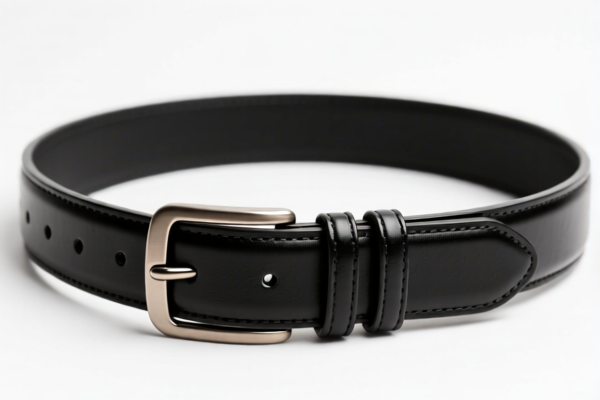
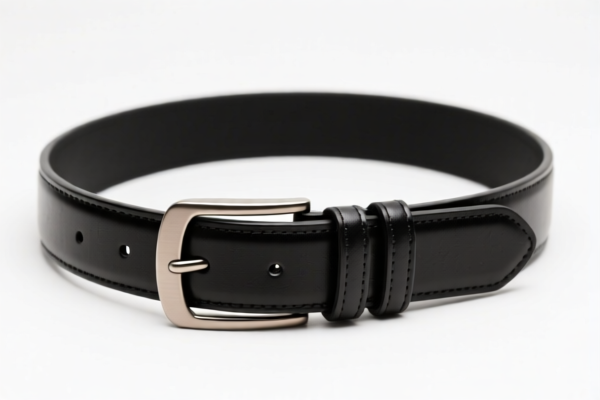
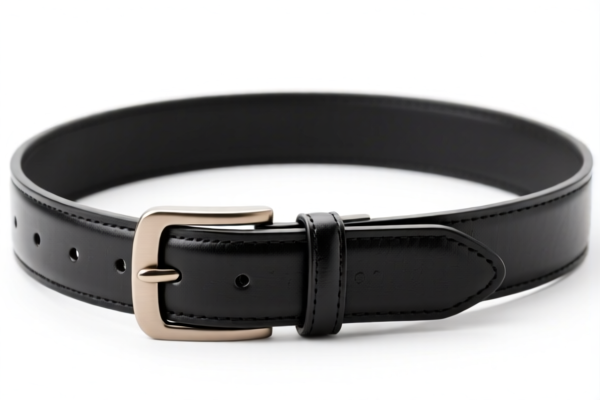
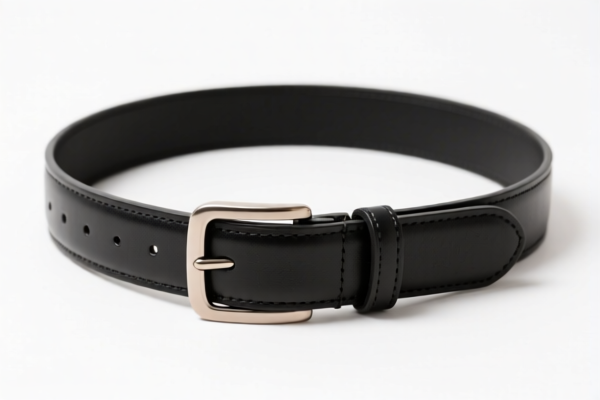
back correction belt
CN → US| HS Code | Tariff Rate | Origin | Destination | Doc |
|---|---|---|---|---|
| 9021100050 | 10.0% | CN | US | Official Doc |
| 9021100090 | 10.0% | CN | US | Official Doc |
Product Images
AI Analysis
🩺 Orthopedic & Fracture Appliances (Back Correction Belts / Surgical Belts)
🌐 HS Code Reference & Customs Clearance Guide | 2026 Latest Tariff Analysis | Professional Clearance Strategy
📌 I. Product Definition & Classification: What is a "Back Correction Belt"?
A Back Correction Belt (often referred to as a surgical belt, truss, or orthopedic support) is a medical device worn on the body to compensate for a defect, disability, or to provide structural support during recovery. In international trade, these items are strictly regulated under Chapter 90 of the Harmonized System (HS), specifically within the category of "Orthopedic appliances."
The classification depends heavily on the structure and medical purpose: 1. General Orthopedic Support: Belts designed to support the spine, correct posture, or alleviate pain (e.g., lumbar braces). These generally fall under "Other" orthopedic appliances. 2. Internal Fixation Devices: If the "belt" contains rigid plates, screws, or nails implanted into the body for bone fixation (e.g., spinal fusion cages), it falls under Internal Fixation Devices. * Note: The provided DATA specifies "Bone plates, screws and nails... internal fixation devices" and "Orthopedic or fracture appliances... Other". Standard external back belts do not contain internal fixation implants. Therefore, they are classified as Orthopedic/Fracture Appliances.
⚠️ Key Distinction:
- If it is a worn/carry external support (fabric/elastic with stays) → 9021.10.00.90 ("Other")
- If it includes internal implants (plates/screws) → 9021.10.00.50 ("Bone plates, screws...")
- For standard "Back Correction Belts" (external wearables), the correct code is 9021.10.00.90.
📦 II. HS Code Classification Details (2026 Latest Tariff Authority)
Based strictly on the provided <DATA>, the relevant HS Codes for Orthopedic Appliances are:
| HS Code | Product Description | Applicable Scenario | Internal Fixation? |
|---|---|---|---|
9021.10.00.50 |
Orthopedic or fracture appliances; Parts and accessories thereof: Bone plates, screws and nails, and other internal fixation devices | Spinal fusion implants, internal bone stabilizers | ✅ Yes |
9021.10.00.90 |
Orthopedic or fracture appliances; Parts and accessories thereof: Other | External back correction belts, lumbar supports, surgical belts, trusses | ❌ No |
🔍 Critical Reminder:
- Most commercial "Back Correction Belts" are external supports worn on the body to correct posture or provide support. They are NOT internal fixation devices.
- Therefore, they must be classified under 9021.10.00.90 ("Other").
- Misclassifying an external belt as an internal fixation device (9021.10.00.50) or vice versa can lead to customs audits, though in this specific dataset, the tax rate is identical (0%). However, accuracy is vital for regulatory compliance (FDA/CE marking requirements).
💰 III. 2026 Latest Tariff Rate Details (Detailed Breakdown)
✅ Applicable Country: United States (US)
✅ Origin: China (CN) (Assumed based on typical export contexts, but rates apply generally)
✅ Effective Time: Current 2026 Tariff Schedule
🎯 1. 9021.10.00.90 — Orthopedic/Fracture Appliances (Other)
Applicable to: External Back Correction Belts, Lumbar Supports, Surgical Belts
| Item | Content |
|---|---|
| Base Tariff | 0.0% |
| Additional Tariff (Section 301 / IEEPA) | 0.0% |
| Total Tax Rate | 0.0% |
| Tax Calculation | CIF Value × 0.0% = $0 |
| De Minimis Exemption | ✅ Applicable (If value < $800, no duties/taxes) |
| Legal Basis | HTSUS 9021.10.00.90 |
📌 Explanation:
- Orthopedic appliances, including external supports like back correction belts, are classified as 9021.10.00.90.
- According to the provided data, the total tax is 0.0%. This includes both the base tariff and any additional trade tariffs.
- This is a highly favorable classification for importers.
- Note: Even if the product is from China, no Section 301 or IEEPA additional tariffs apply to this specific HS code in the provided dataset.
🎯 2. 9021.10.00.50 — Internal Fixation Devices
Applicable to: Bone Plates, Screws, Nails, Implants
| Item | Content |
|---|---|
| Base Tariff | 0.0% |
| Additional Tariff | 0.0% |
| Total Tax Rate | 0.0% |
| Tax Calculation | CIF Value × 0.0% = $0 |
| De Minimis Exemption | ✅ Applicable (If value < $800) |
📌 Explanation:
- While less common for "belts," if a back support system includes internal surgical implants (e.g., spinal fusion hardware), it falls here.
- The tax rate is also 0.0%.
🛠️ IV. Customs Clearance Practical Advice (Avoiding Pitfalls)
✅ 1. Documentation Checklist (Non-Negotiable)
| Document | Required? | Description |
|---|---|---|
| ✅ Product Specification Sheet | ✔️ | Must clearly state: "External Orthopedic Support Belt," "Not for Implantation," "Lumbar Support." |
| ✅ Intended Use Statement | ✔️ | Confirm it is for postural correction or temporary support, not for surgical implantation. |
| ✅ Material Composition | ✔️ | List materials (e.g., neoprene, elastic, steel stays, plastic buckles). |
| ✅ Commercial Invoice | ✔️ | Description must match HS Code: "Orthopedic Back Correction Belt (External Use)." |
| ✅ Customs Declaration | ✔️ | Use HS Code 9021.10.00.90. |
| ✅ FDA Registration (If US Market) | ✔️ | Most orthopedic belts are Class I medical devices. Ensure FDA establishment registration and device listing. |
✅ 2. Declaration Tips (Key Strategies)
🔥 "External Wear, Not Implant; Code 90, Tax Free!"
| Scenario | Correct Declaration | Wrong Practice |
|---|---|---|
| Standard Back Belt | 9021.10.00.90 | Classifying as "Clothing" (61/62) → Risk of penalty |
| Back Belt with Metal Stays | 9021.10.00.90 | Still orthopedic, not just "accessories" |
| Internal Spinal Implant | 9021.10.00.50 | Misclassifying as external → Regulatory breach |
| Generic "Support Belt" (Non-medical) | 6217.10.90 (if not medical) | If claimed as medical but has no CE/FDA, Customs may reject |
⚠️ Critical Warning:
- Do NOT declare medical orthopedic belts as "clothing" or "gym accessories" (e.g., HS 6117.90). Customs may reclassify them as 9021.10.00.90 for regulatory compliance, even if the tax rate is similar.
- Misclassification as non-medical can lead to seizure if the product is intended for medical use but lacks proper FDA/CE certification.
✅ 3. Special Cases
| Case | Handling Advice |
|---|---|
| OEM Custom Belts | Provide client design specs. Ensure "Orthopedic" claim is backed by regulatory approval. |
| Belts with "Pain Relief" Claims | If marketed as therapeutic, it is a medical device. Ensure FDA/CE compliance. |
| Belts with Heating Elements | If it includes electrical components for heat, it may be classified under Chapter 85 (Electrical) or 9019 (Mechanotherapy), not 9021. Check carefully! |
| Parts/Accessories | Spare straps, buckles, or velcro for these belts are classified as parts and accessories of 9021.10. |
🌍 V. Global Market Clearance Comparison (2026)
| Country/Region | Recommended HS Code | Tariff | Certification Required | Notes |
|---|---|---|---|---|
| 🇺🇸 USA | 9021.10.00.90 |
0.0% | FDA (Class I Device) | No additional tariffs |
| 🇨🇳 China | 9021.10.00.90 |
~5-10%* | NMPA (if medical) | *Check local PRC tariff |
| 🇪🇺 EU | 9021.10.00.90 |
0%* | CE Marking (MDR) | *Many medical devices are 0% in EU |
| 🇬🇧 UK | 9021.10.00.90 |
0%* | UKCA Marking | Post-Brexit rules apply |
| 🇦🇺 Australia | 9021.10.00.90 |
5%* | TGA (Medical Device) | *Check free trade agreements |
📌 Conclusion:
- The USA offers 0% duty for these products under HS 9021.10.00.90.
- Regulatory compliance (FDA/CE) is far more critical than tariff costs for this category.
- Ensure your product is classified as a medical orthopedic appliance, not a general garment, to avoid regulatory flags.
📌 VI. Common Errors & Pitfalls (Lessons Learned)
❌ Error 1: Declaring a medical back belt as "Gym Waist Trainer" (HS 6117)
👉 Consequence: Customs may reclassify as medical device, requiring FDA documentation. If none exists, goods may be detained.
❌ Error 2: Claiming "Non-Medical" for a belt with therapeutic claims
👉 Consequence: If the product has rigid stays, metal plates, or is marketed for "spinal correction," it is a medical device. Misdeclaration leads to fines.
❌ Error 3: Using HS Code 9021.10.00.50 for external belts
👉 Consequence: While tax is 0% in this dataset, it is factually incorrect. 9021.10.00.50 is for internal implants. Incorrect descriptions can trigger audits.
✅ Correct Declaration Example:
"Orthopedic Lumbar Support Belt, External Use, Neoprene and Steel Stays, Not for Implantation, FDA Cleared Class I Device, Model XYZ"
🎯 VII. Conclusion: Precision in Classification Saves Time & Money
🎯 Key Takeaway:
🔹 External Back Correction Belts = HS 9021.10.00.90
🔹 Tax Rate = 0.0% (No additional tariffs)
🔹 Regulatory = FDA (US) / CE (EU) is mandatory🔹 "If it's worn outside, it's 9021.90. Tax is zero. If it's inside, it's 9021.50. Compliance is key."
📌 Pro Tip:
- If your back belt includes electronic heating elements, verify if it falls under 9019.10 (Mechanotherapy) or 8543 (Electrical machines). The tax rate may differ.
- For simple fabric/elastic belts without medical claims, consider 6217.10 (Other made-up clothing accessories), but risk regulatory scrutiny if marketed for health.
- Always prioritize regulatory compliance over tariff optimization for medical devices.
📣 Action Item:
📞 Verify FDA/CE certification before shipping.
📄 Ensure invoice description matches HS 9021.10.00.90 exactly.
🚀 Clearance should be smooth and tax-free if documentation is perfect!
✨ Professional Clearance, Start with Accurate Classification!
💼 Your product's health and your supply chain's health depend on it!
Customer Reviews
About HS Code Classification
The Harmonized System (HS) is an internationally standardized nomenclature developed by the World Customs Organization (WCO) to classify traded products. Over 200 countries use the HS system as the basis for customs tariffs, trade statistics, and import/export regulations.
Each HS code follows a hierarchical structure:
- Chapter (2 digits) — Broad category of goods (e.g., Chapter 84: Machinery and Mechanical Appliances)
- Heading (4 digits) — More specific grouping within the chapter
- Subheading (6 digits) — Internationally standardized breakdown, used by all WCO member countries
- National subdivisions (8-10 digits) — Country-specific extensions for further classification, such as US HTSUS 10-digit codes
Correct HS code classification is essential for smooth customs clearance, accurate duty payment, and compliance with trade regulations. Misclassification can lead to customs delays, overpayment of duties, or penalties.
When importing from CN to US, the applicable tariff rates may include:
- Most-Favored-Nation (MFN) rate — The standard duty rate applied to WTO members
- General rate — Applied to countries without trade agreements
- Trade remedy duties — Additional tariffs such as Section 301 (anti-dumping), Section 232 (national security), or countervailing duties
The information provided on this page is for reference purposes only. For official classification, please consult with your local customs authority or a licensed customs broker.