backpacks
CN → US| HS Code | Tariff Rate | Origin | Destination | Doc |
|---|---|---|---|---|
| 4202923120 | 52.6% | CN | US | Official Doc |
| 4202923900 | 52.6% | CN | US | Official Doc |
| 6307909891 | 24.5% | CN | US | Official Doc |
| 4202923131 | 52.6% | CN | US | Official Doc |
Product Images
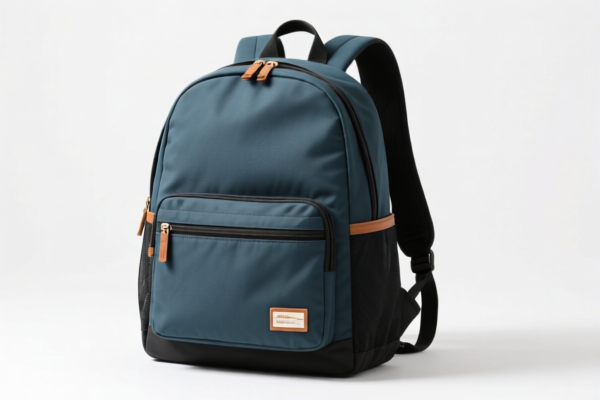
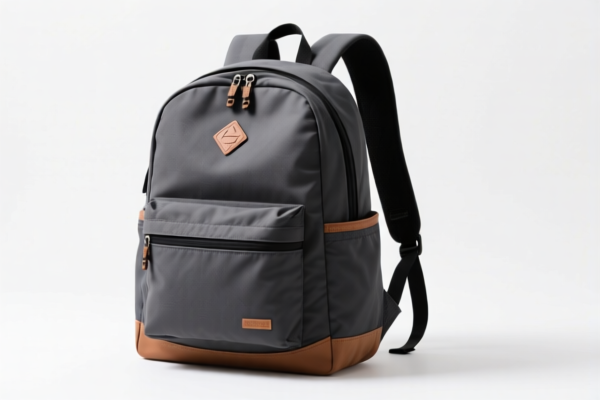
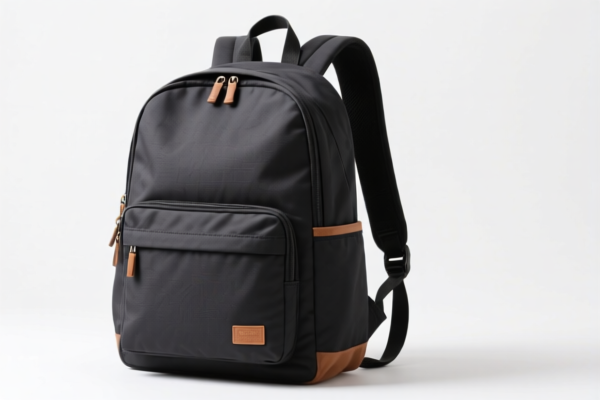
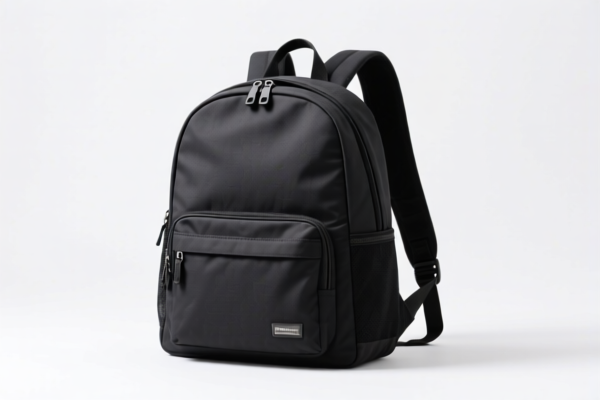
AI Analysis
🎒 Backpacks & Travel Gear (Textile Materials)
🌐 HS Code Reference & Customs Clearance Guide | 2026 Latest Tariff Analysis | Strategic Transit Strategy for Textile Bags
📌 I. Product Definition & Classification: Do You Really Know "Backpacks"?
Backpacks and travel bags made of textile materials are versatile consumer goods used in daily commuting, sports, and travel. In international trade (specifically targeting the US Market based on the provided tax data), they are strictly categorized based on their outer surface material and specific function.
The Core Distinction:
- Backpacks (Luggage Type) Classified under Chapter 42 (Articles of leather or substitute leather). Specifically, those with an outer surface of textile materials fall under 4202.92.
- Travel Storage/Organizer Bags: Often confused with backpacks. If they are "finished consumer goods" made of textile materials but not strictly classified as backpacks/luggage, they may fall under Chapter 63 (Other made-up textile articles), specifically 6307.90.
⚠️ Key Classification Point:
- If it is a Backpack (carrying capacity, straps, structured) with textile exterior → Chapter 42 (4202.92.31/39).
- If it is a Storage/Organizer Bag (soft, unstructured, for packing) → Chapter 63 (6307.90.98).
📦 II. HS Code Classification Details (2026 Latest Tariff Authority Comparison)
Based on the provided <DATA>, here are the specific HS Codes and their exact definitions:
| HS Code | Product Description | Applicable Scenario | Material Constraint |
|---|---|---|---|
4202.92.31.20 |
Backpacks, women's backpacks, female-style backpacks; material: textile or synthetic fiber; used for travel or sports bags | Commuter backpacks, sports backpacks, travel rucksacks | Outer surface: Textile/Synthetic Fiber |
4202.92.39.00 |
Women's backpacks; outer surface textile materials; classified under "Other" categories of travel/sports/similar bags | Generic textile backpacks not fitting other specific subcategories | Outer surface: Textile Material |
6307.90.98.91 |
Travel Storage Bags (Organizers); finished consumer goods; material: textile; classified as "Other made-up articles" | Packing cubes, toiletry bags, internal organizers for luggage | Outer surface: Textile Material |
4202.92.31.31 |
Travel Storage Bags; used for travel-type bags; outer surface material: textile | Textile-based storage solutions specifically designed for travel gear | Outer surface: Textile Material |
🔍 Important Note:
- Items4202.92.31.20and4202.92.39.00are Backpacks/Luggage. They attract higher tariffs due to Section 301 and IEEPA penalties.
- Item6307.90.98.91is a Storage/Organizer. It has a significantly lower tariff burden (24.5% vs 52.6%).
- Do not misclassify a structured backpack as a "storage bag" to avoid penalties. Customs will inspect the structure (straps, handles, rigidity).
💰 III. 2026 Latest Tariff Rate Details (Including Additional Taxes & Policy Surcharges)
✅ Applicable Country: United States (US)
✅ Origin: China (CN)
✅ Effective Date: Current rates apply (post-2025 adjustments)
🎯 1. High-Tariff Category: Backpacks & Luggage (HS: 4202.92.31/39)
Includes: 4202.92.31.20, 4202.92.39.00, 4202.92.31.31 (if classified as luggage-type)
| Item | Content |
|---|---|
| Base Tariff | 17.6% |
| Additional Tariff (Section 301) | 25.0% |
| IEEPA Surcharge (122 Clause) | 10.0% |
| Total Tax Rate | 52.6% |
| Tax Calculation | CIF Value × 52.6% |
| De Minimis Exemption? | ❌ NO (Cannot use $800 de minimis for these HS codes from China) |
| Legal Basis Path | Base: 17.6% + Section 301: 25.0% + IEEPA 122: 10.0% |
📌 Explanation:
- Base Tariff (17.6%): Standard US MFN rate for textile-based luggage.
- Section 301 Tariff (25.0%): Retaliatory tariffs on Chinese goods.
- IEEPA 10%: Additional surcharge under the International Emergency Economic Powers Act (often referred to as "122 Clause" in specific customs contexts).
- Total 52.6% is a very high cost. Profit margins must account for this.
🎯 2. Lower-Tariff Category: Travel Storage/Organizers (HS: 6307.90.98.91)
Includes: 6307.90.98.91 (Specifically labeled as "Travel Storage Bag" / "Finished Consumer Good")
| Item | Content |
|---|---|
| Base Tariff | 7.0% |
| Additional Tariff (Section 301/Other) | 7.5% |
| IEEPA Surcharge (122 Clause) | 10.0% |
| Total Tax Rate | 24.5% |
| Tax Calculation | CIF Value × 24.5% |
| De Minimis Exemption? | ❌ NO (Still subject to additional tariffs if from China, but base rate is lower) |
| Legal Basis Path | Base: 7.0% + Surcharge: 7.5% + IEEPA 122: 10.0% |
📌 Explanation:
- This classification applies to soft storage items (like packing cubes or internal organizers) rather than primary carrying backpacks.
- The 24.5% rate is nearly half of the backpack rate.
- Caution: If the "storage bag" has straps and is designed to be carried on the back as a primary bag, Customs may reclassify it as a Backpack (4202...), triggering the 52.6% rate.
🛠️ IV. Customs Clearance Practical Advice (Real-World Pitfall Avoidance Guide)
✅ 1. Required Documentation Checklist (Non-negotiable)
| Document | Must Provide | Description |
|---|---|---|
| ✅ Product Specification Sheet | ✔️ | Must detail: Dimensions, Material Composition (e.g., 100% Polyester), Use Case (Backpack vs. Organizer). |
| ✅ Product Photos (Clear) | ✔️ | Front, back, side, and interior. Must show if it has shoulder straps (Backpack) or just zippers (Organizer). |
| ✅ Commercial Invoice | ✔️ | Must accurately describe the item as "Travel Backpack" or "Packing Organizer" to match HS Code. |
| ✅ Packing List | ✔️ | Itemized list of contents. |
| ✅ Proof of Origin | ✔️ | Certificate of Origin (CO) for China. |
✅ 2. Declaration Strategy (Key Mantra)
🔥 "Structure Defines Code: Straps = Backpack (52.6%), Soft Box = Storage (24.5%)"
| Scenario | Correct Declaration | Wrong Practice | Consequence |
|---|---|---|---|
| Backpack with Shoulder Straps | 4202.92.31.20 or 4202.92.39.00 |
Declaring as "Storage Bag" | Audit & Penalty. Reclassified to Backpack → Pay difference + fines. |
| Soft Packing Cube/Toiletry Bag | 6307.90.98.91 |
Declaring as "Backpack" | Unnecessary high tax. Missed savings opportunity. |
| Hybrid Bag (Backpack with pockets) | 4202.92.31.20 |
Splitting shipment | Higher Risk. Must declare whole item. |
✅ 3. Special Handling for "Travel Storage Bags"
If you are shipping items like packing cubes, shoe bags, or internal organizers: 1. Emphasize "Storage": Use keywords like "Packing Cube," "Organizer," "Insert," in the description. 2. Avoid Straps: Ensure the product does not have shoulder straps or handles that imply it is a primary carrying device. 3. Material Check: Ensure the outer surface is indeed textile (nylon, polyester, canvas).
🌍 V. Global Market Comparison (2026 Outlook)
| Country/Region | Recommended HS Code | Total Tax Rate (China Origin) | Certification Requirements | Notes |
|---|---|---|---|---|
| 🇺🇸 USA | 4202.92.31.20 (Backpack) |
52.6% | None specific, but accurate HS is critical | High tax due to 301 + IEEPA |
| 🇺🇸 USA | 6307.90.98.91 (Storage) |
24.5% | None specific | Lower tax if classified correctly as storage |
| 🇨🇳 China | 4202.92.31 |
~10-15% (Import Tariff) | CCC (if applicable) | Lower base rates compared to US |
| 🇪🇺 EU | 4202.92 |
4% (Base) + VAT | CE (if applicable) | No Section 301 equivalent, but VAT varies |
| 🇬🇧 UK | 4202.92 |
4% (Base) + VAT | UKCA | Post-Brexit rules apply |
📌 Conclusion:
- The US Market is the most expensive due to the 52.6% total tax on backpacks.
- Differentiation between "Backpack" and "Storage Bag" is crucial for cost control.
- For Storage Bags, the 24.5% rate is still significant but manageable.
📌 VI. Common Mistakes & Pitfall Guide (Lessons Learned)
❌ Mistake 1: Declaring a Backpack as a "Textile Bag" to avoid Section 301.
👉 Consequence: Customs audit → Reclassification to 4202.92 → Pay 52.6% + Penalties.
❌ Mistake 2: Using "Backpack" for a Packing Cube.
👉 Consequence: Overpaying tax. You paid 52.6% instead of 24.5%.
❌ Mistake 3: Ignoring the "122 Clause" IEEPA surcharge.
👉 Consequence: Unexpected bill at customs. The 10% is mandatory for these Chinese textile goods entering the US.
❌ Mistake 4: Assuming De Minimis ($800) applies.
👉 Consequence: De Minimis does NOT apply to these HS codes from China. All duties apply from the first dollar.
✅ Correct Action:
"Textile Backpack, 20L, Nylon, with Shoulder Straps, Model XYZ" → HS 4202.92.31.20
"Nylon Packing Cube Set, 6 Pieces, Zipper Closure, No Straps" → HS 6307.90.98.91
🎯 VII. Conclusion: Precision in Classification, Savings in Profit!
🎯 Remember the Mantra:
🔹 "Backpacks are 52.6%, Storage is 24.5%. Straps mean Backpack. No Straps means Storage."
🔹 "Don't rely on De Minimis for Chinese Textiles. Every cent is taxed."
📌 Pro Tip:
If you sell hybrid bags (e.g., a backpack that folds into a small pouch), ensure the primary function is carrying on the back (Backpack). If it is primarily for storage within luggage, argue for 6307.90.
Recommendation: Consult a customs broker for Advance Ruling if the product structure is ambiguous.
📣 Immediate Action:
📞 Verify your product photos and structure.
📝 Choose the correct HS Code:4202.92.xxfor Backpacks,6307.90.xxfor Storage.
🚀 Clear the Customs Hurdle, Keep the Profit!
✨ Professional Clearance Starts with Accurate Classification!
💼 Your Cost is Calculated to the Cent!
Customer Reviews
About HS Code Classification
The Harmonized System (HS) is an internationally standardized nomenclature developed by the World Customs Organization (WCO) to classify traded products. Over 200 countries use the HS system as the basis for customs tariffs, trade statistics, and import/export regulations.
Each HS code follows a hierarchical structure:
- Chapter (2 digits) — Broad category of goods (e.g., Chapter 84: Machinery and Mechanical Appliances)
- Heading (4 digits) — More specific grouping within the chapter
- Subheading (6 digits) — Internationally standardized breakdown, used by all WCO member countries
- National subdivisions (8-10 digits) — Country-specific extensions for further classification, such as US HTSUS 10-digit codes
Correct HS code classification is essential for smooth customs clearance, accurate duty payment, and compliance with trade regulations. Misclassification can lead to customs delays, overpayment of duties, or penalties.
When importing from CN to US, the applicable tariff rates may include:
- Most-Favored-Nation (MFN) rate — The standard duty rate applied to WTO members
- General rate — Applied to countries without trade agreements
- Trade remedy duties — Additional tariffs such as Section 301 (anti-dumping), Section 232 (national security), or countervailing duties
The information provided on this page is for reference purposes only. For official classification, please consult with your local customs authority or a licensed customs broker.