baffle cover
CN → US| HS Code | Tariff Rate | Origin | Destination | Doc |
|---|---|---|---|---|
| 8487900040 | 38.9% | CN | US | Official Doc |
| 7326190080 | 87.9% | CN | US | Official Doc |
| 8487900080 | 88.9% | CN | US | Official Doc |
| 7326908688 | 87.9% | CN | US | Official Doc |
Product Images

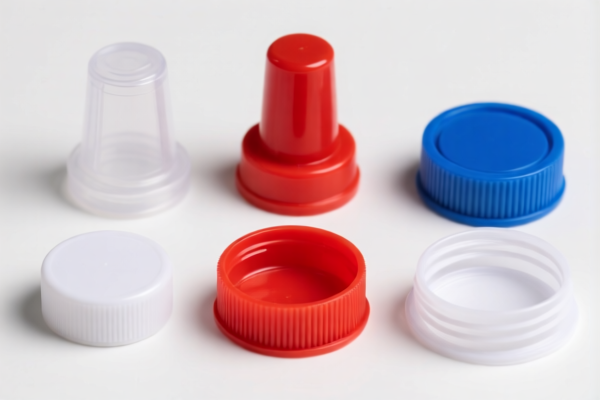

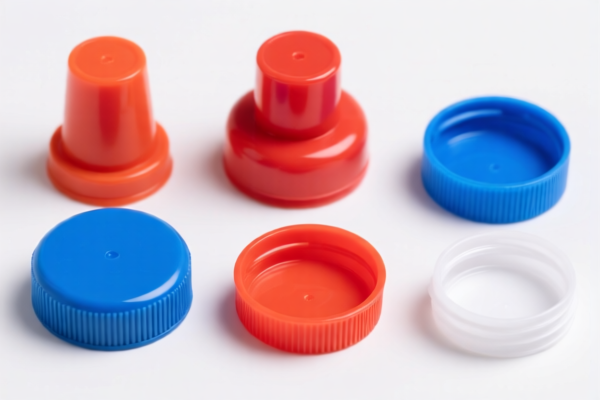
AI Analysis
🛡️ Baffle Cover (挡板盖)
🌐 HS Code Reference & Clearance Guide | 2026 Latest Tariff Analysis | Professional Customs Strategy
📌 I. Product Definition & Classification: What is a "Baffle Cover"?
A Baffle Cover is a mechanical component primarily used in industrial machinery, HVAC systems, automotive structures, or electrical enclosures. Its core function is to deflect airflow, block debris, protect internal components, or aesthetically cover mechanical linkages.
In international trade, its classification depends heavily on two factors: 1. Function: Is it a general mechanical part? 2. Material: Is it metal (steel/iron), plastic, or other material?
⚠️ Key Classification Logic:
- If the product is a mechanical component (part of a machine/vehicle) and the material is not explicitly stated as non-metal, it often falls under Chapter 84 (Machinery) as "Other Parts."
- If classified strictly as a general metal article (not specifically a machine part with a unique function), it may fall under Chapter 73 (Iron/Steel Articles).
- Critical Warning: For products originating from China, the material choice drastically changes the tariff burden due to Section 301 and Section 122 duties.
📦 II. HS Code Classification Details (2026 Latest Tariff Authority Match)
Based on the provided data, there are four potential HS Codes. The difference lies in whether the code treats the item as a general mechanical part (lower base duty) or a general metal article (higher base duty), and how the additional US tariffs apply.
| HS Code | Product Description | Matching Logic | Material Assumption | Base Duty |
|---|---|---|---|---|
8487.90.00.40 |
Other mechanical parts (Cover/Shell type) | Matches "Parts/Components" category. No explicit material conflict found. Uses the "fallback logic" for mechanical parts. | Unspecified (Assumed compatible with machinery) | 3.9% |
7326.19.00.80 |
Other articles of iron or steel | Matches "Parts/Components" feature. No explicit material conflict. Infer metal (Steel) based on common industrial use. | Steel/Iron | 2.9% |
8487.90.00.80 |
Other mechanical parts | Matches "Cover" shape. No electrical components. Inferred as metal or non-electrical material to avoid conflict with Chapter 85 exclusions. | Metal or Non-Electrical | 3.9% |
7326.90.86.88 |
Other articles of iron or steel | Matches "Parts/Components" (Shell/Cover). Based on HS 7326.90 attribute "Other iron/steel articles." Infer metal (Iron/Steel). | Iron/Steel | 2.9% |
🔍 Important Note:
- Codes8487.90.00.40and8487.90.00.80share the same Base Duty (3.9%) but differ in Total Tax due to specific footnotes or classification nuances in the provided data.
- Codes7326.19.00.80and7326.90.86.88share the same Base Duty (2.9%) but differ in total tax calculation due to different sub-headings under Chapter 73.
💰 III. 2026 Latest Tariff Rate Breakdown (Including Surcharges & Policy Add-ons)
✅ Applicable Country: United States (US)
✅ Origin: China (CN)
✅ Effective Date: Current (Post-2025 Regulations)
🎯 1. 8487.90.00.40 – Other Mechanical Parts (Lowest Risk Base)
| Item | Content |
|---|---|
| Base Duty | 3.9% |
| Section 301 Surcharge | +25.0% (Section 301 Tariffs on Chinese Goods) |
| Section 122 Tariff | +10.0% (Specific to certain machinery parts/steel imports under IEEPA) |
| Total Tax Rate | 38.9% |
| Tax Calculation | CIF Value × 38.9% |
| De Minimis Eligibility | ❌ No (Section 301 and 122 goods are generally exempt from de minimis thresholds) |
| Legal Basis Path | USITC:8487.90.00.40 → SEC301:25% → IEEPA:Section122(10%) |
📌 Explanation:
- This code offers the lowest total tax (38.9%) among all options.
- It assumes the item is a mechanical part without a specific conflict, allowing the use of the lower base rate (3.9%) plus the mandatory surcharges.
- Key Advantage: It avoids the 50% Steel/Aluminum/Copper surcharge mentioned in other codes, likely because it is classified under Chapter 84 (Machinery Parts) rather than Chapter 73 (General Steel Articles), which may have different exemption or application rules for the 50% tariff.
🎯 2. 7326.19.00.80 – Other Articles of Iron or Steel (Higher Risk)
| Item | Content |
|---|---|
| Base Duty | 2.9% |
| Section 301 Surcharge | +25.0% |
| Section 122 Tariff | +10.0% |
| Steel/Aluminum/Copper Surcharge | +50.0% (Specific to steel articles under Section 232/related provisions) |
| Total Tax Rate | 87.9% |
| Tax Calculation | CIF Value × 87.9% |
| De Minimis Eligibility | ❌ No |
| Legal Basis Path | USITC:7326.19.00.80 → SEC301:25% → IEEPA:Section122(10%) → SteelSurcharge:50% |
📌 Explanation:
- Despite a slightly lower base duty (2.9%), the 50% Steel Surcharge makes this code extremely expensive.
- This code explicitly identifies the product as a Steel Article.
- Total Tax: 87.9% is nearly double the tax of8487.90.00.40.
🎯 3. 8487.90.00.80 – Other Mechanical Parts (Highest Total Tax)
| Item | Content |
|---|---|
| Base Duty | 3.9% |
| Section 301 Surcharge | +25.0% |
| Section 122 Tariff | +10.0% |
| Steel/Aluminum/Copper Surcharge | +50.0% (Even under Chapter 84, if the material is inferred as steel, this surcharge may apply depending on customs interpretation) |
| Total Tax Rate | 88.9% |
| Tax Calculation | CIF Value × 88.9% |
| De Minimis Eligibility | ❌ No |
| Legal Basis Path | USITC:8487.90.00.80 → SEC301:25% → IEEPA:Section122(10%) → SteelSurcharge:50% |
📌 Explanation:
- This is the most expensive option at 88.9%.
- It is classified as a mechanical part but incurs the 50% steel surcharge.
- Risk: High. If customs determines the part is steel and applies both Section 301, Section 122, AND the 50% steel tariff, the cost is prohibitive.
🎯 4. 7326.90.86.88 – Other Articles of Iron or Steel
| Item | Content |
|---|---|
| Base Duty | 2.9% |
| Section 301 Surcharge | +25.0% |
| Section 122 Tariff | +10.0% |
| Steel/Aluminum/Copper Surcharge | +50.0% |
| Total Tax Rate | 87.9% |
| Tax Calculation | CIF Value × 87.9% |
| De Minimis Eligibility | ❌ No |
| Legal Basis Path | USITC:7326.90.86.88 → SEC301:25% → IEEPA:Section122(10%) → SteelSurcharge:50% |
📌 Explanation:
- Same high tax burden as7326.19.00.80.
- Classifies the product as a general Iron/Steel Article.
- Avoid unless necessary for compliance reasons not covered here.
🛠️ IV. Customs Clearance Practical Advice (Pitfall Avoidance Guide)
✅ 1. Preparation Checklist (Non-negotiable)
| Document | Required? | Description |
|---|---|---|
| ✅ Product Specification Sheet | ✔️ | Must detail dimensions, weight, function (e.g., "Baffle for HVAC Unit"), and exact material composition (e.g., "Stainless Steel 304", "ABS Plastic", "Aluminum Alloy"). |
| ✅ Technical Drawing | ✔️ | To prove it is a "mechanical part" (Ch 84) rather than a "general metal article" (Ch 73). |
| ✅ Product Photos | ✔️ | Clear shots of the part, including any brand, model, and material stamps. |
| ✅ Commercial Invoice | ✔️ | Must accurately describe the item as "Baffle Cover, Mechanical Part, [Material]" |
| ✅ Packing List | ✔️ | List items separately if mixed with other goods. |
✅ 2. Declaration Strategy (Key Mantras)
🔥 "Define Material, Define Function, Avoid Steel Surcharge!"
| Scenario | Recommended HS Code | Reason |
|---|---|---|
| Product is Plastic/Non-Metal | 8487.90.00.40 or 8487.90.00.80 |
Avoids 50% Steel Surcharge. If plastic, the 50% surcharge does not apply. |
| Product is Metal but Part of Machinery | 8487.90.00.40 |
Best option. Base duty 3.9% + 35% surcharges = 38.9%. No 50% steel tariff if classified under Ch 84. |
| Product is General Steel Sheet/Part | 7326.19.00.80 / 7326.90.86.88 |
AVOID if possible. High tax 87.9% due to 50% steel surcharge. |
✅ 3. Special Case Handling
| Situation | Handling Advice |
|---|---|
| OEM Custom Part | Provide customer drawings and order details to prove it is a specific mechanical part for a machine, supporting 8487 classification. |
| Mixed Material (e.g., Steel Frame + Plastic Cover) | Declare the primary material or value. If the cover is mostly plastic, use 8487.90.00.40 with a clear description of plastic composition to avoid steel tariffs. |
| Used vs. New | Ensure the invoice clearly states "New" if required. Used mechanical parts may have different regulations. |
| Section 122 Applicability | Note that Section 122 (10%) applies to certain machinery and steel products. Confirm with a customs broker if 8487 items are exempt from this specific 10% surcharge, but based on the provided data, it is included. |
🌍 V. Global Market Comparison (2026 Latest)
| Country/Region | Recommended HS Code | Base Duty | Additional Duties (China) | Total Est. Rate | Remarks |
|---|---|---|---|---|---|
| 🇺🇸 USA | 8487.90.00.40 |
3.9% | +35% (301+122) | 38.9% | Best Option |
| 🇨🇳 China | 8487.90.00.40 |
8.0% | None | 8.0% | Low import duty |
| 🇪🇺 EU | 8487.90.00.40 |
5.0% | None | 5.0% | No Section 301 |
| 🇬🇧 UK | 8487.90.00.40 |
5.0% | None | 5.0% | Post-Brexit alignment |
| 🇯🇵 Japan | 8487.90.00.40 |
5.0% | None | 5.0% | Low duty |
📌 Conclusion:
- The USA is the only market with significant additional tariffs.
- Classifying as8487.90.00.40(Mechanical Part) instead of7326(Steel Article) saves ~49% in taxes (38.9% vs 87.9%).
📌 VI. Common Errors & Pitfall Guide (Lessons Learned)
❌ Error 1: Declaring a Steel Baffle Cover as 7326
👉 Consequence: Incurs 50% Steel Surcharge → Total Tax 87.9%.
✅ Fix: Prove it is a mechanical part (8487) or use a non-steel material.
❌ Error 2: Misidentifying Material as Plastic when it is Steel
👉 Consequence: Customs inspection reveals steel → Penalty + Back Tax + Delay.
✅ Fix: Accurate material declaration is crucial.
❌ Error 3: Using Generic Terms like "Metal Cover"
👉 Consequence: Customs may assign 7326 by default → High Tax.
✅ Fix: Use specific terms: "Baffle Cover, Mechanical Part for HVAC, Stainless Steel 304" → Support 8487.
🎯 VII. Conclusion: Strategic Clearance for Baffle Covers
🎯 Key Takeaway:
🔹 "Chapter 84 is the Hero, Chapter 73 is the Villain."
🔹 HS Code8487.90.00.40is the optimal choice for Baffle Covers from China, minimizing total tax to 38.9%.
🔹 Avoid7326codes unless the item is a general steel article not specific to machinery, as the 50% steel surcharge will double your tax burden.
📌 Pro Tip:
If your baffle covers are made of Plastic, Aluminum (non-steel), or Composite Materials, ensure your invoice explicitly states the material. This can help avoid the 50% Steel Surcharge even if classified under 7326 or 8487 (depending on specific rulings), but 8487.90.00.40 remains the safest and most cost-effective path for mechanical parts.
📣 Immediate Action:
📞 Consult a US Customs Broker before shipping.
📦 Provide Product Specs and Drawings to support8487.90.00.40classification.
🚀 Save ~50% in taxes by choosing the right HS Code!
✨ Professional Customs, Precise Classification, Maximized Profit!
💼 Every Percent Saved is Directly Added to Your Bottom Line!
Customer Reviews
About HS Code Classification
The Harmonized System (HS) is an internationally standardized nomenclature developed by the World Customs Organization (WCO) to classify traded products. Over 200 countries use the HS system as the basis for customs tariffs, trade statistics, and import/export regulations.
Each HS code follows a hierarchical structure:
- Chapter (2 digits) — Broad category of goods (e.g., Chapter 84: Machinery and Mechanical Appliances)
- Heading (4 digits) — More specific grouping within the chapter
- Subheading (6 digits) — Internationally standardized breakdown, used by all WCO member countries
- National subdivisions (8-10 digits) — Country-specific extensions for further classification, such as US HTSUS 10-digit codes
Correct HS code classification is essential for smooth customs clearance, accurate duty payment, and compliance with trade regulations. Misclassification can lead to customs delays, overpayment of duties, or penalties.
When importing from CN to US, the applicable tariff rates may include:
- Most-Favored-Nation (MFN) rate — The standard duty rate applied to WTO members
- General rate — Applied to countries without trade agreements
- Trade remedy duties — Additional tariffs such as Section 301 (anti-dumping), Section 232 (national security), or countervailing duties
The information provided on this page is for reference purposes only. For official classification, please consult with your local customs authority or a licensed customs broker.