bamboo bathroom mats
CN → US| HS Code | Tariff Rate | Origin | Destination | Doc |
|---|---|---|---|---|
| 4601218000 | 35.0% | CN | US | Official Doc |
| 4601219000 | 43.0% | CN | US | Official Doc |
| 4421919880 | 38.3% | CN | US | Official Doc |
| 4421914000 | 22.6% | CN | US | Official Doc |
| 3924905650 | 20.9% | CN | US | Official Doc |
| 3924901050 | 13.3% | CN | US | Official Doc |
Product Images
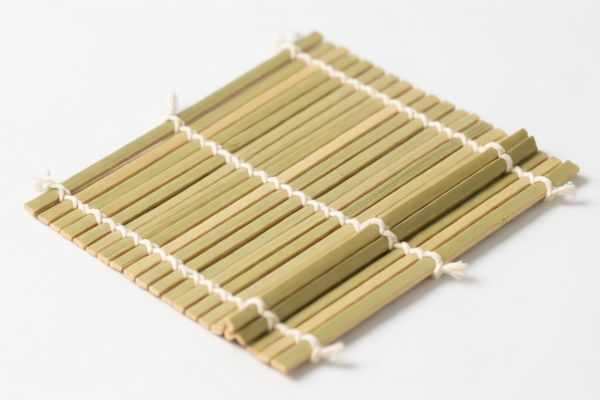
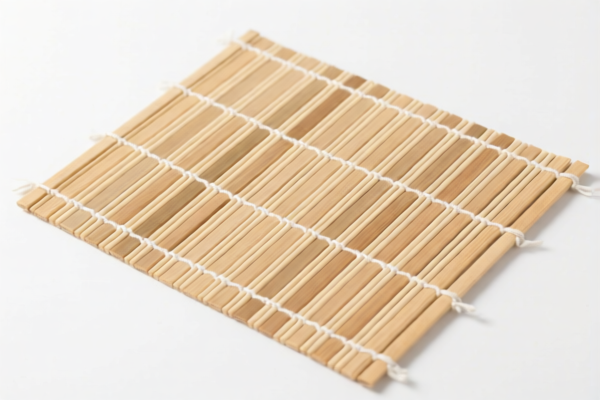
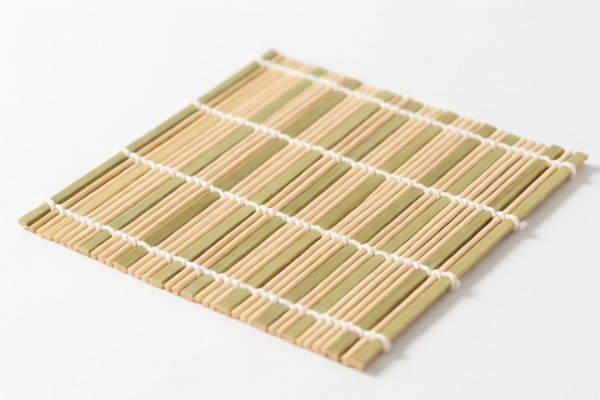
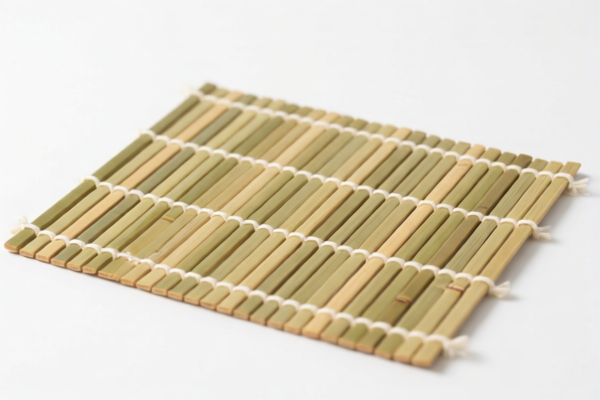
AI Analysis
🛁 Bamboo Bathroom Mats (and Related Bamboo Flooring Coverings)
🌐 HS Code Reference & Customs Clearance Guide | 2026 Latest Tariff Analysis | Professional Strategy for Bamboo Home Goods
📌 I. Product Definition & Classification: What Exactly is a "Bathroom Mat"?
Bathroom mats made of bamboo fall into a complex intersection of wood articles and woven vegetable materials. In international trade, the classification depends heavily on the manufacturing process and structural integrity:
1. Woven/Woven-Strip Mats (Plaits & Similar Products):
Mats made by weaving bamboo strips or slats together. These are considered "plaits" or "mats of vegetable materials."
👉 Primary HS Code Family: 4601.21
2. Solid Wood/Engineered Wood Articles:
Mats constructed from solid bamboo planks, glued layers, or rigid bamboo composite structures that are not primarily defined as "woven plaiting."
👉 Primary HS Code Family: 4421.91
⚠️ Critical Distinction:
- If the product is flexible, woven, or made of parallel strands bound together → 4601.21
- If the product is rigid, assembled from wood blocks, or functions as a floor covering made of solid/panel wood → 4421.91
- Note: Some rigid bamboo "rug-style" mats may be classified under 4421.91 if they are not considered "woven mats" by customs authorities.
📦 II. HS Code Classification Details (2026 Latest Tariff Authority Cross-Reference)
| HS Code | Product Description | Applicable Scenario | Key Feature |
|---|---|---|---|
4601.21.80.00 |
Mats, matting and screens of vegetable materials: Of bamboo: Other: Floor coverings | Large bamboo floor mats, interlocking bamboo tiles, woven bamboo rugs | ✅ Woven/Plaited structure intended for floor use |
4601.21.90.00 |
Mats, matting and screens of vegetable materials: Of bamboo: Other: Other | Small bath mats, wall hangings, decorative bamboo mats (not primarily floor coverings) | ✅ Woven/Plaited structure, non-floor or generic use |
4421.91.40.00 |
Other articles of wood: Of bamboo: Wood blinds, shutters, screens and shades... | Excluded – Only applies if the item is a blind/shutter/shade | ❌ Not applicable for standard mats |
4421.91.98.80 |
Other articles of wood: Other: Of bamboo: Other Other | Rigid bamboo bathroom mats, solid bamboo slab mats, non-woven wood articles | ✅ Rigid/Assembled wood structure (not woven) |
🔍 Key Reminder:
- Woven Bamboo Mats generally go to 4601.21.
- Solid/Rigid Bamboo Mats (e.g., glued slats) may go to 4421.91.98.80.
- Do NOT classify bamboo mats as "textiles" (Chapter 57 or 63) unless they are mixed with fabric backing and primarily considered textile products. Pure bamboo is Chapter 44 or 46.
💰 III. 2026 Latest Tariff Rate Breakdown (Including Surtaxes, Policy Add-ons)
✅ Applicable Country: United States (US)
✅ Origin: China (CN)
✅ Effective Time: 2025–2026 (Current Trade War Rates)
🎯 1. 4601.21.80.00 —— Bamboo Floor Coverings (Woven Mats)
| Item | Content |
|---|---|
| Base Rate | 0% (ad valorem) |
| USITC Surtax | +25% (Section 301 / USITC Footnote for bamboo products) |
| IEEPA Surtax | +10% (针对中国/香港产品,自2025年11月10日起) |
| Total Rate | 35% |
| Tax Calculation | CIF Value × 35% |
| De Minimis Eligibility | ❌ No (deny_de_minimis) |
| Legal Path | USITC:4601.21.80.00 → Footnote:25% → IEEPA:9903.01.24 |
📌 Explanation:
- 0% Base is standard for many woven vegetable mats.
- 25% Surtax applies because bamboo products are often targeted under specific trade measures.
- 10% IEEPA is the additional tariff for Chinese goods under executive order.
- Total: 35%. This is a high-cost item for importers.
🎯 2. 4601.21.90.00 —— Bamboo Mats (Other, Non-Floor)
| Item | Content |
|---|---|
| Base Rate | 0% |
| USITC Surtax | 0% |
| IEEPA Surtax | 0% |
| Total Rate | 0% |
| Tax Calculation | CIF Value × 0% |
| De Minimis Eligibility | ✅ Yes (may qualify if under $800 per shipment) |
| Legal Path | USITC:4601.21.90.00 → No Footnote Surtax → No IEEPA |
📌 Important:
- If your bamboo mat is not classified as a "floor covering" (e.g., it’s a small wall mat, decorative piece, or non-floor bath mat), it may fall under 90.00 (Other), which has 0% total tax.
- Strategic Advice: Clearly describe the product as "Decorative Bamboo Mat" or "Wall Hanging Bamboo Mat" if it is not primarily for floor use, to potentially avoid the 25% surtax.
🎯 3. 4421.91.98.80 —— Other Wooden Articles (Rigid Bamboo Mats)
| Item | Content |
|---|---|
| Base Rate | 3.3% |
| USITC Surtax | +25% |
| IEEPA Surtax | +10% (Implied in total if China origin) |
| Total Rate | 28.3% (Base + Surtax only, per DATA) |
| Tax Calculation | CIF Value × 28.3% |
| De Minimis Eligibility | ❌ No |
| Legal Path | USITC:4421.91.98.80 → Footnote:25% + Base:3.3% |
📌 Note:
- This code applies if the mat is rigid, made of solid bamboo, and not considered "woven."
- Total Tax: 28.3% (as per provided data).
- Lower than floor coverings (35%) but still high.
🎯 4. 4421.91.40.00 —— Bamboo Blinds/Shutters (Excluded)
| Item | Content |
|---|---|
| Base Rate | 0% |
| Surtax | 0% |
| Total Rate | 0% |
| Applicability | ❌ Not for mats |
📌 Warning: Do NOT misclassify mats as blinds/shutters. If inspected, this will be flagged as misdeclaration, leading to penalties.
🛠️ IV. Customs Clearance Practical Advice (Field Pitfall Guide)
✅ 1. Documentation Checklist (Essential)
| Document | Required? | Notes |
|---|---|---|
| ✅ Product Specification | ✔️ | Describe: "Woven bamboo strip mat" vs. "Solid bamboo slab mat" |
| ✅ Material Composition | ✔️ | 100% Bamboo? Mixed with wood? |
| ✅ Product Photos | ✔️ | Clear shot of weaving pattern vs. solid structure |
| ✅ Commercial Invoice | ✔️ | State "Bamboo Mat" not "Wooden Floor" unless accurate |
| ✅ Packing List | ✔️ | Weight, dimensions, quantity |
| ✅ Origin Certificate (CO) | ✔️ | Required for US import proof |
✅ 2. Declaration Tips (Key Mantra)
🔥 "Weave vs. Solid, Floor vs. Wall, Description Must Match Structure!"
| Scenario | Correct Declaration | Wrong Approach |
|---|---|---|
| Woven Bamboo Bath Mat (Small) | 4601.21.90.00 – "Decorative Bamboo Mat" |
Misclassifying as floor covering → 35% tax |
| Woven Bamboo Floor Mat (Large) | 4601.21.80.00 – "Bamboo Floor Covering" |
Calling it "Wall Art" to avoid tax → Audit risk |
| Rigid Bamboo Slab Mat | 4421.91.98.80 – "Wooden Article" |
Calling it "Woven Mat" → Classification error |
| Bamboo + Fabric Combo | Check Chapter 63/57 | Pure bamboo is Ch44/46; mixed may change classification |
✅ 3. Special Cases Handling
| Situation | Recommendation |
|---|---|
| Small Bath Mats (<2ft x 3ft) | Argue under 4601.21.90.00 (Other) to qualify for 0% tax if not floor-specific. Provide use-case documentation. |
| Interlocking Bamboo Tiles | Classify as 4601.21.80.00 (Floor Covering). 35% tax applies. |
| OEM Custom Mats | Provide design specs to prove structure (woven vs. solid). |
| Mixed Materials (Bamboo + Cotton Backing) | May fall under Textile Chapter (57/63). Consult expert. Pure bamboo is safer under 4601. |
🌍 V. Global Market Comparison (2026)
| Country/Region | Recommended HS Code | Tariff | Notes |
|---|---|---|---|
| 🇺🇸 USA | 4601.21.80.00 |
35% | High surtax on floor coverings |
| 🇺🇸 USA | 4601.21.90.00 |
0% | If classified as "Other" (non-floor) |
| 🇪🇺 EU | 4601.21 |
0–4% | Lower tariffs, no Section 301 |
| 🇨🇳 China | 4601.21 |
0–5% | Export from China, import to EU/US |
| 🇯🇵 Japan | 4601.21 |
0–3% | Favorable |
📌 Conclusion:
- USA is the hardest market due to 25%+10% surtaxes on bamboo floor products.
- Strategy: If possible, design mats as "wall decorations" or "non-floor mats" to use4601.21.90.00(0% tax).
- Avoid misdeclaration. Customs can inspect weave pattern.
📌 VI. Common Mistakes & Pitfalls (Blood Lessons)
❌ Mistake 1: Calling all bamboo mats "Floor Coverings"
👉 Result: 35% tax. If it’s a small bath mat, you can argue for 0% under 4601.21.90.00.
❌ Mistake 2: Misclassifying rigid bamboo mats as "Woven"
👉 Result: If it’s solid, it’s 4421.91.98.80 (28.3%). Don’t force it into 4601.
❌ Mistake 3: Ignoring IEEPA 10% Surtax
👉 Result: Underpayment. Total tax is not just USITC 25%, but also IEEPA 10%.
✅ Correct Approach:
"Bamboo Woven Bath Mat, 100% Bamboo, Non-Floor Decorative, Model XYZ" →
4601.21.90.00→ 0% Tax
🎯 VII. Conclusion: Professional Declaration, Save Costs!
🎯 Remember the Mantra:
🔹 "Woven Floor = 35%, Woven Other = 0%, Solid Wood = 28.3%!"
🔹 "Small Mats, Big Savings! Classify as 'Other' if Possible!"
📌 Tips:
- If your bamboo mats are small, decorative, or non-floor, emphasize "Other" in description.
- For large floor mats, prepare for 35% tax. Consider sourcing from Vietnam/Malaysia for potential tariff benefits.
- Pre-advance Ruling (Ruling Letter) is recommended for new products to confirm classification.
📣 Immediate Action:
📞 Contact customs broker + Provide product photos + Confirm "Floor" vs. "Other" use
🚀 Save 35% tax by accurate classification!
✨ Professional Clearance Starts with Precise Classification!
💼 Every dollar counts in bamboo trade!
Customer Reviews
About HS Code Classification
The Harmonized System (HS) is an internationally standardized nomenclature developed by the World Customs Organization (WCO) to classify traded products. Over 200 countries use the HS system as the basis for customs tariffs, trade statistics, and import/export regulations.
Each HS code follows a hierarchical structure:
- Chapter (2 digits) — Broad category of goods (e.g., Chapter 84: Machinery and Mechanical Appliances)
- Heading (4 digits) — More specific grouping within the chapter
- Subheading (6 digits) — Internationally standardized breakdown, used by all WCO member countries
- National subdivisions (8-10 digits) — Country-specific extensions for further classification, such as US HTSUS 10-digit codes
Correct HS code classification is essential for smooth customs clearance, accurate duty payment, and compliance with trade regulations. Misclassification can lead to customs delays, overpayment of duties, or penalties.
When importing from CN to US, the applicable tariff rates may include:
- Most-Favored-Nation (MFN) rate — The standard duty rate applied to WTO members
- General rate — Applied to countries without trade agreements
- Trade remedy duties — Additional tariffs such as Section 301 (anti-dumping), Section 232 (national security), or countervailing duties
The information provided on this page is for reference purposes only. For official classification, please consult with your local customs authority or a licensed customs broker.