bamboo braided floor mats
CN → US| HS Code | Tariff Rate | Origin | Destination | Doc |
|---|---|---|---|---|
| 5705002090 | 38.3% | CN | US | Official Doc |
| 4421919880 | 38.3% | CN | US | Official Doc |
| 4421999880 | 38.3% | CN | US | Official Doc |
| 4602114500 | 41.6% | CN | US | Official Doc |
| 4602110700 | 35.0% | CN | US | Official Doc |
Product Images
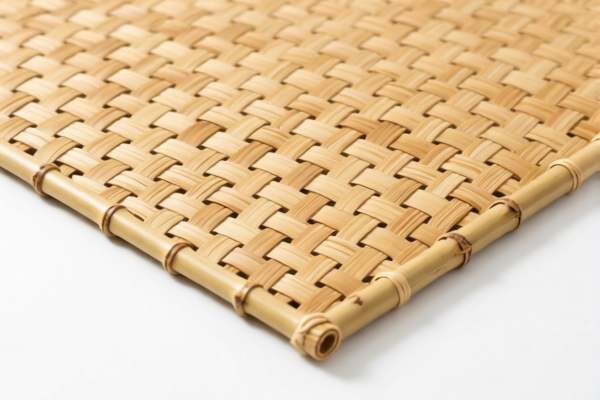
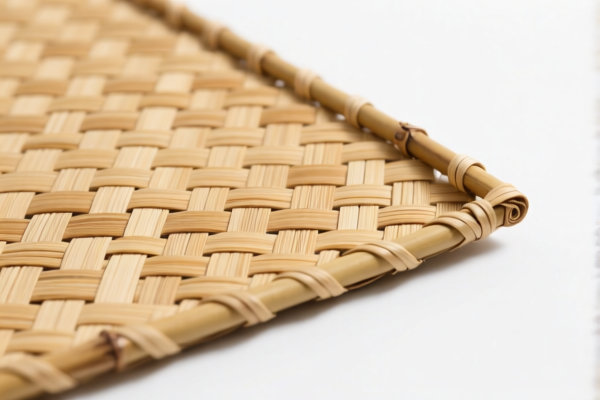
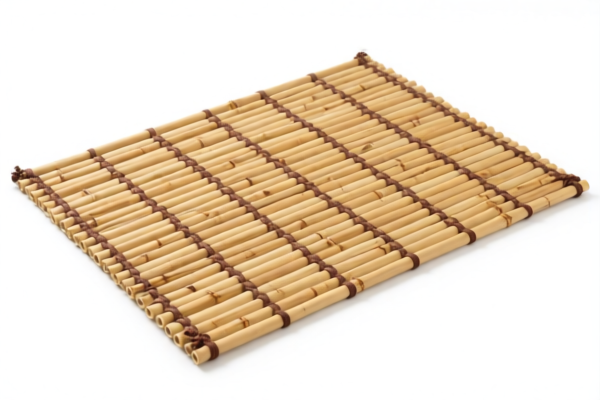
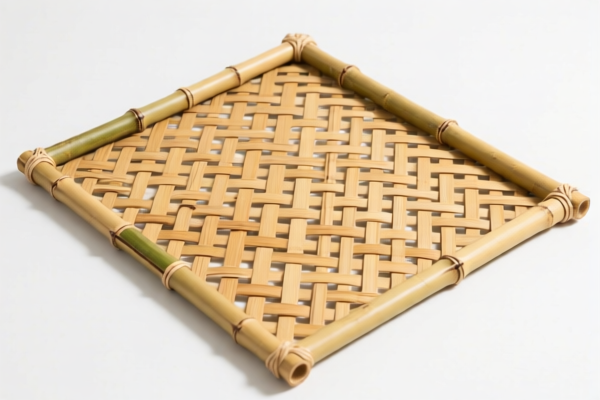
AI Analysis
🎋 Bamboo Braided Floor Mats: Ultimate HS Code Classification & US Customs Clearance Guide (2026)
🌐 HS Code Reference & Clearance Guide | 2026 Latest Tariff Analysis | Professional Clearance Strategy
📌 Product: Bamboo Braided Floor Mats
📍 Destination: United States (US)
🏭 Origin: China (CN)
⚠️ Critical Warning: High tariff impact due to Section 301 and IEEPA provisions. Misclassification can lead to severe penalties or double taxation.
📦 Part 1: HS Code Classification Analysis & Tax Details
Below is the precise classification breakdown for Bamboo Braided Floor Mats based on the provided data. Each HS Code represents a different interpretive path by Customs and Border Protection (CBP), leading to varying tax implications.
1️⃣ Classification A: Textile/Fiber Category
HS Code: 5705.00.20.90
Summary: The bamboo floor mat is classified as a textile/fiber floor covering. The form fits the definition of a floor covering, with no material conflict regarding the "weaved" nature being treated as a textile-like fiber product.
| Tax Component | Rate | Details |
|---|---|---|
| Base Duty | 3.3% | Standard Most Favored Nation (MFN) rate |
| Section 301 Tariff | 25.0% | Additional tariff on Chinese goods (USITC Footnote 9903) |
| IEEPA Tariff | 10.0% | Additional tariff under International Emergency Economic Powers Act |
| 💰 Total Tax Rate | 38.3% | 3.3% + 25.0% + 10.0% |
📝 Interpretation: This classification treats the mat as a "floor covering" similar to carpets or rugs made from textile fibers. While logically sound for "braided" items, CBP may argue that bamboo is a vegetable material, not a textile fiber.
2️⃣ Classification B: Wood/Bamboo Category (Specific)
HS Code: 4421.91.98.80
Summary: The material is bamboo (a type of wood/vegetable fiber) and the form is a woven mat. It falls under the subheading for "Other articles of wood/bamboo," specifically within the "other" category for woven mats.
| Tax Component | Rate | Details |
|---|---|---|
| Base Duty | 3.3% | Standard MFN rate |
| Section 301 Tariff | 25.0% | Additional tariff on Chinese goods |
| IEEPA Tariff | 10.0% | Additional tariff under IEEPA |
| 💰 Total Tax Rate | 38.3% | 3.3% + 25.0% + 10.0% |
📝 Interpretation: This is a strong candidate if the mat is considered a "woven mat" made of bamboo strips. It aligns with the material science (bamboo = wood-like) and form (mat).
3️⃣ Classification C: Wood/Bamboo Category (General/Residual)
HS Code: 4421.99.98.80
Summary: The material is bamboo, and the form is a mat. It falls under the residual "Other" category for wooden/bamboo articles, acting as a catch-all for items not specifically listed elsewhere.
| Tax Component | Rate | Details |
|---|---|---|
| Base Duty | 3.3% | Standard MFN rate |
| Section 301 Tariff | 25.0% | Additional tariff on Chinese goods |
| IEEPA Tariff | 10.0% | Additional tariff under IEEPA |
| 💰 Total Tax Rate | 38.3% | 3.3% + 25.0% + 10.0% |
📝 Interpretation: Similar to 4421.91, but used if the specific "woven mat" subheading is contested. The tax burden remains identical.
4️⃣ Classification D: Basketry/Plaiting Category (Material Restricted)
HS Code: 4602.11.45.00
Summary: The name "Bamboo Braided" fits the material restriction of plaiting materials. The floor mat is seen as an application of plaited/woven products.
| Tax Component | Rate | Details |
|---|---|---|
| Base Duty | 6.6% | Standard MFN rate (Higher base) |
| Section 301 Tariff | 25.0% | Additional tariff on Chinese goods |
| IEEPA Tariff | 10.0% | Additional tariff under IEEPA |
| 💰 Total Tax Rate | 41.6% | 6.6% + 25.0% + 10.0% |
📝 Interpretation: Chapter 46 covers "Plaiting materials... articles of plaiting materials." This is a valid classification for bamboo crafts. However, the higher base duty (6.6% vs 3.3%) makes this option more expensive than classifications 1-3.
5️⃣ Classification E: Basketry/Bag Category (Lowest Base, Same Total?)
HS Code: 4602.11.07.00
Summary: The material is bamboo, form is braided, and use is a mat. It falls under the extension of basketry, bags, and related woven products.
| Tax Component | Rate | Details |
|---|---|---|
| Base Duty | 0.0% | Free (0%) MFN rate |
| Section 301 Tariff | 25.0% | Additional tariff on Chinese goods |
| IEEPA Tariff | 10.0% | Additional tariff under IEEPA |
| 💰 Total Tax Rate | 35.0% | 0.0% + 25.0% + 10.0% |
📝 Interpretation: This is the most tax-efficient option. By classifying the mat under a specific basketry/plaiting subheading that has a 0% base duty, the total tax burden is reduced to 35.0%.
⚠️ Risk: CBP may reject this if they deem "floor mats" to be primarily floor coverings (Chapter 57) or wooden articles (Chapter 44) rather than general basketry. However, if argued correctly as a "plaited article," it offers significant savings.
📊 Comparison Summary Table
| HS Code | Classification Logic | Base Duty | Add. Tariff (301) | Add. Tariff (IEEPA) | Total Tax Rate |
|---|---|---|---|---|---|
5705.00.20.90 |
Textile Fiber Floor Covering | 3.3% | 25.0% | 10.0% | 38.3% |
4421.91.98.80 |
Woven Mat (Wood/Bamboo) | 3.3% | 25.0% | 10.0% | 38.3% |
4421.99.98.80 |
Other Wooden/Bamboo Article | 3.3% | 25.0% | 10.0% | 38.3% |
4602.11.45.00 |
Plaited Material Article | 6.6% | 25.0% | 10.0% | 41.6% |
4602.11.07.00 |
Plaited Basketry/Bag Item | 0.0% | 25.0% | 10.0% | 35.0% ✅ |
🛠️ Part 2: Customs Clearance Advice & Operational Pitfalls
✅ 1. Strategic Recommendation: Aim for 4602.11.07.00
- Why? It offers the lowest total tax rate (35.0%) due to the 0% base duty.
- How to Argue: Emphasize the manufacturing process (braiding/plaiting of bamboo strips) rather than the end-use (floor covering). Use terms like "Woven Bamboo Plaque" or "Braided Bamboo Weaving" in descriptive fields if possible, while clearly stating "Floor Mat" for safety.
- Risk: If CBP insists it is a "floor covering," they may reclassify to
5705or4421, adding 3.3-6.6% more in base duties.
✅ 2. Critical Documentation Checklist
To support any of these classifications, especially for bamboo products, you must provide:
| Document | Purpose | Key Details Required |
|---|---|---|
| Product Photos | Prove Material & Form | Clear shots of the braided texture, bamboo strips, and overall mat shape. |
| Bill of Materials (BOM) | Verify Material | Specify "100% Natural Bamboo Strips," "No synthetic backing," or "Glue type" (if any). |
| Manufacturing Process Description | Support Chapter 46 Argument | Describe the plaiting/braiding technique. E.g., "Bamboo strips are dyed, flattened, and hand-woven." |
| Commercial Invoice | Value Declaration | Must list unit price, total value, and country of origin (China). |
| Packing List | Logistics Info | Weight, dimensions, number of pieces. |
| FSC Certificate (Optional but Recommended) | Sustainability Proof | If using FSC-certified bamboo, it adds credibility and may help with certain retailer requirements. |
✅ 3. Common Clearance Pitfalls to Avoid
❌ Pitfall 1: Mislabeling as "Carpet" or "Rug"
Consequence: Triggers Chapter 57 (5705), which may have higher scrutiny for "textile" content. If bamboo is seen as non-textile, CBP may reject it or ask for clarification.
Fix: Use "Mat," "Weaving," "Plaited Article," or "Home Decor Item" instead of "Carpet."
❌ Pitfall 2: Ignoring Section 301 and IEEPA
Consequence: Failure to declare US-origin or proper exclusion numbers can lead to seizure or massive fines. All listed HS Codes above include the 25% Section 301 and 10% IEEPA tariffs.
Fix: Ensure the entry includes the correct Type 88 (Section 301) and Type 88 (IEEPA) tariff codes if required by your software, or simply calculate the total 35%-41.6% cost into your landed cost model.
❌ Pitfall 3: Overlooking the "Glue" Component
Consequence: If the mat is heavily glued (e.g., with resin or synthetic adhesives), CBP might classify it as a "composite material" or "plastic article," leading to a completely different (and potentially higher) duty rate.
Fix: If glue is used, disclose it. If it's minor, emphasize the dominant characteristic is the bamboo weaving.
❌ Pitfall 4: Incorrect Value Declaration
Consequence: Customs may audit the value if it seems too low compared to market prices.
Fix: Ensure the invoice value reflects the transaction value (price paid for the goods + shipping + insurance).
✅ 4. Pro-Tip for Smooth Clearance
📢 Pre-Arrival Review Program (PARP):
For high-volume imports, consider applying for a PARP with CBP. This allows you to get a binding determination on the HS Code before the goods arrive. This is highly recommended if you are targeting4602.11.07.00to avoid post-entry audits and potential back-taxes.
🌍 Global Market Context (2026)
| Market | Recommended HS Code | Total Tax Rate (China Origin) | Notes |
|---|---|---|---|
| 🇺🇸 USA | 4602.11.07.00 |
35.0% | Best option. Includes 25% (301) + 10% (IEEPA). |
| 🇨🇳 China | 4602.11.07.00 |
~0-5% | Import tax for domestic sale is low; VAT applies. |
| 🇪🇺 EU | 4602.11.00.00 |
0-6% | No Section 301/IEEPA. Standard EU duty. |
| 🇬🇧 UK | 4602.11.00.00 |
0-6% | Post-Brexit tariffs similar to EU. |
📌 Final Verdict & Action Plan
- Primary Strategy: Classify under
4602.11.07.00to achieve the 35.0% total tax rate. - Backup Strategy: If CBP disputes the basketry classification, expect
4421.91.98.80or5705.00.20.90at 38.3%. - Avoid:
4602.11.45.00due to the higher base duty (41.6% total). - Action: Prepare detailed photos and a process description highlighting the braiding/plaiting technique. Engage a licensed customs broker to file the entry with supporting evidence.
💡 Remember: In customs classification, form and function matter, but material and manufacturing process often win the argument. For bamboo mats, the weaving/braiding process is your strongest asset for the lower-tariff classification.
✨ Professional clearance starts with precise classification.
💼 Your cost savings are in the details.
Customer Reviews
About HS Code Classification
The Harmonized System (HS) is an internationally standardized nomenclature developed by the World Customs Organization (WCO) to classify traded products. Over 200 countries use the HS system as the basis for customs tariffs, trade statistics, and import/export regulations.
Each HS code follows a hierarchical structure:
- Chapter (2 digits) — Broad category of goods (e.g., Chapter 84: Machinery and Mechanical Appliances)
- Heading (4 digits) — More specific grouping within the chapter
- Subheading (6 digits) — Internationally standardized breakdown, used by all WCO member countries
- National subdivisions (8-10 digits) — Country-specific extensions for further classification, such as US HTSUS 10-digit codes
Correct HS code classification is essential for smooth customs clearance, accurate duty payment, and compliance with trade regulations. Misclassification can lead to customs delays, overpayment of duties, or penalties.
When importing from CN to US, the applicable tariff rates may include:
- Most-Favored-Nation (MFN) rate — The standard duty rate applied to WTO members
- General rate — Applied to countries without trade agreements
- Trade remedy duties — Additional tariffs such as Section 301 (anti-dumping), Section 232 (national security), or countervailing duties
The information provided on this page is for reference purposes only. For official classification, please consult with your local customs authority or a licensed customs broker.